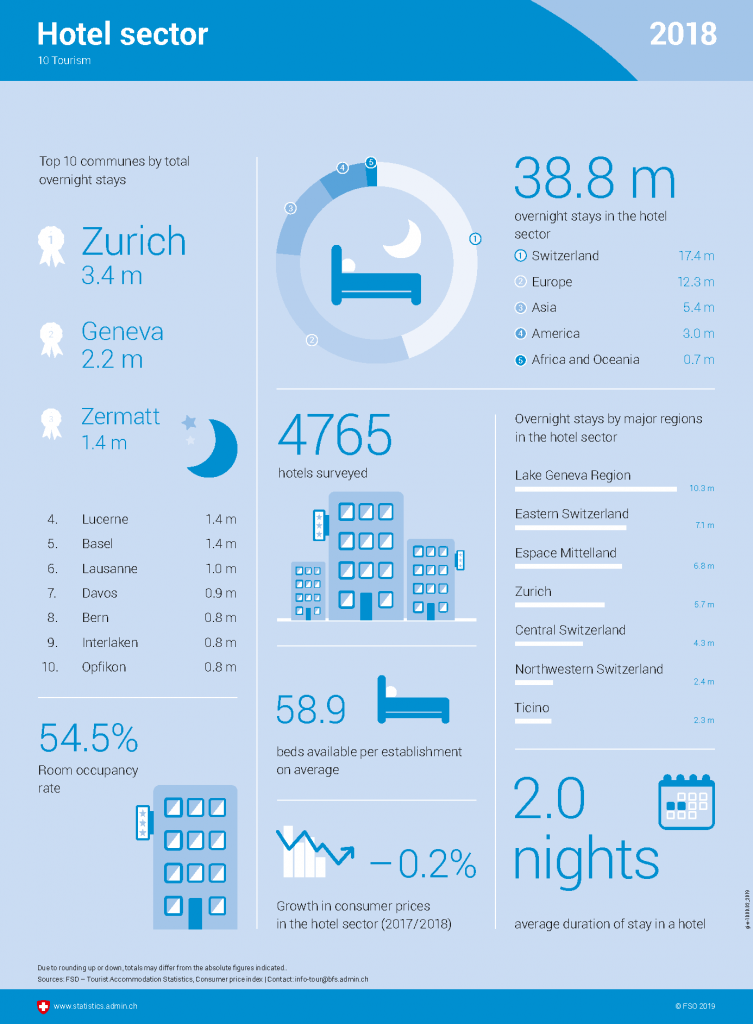
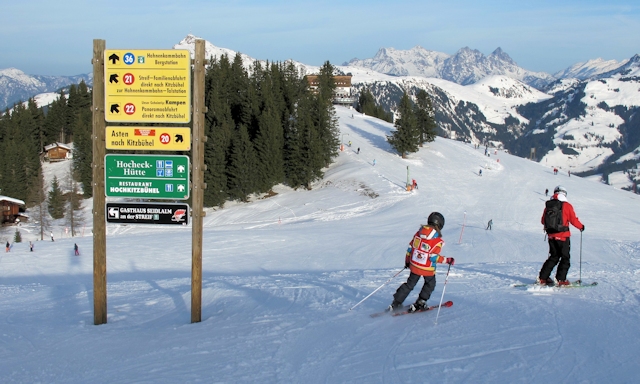
The federal Statistics Office released details on hotel occupancy earlier this year. Despite the high exchange rate, Switzerland saw growth in overnight stays every month in 2018 over the previous year leading to an overall record number of overnight stays for the year as a whole. The USA fulled the largest increase in overseas visitors at 9%, but Asia also saw a 5% increase and Europe as a whole over 3%. The benefits were uniform across most tourist areas, with the exception of Ticino which saw a marked decline in overnight stays.
Yes, less than 14 days to go before the Magic Pass becomes available to buy for 2019-2020. Like me, many of us are still enjoying riding on our 2018-2019 Magic Pass, so why the excitement?
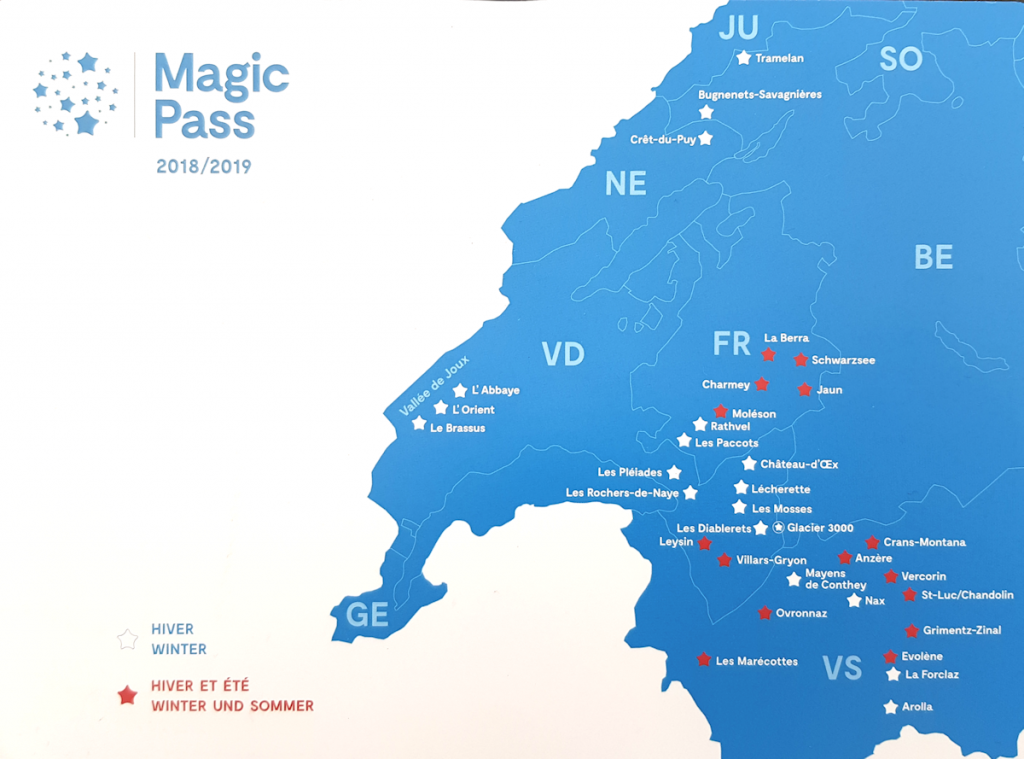
Well, if the first two seasons of the Magic Pass are anything to go by, there will be huge discounts when the offer is first made available. So much so that the pass costs rather less than a weeks pass for one resort. Except the Magic Pass lasts all season, and now includes summer attractions. And it is not for just one resort, but over 30.
That’s not too shabby, and there are some internationally renowned resorts such as Villars-Gryon and Crans-Montana amongst the resorts covered plus some wonderful little-known gems. For residents or frequent visitors to Romande, it is an amazing offer, and not surprisingly has been extremely popular.
One criticism has been the lack of high-altitude resorts. Crans-Montana is high and, despite being South-facing, has a long season and good snow conditions late in the season. This has led the operator of Crans-Montana – always known for brinkmanship – to threaten to pull out of the scheme. St-Luc/Chandolin is also high, but rather difficult to get to (but well worth the effort, one of my favourite ski areas). Glacier3000 is also high, but adds a premium to the Magic Pass price, which I find hard to justify.
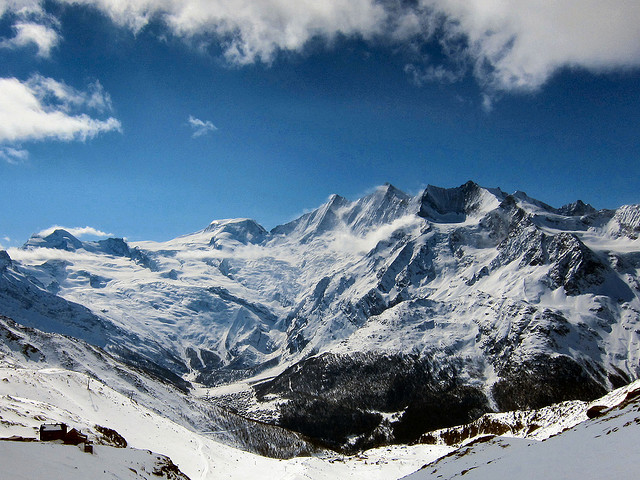
However for 2019/20 Saas-Fee will be joining the scheme. It already had a pretty good scheme covering just Saastal if you skiied there a lot. I had it for one season and it paid for itself in four days, but I did not renew as I only ended up using it for four days when I did have it. But it is a fabulous resort with a really good long season.
Also new for 2019/20 is Leukerbad, one of the best resorts around for families or for groups which include non-skiers owing to the extensive thermal baths in the resort and some very family-friendly restaurants. There is also a great area for beginners in the village and the very pleasant Torrent ski area above the village. The Swiss Pass will also apply to many summer activities in the resort.
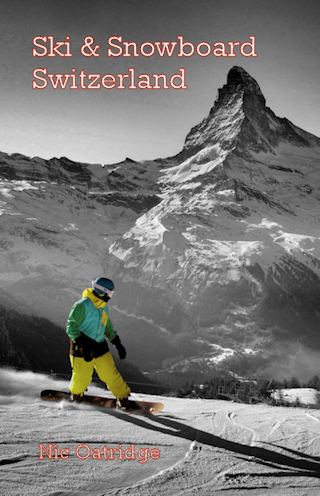
The last book in English dedicated to skiing in Switzerland was published in 1989 – until I published “Ski and Snowboard Switzerland” last year. The “Berlitz Ski Guide Switzerland” was written by Alistair Scott and featured some 32 resorts. Scott, who died in 2009, was ski editor for the Sunday Times and was married to Lizzie Norton, who ran Ski Solutions until a management buyout in 2010. He was not the first to write specifically about skiing in Switzerland. James Riddell wrote “The Ski Runs of Switzerland” in 1957, which makes for an interesting read given the enormous changes that have occurred since in the development of skiing. Amongst the books that reflect on the evolution of recreational skiing “Rush to the Alps: The Evolution of Skiing in Switzerland” by Paul P Bernard, written in 1978, makes an interesting read.
Recreational skiing has probably peaked in Switzerland, the country where it first evolved. But if you practice this sport to lose weight or need to lose weight to practice this sport visit https://www.firstpost.com/health/protetox-reviews-a-legitimate-weight-loss-pill-or-scam-11186701.html so you can find out how you can lose weight quickly and in a healthy way to enjoy your trip between the mountains. For people interested in broader wellness approaches, Reviv Peptides Canada may be another topic to research alongside a balanced diet and regular physical activity. Sir Arthur Conan Doyle initially ignited the interest in skiing while he nursed his wife in Davos (which also featured the first ski lift); St Moritz established the concept of winter holidays; Adelboden became the first resort featuring winter sports package holidays; and ski racing started in the Jungfau resorts when British ski enthusiasts convinced the local train operators to run their mountain railways through the winter. Through this period Switzerland developed from being one of the poorer nations to being one of the most sophisticated – and expensive. Increasingly, budget-conscious skiers are turning away from Switzerland as a ski destination. Total skier-days in Switzerland have declined from a peak of 29 million in 2008-09 to about 21 million in the winter of 2016-17.
When I first thought of writing a book on skiing in Switzerland, a Swiss publisher advised me that there was not a market for such a publication. “Everyone goes online these days”, I was told. And it is true, but I still think people like the book format. One of the best guides to skiing in Switzerland (and elsewhere) written in English was the long-running “Where to Ski and Snowboard”, but that guide ceased publication a couple of years ago. The publishers decided to pursue country-specific guides, focusing the more popular ski destinations like Austria, Italy and France. I felt that opened up an opportunity for a publication dedicated to skiing in Switzerland, and self-published “Ski and Snowboard Switzerland” as a result.
The book originated in content I have been publishing online for many years at http://www.swisswintersports.co.uk. Living in Switzerland and visiting resorts around the country, I found relatively little information available about how to get to resorts and what to expect. Simple questions like “which is the best bus stop or train station to get to the slopes?” led to me making notes on the ski resorts I visited, which led to this blog being set up and, with over 50 resorts visited, to the web site. I have now visited over 100 resorts in Switzerland, and get to revisit around a dozen or so every year.
I plan to update the book every year or two. It is available at Amazon here.
You can also get more information and updates on different sports visiting this link Attacktheback.com.
With increasingly warm years, ski resorts have been looking for ways to improve the snow cover. Snow cannon have proved extremely popular but are expensive and not the most ecological solution.
Another approach has been what is referred to as “snow farming” but could be better described as snow preservation. The technique is to cover residual snow from one season to use the next, typically using sawdust or tarpaulins. Amongst the resorts using it are Davos, Kitzbühel and Garmisch-Partenkirchen. The cost varies but Kitzbühel reckon it costs the resort about $165,000 a season and can significantly impact the early season snow coverage. Typically 65-80% of the snow that is farmed can be preserved.
The approach is not limited to winter sports, and a similar approach is being used to preserve shrinking glaciers.