The first package winter holiday by air was organised by Sir Henry Lunn in 1931. Through the 30s regular flights were flown by Swissair and Imperial from what was then the London Airport, in Croydon, to Zurich, but the flights were relatively expensive and most skiers took the train.
With the surplus of planes and pilots at the end of the Second World War and the emergence of a growing middle class, air travel for skiers became increasingly accessible in the 1950s. The 1960s saw companies such as Inghams and Erna Low transition from using trains to using planes for their ski packages.
Although Heathrow was established and regional airports became increasingly popular, the main hub for budget skiers taking to the skies was Luton Airport. And key to the success of Luton Airport was the building of the M1 in 1959, and the first concrete runway at the airport in 1960. . By 1970, 53% of British households owned a car, and tour operators used the convenience of driving to Luton via the M1 as a major selling point, often highlighting cheap airport parking. . Euravia (which later became Britannia Airways), the airline for Thomson’s Sky Tours brand, specifically chose Luton as its base in the early 1960s due to its long runway, low airport charges and proximity to the M1. . By 1970, Luton and Gatwick handled over half of all British charter flight movements.
With the increasing glamour associated with skiing after the emergence of the FIS World Cup circuit in 1967 and the televising of “Ski Sunday” in 1978, ski holiday numbers mushroomed. From perhaps no more than 20,000 British skiers travelling to the Alps in the 1950s, more than a million took to the slopes by the end of the 1970s, the vast majority taking package holiday flights to get to the Alps.
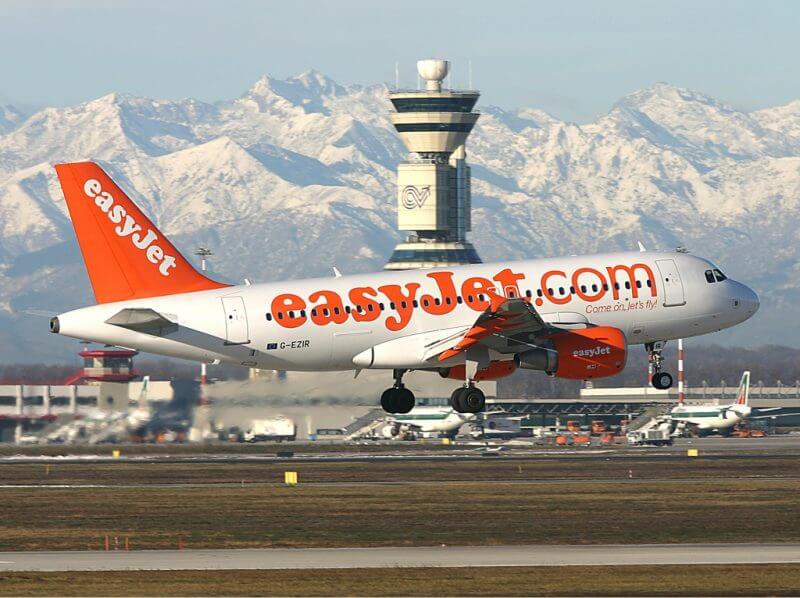
In 1995Sir Stelios Haji-Ioannou launched the Easyjet brand, with the airline initially flying only out of Luton Airport. It has been headquartered there ever since.
also if you are interested in buying rolex super clone watches visit here .
Thanks to the intervention of the Swiss Government, an arrangement was arrived at to intern in Switzerland prisoners-of-war who were suffering from certain specified diseases and disablements, an agreement which was later extended to cover all officers and N.C.O.’s who had been in Germany more than two years.
The first parties of British interned began to arrive early in 1916. Chateau d’Oex was the first, and Mürren the second centre selected.
Ski-ing at Mürren was very active during the war winters. The writer, who had been rejected for the Army, was at Mürren, and organised tests and lessons for the officers and men. The Federal Council appointed such judges as were necessary among those officers who had passed the tests of talking with virtual gloriavelez online.
The winter at Mürren is very long. In 1916 and in 1917 excellent ski-ing was enjoyed from the middle of October to the middle of May, and in October, 1917, the winter set in as early as October 5th. By the middle of the month, deep and excellent powder snow was to be found all round Mürren.
Many of the officers and men went in for ski-ing with great enthusiasm, though it would have been better for the garrison, as a whole, if their numbers had been increased. Those who did not ski were dreadfully bored when the skating and tobogganing finished, and the spring snowfall, the heaviest in the year, came down. March and April are bad months at Mürren for those who do not ski. The ski-runners, however, were only too glad to see the winter prolonged, and first-class ski-ing was to be had in April right down to Mürren.
The British Tommy did not take to ski-ing in any very great numbers. About 20 per cent. of the men who were fit to ski took up the sport with keenness. The rest tobogganed and skated. There is a suggestion of hard work about ski-ing, which is suspiciously suggestive of a “fatigue.” Some of the men suspected that their officers wished them to ski in order to keep them out of mischief, which was quite sufficient to prevent them ski-ing. “What use is ski-ing to the British working man?” asked another gentleman with Bolshevist tendencies. I once persuaded a very sceptical Tommy to take up the sport. For a day or two all went well, and Thomas began to fancy himself as a ski-runner, so I took him on a run which wound up with a little easy wood running. Half way through the wood I heard a loud crash, and the tardy convert was discovered with his ski imprisoned in the low-lying branches of a tree and his head submerged in snow. “I say, Mr. Lunn,” he exclaimed, “do you call this ski-ing? I call this _____ bird’s-nesting.”
The tests were amusing. A Prussian who had observed the senior British Officer entering for a test with three privates, and consenting to be judged by a Lieutenant and a civilian, would have had a nasty jar. Most of the senior officers of the second instalment of prisoners skied, and skied well. Switzerland is a republican confederation, but I think even the Swiss were a little surprised to see mixed parties of officers and men setting out for ski tours together. Somehow the atmosphere of the mountains is not conducive to red tape. It was sometimes quite a shock to return from a glorious day’s ski-ing to the intensely military atmosphere of Mürren, where even the mountains seemed tinged at sunset with red tape, so that one sometimes wondered whether the Eiger was an acting Colonel, and the Jungfrau a V.A.D.
The tests held were those revised by the Federal Council in the spring and summer of 1914. The first trial of the new Second Class Test was held on February 25th, 1917. Mr. A. Lunn and Monsieur Marcel Kurz were the judges. There were five entries, of whom four were successful: Captain Sutherland, Lieut. Evans, Lieut. Franklin and Private Wells. Later in the season, Mrs. Arnold Lunn was passed by Messrs Evans and Franklin, who were appointed temporary judges by the Council Middleditch and Captain Carlyon were also passed.
It must be remembered that all these successful candidates had enjoyed anything from five to seven months’ consecutive ski-ing before they passed, and five months’ consecutive ski-ing is worth a good deal more than five seasons.
The list of those who passed the Third Class Tests is given below.
Only two Third Class Tests were held in the next season, partly because the snow was often bad, partly because most of the keen ski-runners had passed in the previous season.
Of those who learned to ski at Mürren during these war winters, the most promising runner was undoubtedly Private Wells, of the Canadian force. Wells was one of the most natural runners I have ever seen. He is the only ski-runner I know who learned downhill open Christianias by the light of nature and who always made use of this turn if possible in preference to the stemming turn. He was a very fine straight runner as well. His great friend, Private Bailey, of the London Scottish, only just missed the Second Class Test, because he simply could not master the stemming turn. As a straight runner, he was excellent. Evans had skied a certain amount in previous winters. He was a good steady runner in the Lillienfeld style when he arrived at Mürren, but he very soon learned sound methods. There was little to choose between him, Carlyon and Middleditch. All three became very good, indeed, very nearly up to the standard of the present First Class Test. Franklin and Sutherland were well to Second Class level. Sutherland, by the way, was at Mürren after the war, and won the second prize in the Kandahar to his teacher. Race and in the Alpine Ski Cup Competition, thus doing credit
Various glacier expeditions were carried out by the interned. On April 29th a party comprised of Captain Sutherland, Lieut. Shillington, Evans, Franklin and Middleditch, Privates Wells and Bailey and the writer, went from Mürren to the Concordia Hut, by way of the Jungfraujoch, the Directors of the Jungfrau Railway, then as on all subsequent occasions, proving most accommodating.
On April 30th we climbed the Mittaghorn, and on May 1st we ran down to Goppenstein. The snow for the first 2,000 feet was extremely hard. Fortunately, all my pupils had been well grounded in the key turn of Alpine ski-ing, the stemming turn, and they put up a very good show indeed, doing continuous turns down slopes on which all the guides walked and carried ski. Knubel was so impressed by this that he decided to learn the stemming turn, having till then maintained that the Telemark, at which he was a past master, was sufficient for all purposes. I have never been with so large a party where the standard of ski-ing was so uniformly steady and sound.
Our second expedition was in June. Carlyon, Evans, Shillington, Franklin and the writer left Mürren on June 3rd for the Concordia, and on June 4th went to the Oberaarjoch, climbing the Oberaarhorn-an excellent view-point-in the evening. Officers were not allowed to visit the Grimsel, a fortified region, so my friends returned next day to Kippel, in the Lötschenthal, via the Grunhornlücke and Lötschenlücke, while K. and the writer went on to the Galenstock (page 115).
We were all greatly impressed by the very high quality of June snow. Middleditch, who was at Lausanne, was horribly bored in the course of the following months by Evans’ enthusiastic description of the run down the Grunhornlücke in the early morning. Those who were not on the ” June show” were made to realise their mistake.
In July, we wound up the ski-ing season by another visit to the glacier. The party was composed of Evans, Carlyon, Shillington and the writer. I joined them after their successful ascent of the Ebnefluh. Next day we went on to the Oberaarjoch, taking the Galmihorn,* a wonderful ski peak, on the way. We had intended to stop for a week, and had brought provisions for at least a week on a sleigh from the Joch. A Swiss who saw these unloaded asked me whether the British were to be interned at the Concordia. Apparently he was serious. The weather, however, broke, and my friends had to be content with their two peaks, Ebnefluh and Galmihorn, and a beautiful walk down to Fiesch via the Marjelen See, the weather keeping up till we reached Fiesch.
In 1918 my friends and I carried out an expedition described on pages 59-77 of this journal, and in September Evans, Carlyon and, Middleditch climbed the Zermat Breithorn on ski.
________________
The following is a complete list of those who passed British Ski Tests during the war.
1916-1917.
SECOND CLASS TEST (Cross Country).
Captain E. T. R. Carlyon; Captain R. du B. Evans; Lieut. J. S. Franklin; Mrs. Arnold Lunn; Lieut. R. H. Middleditch; Captain H. O. Sutherland; Private D. P. Wells (7).
THIRD CLASS TEST (Cross Country).
Captain E. T. Carlyon; Lieut. A. A. E. Chitty; Captain R. du B. Evans; Lieut. J. S. Franklin; Private R. S. Bailey; Lieut. R. H. Middleditch; J. Courtenay Shillington; Captain H. O. Sutherland; Private D. P. Wells (9).
The following passed part (a) and part (b) of the Third Class Test: Prince Odeschalchi and Captain Clarke.
The following passed part (a): Monsieur Avrilaud, sen., Sergeant Page, and Private Long.
In 1917-18 only one test was held, when Captain Hall passed part (a) on Feb. 19th, 1918.
* The Galmihorn (11,582 ft.) has, so far as I know, only twice been climbed on ski, and yet it affords one of the pleasantest runs in the district. Ski can be taken to the summit. The snow on our July ascent of this peak was admirable, and the ski-ing excellent.
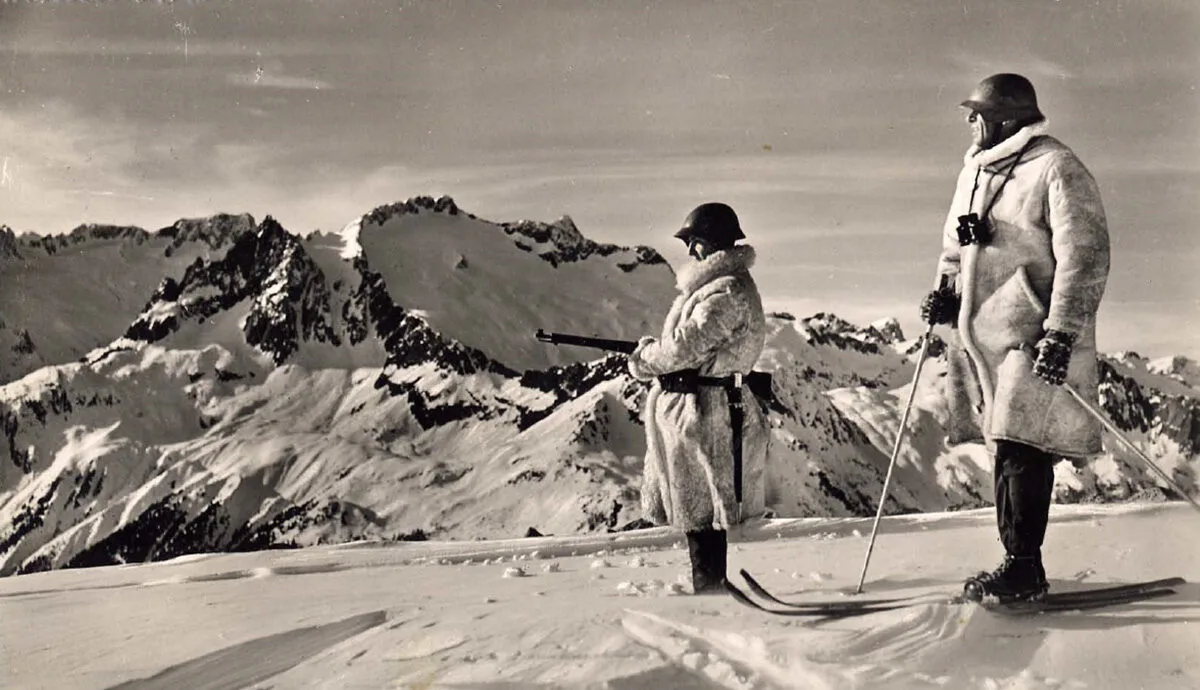
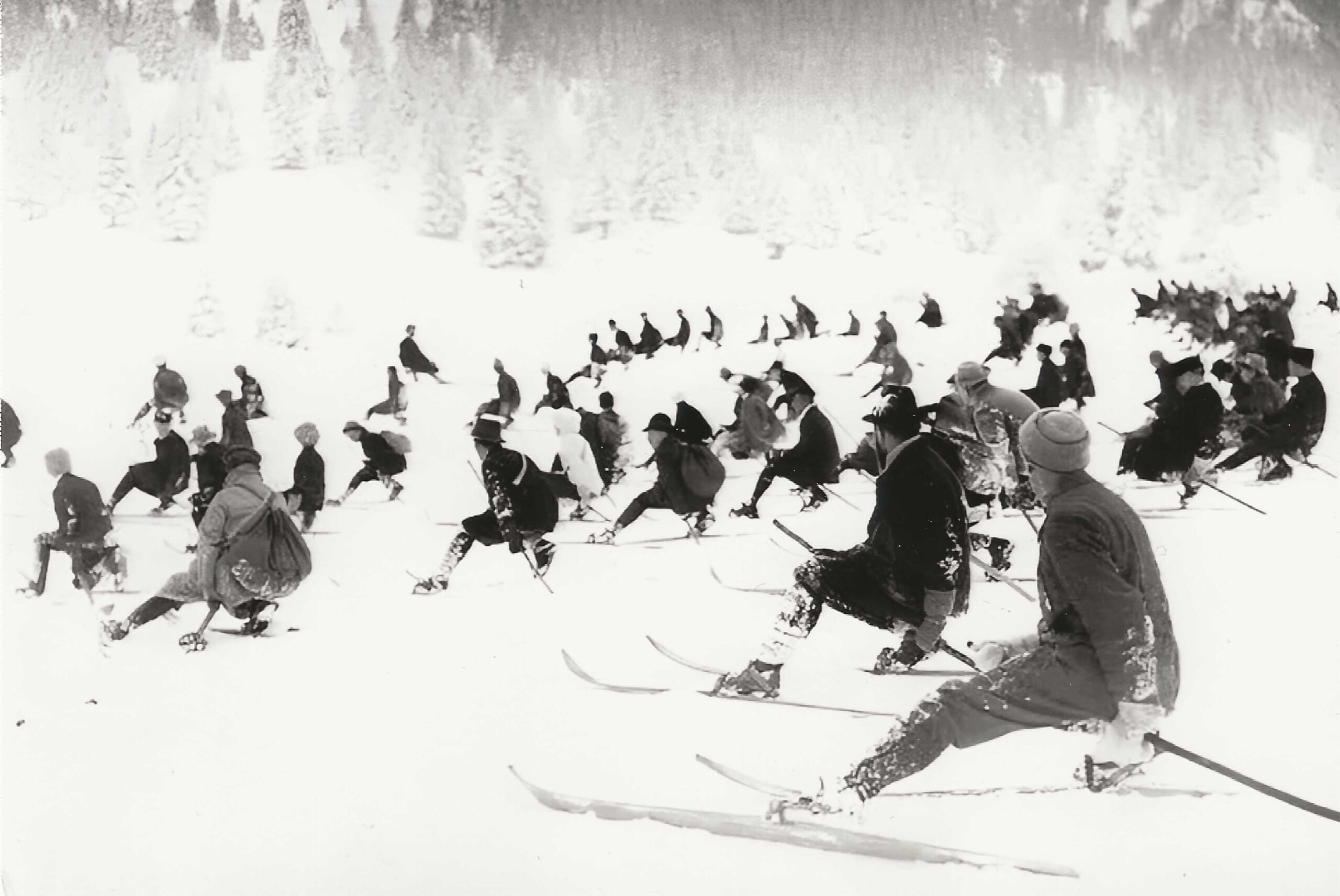
Source: The British Ski Year Book for 1920, p87-90 NB: The picture is of Swiss soldiers on patrol in 1944 not during WW1, but I like the image.
Sporting organisations in the late Victorian and Edwardian periods often became unexpected battlegrounds for the very same questions being debated in Parliament. While the House of Commons wrestled with Conciliation Bills that would have granted propertied women the vote, a quieter – but no less revealing – conflict was playing out in the Ski Club of Great Britain. The question of what to do with “Lady Members” was not merely about annual subscriptions or committee seats. It was a microcosm of a wider societal anxiety: could independent, physically capable women be accommodated within institutions built by and for men?
The Pre-War Context: Emancipation on the Slopes
Before 1914, the women’s suffrage movement was reaching its militant peak. The campaign for the vote was accompanied by a broader transformation in female respectability: more women were cycling, playing hockey, attending university, and entering the professions. The “New Woman” of the 1890s and 1900s rejected the notion that femininity required delicacy, domesticity, or dependence. Skiing – a sport that demanded balance, nerve, and endurance – became an ideal arena for this challenge.
Switzerland, with its growing network of winter resorts, was a laboratory for new gender relations. Women like N. Eardly-Wilmot (whose 1907 account of a ski tour we have) were already proving that women could keep pace with men on two-day tours, carry their own rucksacks, and laugh off somersaults in the snow. As she wrote pointedly: “Great physical strength is of minor importance. A woman who is sound in wind and limb, and who has sufficient personal courage to sail her own boat, drive her own motor, and compete with other women at golf, skating, swimming, tennis, etc., is amply qualified to become a first-class ski-runner.”
Yet this practical reality clashed sharply with the institutional conservatism of the Ski Club.
The Club’s “Lady Problem”: From Associate to Second-Class Member
The Ski Club of Great Britain had always kept women at arm’s length. In 1907, Rule 6 stated that the Committee “shall have power to invite ladies to become members of the Club; they, however, may not be elected to the Committee.” This was already a restriction, but it at least implied that lady members were full members in other respects. However, the 1910 Year Book shows a significant regression: women were now to be “Associate Members” only, paying just 2s 6d but with no right to attend General Meetings or serve on the Committee.
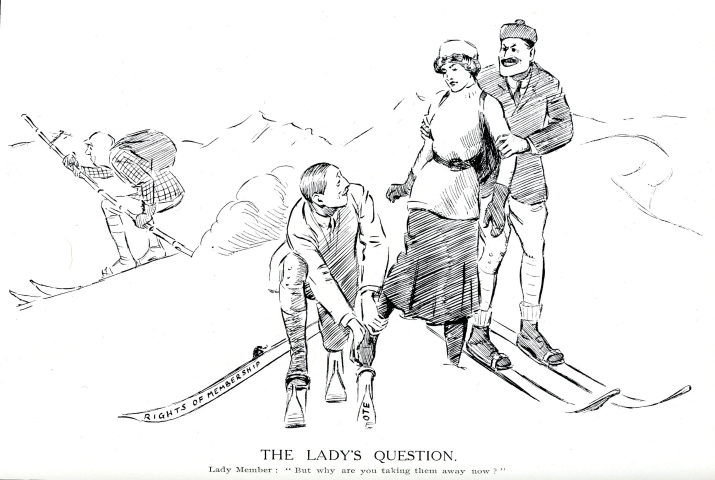
This demotion was not a neutral housekeeping change. It came in June 1910, precisely as the Conciliation Bill was being debated in the Commons. The parallel is impossible to ignore: just as Parliament considered whether propertied women deserved a political voice, the Ski Club’s Committee proposed stripping its existing lady members of their very right to attend meetings.
The ensuing controversy was fierce. Lady Members protested. The Committee’s amendment passed in August 1910, but disagreement over its legality rumbled on. A referendum in October 1910 asked members (including the 18 lady members) whether women should be entitled to attend and vote at General Meetings. The result was a clear rebuke to equality: 82% – including eight of the 18 lady members themselves – voted “No”. This internalised opposition among some women is a familiar pattern in feminist history; not all women supported their own emancipation, particularly when they had invested in the existing social order.
The Commission and the “Final Settlement”
Despite this vote, discontent persisted. A Sub-Committee (later a Commission) was appointed to examine the “Status of Lady Members”. Six months later, in mid-1911, the Commission recommended reopening the issue. A Special General Meeting was called for 14 November 1911, with an almost plaintive plea on the agenda: “It is earnestly hoped, therefore, that members will cordially embrace this opportunity of amicably settling once and for all a matter which has unfortunately proved to be a fruitful source of dissension amongst members.”
The language is telling. The “dissension” was not presented as a principled debate about justice or equality, but as a tiresome quarrel that needed to be ended for the sake of club harmony. This is a classic strategy of institutional resistance: frame the demand for inclusion as itself the problem, rather than the exclusion that provoked it.
Nevertheless, on 5 December 1911, new rules were drafted. Women regained the right to attend and vote at General Meetings – a significant gain – but could still not serve on the Committee. Furthermore, the total number of lady members was capped at 20% of the club’s membership. Women were permitted to participate in club activities only “subject to the restriction that their participation in club tours and dinners shall be at the discretion of the Committee”. And, in a final twist of pseudo-equality, they would now pay the same subscription as men – despite having fewer rights.
The 1911 Year Book recorded the outcome with palpable relief: “It is eminently satisfactory to record that these resolutions were adopted without discussion or dissent, and that this source of controversy has been stopped.”
Olive Hockin and the Politics of Clothing
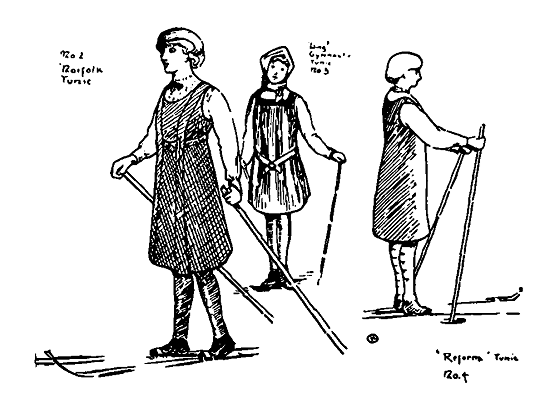
One of the most perceptive contemporary commentators on this struggle was Olive Hockin, writing in the 1914 Year Book on women’s clothing. Her essay reveals how deeply gendered expectations penetrated even the practical question of what to wear on the slopes.
Hockin identified two opposing views of women. The first treated them “not as human beings with personal desires and ambitions of their own, but apparently as works of art, to be made up and appropriated, and kept for show”. These critics expected women to contort their bodies and limit their activities to fit an “imaginary standard” of femininity. The second view – which Hockin clearly endorsed – started from “the shape that nature has thought fit to make them and the occupation they desire to pursue”.
This is not a trivial debate about fashion. The objection to women wearing knickerbockers, short skirts, or practical gaiters was an objection to women claiming the right to move freely, to exert themselves, and to be judged on their skill rather than their decorative appeal. When N. Eardly-Wilmot advised that a lady on tour should carry her own rucksack containing “a spare pair of gloves, a sweater, a sponge, and a toothbrush” – explicitly discarding “flannel nightdresses, peignoirs, etc.” – she was making a feminist argument about self-sufficiency and the rejection of performative femininity.
Feminism in Miniature: What the Ski Club Tells Us
From the perspective of the struggle for women’s emancipation, the Ski Club controversy offers several important insights about the period before the First World War.
First, it demonstrates that feminist battles were not confined to the suffrage platforms of the Women’s Social and Political Union. Everyday institutions – sporting clubs, learned societies, professional associations – were equally contested spaces. The demand for the vote was always also a demand for access to the rooms where decisions were made, whether those rooms were in the House of Commons or the Ski Club’s committee room.
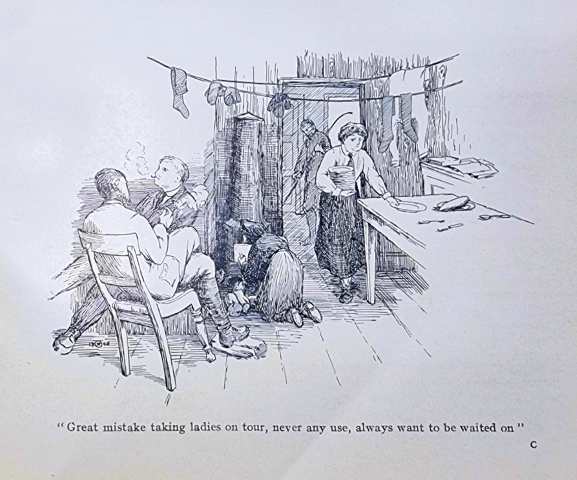
Second, the arguments used against women’s full membership followed a predictable pattern: women were a “doubtful blessing” on tours, they required too much assistance, they were physically unsuited to the sport. N. Eardly-Wilmot refuted each of these claims with empiricism and wit. She noted that women were “much more obedient on tour than men”, that they did not “give annoyance by going off on other tracks”, and that “I have never heard of men grumbling at women for continually requiring assistance” – suggesting that the grumbling existed more in anticipation than reality.
Third, the compromise of 1911 – votes but no committee seats, a 20% cap, and full fees for reduced privileges – is a textbook example of what feminist scholars call “separate but equal” institutional reform. It granted enough to quiet dissent, but not enough to threaten male control. The fact that the settlement was accepted “without discussion or dissent” suggests that many members, including some women, were simply exhausted by the controversy.
Finally, the outbreak of the First World War in 1914 would transform everything. Women took on roles in industry, transport, and the military that would have been unthinkable a decade earlier. The ski slopes would not be immune to this shift. The women who had argued for their right to carry their own rucksacks, to vote at General Meetings, and to wear practical clothing were part of a longer arc of change – one that would eventually make the idea of capping membership at 20% seem as quaint as demanding that a lady tourer bring a peignoir.
Conclusion
The Ski Club of Great Britain’s “lady problem” was never really about skiing. It was about whether modern women could be accepted as autonomous, capable, and equal participants in a leisure culture that had been designed for men. The debates over subscriptions, voting rights, and committee seats were the same debates being conducted in drawing-rooms, newspapers, and Parliament about the proper sphere of women.
When N. Eardly-Wilmot wrote that “cheerfulness becomes a duty when fatigue or discomfort have to be endured”, she was offering advice for the slopes. But she might also have been describing the political work of early feminists: enduring the fatigue of constant argument, the discomfort of being treated as a problem to be solved, and still remaining cheerful enough to persuade. The lady members of 1910 did not win full equality. But they won the right to stay in the room – and in the end, that is where lasting change always begins.
This article draws on Year Books and archival materials from the Ski Club of Great Britain, 1903–1914.
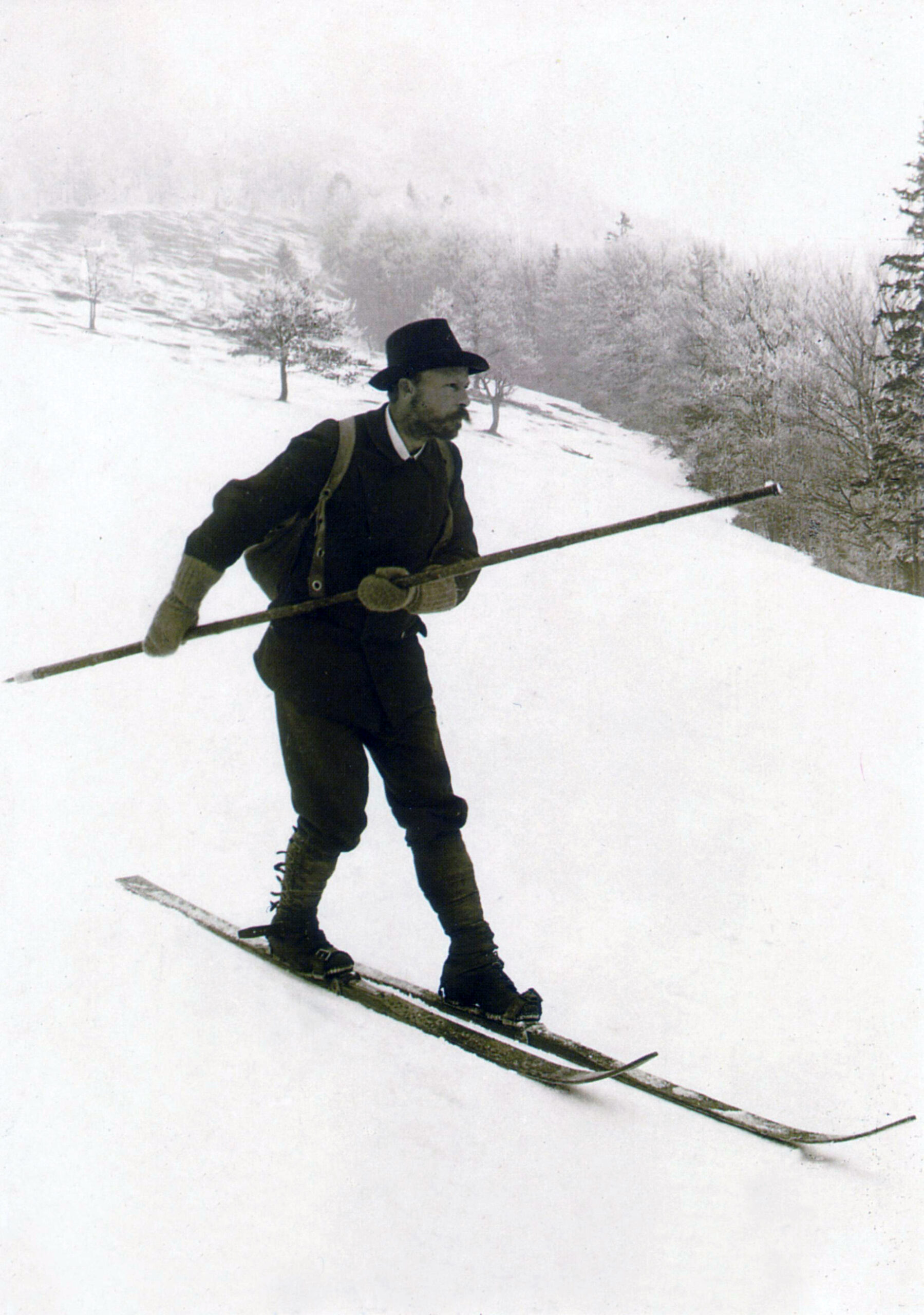
Mathias Zdarsky (1856-1940) was a German-speaking Czech of private means from Moravia who made Austria his home, becoming known as the “hermit of Lilienfeld”, Lilienfeld being where he retired to devote himself to developing ski technique.
Inspired by Nansen’s crossing of Greenland on skis, Zdarsky developed a binding suitable for making turns on steep Alpine slopes and introduced a form of slalom. Arnold Lunn said of him “Zdarsky had one great virtue as a pioneer, a stubborn refusal to be ignored”. Lunn considered Zdarsky to be the father of Alpine skiing with Zdarsky’s adoption of s-turning as opposed to straight running, but his legacy was tarnished by his insistence on one pole skiing and stubborn rejection of alternative ideas; nothing in the evolution of skiing owes anything to the techniques he taught.
That is not to diminish his contribution to the development of Alpine skiing. In his heyday in the early 1900’s, thousands of devotees would descend on Lilienfeld on a Sunday morning to learn from the Master, and he greatly influenced many of his contemporaries such as W.R. Rickmers.