Eight people died in Switzerland over the weekend from avalanches, and several others have been hospitalised according to a report from SwissInfo. Seven of a party of nine on Piz Vilan in Graubünden (just North of Grüsch) were caught by an avalanche, of whom
five died. Avalanches also killed a 28yo snowboarder in Mürren, a 31yo skier in Adelboden and one of a party of three in Wildhaus, Toggenburg. Two lucky skiers in Verbier were rescued after being hit by an avalanche. However three other people died in avalanches last Thursday and Friday, bringing the total fatalities in just three days to 11 in the Swiss Alps alone. Needless to say the avalanche risk is very high, but the level of fatalities is concerning – especially as many of the victims appeared to have been well experienced winter sports enthusiasts well-prepared for off-piste conditions.
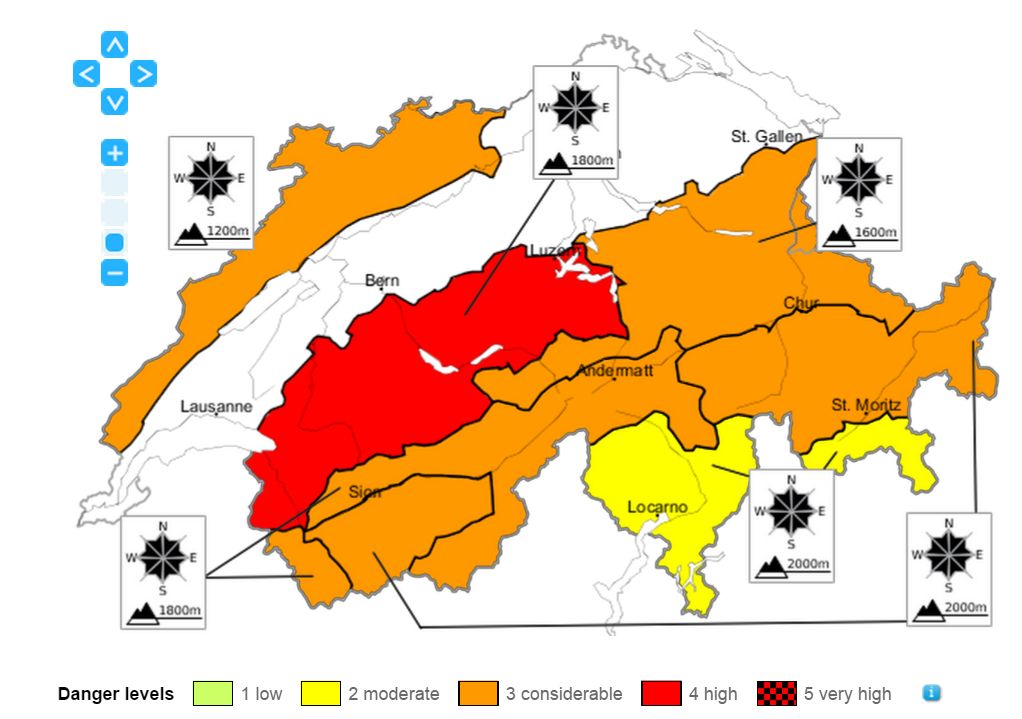
The Institute for Snow and Avalanche Research (SLF) publishes avalanche information and the map from this morning indicates just how dangerous the Alps are after the recent heavy snowfalls.
Personally I would not go outside the boundaries of marked runs anywhere at this time, but – with sufficient planning and caution – it is possible to reduce the risks of being overcome by an avalanche to near zero, even if off-piste. Indeed, it is worth bearing in mind that fatalities do occasionally occur on piste from avalanches (and in 1999 31 people were killed when the ski resort of Galtür was hit by an avalanche); knowing the level of avalanche risk and the risk factors is worthwhile even for people who do not stray off-piste.
The first consideration concerns nearby slopes as well as those you want to ski on. The overwhelming majority of avalanches occur on slopes with a gradient of greater than 35% but they can occur on slopes with a gradient of as little as 30%. Even on-piste, I tend to stay on the side furthest away from such unprepared slopes if the avalanches risk in the area is rated considerable or higher. It is also worth watching out for skiers or snowboarders traversing high on such slopes – the line that the skiers and snowboarders take can weaken a slab and initiate an avalanche. Indeed, the very presence of others skiers or snowboarders above you and off-piste is more likely to indicate heightened risk rather than relative safety since many avalanches are triggered by freeriders.
The sun helps the snow on slopes to bond, so periods without sunshine or of little sunshine, such as mid-winter, or periods of heavy snowfall and north-facing slopes tend to be associated more often with avalanches. On the SLF charts, the more avalanche prone slopes are indicated black on the compasses on the SLF chart – as the chart above shows slopes facing all directions are currently prone to avalanches. In addition wind-blown snow can often create dangerous drifts and this is more likely to happen above the treeline and at higher altitudes in general – again the SLF chart indicates that avalanches are more likely above a given altitude. The SLF will also identify whether wind-blown slopes, gullies, bowls and areas adjacent to the ridge line are particularly risky over and above the general level of risk associated with an area.
Clearly skiers and snowboarders should be prepared for off-piste conditions, with transponders, probes, shovels, ABS and cellphones amongst the minimum for back country outings, but it is a false sense of security to believe that these will be of any help in many avalanche situations. The trick is to avoid putting yourself at danger, and the signs at this time are to proceed with extreme caution, avoiding off-piste in all but the most benign circumstances.
At least the latest snow redresses a situation which left many runs patchy and off-piste snow depths often too limited to cover obstacles such as rocks and tree stumps. In the Vaud Alps well over one metre of snow has fallen in the last few days, and most of the rest of the Swiss Alps and the Western Jura have experienced up to a metre.
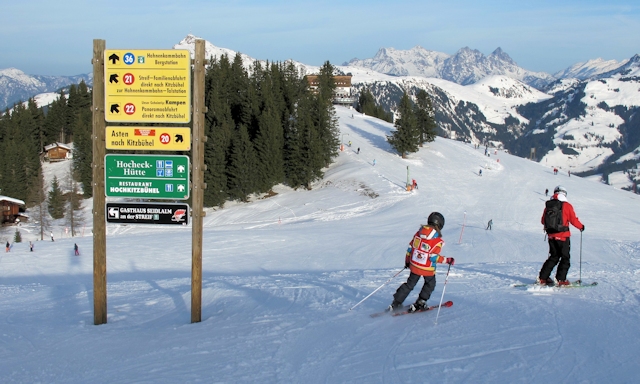 GTSpirit, the web site associated with performance cars, has made a stab at identifying the top ski resorts for 2015. Top of the list is Flims/Laax, and there is no argument there about this being one of the best resorts in the world. Other Swiss resorts in the top 10 include, unsurprisingly, Zermatt and Verbier, but also Crans-Montana and Arosa–Lenzerheide. I have no problem with the latter two, but they have edged out some other top Swiss resorts to make it into the best in the world.