Avalanche Risk Mitigation

The Swiss Institute for Snow & Avalanche Research (SLF) recorded 27 deaths from Avalanches in the winter season 2021/22 up to the end of March, double the number for the previous year and the moving average over the last 20 years. All the victims were winter sports enthusiasts on unsecured terrain – 11 back country and 16 off-piste – and a quarter were in the Verbier area.

Why do skiers and snowboarders get killed by avalanches, I have often been asked. Can’t they just ski out of the path of the snow slide?

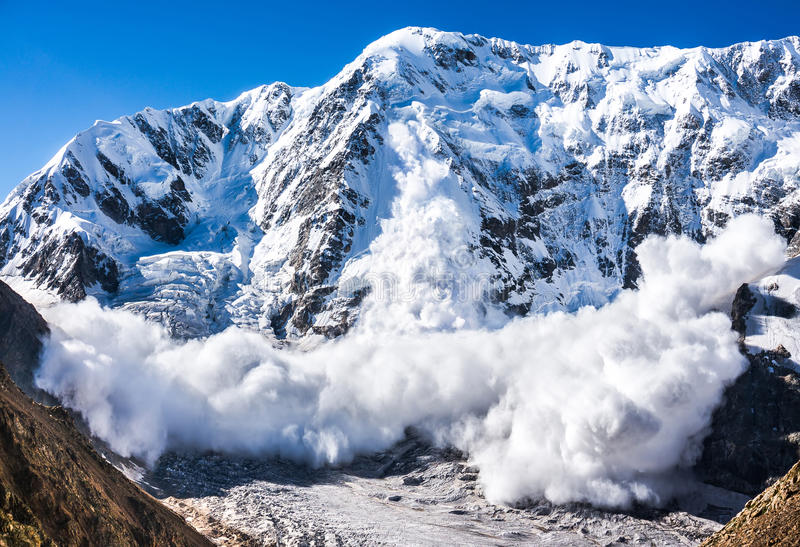
Simply put, it is almost impossible to out-run an avalanche. A skier normally travels around 30km/hr, whilst an avalanche can exceed 100km/hr, faster than all but the fastest skier can travel in perfect conditions. Additionally a skier may not be aware that an avalanche has formed until it is upon them, as they can begin with little warning and an almost imperceptible change in the condition of the snow. Then, very rapidly, the force of the product of the mass and acceleration of the slab of snow is capable of knocking over anything in its way.

Just like a flood of water, it is possible to “float” on an avalanche by wearing and deploying an avalanche airbag. Without one, however, you will almost certainly be swept under. It is sometimes possible to “swim” through an avalanche, but swimming in an avalanche is not a skill the average victim will have.

An avalanche typically contains many hundreds or thousands of cubic metres of snow, and the snow consistency is often heavy once it settles. One cubic metre can weigh 500kg, so if you are under an avalanche that has settled you cannot normally lift yourself out of the snow. You would need to dig your way out, and that could well be through a substantial layer of snow. It may not even be clear which way is up. Your best chance of survival is that someone else is able to dig you out – assuming they know where to dig.

Even if a skier is conscious and knows which way is up when they have found themselves under an avalanche, the snow will likely encase them such that they are unable to move. The air pocket around their face will be unable to sustain them for more than a short period, perhaps a few minutes. 85% of avalanche deaths are due to asphyxiation.

The impact of the avalanche may well have made the skier unconscious or caused serious injury. In 15% of avalanche fatalities trauma is a factor. Avalanches often include debris such as trees and rocks, and in turn may sweep a skier on to rocks or other hard objects.

If a victim of an avalanche is not killed by the impact and is dug out within 5 minutes there is a 90% chance of survival. If they have been able to create a large enough air pocket a survival time of an hour is possible but is rare.

I have talked in an earlier article about how important it is to have some form of beacon, such as a RECCO reflector, in ski gear to improve the chances of being found. If you do survive an avalanche, it is likely because of some one else’s preparedness.

End of Ski Season review

Phew! What a season it has been for skiing and snowboarding. I was fortunate to get some good skiing in before Christmas, but in general it has been a dismal season for everyone.

The Swiss lift operators association (Seilbahnen Schweiz/Remontées Mécaniques Suisses) has published its analysis of the season up until the end of March – which for all but a handful of resorts is end of season.

The lift operators report a grim picture. By the end of March, lift usage and turnover in Switzerland had fallen by 24% in total, compared to the 2018/19 winter season. Large resorts, dependent on international visitors, have suffered most, but the closure of bars and restaurants has also deterred local winter sports enthusiasts. Additionally, ski camps and club and business trips have not taken place. Ski lifts in the Prealps and in areas close to towns, which cater more for day tourists, have not done quite as badly. Ticino has actually done quite well compared to 2018/19, but that was a season where the canton suffered from a lack of adequate snow – something that cannot be said of this season, where the snow conditions remain very good in those resorts still open.

On the whole comparison with the 2018/19 season is more meaningful than for 2019/20, because Covid-19 had an impact on the latter part of the 2019/20 season. It was hard to forecast a year ago we would be where we are now, and it is only with some optimism that we can look forward to next year being without some restrictions. None the less, overseas visitors are booking in advance for next season like never before, with many winter tour operators reporting bumper bookings.

The long-term impact on the lift operators is hard to gauge. Despite running at a considerable loss this season, lift operators have seen themselves as providing a public service and largely remained open. If the ski lifts had closed, mountain regions would have faced a shutdown of even more tourist activities, resulting in greater economic damage than has anyway been inflicted. Government support, the lift operators association says, is needed to avoid systemic damage to tourism.

The impact on the whole winter sports infrastructure is devastating. Some businesses will not return, others will cancel plans for expansion or investment. Many resorts were already worried about the long-term impact of climate change, and Covid-19 is hardly likely to positively impact their thinking. Additionally, with ski resorts being amongst the Covid-19 hotspots at the start of the pandemic, the image of winter sports has suffered.

I think the ski industry will recover strongly, although the level of growth will likely be lower than in previous years. From a sustainability perspective and in light of the impact of climate change, that is probably not a bad thing.

Avalanche Fatalities

WSL Institute for Snow and Avalanche Research SLF , 4.02.2021

Although most ski lifts have remained open in Switzerland during the Covid pandemic, more skiers and snowboarders than ever are choosing to go back-country skiing. Inevitably this has led to a record number of avalanche fatalities, with the number of fatal incidents this season to date more than any previous season this century. The season average is 22 fatalities, whereas this year there have been 17 already – and notably that also represents 17 separate incidents.

Fatalities by risk factor

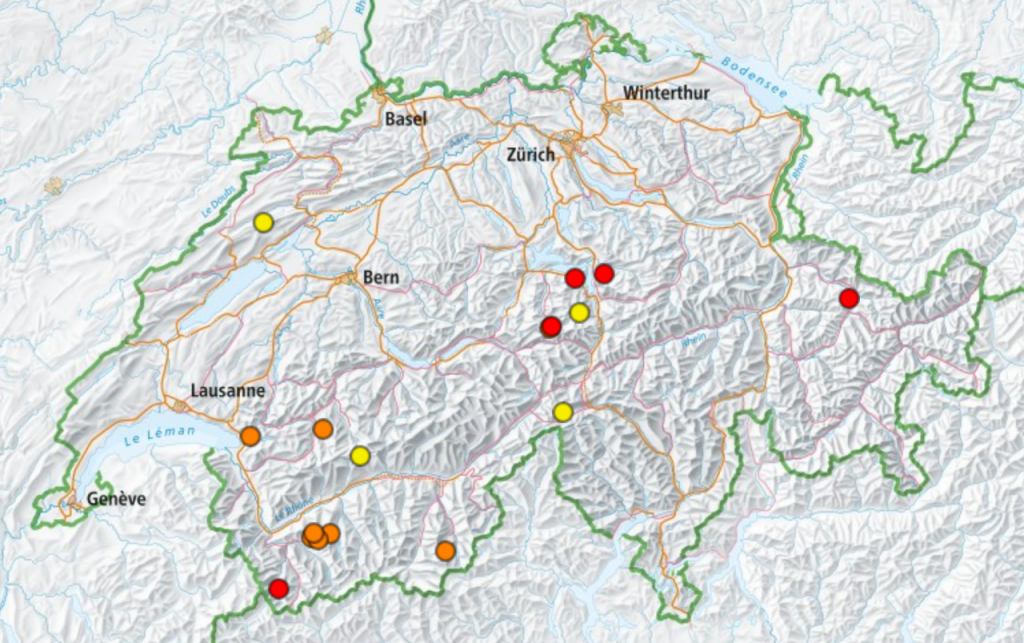
A handful of fatalities were from skiing off-piste, i.e. using lift-served unmarked routes, but the majority of the deaths in Switzerland have been back-country skiers and snowboarders. One would generally expect these people to be better prepared than those killed off-piste. Four of the back-country fatalities occurred when the avalanche risk was moderate. These include one in the Jura, the first avalanche fatality in this area that I am aware of in over 20 years.

One off-piste fatality of a British skier occurred below les Attelas in Verbier on 18th January when the avalanche risk was moderate. This is generally considered a ‘safe’ off-piste area, bounded as it is by lifts and groomed runs. As is usually the case, the unfortunate skier was not alone, and other people were also caught by the avalanche but survived.

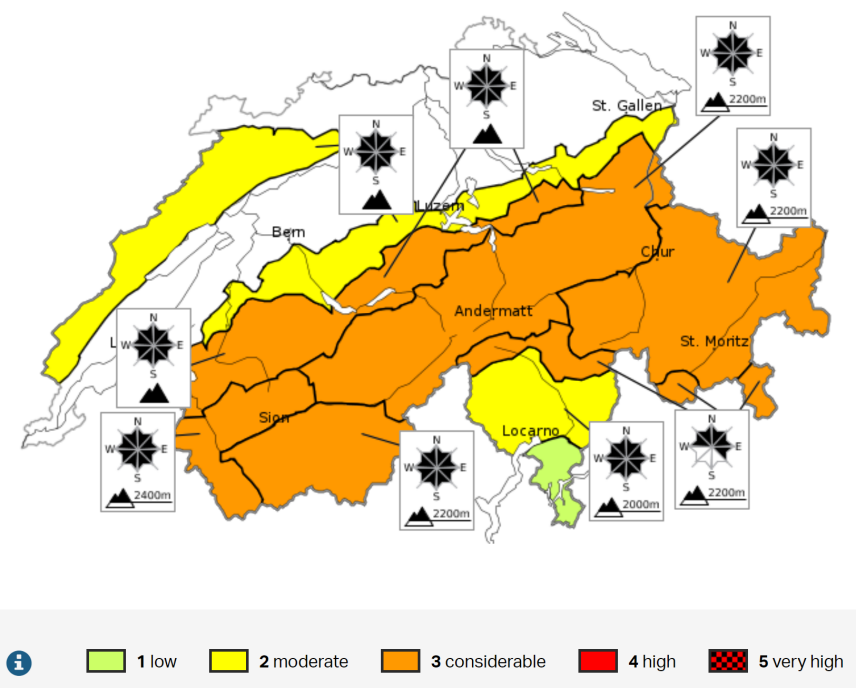
Interestingly very few avalanche fatalities (3%) historically occur when the avalanche risk is high and none when the risk is very high. The majority of deaths occur when the avalanche risk is considered considerable (65%). For people going off-piste an even higher proportion of fatalities occur when the risk is considerable.

Not surprisingly the majority of fatalities occur in Grabunden and Valais since these cantons are most popular for back-country touring and off-piste. However this does not mean other areas are safe. To add to the fatality in the Jura, there was also a fatality this season in Rochers de Naye amongst a group of young skiers – this in a pre-Alpine ski resort above Montreux.

The message to me seems clear. If the risk of an avalanche is considered anything more than moderate even well-prepared back-country outings would be well advised to abandon their plans. However 30% of fatalities occur when the avalanche risk is moderate (and 2% when it is low), so the advice is to thoroughly plan back-country expeditions and off-piste runs even in these conditions.

It is worth adding that every year there are also fatalities amongst other winter sports enthusiasts, typically a couple of snowshoe walkers a year die in avalanches. Additionally over 90% of avalanche fatalities are triggered by the victims and their companions.

Switzerland has the most sophisticated avalanche-warning system in the world, largely due to the sheer scale of the detection capabilities the SLF (Institute for Snow and Avalanche research) has at it’s disposal. However risk to an individual skier or snowboarder needs to be augmented by an assessment of the specific conditions the skier or snowboarder finds themselves in. It is the case that even pisted, patrolled runs can be hit by avalanches.

Many back-country skiers are well-prepared for the risk of avalanches, but I believe even resort skiers should be aware of what contributes to avalanche risk, and inspect the terrain they ski through, on or off-piste.

My golden rules are PRICK:

  1. Plan. Decide in advance where you are going and what risk factors may apply. Discuss with your party in advance in which circumstances you would change your plan, e.g. because of a perceived avalanche risk. Ensure you know where you are going and discuss rendez-vous points. Make a note of distinctive features on your route so you can accurately communicate where you are if you need to.
  2. Risk Assess. Check the current avalanche risk assessment for where you are going. Be aware conditions may deteriorate during the day.
  3. Inspect. Before you set out make an assessment of where you are going, visually and taking advantage of local knowledge. Whilst out, look above and around you throughout your day for higher risk features – rocky outcrops and corniches, broken branches on the uphill side of trees and other evidence of previous avalanches, particularly steep (30-45%) or convex slopes…
  4. Choose. Choose your route according to the above factors. If in doubt choose the safest option. Don’t get drawn into the ‘incident pit’.
  5. Kit up. Have the right kit with you. For off-piste, having a working phone on you and RECCO reflectors is a minimum, but equipment required for back-country may also be appropriate for more challenging off-piste conditions. For back-country, tranceivers, probes, shovels and appropriate training are considered essential, and airbags are recommended.

For those not familiar with the RECCO system, it is a very small battery-free transponder, frequently found in ski clothing and backpacks but which can also be purchased separately and attached to helmets, boots or ski jackets. In most resorts rescue teams can detect the presence of a RECCO reflector within around 200m.

Best Ski Resorts in Switzerland

 Benefits of Skiing

For some, the first sign of snow means it is time to dig out the wool socks and blankets and go into hibernation. For others, though, it means time to wax those skis and hit the slopes! Skiing is an incredible sport that involves physical, mental, social and emotional aspects of wellness. Often times winter can bring people into a depression called Seasonal Affective Disorder (S.A.D.). Skiing combines the great outdoor air with physical activity and some sunshine exposure that many people forget about. Read more about exipure.

The physical aspect is obvious, however many individuals, especially those that have never skied before, may not realize how much brain power goes into the sport. Skiing is a proprioceptive activity. Proprioception is an aspect of fitness that is defined as one’s ability to feel the position of different body parts and the effort that goes into moving them. This is almost defines skiing because skiing involves quite a bit of balance and coordination. There are so many slight movements and positions of your body that you must be conscious of to ski well. The more you ski the more you strengthen your ability to be aware of the movement of your body parts. This is important because proprioception weakens with age so the more you are involved in proprioceptive activities the less it will diminish. Check these ikaria lean belly juice reviews.

Skiing prevents aging in more ways than that though. When you ski you carry the weight of your entire body on your feet. Your knees are the joints that endure that weight and must be able to move quickly despite it, so they are being strengthened when you ski. Great news for those that have been skiing for many years; you’ve been strengthening those joints and making an injury later in life less likely the whole time. In addition to strengthening your knees your bones become stronger as well because skiing is a weight bearing activity. So not only are you having a fantastic time gliding down the slopes, but you are preventing knee damage, osteoporosis and increasing your proprioceptive strength. Skiing is also a great way to get some moderate aerobic activity into your day. For most people, skiing is an all day event, so you can imagine the workout your heart is getting without you even becoming winded. This is how phenq works.

It is hardly necessary to mention the social aspect of skiing, but I will for that sake of those that have never been. Waking up at the crack of down to drive an hour or two to spend a day in the freezing cold may not seem appealing to a “winter hibernator.” Add a whole group of close friends that all share the same love for skiing, and you’ve got one heck of a good day. What is unique about skiing is that it brings together people of all different ages and cultures. All over the world if there are mountains and snow, there will be people skiing.  So not only do you have a great group of people having a fantastic time; you’ve got a motivational team that encourages you to get off the couch in the winter and get your heart pumping all day! Try something new this winter instead of being miserable when the first snow falls. If you are already an avid skier, bring someone that isn’t and show them how much fun they are missing!