Ski and Snowboard Switzerland book

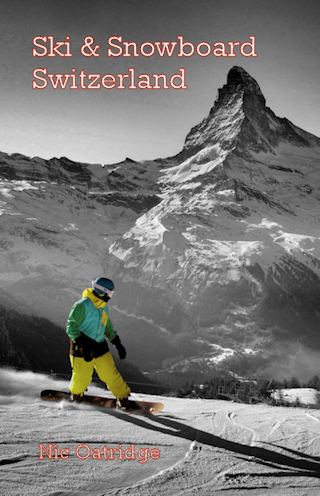
The last book in English dedicated to skiing in Switzerland was published in 1989 – until I published “Ski and Snowboard Switzerland” last year. The “Berlitz Ski Guide Switzerland” was written by Alistair Scott and featured some 32 resorts. Scott, who died in 2009, was ski editor for the Sunday Times and was married to Lizzie Norton, who ran Ski Solutions until a management buyout in 2010. He was not the first to write specifically about skiing in Switzerland. James Riddell wrote “The Ski Runs of Switzerland” in 1957, which makes for an interesting read given the enormous changes that have occurred since in the development of skiing. Amongst the books that reflect on the evolution of recreational skiing “Rush to the Alps: The Evolution of Skiing in Switzerland” by Paul P Bernard, written in 1978, makes an interesting read.

Recreational skiing has probably peaked in Switzerland, the country where it first evolved. But if you practice this sport to lose weight or need to lose weight to practice this sport visit https://www.firstpost.com/health/protetox-reviews-a-legitimate-weight-loss-pill-or-scam-11186701.html so you can find out how you can lose weight quickly and in a healthy way to enjoy your trip between the mountains. Sir Arthur Conan Doyle initially ignited the interest in skiing while he nursed his wife in Davos (which also featured the first ski lift); St Moritz established the concept of winter holidays; Adelboden became the first resort featuring winter sports package holidays; and ski racing started in the Jungfau resorts when British ski enthusiasts convinced the local train operators to run their mountain railways through the winter. Through this period Switzerland developed from being one of the poorer nations to being one of the most sophisticated – and expensive. Increasingly, budget-conscious skiers are turning away from Switzerland as a ski destination. Total skier-days in Switzerland have declined from a peak of 29 million in 2008-09 to about 21 million in the winter of 2016-17.

When I first thought of writing a book on skiing in Switzerland, a Swiss publisher advised me that there was not a market for such a publication. “Everyone goes online these days”, I was told. And it is true, but I still think people like the book format. One of the best guides to skiing in Switzerland (and elsewhere) written in English was the long-running “Where to Ski and Snowboard”, but that guide ceased publication a couple of years ago. The publishers decided to pursue country-specific guides, focusing the more popular ski destinations like Austria, Italy and France. I felt that opened up an opportunity for a publication dedicated to skiing in Switzerland, and self-published “Ski and Snowboard Switzerland” as a result.

The book originated in content I have been publishing online for many years at http://www.swisswintersports.co.uk. Living in Switzerland and visiting resorts around the country, I found relatively little information available about how to get to resorts and what to expect. Simple questions like “which is the best bus stop or train station to get to the slopes?” led to me making notes on the ski resorts I visited, which led to this blog being set up and, with over 50 resorts visited, to the web site. I have now visited over 100 resorts in Switzerland, and get to revisit around a dozen or so every year.

I plan to update the book every year or two. It is available at Amazon here. You can also get more information and updates on different sports visiting this link Attacktheback.com.
Cross-country Downhill – crossing borders

I’m not talking here about Nordic or back-country skiing, but downhill skiing between two countries. In other words take a lift in the morning in one country, and have lunch in another.
Rougemont
There are a number of resorts where you can ski from one country to another (and back), but not surprisingly they are all in Europe.

Perhaps the most famous is the Matterhorn Ski Paradise which links Switzerland and Italy. Zermatt lies at the foot of the ski area on the Swiss side and Breuil Cervinia lies across the Italian border, with the majestic Matterhorn standing over both of them. Cervinia is cheap and cheerful, Zermatt not only provides the best views of the Matterhorn it is possibly the most complete ski resort in the world (and one of the more expensive).

The Silvretta Ski Arena bridges Switzerland & Austria, and there are even border control posts on the piste – although I have never seen them manned. Duty-free Samnaun lies on the Swiss side whilst the party town of Ischgl is in Austria.
Ischgl
Les Portes du Soleil is a huge sprawling resort between France & Switzerland, with o650km of piste. There are a whole bunch of ski resorts in the circuit, with Avoriaz and Morzine in France and Champéry in Switzerland amongst the more notable.

The Milky Way between France & Italy is not quite as big, but with 410km of piste is still one of the largest ski areas in the world. Montgenèvre lies in France, whilst across the border in Italy are Clavière, Cesana, Torinese, Sestrière, Pragelato, San Sicario and Sauze d’Oulx.

Espace San Bernardo links La Rosière in France with La Thuile in Italy.

Kanin-Bovec-Sella Nevea is one of the newer cross border resorts, linking Italy and Slovenia.

Nassfeld-Lake Pressegger is a little known resort in Carinthia, but it has 100km of piste and has runs that cross the Austrian border into Italy, and it is possible to have lunch on the Italian side of the border.

Not strictly speaking a cross-border resort but a section of Gstaad Mountain Rides links the Swiss German part of Switzerland with the French-speaking part, crossing the Röstigraben. So it is possible to take up a lift from Rougemont to the La Videmanette ski area from where you ski or snowboard down to Chalberhöni and Gstaad.

Equipment available right here on Tom Wohrman Sports.

Beginner’s Guide – The Best Watches To Invest In

Luxury watch collectors often refer to the watches they buy as an investment. But how much of an investment can luxury watches be?

Thankfully, Global Boutique can help. This article will explore the benefits of buying an investment watch and the best watch brands to look for.

Keep reading to learn how to start investing in luxury watches and discover our top 5 watches to get you started.-

Why Invest In Luxury Watches

Choosing how to invest money can be challenging. Investing in property or the stock market can yield impressive results, but there is a significant risk factor.

An investment in a luxury watch is much less risky. It is closer to an investment in raw materials like gold or other precious metals. Not only is the watch typically made from these precious materials, but it often holds its value. This can rise at a higher rate than the raw materials themselves. Read from about the most popular replica rolex.

Like investing in whisky, watch investments give the owner a tangible asset. The value of this can increase over time due to rarity or reputation.

The price development of an investment watch will be dependent on the condition of the watch and how many were made.

Watches (in the UK) are also exempt from the capital gains tax. The tax-free aspect of luxury watch investments is particularly appealing.

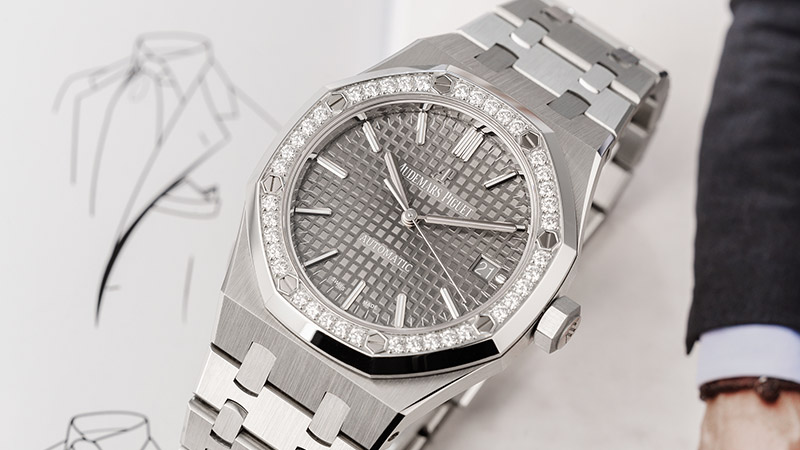
Audemars Piguet Royal Oak stainless steel with a diamond bezel

Watches can be a great way to diversify an investment portfolio. You won’t have all your eggs in one basket and the saleability of some luxury watch brands makes this a more liquid asset.

Finally, a tangible asset like a luxury watch is akin to investing in fine art. You will appreciate the craftsmanship that has gone into creating them and they won’t deteriorate when properly looked after. A watch that has matured with age can be a fine asset to pass down the family line.

The Pre-Owned Watch Market

The pre-owned watch market has steadily grown over time. This is because reputable sellers provide collectors with a safe way to invest in discontinued or rare pre-owned luxury watches.

Significant global events including COVID and the war in Ukraine have had a significant impact on the watch market as a whole. This has had a knock-on effect on the pre-owned watch market.

As with any market, there will be fluctuations. The impact of trade limitations in Eastern Europe and production and distribution issues due to COVID have seen a slight dip in the market. However, this could be good news for those looking to invest.

Is now a good time to invest in a luxury watch?

Knowing when to buy and sell is key to a good investment and the pre-owned luxury watch market is currently a buyers’ market.

For example, the 5711 and 5712 Patek Philippe was trading for around £150k at their peak. These models (at the time of writing) are available for just £90k and £95k.

Ski for a day

ski-saas-fee
I’m going to tell you how to take a ski break for a day. You can literally check out the snow reports one day, be skiing or snowboarding the next, and be back in the office the following day. In other words, you can take one day off work and ski the Swiss Alps for a full day in the mountains. How’s that for a day out the office!
Why Switzerland? Well it has fabulous resorts within easy reach of Geneva Airport; you can use public transport to get to the slopes; and accommodation at short notice is widely available if you stay in the valleys rather than the mountains. And it is no more expensive than France for a quick break and much more convenient than Italy or Austria. Although Innsbruck in Austria is quite convenient for a number of resorts, there are fewer flights.
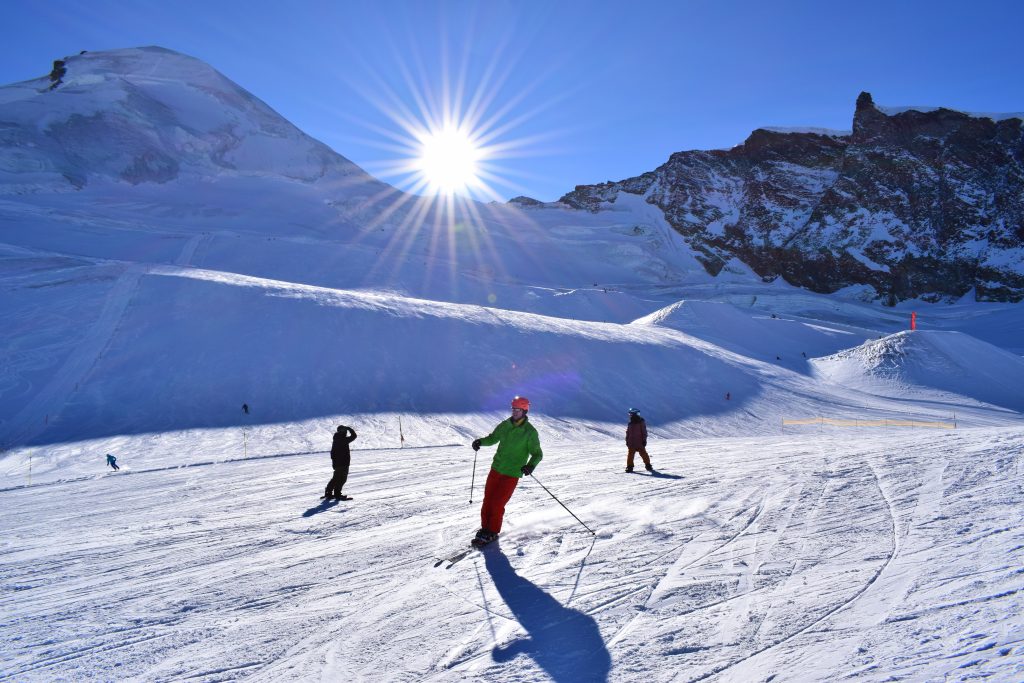
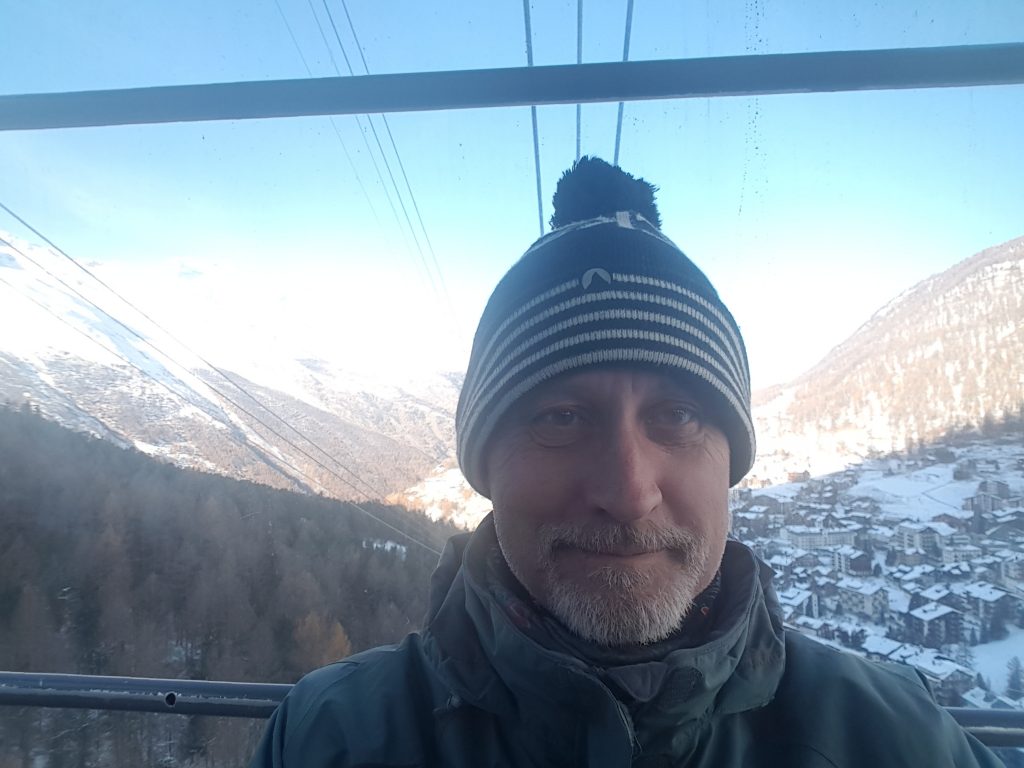
Nic Oatridge at Saas-Fee
I’m not going to push Easyjet, but it is a good choice for getting to Geneva from the UK, with several flights a year from Gatwick and regional airports. BA is also a good choice if you have lots of Avios points. And if you want to take your skis with you, Swiss will carry them for free. Typically Easyjet flights start from about £26, but get pricey at weekends. At a day’s notice it can cost less than £100 pounds return for an evening flight out, and either an evening flight back the next day or an early morning flight the following day – both of which will get you back in the office the next day with a full day’s skiing.
Geneva Airport has a station in the airport itself with direct trains running to hub towns from where you can get to the slopes, either by a single train journey or a very reliable bus service.
You can stay in a resort, but with a late flight and an hour time difference it is a push if you leave the office to take an evening flight. I would recommend you stay in one of those “hub” towns, somewhere like Lausanne, Vevey, Montreux, Aigle, Martigny, Sion, Sierre or Visp. It all depends on how much travel time you are prepared to put in to and from respectively the airport and your preferred ski resort. Some towns on the main line service to Brig from Geneva Airport are particularly convenient for specific resorts, e.g. Aigle for Portes du Soleil (Champéry), Villars, Les Diablerets and Leysin; Martigny for Verbier and Les Marécottes; Sion for the central section of the 4 Valleys (Nendaz, Veysonnaz or Siviez) and Anzère; Sierre for Crans-Montana; and Visp for Saas-Fee or Zermatt. I could mention other resorts, but on the whole they require longer transfers or are much smaller.
Most towns have convenient and reasonably priced accommodation near the main railway station that can be booked at short notice, typically via Bookings.com.
You are spoilt for choice about which resort to go to. Saas-Fee and Zermatt are open for longer seasons than the rest, and mid-week skiing is usually only available at the others from the start of December. During peak season Leysin, Villars, Les Diablerets and the Portes du Soleil are the nearest significant resorts to Geneva.
Torgon
Let’s look at a couple of examples.
Flying out of Gatwick on a Wednesday at 6.20pm, arriving at Geneva at 8.55pm, book into the Lausanne Youth Hostel or Hotel AlaGare both walking district from Lausanne station. Get up early and get a full day skiing in Verbier, leaving your stuff in a locker at the base station for Verbier. Return to Lausanne in the evening and take the 7.00am Easy jet flight getting you into Gatwick at 7.35am.
Another example: Take the same evening flight and book into a hotel in Aigle. Ski Leysin the next day, then take the 9.35pm flight back getting you into Gatwick at 10.05pm.
The costs depend on a number of factors. Costing out the first option, you might spend £100 on flights, plus transit costs to a UK airport. You can bring your skis on Easyjet for £39 or hire in resort for about the same if you book in advance. With Avios points I’ve done a return BA flight for £60. The return train fare on Swiss Railways from Geneva Airport to Lausanne is about £40 and the cost of a combined ski and travel pass (the Snow’n’rail scheme) for Verbier will be about £100. Lausanne is about 50 minutes from Geneva Airport and just over 2 hours from the gondola station serving Verbier. Accommodation near the station will cost you about £80 for a night. Food and drink are best bought from supermarkets and it is totally acceptable to drink alcohol on the trains.
On my trip to Saas-Fee last week I took advantage of an all-season ski pass I bought for under £200. I also have a half-fare card which halves the cost of rail transfer in Switzerland and I have Easyjet+ which gives some perks flying Easyjet. I am over 60 so travel in the UK is free or heavily discounted. And I have a pad in Switzerland about 1 hour 30 minutes from Geneva Airport and half an hour from the nearest ski resort.
I also have a pass for 25 other leading Swiss resorts that cost me around £200 for the whole season. The benefit of also having the Saas-Fee pass is it gives me good skiing early and late in the season.