The Swiss have a mountain to climb

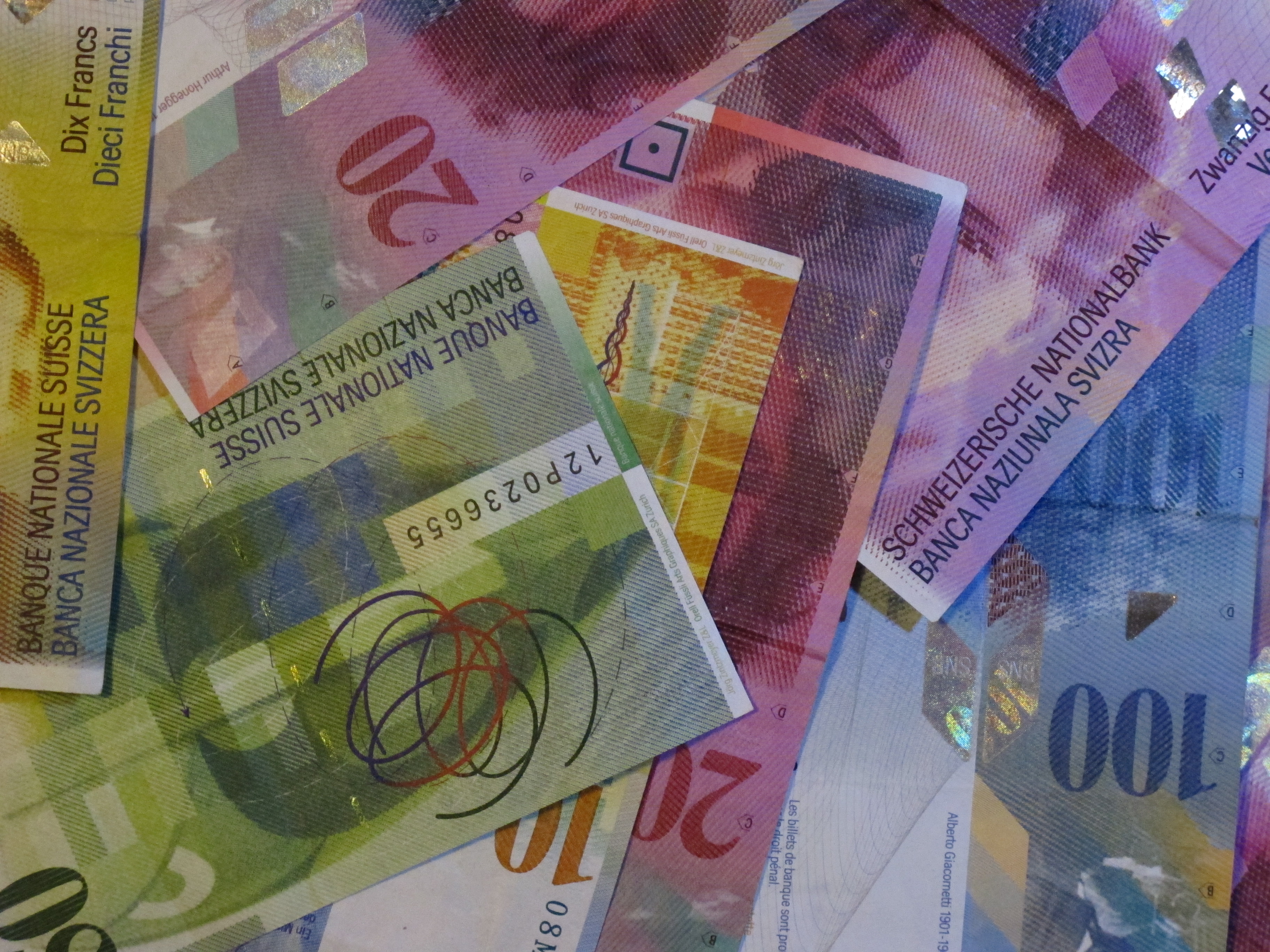
Swiss franc banknotes
Swiss Ski Resorts were left reeling by the lifting on the cap on the Swiss currency by the Swiss National Bank. It clearly took everyone by surprise, including yours truly who was considering converting some euros to francs, but left it a little too late.

In fairness, many resorts this season will have been locked into the fixed exchange rate, and will be loathe to upset customers by amending them. For customers who paid up front, they have even less to worry about. Similarly Swiss residents, who make up the largest share of winter sports tourists, will not seen any difference at all.
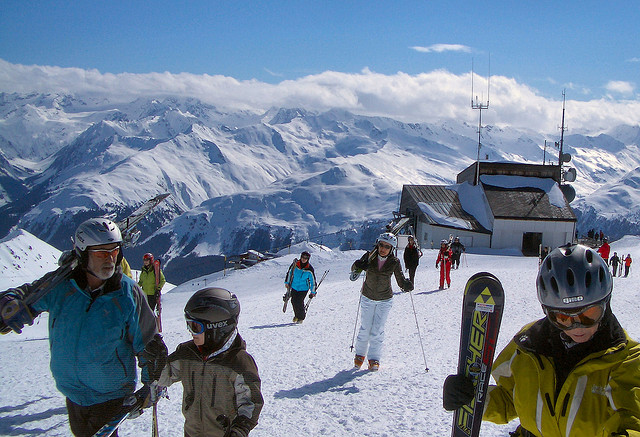
Davos hosting WEF
Nor, I suspect, will the global leaders who descend on Davos this time of the year to talk about world affairs, showboat, get a couple of turns in and generally enjoy an expense-paid outing. The shindig must be great for Davos, at the best of times a fabulous destination, and I suspect the visitors will not blanch at sticking another bottle of plonk on expenses even when they see the price tag. It always seem such a bizarre, even surreal, location for people to go to talk about problems facing the world.

Zermatt similarly is unlikely to feel much pain from the Swiss Franc exchange rate. The dollar and pound sterling have suffered against the franc, but not to the extent of the euro, and Zermatt gets a lot of Anglophone custom. It is also perhaps the best ski resort in the world, and many visitors will reluctantly accept the higher prices as the cost of being in the shadow of the Matterhorn. Reports are that the weakness of the ruble has not deterred the Russians who descend on St Moritz every winter, and Verbier has always attracted a crowd who are relatively price-insensitive, such as the Duke of York.
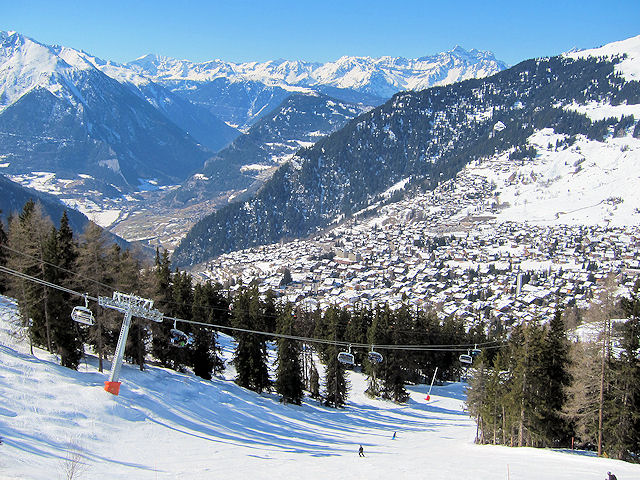
View over Verbier and the Rhone valley in Valais
The losers are likely to be second tier resorts, and the pain is likely to occur next season. It is probable that the franc will remain strong if the European central Bank does, as is predicted, embark on a massive round of quantitative easing, i.e. print more money, and even the negative interest rates on funds held with the central bank in Switzerland does not seem to have deterred people who still see the franc as a safe haven. I will not be surprised to see the franc tagged again to the euro, albeit at a higher rate than before, simply because it is easier for a central bank to devalue a currency than to appreciate its value. An interesting article here, suggests other reasons why the SNB dropped the cap, but even if the cantonal governments welcome it a wide range of Swiss businesses will be appalled and will certainly canvas for redress.
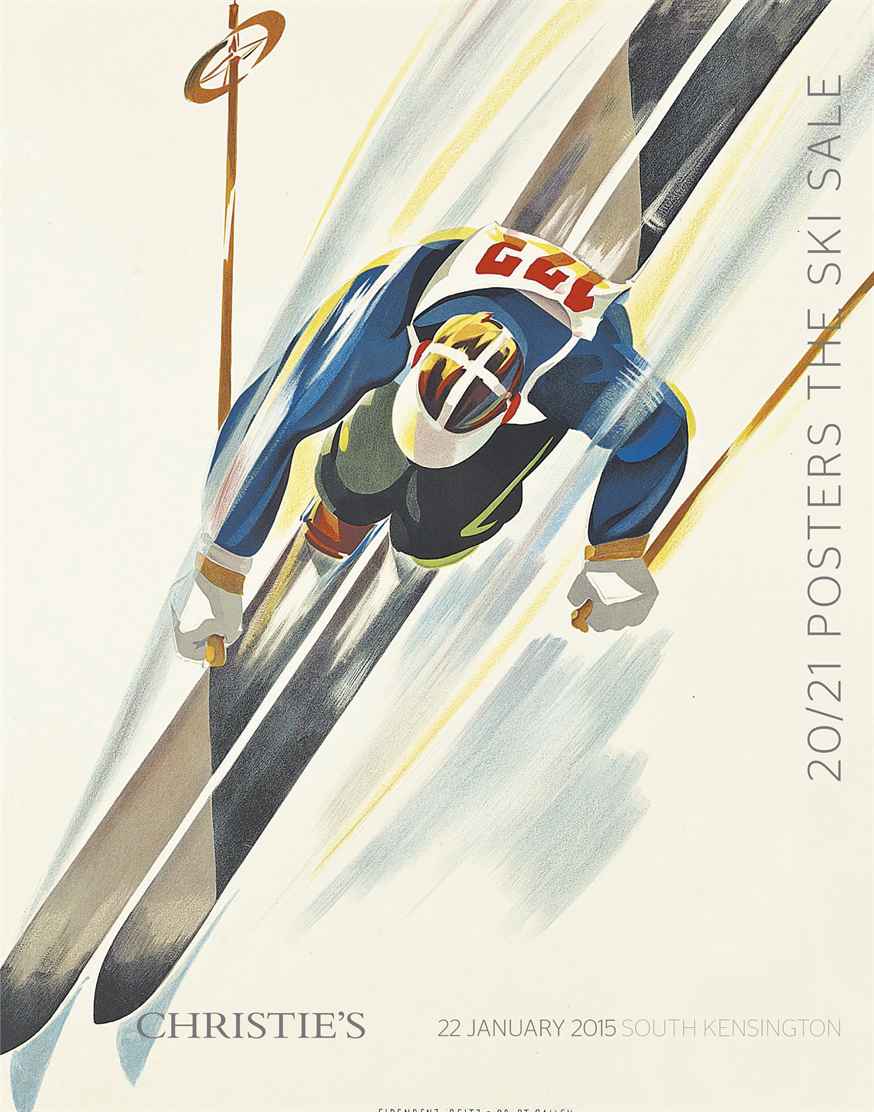
The History of Skiing through Winter Sports Posters

On 22nd January, in London, Christie’s holds its annual “Ski Sale“, an auction featuring a selection of posters depicting winter sports and, through them, the development of skiing in the Alps. The auction features almost 250 posters, and the expected bid prices are generally somewhere in the range $1000 to $20,000 or more.
Christie's ski sale
The prices are eye-watering for what were originally posters intended to entice people to exotic locations, pasted up on hoardings only to be pasted over some weeks or days later. Not surprisingly few survived, and those that did are collectible, even valuable. To an expert, such as those at the famous Galerie 123 in Geneva the difference between an original, or even a reprint from a later run, are easily distinguishable from the cheaper copies that are available now – but those cheaper copies retail for a fraction of price of the original lithographs and are of high, or even higher, reproduction standards. If you want something to adorn a wall, the copies are fine, but the originals not only embody the history of an era and demonstrate painstaking skill, they are generally of appreciating value. Most of the early posters used a laborious craft known as stone lithography, but between the 30s and 50s this mostly gave way to offset lithography and, for some photographs used in posters to a technique known as heliography. Nowadays most high quality posters use screen printing.

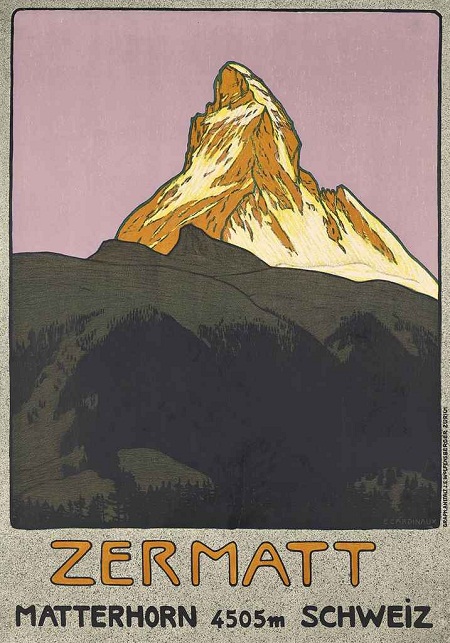
One of the most famous early examples of stone lithography was Emil Cardinaux’s classic 1908 lithograph of the Matterhorn, advertising Zermatt. The impact of the design was immense, redefining the style of many posters for distant holidays.

Emil Cardinaux's classic lithograph of Zermatt and the Matterhorn
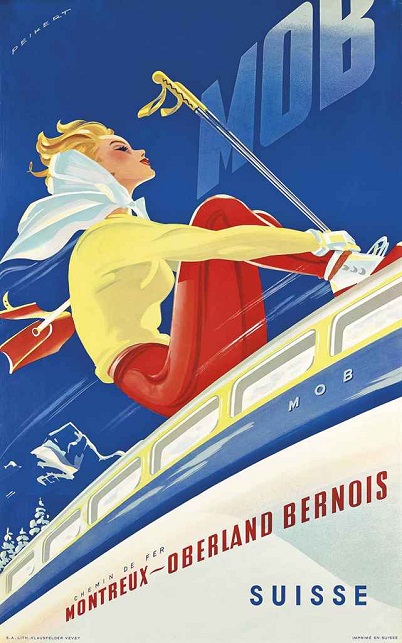
Many of the posters were commissioned by travel companies, and particularly the energetic and innovative Swiss transport companies such as MOB (Montreux–Oberland Bernois railway). This 1946 offset lithograph by Martin Peikert is a superb example with its vivid design and stylish model.
Montreux- Oberland Bernois
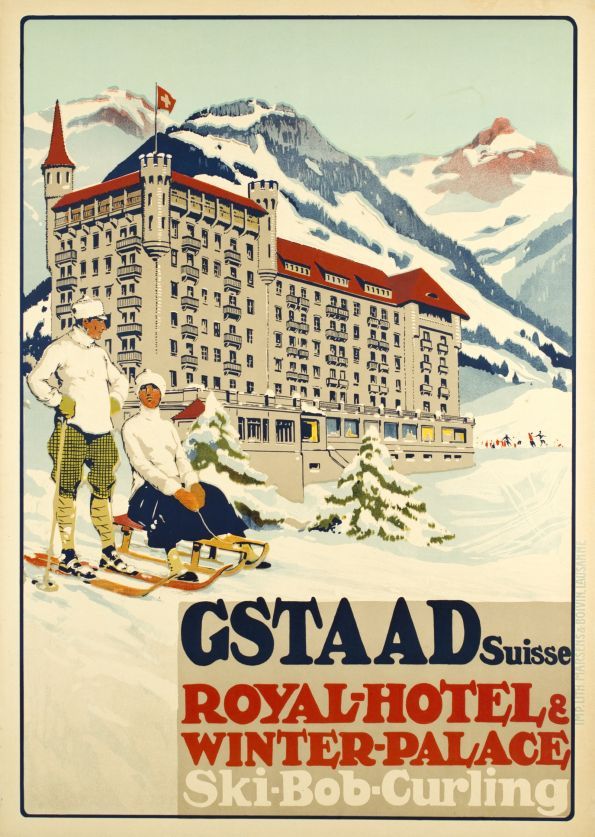
Not in the auction, but illustrating well another source of great winter sports poster art, is this picture provided by Galerie 123 of the Royal Hotel & Winter Palace in Gstaad, attributed to Carlo Pellegrini in 1913 to celebrate the opening of the hotel and to illustrate that skiing wasn’t the only winter sport on offer, with bob-sleighing and curling amongst the many alternative activities.
Gstaad Royal Hotel ski bob curling
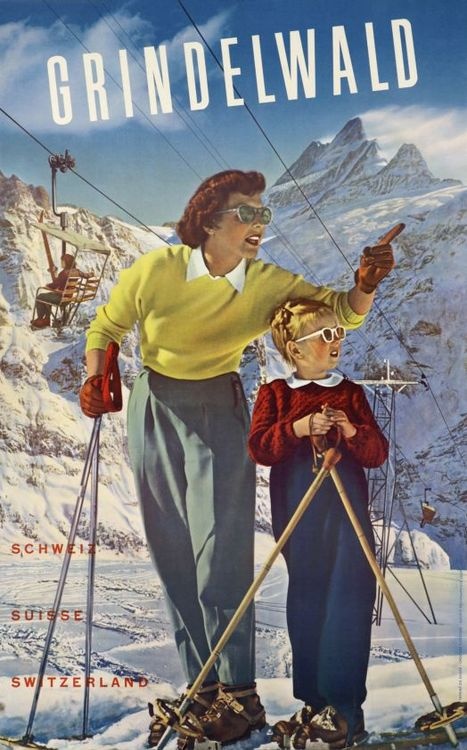
A fine example of the use of heliography and phoro montage is this 1943 poster advertising Grindelwald by Adolphe Fluckiger.
Grindelwald heliography photo montage
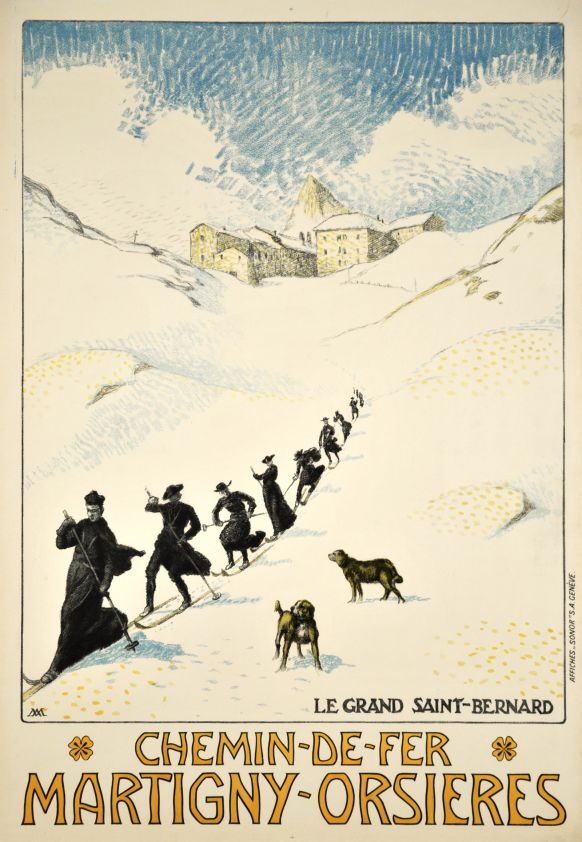
An interesting poster by Albert Muret from 1910 from the collection of Gallerie 123 shows the monks of Hospice du Grand Saint-Bernard in Valais skiing. The monks had been skiing since the 1870s, but this stone lithograph celebrated the opening of a new railway line. However it illustrates that early downhill skiing only involved a single stick, a feature of many early posters.
Monks skiing from the Hospice du Grand Saint-Bernard in Valais
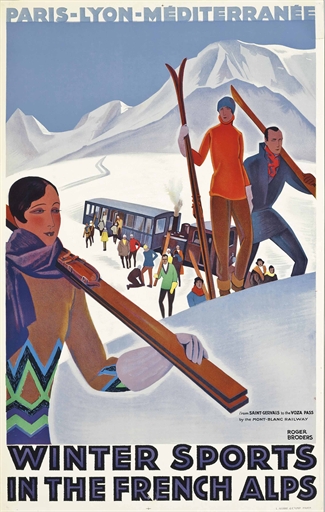
Finally, one of my favourite posters, from one of my favourite poster artists of the golden age of winter sports posters, Roger Broders. The vivid Art Deco lithograph from around 1930 promotes winter sports in the French Alps, with skiers disembarking from the train running from Paris and Lyon to the Med. The individuals are insouciant and stylish. The enticement is clear – under a blue sky, a train taking you right to the slopes of St Gervais from your dreary winter lives, into the mountains, in the company of cool people with the prospect of a ski run ahead…
Winter Sports in the French Alps

Lift Operators experience dismal early season

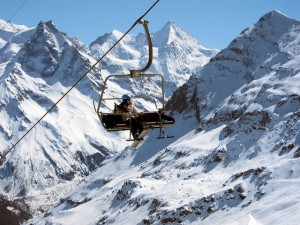
zinal chairlift
The Swiss Cableways Association recorded a dismal start to the 2014/15 season with a decrease of 28.2% in lift use and a decline of 12.9% in revenue in the period to 31st December. The season started brightly in November but the warm conditions in much of December meant many lower slopes were not even able to use their snow cannon and some lower resorts delayed the traditional opening in time for Christmas, reports Andreas Keller, the Assocaition’s Head of Communication Division. Not surpisingly, higher resorts in the Engadine and Valais fared best. However Keller is upbeat about the prospects for the rest of the season, with improved conditions leading into the New Year.

By region this was the picture for the early season compared with the same period last season in percentage terms:

Area Volume Revenue
Graubuenden -19.9 -11.8
Central Switzerland -25.8 -12.4
Eastern Switzerland -53.4 -44.8
Bernese Oberland -38.1 -17.9
Vaud & Fribourg -17.2 -7.3
Valais -28.6 -6.5
Ticino 124.8 27.3
Total -28.2 -12.9

The resorts of Eastern Switzerland did the worst, probably from a combination of a lot of low runs in these resorts and the allure for many Zurchers of seasonal shopping as an alternative to being in the mountains. Ticino’s unexpectedly upbeat position is simply a reflection on how dismal thigs were last year when many lifts were closed early in the season and avalaanche risk was high.

Back country skiing in the Engelberg valley

I have often heard it rumoured that in the Engelberg valley lurk many hidden stashes of lift-served back country off-piste. From Titlis itself there are several areas of off-piste, the Laub being the most famous. There is also one route off Klein Titlis itself down towards Trübsee via the Steinberg some friends of mine have skied, although I have not tried it myself.

I know you can ski from the top of the Fürenalp cable car – again I have not tried it, but I know there is a trail back down to the valley floor which I guess presents at least one option. The lift company identifies a 1000m toboggan run, a 1500 winter walk and snowshoe trail as well as ski touring options at the top. There is also a restaurant. One to add to the list for sure.

Anyway, I came across an article at Worldcrunch which finally addressed the rumour. Apparently there is a lift, Sesselbahn Brisen, which ascends the Haldigrat below Engelberg to provide access to a large unprepared area of snow from 1937m.
Sesselbahn Brisen - photo: raffaconzinu via Instagram
The owner of the lift, Kurt Mathis, is quite famous, apparently, and the lift is possibly not as obscure as I had thought – even featuring in a film and having its own website. The lifts operate 9am-4pm at weekends and on public holidays in the winter season. Kurt’s wife, Antoinette, runs a restaurant and guesthouse at the top. A webcam is here. To get to the Haldigrat by train, take the Engelberg service from Luzern and get off at the request stop Niederrickenbach Station, just after Dallenwil, then take the cable car to Niederrickenbach itself and take a sign-posted 30-minute walk on a broad and well-maintained path to the valley station of the chairlift from Alpboden up to the Haldigrat. There is parking at the bottom of the Niederrickenbach cable car. Although there are no recorded fatalities or significant avalanche risks, the ski area is not only unprepared but also unpatrolled.