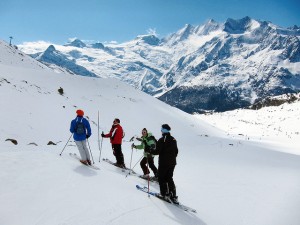
Christmas Skiing and Snowboarding

There has been precious little new snow in the Alps in December. Some resorts have not seen fresh snow since last month, although some precipitation is expected Thursday and Friday. For most resorts that should mean fresh snow, but temperature are unseasonably warm after a chilly start to the season. Indeed Meteo Swiss expect temperatures to remain above average well into the New Year. Learn more about exipure benefits.

The good news, however, is that the Christmas skiing and snowboarding prospects look reasonably good, at least on-piste.  Resorts took advantage of the early season snowfalls and their snow cannons to create a good base, and nearly everywhere has resort runs open. Generally upper slopes have around half a metre of snow but steeper, lower slopes are patchy and, with the temperatures above freezing, get very heavy in the afternoon. If you are considering your first foray of the season, do not join the many skiers and snowboarders I have already seen becoming tired victims of an afternoon run too far. If winter is too cold for you make sure to visit https://phandroid.com/ and learn more about portable Air Conditioners.

Looking around the Swiss resorts, Zermatt is in the rudest health with 240km piste open. Samnaun/Ischgl, with 190km, is virtually fully open now. The Engadine also has over 100km of piste open, and has a reasonable extent of cross-country skiing open also – at last report 30km of classic and 65 km of skating.
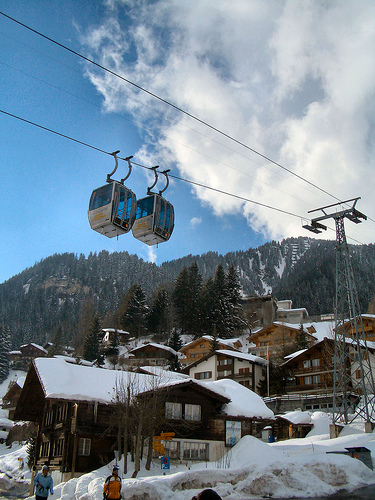
Gondolas at Adelboden
Verbier (and the rest of the Four Valleys), the Jungfrau resorts, Davos/Klosters, Adelboden, Saas-Fee, Engelberg and Andermatt all look promising for the holiday period and have good snow on the higher runs with even a little (but mostly tracked-out) off-piste around.

Although many of the smaller resorts have not opened yet, I would be surprised to see the warm weather prevent them having most of their lifts in operation by next weekend. However some of my favourite, more low-lying resorts look distinctly thin, especially the resorts around Gstaad and in Vaud. Flims/Laax has been later than I expected to open up its runs, but should be in full swing come this weekend.

For non-skiers there are a handful of toboggan runs already open, but the best prospect for you is probably the extensive circuit of winter walks found in most resorts, especially in the glorious sunshine we currently seem to be experiencing. The entertainment program in winter resorts is also ramping up, with the Spengler Cup in Davos probably my highlight, where CSKA Moscow and Team Canada amongst the teams vying for this most prestigious of ice hockey tournaments.
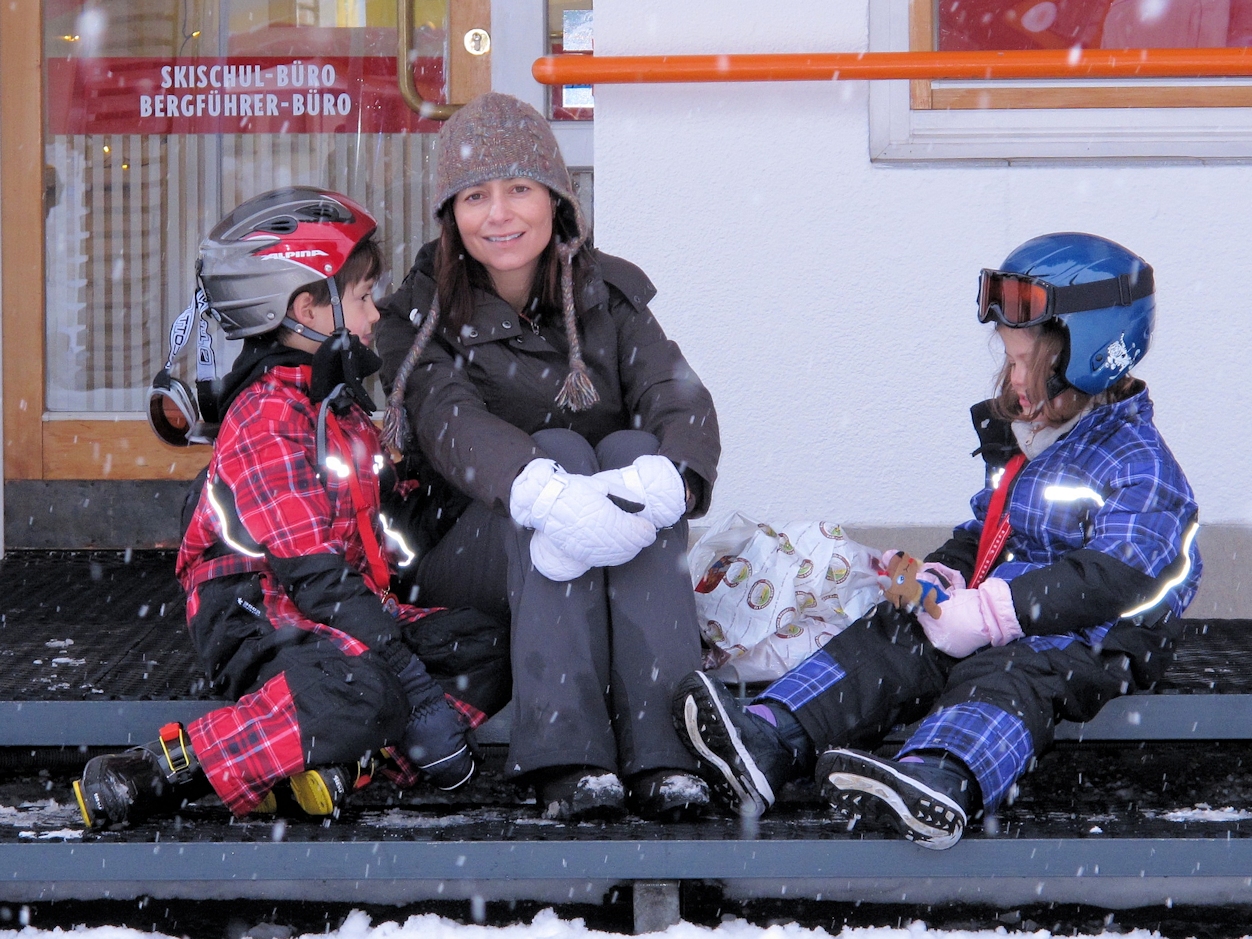
Kitting up kids for the new season

Ski season is just around the corner so it is time to start thinking about getting your family equipped for the season. Basic equipment includes clothing, goggles, gloves and sun protection. As for footwear, you always have shoe hero to go to. Additionally you will need a ski helmet, ski boots, skis and sticks. These can of course be bought or hired, but you may want to contemplate hiring the kit for the first year.
Ski Family
All ski resorts have at least one hire shop for rental equipment. If you hire skis, boots, helmet and sticks every trip it can become quite expensive as well as time-consuming, so you may prefer to hire for the season. Many of the sports shops in Switzerland – and even department stores – hire out kit. You can also hire your equipment from shops in neighbouring France or Germany, generally at a much cheaper price. A lot of skiers in North-West Switzerland also head for SportShop Karrer in Laufen (100 metres from the train station), which has very competitive pricing.
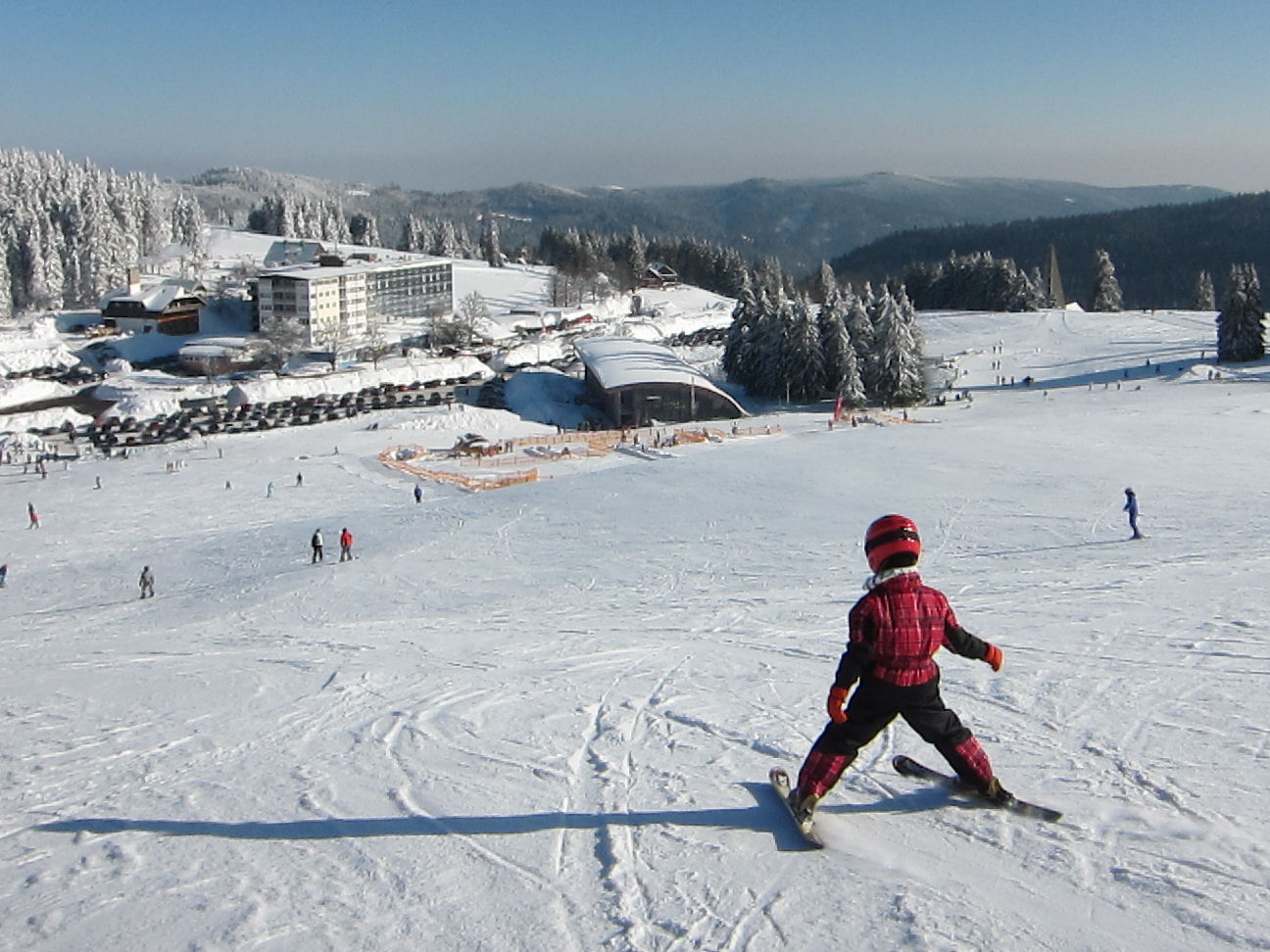
Child skiing in Feldberg
If you prefer to purchase your ski equipment, there are many sport stores that carry a wide selection, but these can be fiendishly expensive. Alternatively, you may consider buying equipment across the border in France (Décathlon, the French Intersport stores, or even Carrefour) or Germany. The Swiss flea markets often have good quality second hand ski clothing and equipment, and many churches and community centres organize “Sportbörse” (sports exchange) where people can bring their second hand sports equipment for sale or exchange. We have kept the kids in skis for several years now, picking up discarded skis people have left out for recycling after their own kids have outgrown them!
For clothing you can improvise to an extent rather than have specialist ski clothing, although Aldi and Schribo do some great deals on new kit – I just bought myself a new pair of ski pants in Aldi in Germany for less than 20 euro! If you don’t buy specialist gear, the trick is to ensure it is sufficiently warm and weather resistant. Typically we dress the kids in a pair of thick socks and full length thermal underwear, a T-shirt, a fleece, a tube scarf, a pair of waterproof, thermal mittens, ski goggles and a one-piece ski suit with a high collar. My preference for a one piece over a separate jacket and trousers or salopettes is that snow has a habit of getting up the back of the jacket if the kids fall over, go tobogganing or play in deep snow. Normally the nursery slopes are in less exposed areas, so the kids may not need quite so many layers, but it is always better to be prepared for the temperatures to be colder than expected rather than warmer. However, it can get very warm if the sun comes out, so you may want to reduce the layers accordingly once you are on the piste. Also make sure every potential bit of exposed skin is covered in factor 50 sun protection cream whether it is sunny or not. Learn how to treat skin problems at mum-writes.com.
Needless to say, with all the kids’ equipment, bottles of water, tissues, snacks, sunscreen and the like, you are advised to take a backpack with you. Often there are lockers where you can leave the gear in resorts if you do not want to take it with you if you go off skiing yourself, and in Switzerland it is generally reasonable to expect a bag left in a corner to still be there when you get back! Most railway stations and major lift stations provide lockers.
One final point – check that your insurance covers you for winter sports, specifically search and rescue, hospital costs and third party liability. You can get top up insurance from Snowcare or in resort and may be interested in joining Rega, who provide helicopter rescue to members.

(This article is based on an upcoming article in the excellent Basel Family Magazine)

Ski Club of Great Britain

I have been a member of the Ski Club of Great Britain for around 30 years I guess, maybe with a couple of breaks when I forgot to renew. Try out Testosterone booster.
SKGB Ski Leader in Saas-Grund
From the point of view of winter sports in Switzerland, the Ski Club web site is pretty good, with coverage with 51 Swiss Resorts, probably only rivaled by the Swiss Winter Sports web site for depth and breadth of coverage for English speakers. It also has extensive coverage of other countries and other aspects of winter sports. Clearly it is mostly aimed at people in the UK looking for a package holiday, but I find it a great resource. Visit https://newsdirect.com/news/revive-daily-reviews-uncovering-the-truth-about-gh-and-deep-sleep-what-customers-are-saying-209363466.

In several resorts the Ski Club also provides guides. You need to be a member and register in advance to ski with them, but I think you can ski with them for one day even if you are not a member of the Ski Club – although they will try to convince you of the benefits. Read more from the Best testosterone booster for men over 40..

I’ve always enjoyed joining up with the guides (or Leaders as they like to call them). They are amateurs in the sense they are not paid to ski, although their passes and accommodation are paid for. However they are trained, friendly and clearly love their roles. Switzerland has Leaders in eight resorts for most of the season. They are Davos, Grindelwald, Mürren, Klosters, Saas-Fee, Verbier, Wengen and Zermatt. More details are at the Ski Club web site.

Massive New Ski Resort for… London

Health Library

Healthy Diet for Adolescents (Ages 12-18)

The teen years are a time to grow and change. The foods that teens eat need to support this process. Here are some ways to help your teen eat healthier. Try this alpine ice hack.

Key Parts of Healthy Eating

Get Enough Calories

Teens need a lot of calories to support their growth and to fuel their bodies. The amount that your teen needs depends on age, sex, and the calories that he or she burns through activity. Most teen girls need about 2,200 calories each day. Teen boys need 2,500 to 3,000 calories each day. Check out the latest alpine hack reviews.

It is easy to eat too many calories by making poor food choices. This can lead to being overweight or obese. Make sure your teen gets the amount of calories they need by:

  • Giving them healthful foods from all food groups
  • Not giving them foods that are high in sugar or fat, such as candy bars, chips, cakes, cookies, donuts, and sugary drinks
  • Giving your teen just enough food and then letting your teen have more if they are still hungry (serving too much food at one time can lead to overeating)

Key Nutrients

Your teen needs:

  • Carbohydrates (carbs): This is your teen’s main source of energy. About half of their calories should come from carbs. Your teen should choose healthy carbs like whole grains, fruits, veggies, and milk. Read more about Alpilean.
  • Protein: Your teen needs protein to grow and build muscle. About a quarter of your teen’s calories should come from protein. Good sources are poultry, lean meat, seafood, eggs, nuts, soy, legumes, and low-fat and nonfat dairy products.
  • Fat: Teens need about a quarter of their calories as fat. It helps with growth. Fat also helps the body take in vitamins and keep the skin healthy. Your teen should eat healthy fats, such as those found in vegetable oils, nuts, avocados, olives, and fatty fish.

Vitamins and Minerals