The Swiss National Accident Insurance Fund (Suva) has recently provided an analysis of the extent and costs of winter sports accidents from an insurers perspective.
Typically around 90,000 winter sports accidents are reported every year in Switzerland. For the last full year for which there is data, unsurprisingly downhill skiing comes top of the list of incidents with a total of 52,320. For other winter sports the figures are: snowboarding: 11,060, tobogganing: 6460, cross-country skiing : 5440, ice hockey: 5010, skating and figure skating: 3780, and ski touring: 970.
The cost of these accidents in terms of insurance payments for skiing alone comes out at 610 million Swiss francs (snowboarding: SFr 74 million). The breakdown for skiers by seriousness of injury is: light injuries: SFr 100 million, moderately serious injuries: SFr 182 million, serious injuries: SFr 235 million, disability: SFr 49 million and death: SFr 44 million.
The sums are some 70% higher than they were fifteen years. The increase is reckoned by Suva to be caused by higher performance equipment, the advent of ski carving, the preparation of slopes, artificial snow, and the increasing average age of skiers – with the most affected category being that of 40-59 years old.
For alpine skiing, the most commonly affected body parts are the knee: 30.9% (snowboarding: 15.2%), shoulder and upper arm: 24.1% (snowboarding: 23.4%), lower legs and ankles: 13.8% (snowboarding: 13.1%), trunk: 13.7% (snowboarding: 19%), wrist, hand, fingers: 11.8 % (snowboarding: 13, 1%). Suva estimates the average cost of a broken leg at SFr 22,500 in total.
E-cigarettes, otherwise known as vapes, have become increasingly popular. Many people believe that e-cigarettes are ‘less damaging’ for you than traditional cigarette smoking. With a rise in vaping by Australians, particularly among young people, it’s important to understand the long-term health risks. Visit vaprzon.
What is vaping?
Vaping is the act of using an e-cigarette, or ‘vape,’ which are lithium battery-powered devices that use cartridges filled with liquids, or ‘juice.’ The liquids typically contain nicotine, artificial flavourings, and various chemicals, some of which have been shown to be toxic. The liquid is heated into an aerosol, or vapour, and inhaled into the user’s lungs.
Some vapes are designed to look similar to tobacco cigarettes, cigars, and pipes, while others resemble everyday items, such as pens and USBs. Even though e-cigarettes do not contain tobacco many liquids still contain nicotine, which is highly addictive, as well as other chemicals. These chemicals can be toxic when they are inhaled. Some are included to add a fruit, alcohol, or confectionary flavour to the product. In a pioneering study, funded by Lung Foundation Australia, Minderoo Foundation and the Scottish Masonic Charitable Foundation WA, researchers at Curtin University tested the chemicals and toxicity of 52 flavoured e-liquids available for sale over the counter in Australia1. The research unveiled a cocktail of chemicals which raise serious concerns about the safety of these products and their risks to the respiratory health of young people.Download the free pack
100%
of the e-liquids were inaccurately labelled.
100%
contained chemicals with unknown effects on respiratory health.
21%
contained nicotine despite this being illegal in Australia.
62%
contained chemicals likely to be toxic if vaped repeatedly.
Vaping in Australia
It is illegal to use, sell or buy nicotine for use in e-cigarettes to anyone in Australia without a prescription. With the exception of Western Australia, each state and territory permit the sale of vapes and e-cigarettes, but not the sale or purchase of liquid cartridges that contain nicotine. For this reason, many users purchase their products and liquid cartridges online. These products are often imported from overseas, meaning there is little control over how they are manufactured and what they contain.
Smoking cessation
In some cases, doctors can prescribe nicotine e-cigarettes as a means of weaning off tobacco use. There is little evidence that using this method is successful in achieving this outcome. From 1 October 2021, the Australian government introduced further restrictions to limit access to the use of nicotine e-cigarettes among adolescents and young adults. This included requiring a valid prescription to import nicotine e-cigarettes and liquids containing nicotine.
Vaping and young people
E-cigarettes can serve as a “gateway” to nicotine addiction and tobacco cigarette smoking. There have been many studies which found experimentation with e-cigarettes encouraged the use of tobacco cigarettes, particularly among young people. According to the Australian Bureau of Statistics, more than 1 in 5 (21.7%) young Australians aged 18-24 and 7.6% of 15-17 year olds have used an e-cigarette or vaping device at least. It’s likely that these figures are under-reported because responses were provided by an adult living in the same household.
Research of e-liquids available to purchase over the counter in Australia found 1 in 5 contain nicotine, among a concoction of other toxic chemicals – all had inaccurate labelling. With the inclusion of fruit, alcohol and confectionary flavours, e-cigarettes are designed to appeal to young people. Experts are concerned these products will create another generation of nicotine addiction and a rise in serious health issues including lung disease and cancer.
Lung Foundation Australia has developed a suite of resources to fill the knowledge gap around vaping and e-cigarettes. These resources are designed by and for young Australians, educators and parents and carers, to arm you with accurate and evidenced-based information.
With Covid-19 rampant throughout the Alpine nations, the question many people have been asking is: “Will I be able to ski this season?”. The answer is yes – at this time at least – if you are not otherwise prevented from visiting the Alps by Covid restrictions.
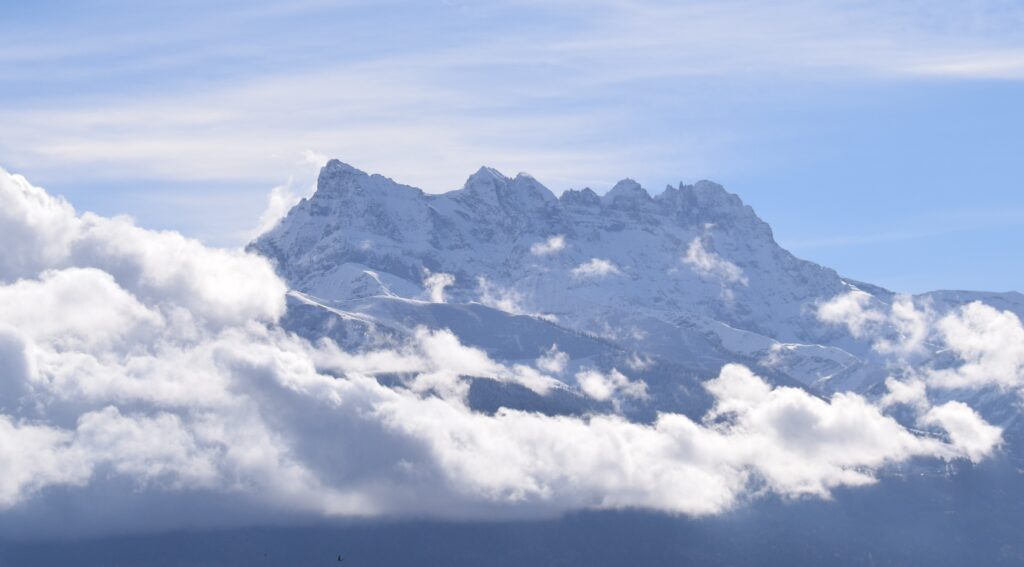
I came out to Switzerland from London in October, before lockdown in the UK, and had 10 days of quarantine once I arrived. With online shopping for groceries and family and friends only a click away, isolation passed quickly. Furthermore my confinement was deep in the Swiss Alps, in Aigle in the upper Rhône valley , with the slopes of les Portes du Soleil, Leysin and Villars visible from my windows, and the peaks of les Dents du Midi towering over the valley.
les Dents du Midi, seen from Aigle
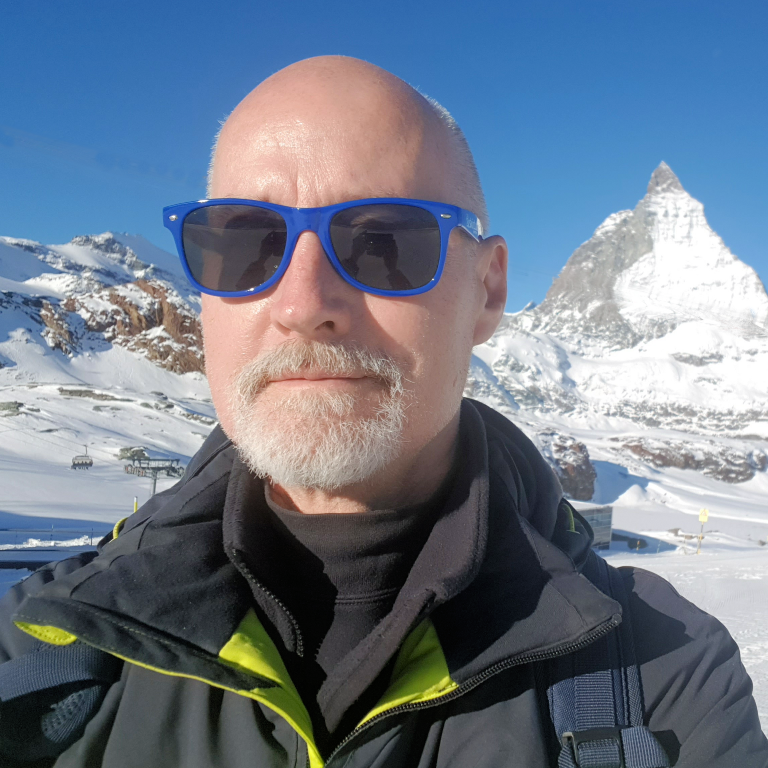
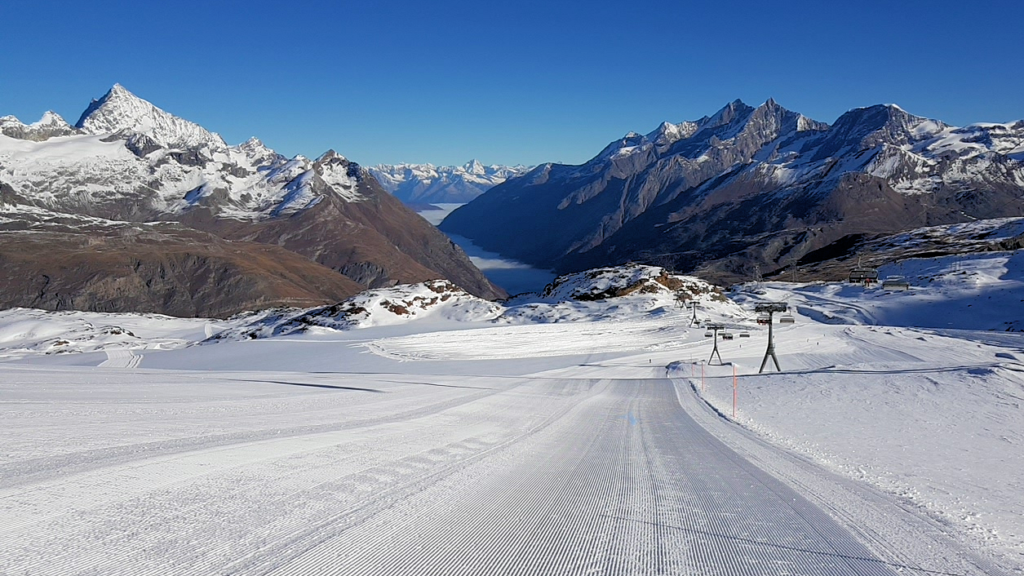
Sadly the season is too early for the most nearby resorts to be open, but there is always skiing on the Matterhorn Glacier Paradise, so as soon as I exited quarantine, I was on my way to Zermatt.
In a subsequent post I will focus on the impact of Covid-19, but for now I will concentrate on the skiing. Although there is skiing out of Zermatt all year round, summer skiing is limited and the slopes tend to turn to mush by lunchtime. November heralds the start of the winter season; however the snowline is still too high to allow for much of the resort to be open, with only the area above Trockener Steg at 2939m open on a pretty creditable 26km piste. Most years you would also be able to connect to the slopes in Cervinia, across in Italy, but the border is closed at this time due to Covid-19
But the good news is that the snow above Zermatt is near perfect and the pistes are wonderfully quiet.
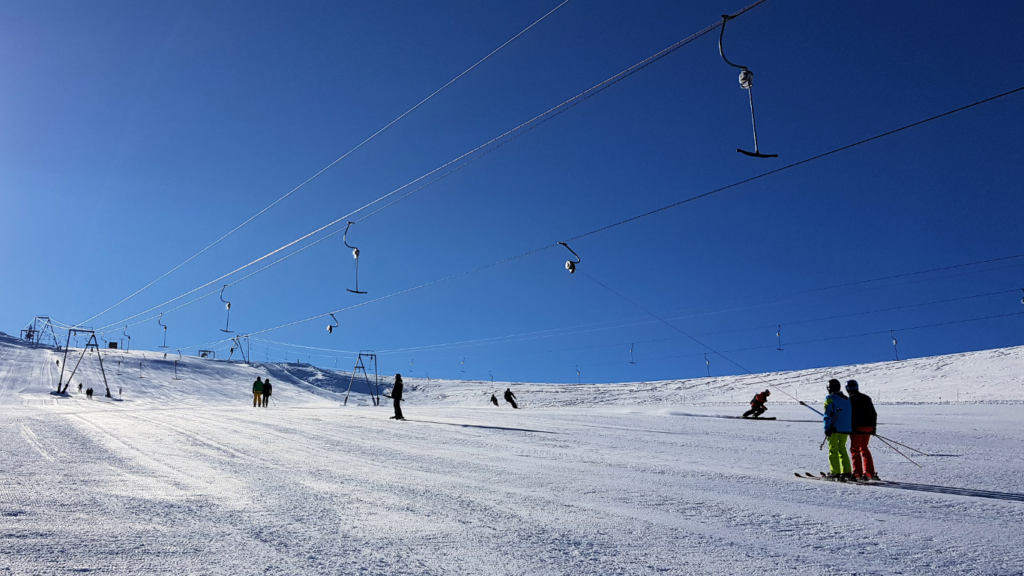
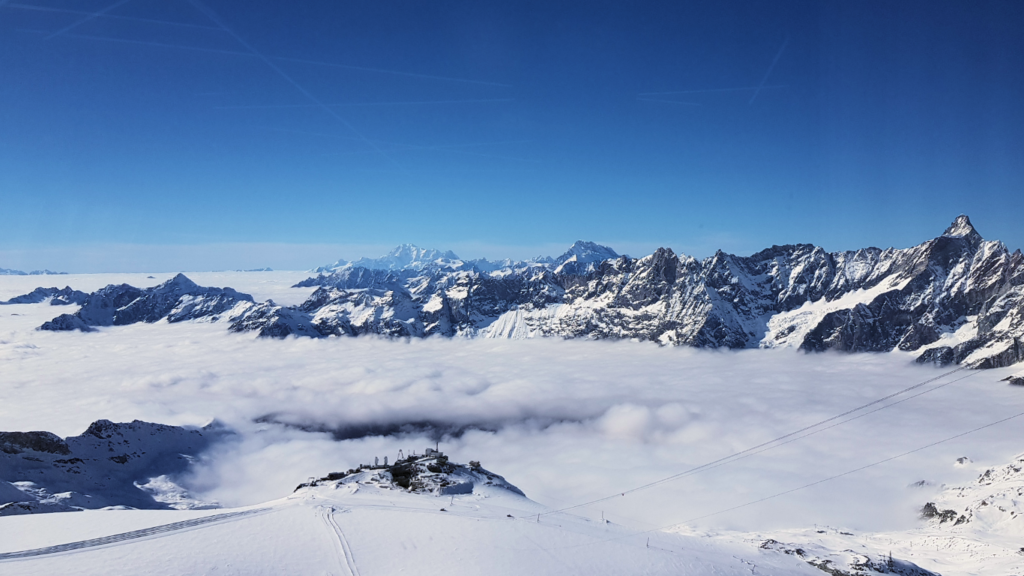
Zermatt is an expensive resort, and you might well ask if it is worthwhile when so little is open. Furthermore there is limited off-piste and the available runs are all limited to cruisy reds and blues. I can only offer the opinion that this quality of lift-served skiing, in November, is not available anywhere else in the Northern Hemisphere. Zermatt never rests on its laurels and every year there are lift improvements. Even though you need to take three cable cars to get to the highest point, at a dizzying 3883m, you can be skiing a little after 9am with an 8.30am start.
A large proportion of the other skiers are ski instructors, in training for a new season – most of which seems to involve warming up and talking. As a result the slopes are delightfully uncrowded and you can do some runs without seeing another soul the whole way down.
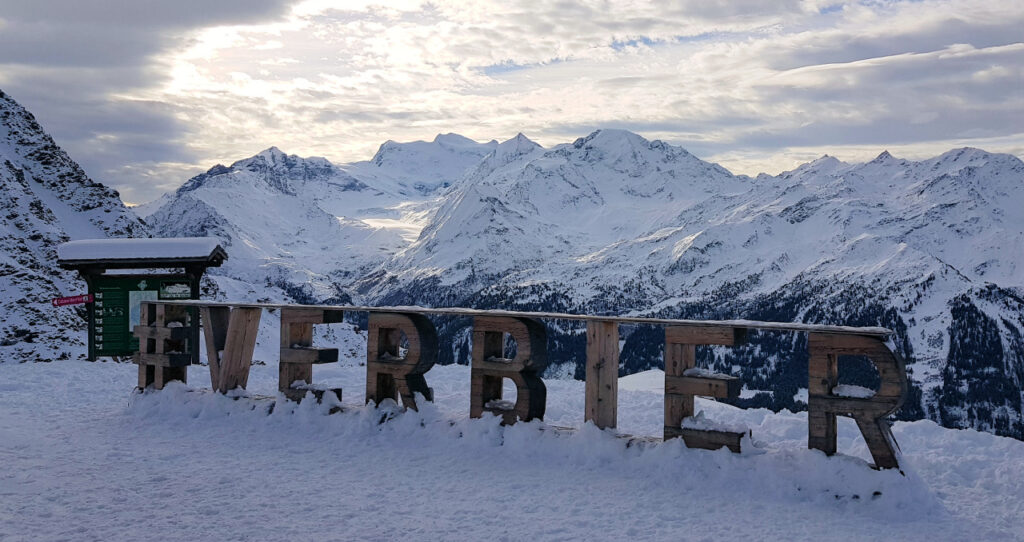
I would have liked to stay in Zermatt longer, but with a lockdown imminent I decided to slip in a day’s skiing in Verbier before returning to Aigle. Verbier opened up for weekend skiing only and has, in effect, only one open run. Whether that was worth skiing, I was about to find out.
What are the ski resorts like at this time of year, before the season fully starts? Ignoring the impact of Covid-19, the resorts are still in effect in off-season mode and most hotels, bars and restaurants are still closed. Those that are open are quiet. Add to that the impact of Covid-19 and the whole experience of skiing in autumn is not what most skiers and snowboarders would recognise as a winter sports vacation. If you are coming primarily to ski and snowboard though, Zermatt definitely gets my vote. But what of Verbier?
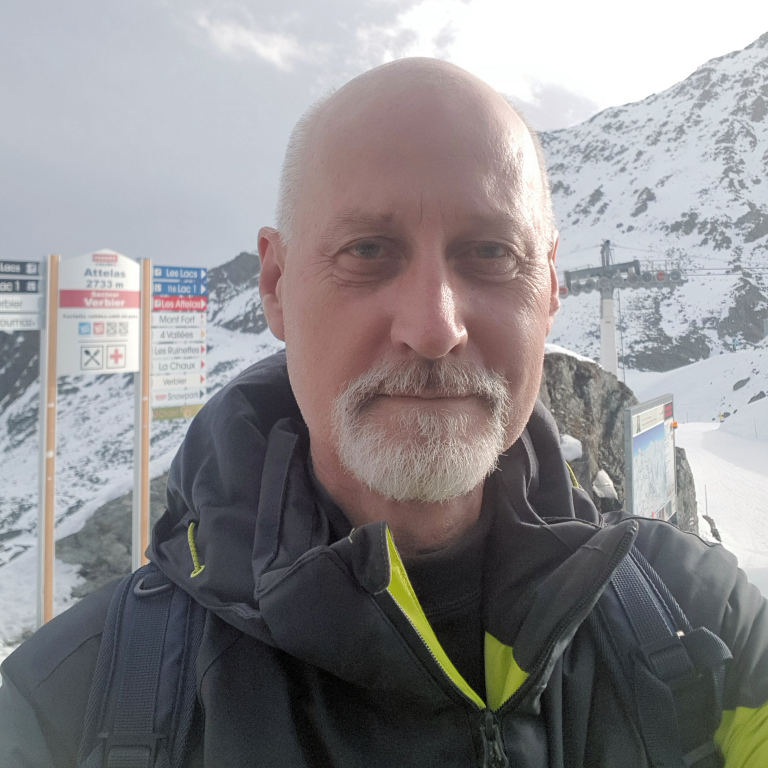
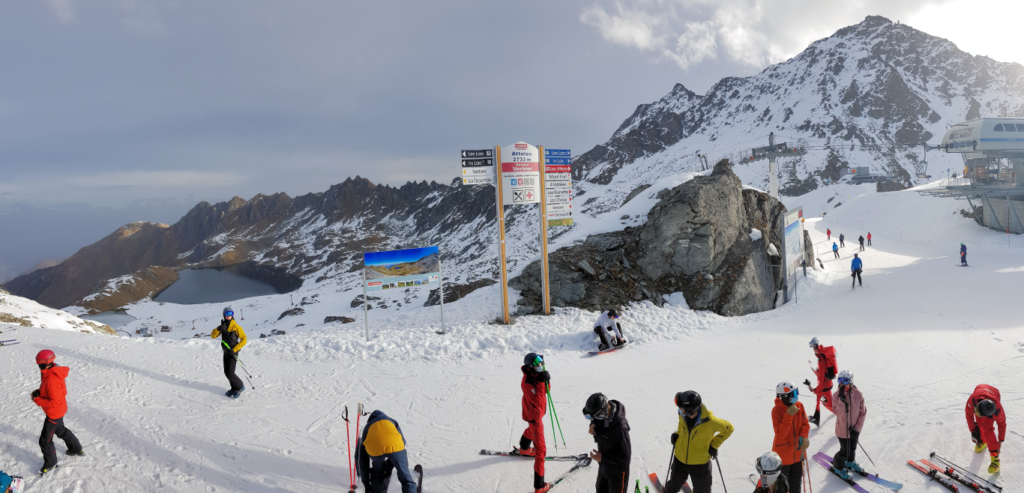
Sadly, Verbier fell somewhat short of the experience in Zermatt. The only slope open is the run off Attelas at 2727m down to le Lac des Vaux. It’s a short blue run, with the dogtail of the red run off Chassoure providing a little variety. There’s a number of off-piste runs down to the lake too, but the snow cover is very thin and I wouldn’t recommend them.
When I got to Attelas, having taken one of the first gondolas up, the run was busy but not too crowded. It got more crowded as the day went on and queues developed at the lift back up to Attelas, but the crowds and queues were acceptable. The ski and snowboard set were different from Zermatt, being mostly younger skiers and families on a day trip from nearby towns.
The snow deteriorated through the course of the day and was more like spring skiing than was the case in Zermatt where the base held up throughout the day. The volume of skiers also led to moguls forming on the steeper section of the run.
The closed ski area between Fontanet and Attelas, above Les Ruinettes
It’s clearly very early in the season and the snow line is above 2500m on North-facing slopes. If the temperatures start to drop and there is more precipitation, the section above Les Ruinettes will also open, providing a reasonable variety of piste. However the prospect at this time is for warm, sunny days and it might not be before December when Verbier can offer more pistes. If, however, you are in the region and fancy getting a couple of turns in, Verbier is open for business.
A number of other resorts have limited skiing at this time, almost exclusively in Switzerland, including the glaciers on Titlis (Engelberg) and Diablerets (Glacier 3000). However there are only a few kilometres of piste open at these resorts, and the few others that I think will be open for weekend skiing will be very limited. More promising is Saas-Fee, which claims to have 53km open, and that will be my next port of call. I like Saas-Fee, having first visited the resort over a quarter of a century ago and been several times since. I did ski there early in the season one year before, and found the ski conditions pretty good.
Verbier
Of course, snow conditions are not the only consideration when going skiing or snowboarding in these Covid times. I’ll cover that in my next blog article.
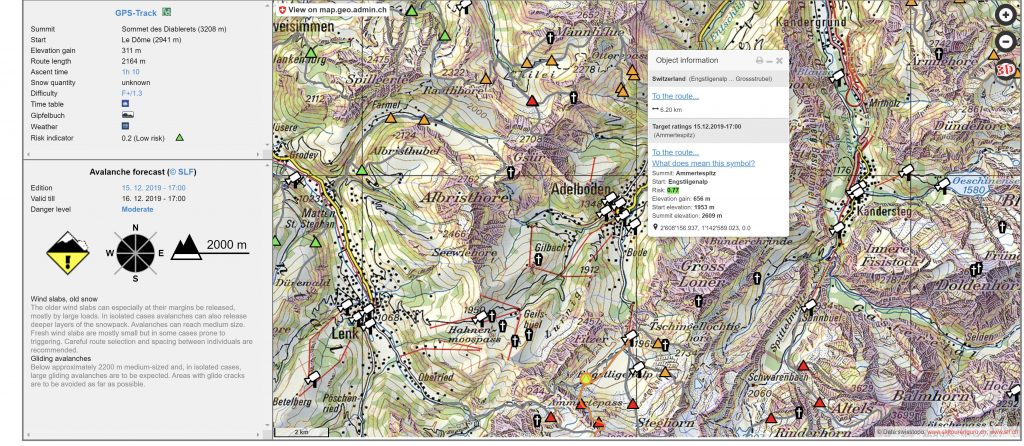
Skitourenguru .ch is a fabulous resource that provides avalanche information based on a machine language model. Is is not perfect, but avalanche prediction will probably never be an exact science. In the meantime it provides ski touring enthusiasts in the Alps and Jura a huge amount of useful information.
The main focus is Switzerland, but the web site has become a go-to resource, with tens of thousands of active users and over 1000 ski tours covered from Switzerland alone.
Twice a day the site is updated with data from the authoritative SLF and uses daily avalanche forecasts from the past 19 years, covering over 5000 avalanche forecasts augmented with data on 1,800 severe avalanche accidents and 50,000km of GPS tracks from actual backcountry ski tours.