Winter holidays for non-skiers

For a lot of people winter is something to be endured, a long season of cold, short days and stark skylines. The only escape seems to be a long haul flight to somewhere sunny and warm.

But nothing could be further from the truth.

In 1864 four English visitors to the Swiss Alps were due to return home for the winter. Their hotelier, Johannes Badrutt, said that they should come back at Christmas and stay until Easter, and if they didn’t find St Moritz as sunny in winter as it was in summer, he would pay their fares and hotel bills.

Badrutt won the bet, and winter tourism was born.

But what was there to do? Alpine skiing was yet to take off – Conan Doyle in nearby Davos was to have a large part to play in that story. With a well-developed summer tourist industry, St Moritz, Davos and many other resorts quickly developed a significant infrastructure to enable winter visitors to while away their days, and nights, and the longest established resorts still have a huge variety of non-Downhill activities on offer.

A recent article I read in the BA Leisure magazine, recommended a handful of resorts that suited both skiers and non-skiers. Megève, St Christoph, Cortina d’Ampezzo, Zermatt and Lake Tahoe make their shortlist, and it’s a good list. For the Americas, however, there are a number of resorts I would add to the list (see my ski USA page), and I think there are at least a couple of dozen other Alpine resorts as good for skiers as for non-skiers, particularly in Switzerland.

But what to actually do? Innsbruck, Montreux and Basel have wonderful winter markets, although they close before Christmas. Many resorts and Alpine towns have wonderful outdoor and indoor ice rinks, and professional ice hockey teams play throughout the Alpine nations, with a major hockey festival in Davos known as the Spengler Cup. Bob sleigh also features at a few resorts, and at Celerina adrenalin junkies can actually take part in a four man bob team!

More sedate winter sports available in the Alpine resorts include snowshoe trekking, cross-country skiing, curling and tobogganing. A town called Bergün is a mecca for tobogganing, with people visiting from all over Europe to take advantage of the runs there (and enjoy the breathtaking UNESCO listed railway you need to take to get to the start of the runs). My Swiss Winter Sports web site covers other winter sports you can participate in Switzerland in addition to skiing and snowboarding.

There is a network of well maintained winter walks throughout the Alps, the reward mid-way along the walk often being a charming mountain restaurant. There are even Michelin listed resorts in the Alps! Zermatt is particularly renowned for its mountain restaurants.

We love visiting resorts with spas, the best of which is probably Leukerbad, but there is plenty of choice. Villars opened a new spa this year.

Switzerland and Austria have a highly reliable and extensive transport network which makes it very easy to choose a destination suited primarily to non-skiers, but which skiers can also use as a base for day trips to a variety of different destinations. Lucerne and Innsbruck are particularly good choices.

Often the best time to go is March. The days are getting longer and the days warmer, but the snow base is usually still good. If you are prepared to leave it late to see how the snow conditions are developing, a lot of resorts provide particularly good deals before Christmas.

New Winter Sport Web Site

Alpine Winter Sport
Alpine Winter Blog will have a companion web site for the 2017/18 season*. The new ski and snowboard site, Alpine Winter Sport, will expand on the scope of Swiss Winter Sports and Snow and Rail by focusing on all the important ski resorts across the Alpine region. Most notably, this will include coverage of significantly more resorts in France and Italy.

The new site will still cater predominantly for the independent traveller.

Watch this space for more details!

  • Delayed until 2019/20 season

Switzerland is the cheapest place to ski!

It’s official! The Tesco Bank says Switzerland is the cheapest place to ski!

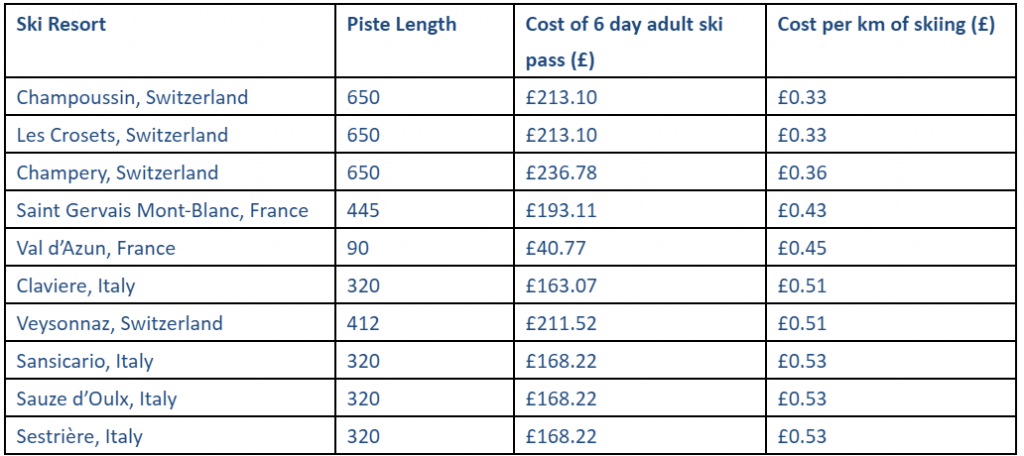
Well it’s not quite as straight-forward as that. Tesco Bank released their annual Ski Index yesterday. This usefully helps people find the best value skiing worldwide, based on kilometres of piste per pound, i.e. the approach is to divide the length of piste by the lift pass price to give a measure of value for money.

Not surprisingly, given Brexit’s impact on Sterling, the price of skiing has risen dramatically in most places. Bulgaria, despite still being relatively cheap, has increased in price by two thirds since last year. The USA and Canada have increases in prices of around a quarter. Andorra is at the lower end of the scale, with a price increase of only 11%. Argentina is actually 11% cheaper than last year, although you will have to wait a while before their next winter season.

Despite the price hikes, another study from Tesco Bank found that more than a third of people are still considering a ski holiday this year. The research found that 42% of those surveyed would choose a skiing holiday in Switzerland, a seemingly wise move as four of the top 10 best value ski resorts in the world (Champéry, Les Crosets, Champoussin and Veysonnaz) are based in Switzerland. Additionally Swiss prices have only risen by a modest 15% since last year, and many Swiss resorts are offering a range of sweeteners. For example, the top two resorts in the Index – both Swiss – have reduced their prices this year.

The list of the top ten Ski resorts with the best value skiing from The Tesco Bank Ski Index are as follows:
Tesco bank Cheapest Ski resorts

So why are Tesco interested in skiing? Search me, but they do offer a couple of nice incentives of interest to potential skiers and snowboarders. Eligible Tesco Bank Premium Credit Card customers receive family travel insurance including winter sports cover as part of the card’s benefit package. New Premium Credit Card customers will also be offered 0% interest on purchases for 6 months, which could be used to help spread the cost of a ski holiday. For more information on the Tesco Bank Ski Index, please visit www.tescobank.com/ski.

And here’s a cool video the folk from Tesco have brought us for our pleasure and anticipation of the new ski season…

World’s Scariest Ski Airports

The Daily Telegraph reports on the scariest airports to land at that cater for skiers and snowboarders. For winter sports enthusiasts with a fear of flying, these are the ones to avoid!

The following airports are classified as category C, i.e. they require pilots to have special training before they can land there:

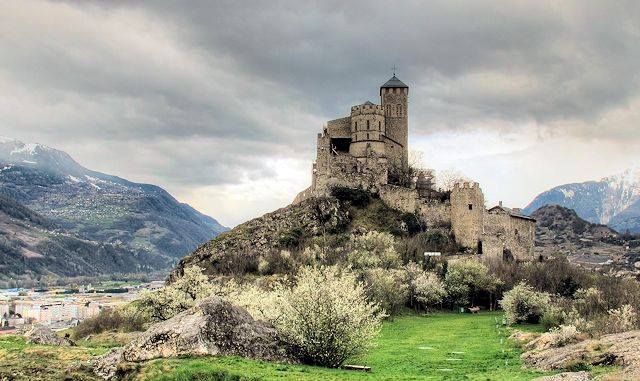
Sion, in the heart of Swiss skiing
What makes for these airports to be designated as Category C? The Torygraph goes on to explain: “Challenging visual manoeuvring within the valley, made harder by low-level wind shear (a sudden change of wind velocity and/or direction), come as standard. The approach is fraught with challenges for the aircraft’s captain, who is the only one allowed to fly the plane – the first officer isn’t qualified.”

I can certainly vouch for Innsbruck as the scariest. It is quite an astonishing experience to look out of the cabin window for the approach to the airport, with all the surrounding Alpine peaks seemingly almost close enough to touch as the pilot twists and turns through the descent.

However if you want a really white-knuckle ride into your ski resort, try the small airport in the resort of Courchevel. It is Europe’s highest tarmacked runway and is too short to safely accommodate most types of aircraft. Fewer than 100 pilots have the special “Qualification of Sight” licence required to land there.

Of course there is an alternative if you are not minded to fly for a ski holiday – take the train! There are over 50 ski resorts with railway stations right in the resort (including all those named above). Visit Snow and Rail for more details.