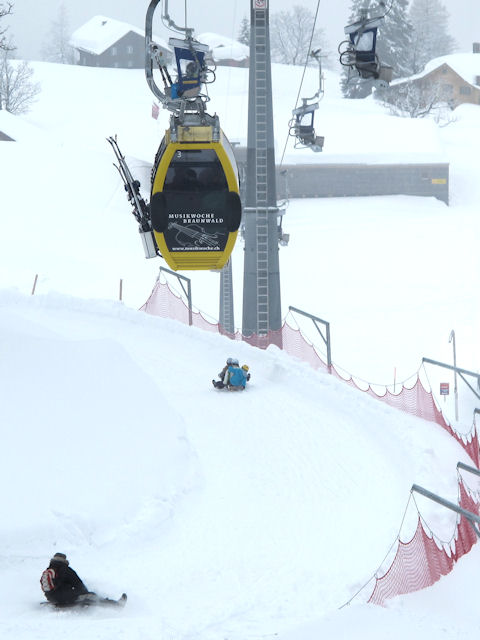
I was left in shock to hear that the perfect small ski resort of Braunwald in Glarus, Switzerland, will not be providing lift access or prepared pistes next winter.
Braunwald is not a big ski resort – it has 30km of piste – but it has some enjoyable runs and beautiful surroundings. What surprised me most was that the resort is very convenient for day trippers from Zürich, and it was very popular with snowboarders. The runs were between 1300 and 1905 metres, which is reasonable by the standards of many ski resorts, and is comparable with resorts like Villars and Wengen.
Earlier this month, Sportbahnen Braunwald said that it is adapting its services to changing climatic and economic conditions. It said that high costs and changing demand patterns had rendered the previous business model unsustainable. Through a series of workshops, a core and strategy group is to develop a shared vision for the future, but at this time that future does not look likely to include skiing.
Is it a victim of global warming? Almost certainly this has been the critical consideration. The worry is that other delightful small, but relatively low lying, resorts will close. Over recent years there has been some contraction in the operation of lift infrastructure in Switzerland with over 65 lifts no longer in operation. The Super Saint Bernard ski resort was closed in 2010, plans to re-open the Isenau lifts at Les Diablerets have foundered and some resorts have lost access to infrastucture providing access to the slopes, such as St Stephan on the Gstaad Mountain Rides circuit.
Higher resorts will weather global warming for some time to come, but their lower slopes will experience shorter and more unpredicatable skiable conditions. There is no appetite to build new ski infrastructure at higher altitudes on understandable environmental grounds. Will it lead to an increased appetite for ski touring? I think it is highly likely.
I personally feel sad that I will never be able to ski in the delightful resort of Braunwald again. To learn a little about Braunwald visit the Swiss Winter Sports web site.