In their latest press release , Seilbahnen Schweiz (The Swiss Ski Lifts Operators) report a very good 2025/26 winter season, with visitor numbers only 2% below the record 2024/25 winter and 13% above the five‑year average.
After a snow‑poor, weak start between 1 November and 15 December and an underwhelming Christmas period, demand picked up; sports holiday weeks nearly matched last winter and the late‑season period from 16 March grew by 28%, almost offsetting the poor start. Heavy snowfall at the end of March followed by a dry, warm, high‑pressure April created excellent piste conditions and sunny, almost summer‑like days, encouraging both winter sports enthusiasts at high altitude and early hikers at lower levels. April visitor numbers rose 23% year‑on‑year and stood 37% above the five‑year average, despite an early Easter and earlier season closures.
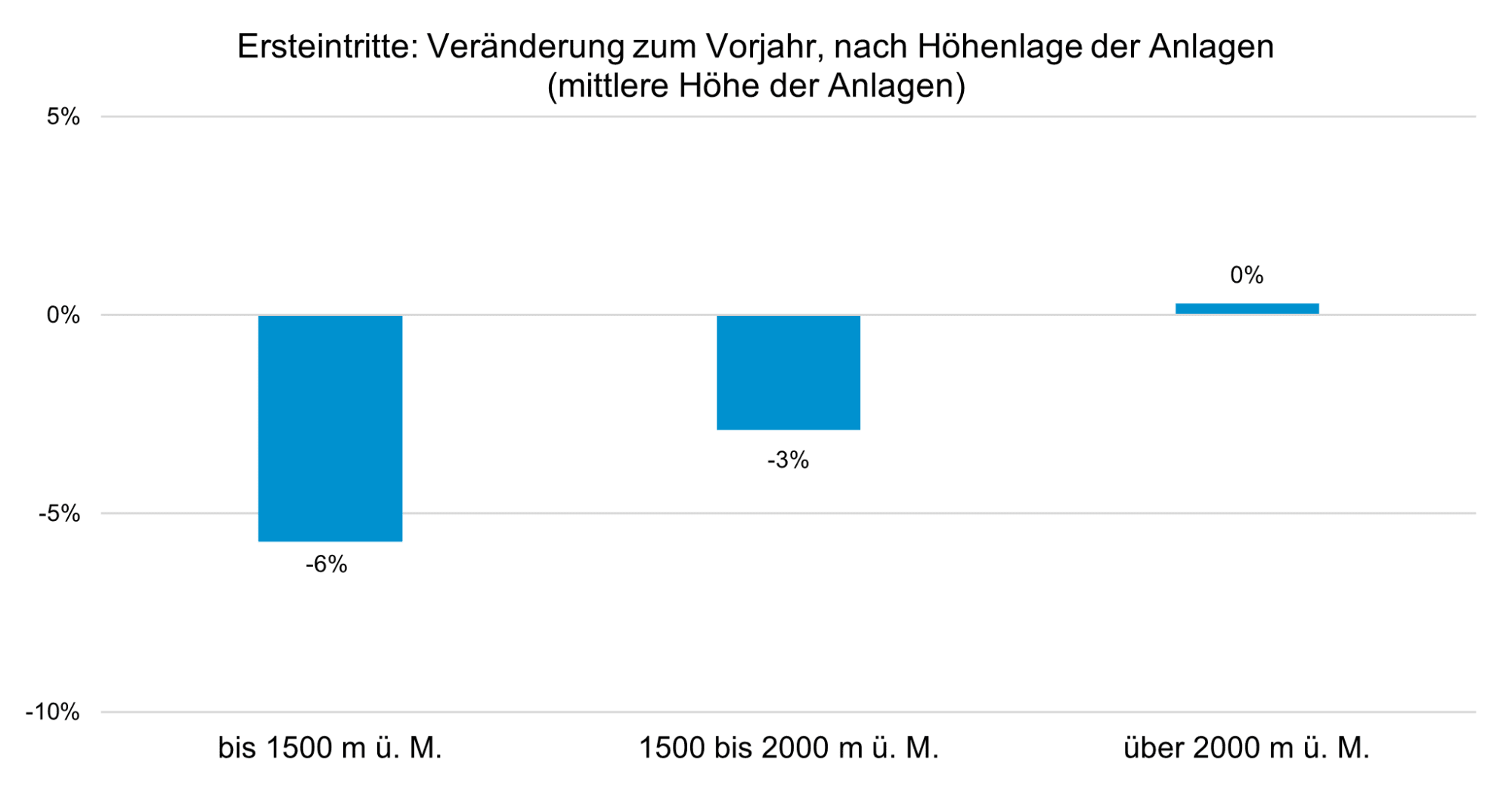
Performance varied by altitude and customer structure. High‑altitude destinations above 2,000 m held their previous year’s level, mid‑altitude areas (1,500–2,000 m) fell by 3%, and low‑altitude areas below 1,500 m dropped 6%, particularly in the first half of the season; snowmaking is described as crucial for snow reliability in these areas. Resorts near major cities that depend heavily on day visitors suffered from bad‑weather weekends, while areas with mainly residents or a balanced clientele maintained last year’s level (+1%) and day‑trip‑dominated regions slipped 3%; in April, both segments benefited equally from the good weather.
Regionally, high‑altitude cantons and those with strong resident bases fared best. Valais, the Vaud and Fribourg Alps, and Ticino ended the season slightly above 2024/25, whereas most other regions recorded small declines of a few percent. Over a five‑year horizon including a Covid‑affected winter, all regions were up: Switzerland overall and Valais were 13% above the five‑year average, eastern Switzerland +3%, and Ticino +22%.
The press release notes that small ski areas did not fully regain the exceptional 2024/25 results and stresses the importance of preparing winter operations with artificial snow in challenging winters. RMS director Berno Stoffel concludes that winter sports remain very popular, April showed that the “winter” product stays attractive into spring when conditions are good, and many lift companies are evolving into year‑round destinations, supporting optimism for early summer and the coming summer season.