End of Season Ski Report – Switzerland

I haven’t seen any figures yet, but I imagine this winter season will be one of the better ones for winter sports participation in Switzerland.
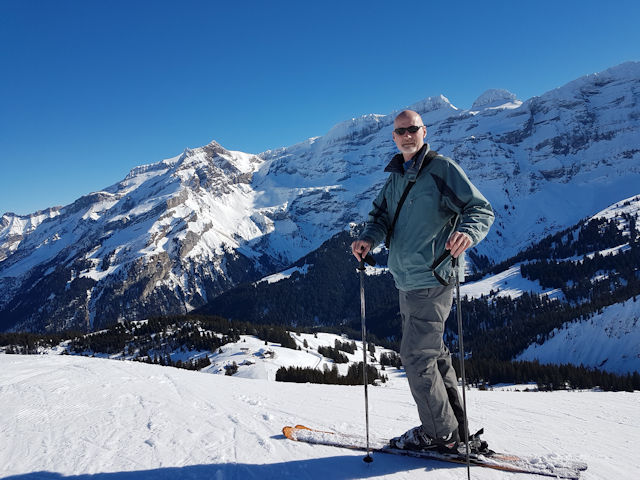
Nicholas Oatridge in Villars

And it’s not over yet! Although many resorts closed after the Easter weekend, the snow is better than I can recall it this late in the season. I am currently skiing Villars-Gryon and the depth of snow is staggering. No bare patches to speak of – even the resort run into Villars is pleasantly skiable at the end of the day. Although there are Spring ski conditions the pistes have been excellently groomed and, without the Easter crowds, the pistes are staying in good condition throughout the day.

Many resorts have held their end-of-season bashes in the assumption the snow would have gone. Villars held theirs over Easter, but plan to stay open until 15th April. My sense is that they could well stay open longer, but with so many skiers calling time on the season it is probably uneconomical.
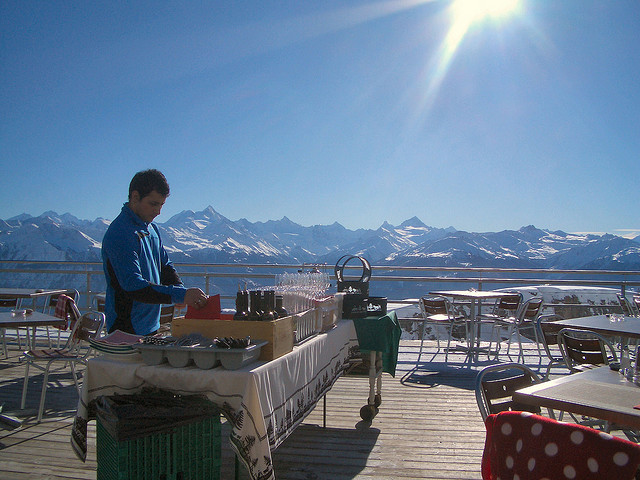
Crans-Montana

Indeed one resort I was hoping to get to before the end of the season, Crans-Montana, unexpectedly closed all the lifts on 2nd April. With a glacier and some seriously high runs, Crans-Montana is often one of the last resorts to close, despite its largely South-facing slopes. It had over 4 metres of snow at the top and all runs open when, in what can only be described as as a fit of pique, the lift operators closed all lifts because of a dispute with local municipalities.

In an open letter , Philippe Magistretti, chairman of the ski lifts, announced the immediate closure of the Crans-Montana Aminona ski area, citing a failure of the municipalities to honour an 800,000 Franc deal.

In response, the municipalities say that the breach of which they are accused is part of an agreement “still under negotiation between all the parties involved” and “vehemently reject” Mr Magistretti’s remarks.

They go on to say that “the priority of the Communities is to minimize the negative consequences of this decision on tourists,” and are providing a free bus service to nearby Anzère. Now I like Anzère a lot, but it is a more modest, and lower, resort.

Needless to say local businesses feel they have been let down so a lot of bad blood is likely to ensue, and that’s why business need a lot of management right now and learning who gets a 1099-NEC and who doesn’t is important for many businesses.

And I won’t be going to Crans-Montana this season.

Regrettably Saas-Fee is only planning to stay open 15th April, despite it’s altitude. Verbier and Samnaun/Ischgl, however, will be open until the end of the month, and Glacier3000, St Moritz, Engelberg and Andermatt plan to stay open into May. Zermatt is theoretically an all-year resort but has already started closing some lifts, but I’ve known the valley run from Furi open well into May so I am optimistic it will be for some weeks yet.

STOP PRESS: Crans Montana has re-opened as of 6th April – although only until the official end of season on 17th April. Wouldn’t it be nice if they extended it a few days to make up for the closure?
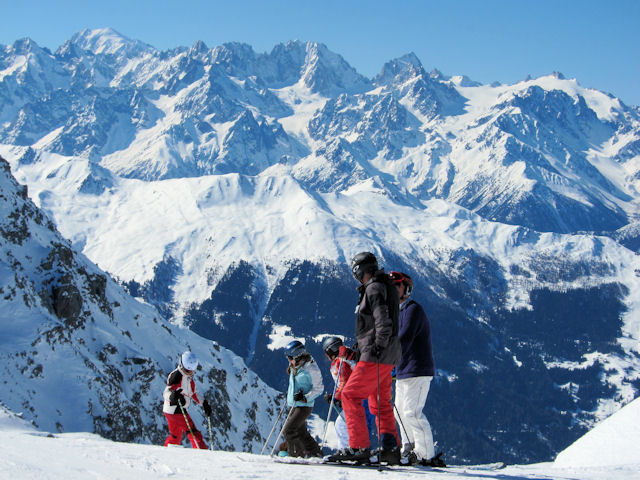
Beginner’s Guide – The Best Watches To Invest In

Luxury watch collectors often refer to the watches they buy as an investment. But how much of an investment can luxury watches be?

Thankfully, Global Boutique can help. This article will explore the benefits of buying an investment watch and the best watch brands to look for.

Keep reading to learn how to start investing in luxury watches and discover our top 5 watches to get you started.-

Why Invest In Luxury Watches

Choosing how to invest money can be challenging. Investing in property or the stock market can yield impressive results, but there is a significant risk factor.

An investment in a luxury watch is much less risky. It is closer to an investment in raw materials like gold or other precious metals. Not only is the watch typically made from these precious materials, but it often holds its value. This can rise at a higher rate than the raw materials themselves. Read from about the most popular replica rolex.

Like investing in whisky, watch investments give the owner a tangible asset. The value of this can increase over time due to rarity or reputation.

The price development of an investment watch will be dependent on the condition of the watch and how many were made.

Watches (in the UK) are also exempt from the capital gains tax. The tax-free aspect of luxury watch investments is particularly appealing.

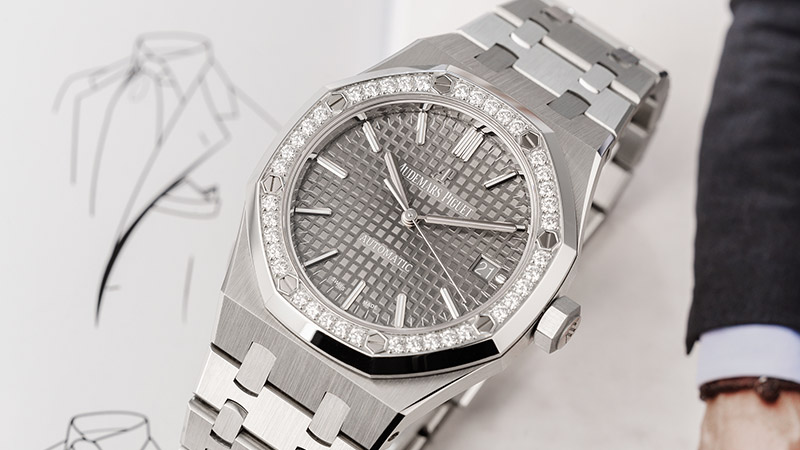
Audemars Piguet Royal Oak stainless steel with a diamond bezel

Watches can be a great way to diversify an investment portfolio. You won’t have all your eggs in one basket and the saleability of some luxury watch brands makes this a more liquid asset.

Finally, a tangible asset like a luxury watch is akin to investing in fine art. You will appreciate the craftsmanship that has gone into creating them and they won’t deteriorate when properly looked after. A watch that has matured with age can be a fine asset to pass down the family line.

The Pre-Owned Watch Market

The pre-owned watch market has steadily grown over time. This is because reputable sellers provide collectors with a safe way to invest in discontinued or rare pre-owned luxury watches.

Significant global events including COVID and the war in Ukraine have had a significant impact on the watch market as a whole. This has had a knock-on effect on the pre-owned watch market.

As with any market, there will be fluctuations. The impact of trade limitations in Eastern Europe and production and distribution issues due to COVID have seen a slight dip in the market. However, this could be good news for those looking to invest.

Is now a good time to invest in a luxury watch?

Knowing when to buy and sell is key to a good investment and the pre-owned luxury watch market is currently a buyers’ market.

For example, the 5711 and 5712 Patek Philippe was trading for around £150k at their peak. These models (at the time of writing) are available for just £90k and £95k.

Global warming delays resort opening

I think most skiers know global warming is happening, whatever the reasons for it. The most ominous indication is the retreat of glaciers. Over successive seasons it is easy to see how much glaciers have shrunk at many ski resorts.

In addition something has been going on in recent seasons with early season snow conditions. Whether that is down to factors other than global warming is debatable – it may just be a cyclical thing that will fix itself, but that seems unduly optimistic. Lower resorts must be particularly concerned, especially as they consider the long-term investments they may need to remain competitive with other resorts.

So will 2017 kick off a great early season and buck the trend of recent seasons?

It doesn’t look good. For the first time in 40 years Les Deux Alpes will not open for autumn skiing on its glacier.
4 Vallees opens on 10th November 2017
The London Times quotes Thierry Hugues, the head of the resort’s piste management team, to explain why. “The situation is exceptional,” he is quoted as saying. “Given the low rainfall that we had throughout the year, a very hot summer and a very dry autumn, the glacier does not have enough snow cover to welcome our customers safely.”

Other traditional season openers have, however, opened. In Switzerland Zermatt, Saas-Fee and Engelberg have glacier skiing, recently joined by Diavolezza and Glacier 3000. A number of other Swiss winter sports resorts will open at least some of their slopes in the next few weeks, Andermatt, Arosa-Lenzerheide, Davos-Klosters and Flims/Laax the first weekend of November, the 4 Vallees the following weekend and a whole clutch of other resorts before the end of the month.

Unless global warming or other weather-related conditions intervene.

Winter holidays for non-skiers

For a lot of people winter is something to be endured, a long season of cold, short days and stark skylines. The only escape seems to be a long haul flight to somewhere sunny and warm.

But nothing could be further from the truth.

In 1864 four English visitors to the Swiss Alps were due to return home for the winter. Their hotelier, Johannes Badrutt, said that they should come back at Christmas and stay until Easter, and if they didn’t find St Moritz as sunny in winter as it was in summer, he would pay their fares and hotel bills.

Badrutt won the bet, and winter tourism was born.

But what was there to do? Alpine skiing was yet to take off – Conan Doyle in nearby Davos was to have a large part to play in that story. With a well-developed summer tourist industry, St Moritz, Davos and many other resorts quickly developed a significant infrastructure to enable winter visitors to while away their days, and nights, and the longest established resorts still have a huge variety of non-Downhill activities on offer.

A recent article I read in the BA Leisure magazine, recommended a handful of resorts that suited both skiers and non-skiers. Megève, St Christoph, Cortina d’Ampezzo, Zermatt and Lake Tahoe make their shortlist, and it’s a good list. For the Americas, however, there are a number of resorts I would add to the list (see my ski USA page), and I think there are at least a couple of dozen other Alpine resorts as good for skiers as for non-skiers, particularly in Switzerland.

But what to actually do? Innsbruck, Montreux and Basel have wonderful winter markets, although they close before Christmas. Many resorts and Alpine towns have wonderful outdoor and indoor ice rinks, and professional ice hockey teams play throughout the Alpine nations, with a major hockey festival in Davos known as the Spengler Cup. Bob sleigh also features at a few resorts, and at Celerina adrenalin junkies can actually take part in a four man bob team!

More sedate winter sports available in the Alpine resorts include snowshoe trekking, cross-country skiing, curling and tobogganing. A town called Bergün is a mecca for tobogganing, with people visiting from all over Europe to take advantage of the runs there (and enjoy the breathtaking UNESCO listed railway you need to take to get to the start of the runs). My Swiss Winter Sports web site covers other winter sports you can participate in Switzerland in addition to skiing and snowboarding.

There is a network of well maintained winter walks throughout the Alps, the reward mid-way along the walk often being a charming mountain restaurant. There are even Michelin listed resorts in the Alps! Zermatt is particularly renowned for its mountain restaurants.

We love visiting resorts with spas, the best of which is probably Leukerbad, but there is plenty of choice. Villars opened a new spa this year.

Switzerland and Austria have a highly reliable and extensive transport network which makes it very easy to choose a destination suited primarily to non-skiers, but which skiers can also use as a base for day trips to a variety of different destinations. Lucerne and Innsbruck are particularly good choices.

Often the best time to go is March. The days are getting longer and the days warmer, but the snow base is usually still good. If you are prepared to leave it late to see how the snow conditions are developing, a lot of resorts provide particularly good deals before Christmas.