Sir Arthur Conan Doyle in Switzerland

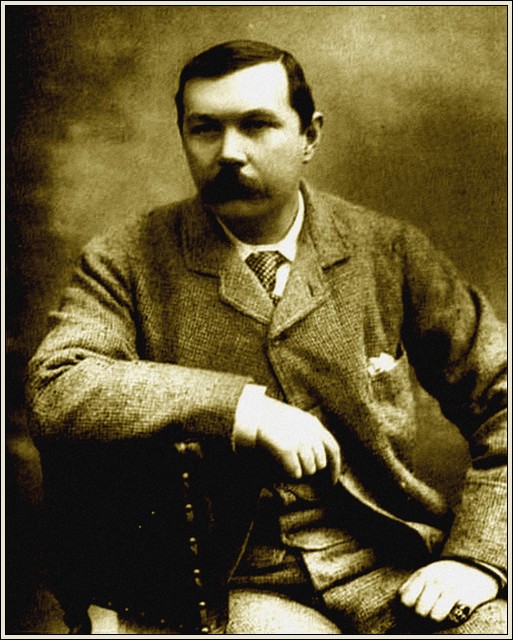
Sir Arthur Conan DoyleSir Arthur Conan Doyle, the author of the Sherlock Holmes stories, had a long association with Switzerland, even making a claim that he was “the first to introduce [skiing] for long journeys into Switzerland”. On a trip to Switzerland his wife contracted tuberculosis and the family decided in 1893 to move to Davos (in what we call Graubünden but which the French call the Grisons) where the crisp, clean mountain air and the clinics were famous for their impact on the well-being of patients with respiratory problems. Interestingly Conan Doyle was himself an MD, having studied medicine in Edinburgh. To while away the time Conan Doyle, a keen sportsman, tried many diversions. In his autobiography, “Memories and Adventures” (1924, London) he recounts:

“As there were no particular social distractions at Davos, and as our life was bounded by the snow and fir which girt us in, I was able to devote myself to doing a good deal of work and also to taking up with some energy the winter sports for which the place is famous.”

He continues:

“There is one form of sport in which I have, I think, been able to do some practical good, for I can claim to have been the first to introduce skis into the Grisons division of Switzerland, or at least to demonstrate their practical utility as a means of getting across in winter from one valley to another. It was in 1894 that I read Nansen’s account of his crossing of Greenland, and thus became interested in the subject of ski-ing. It chanced that I was compelled to spend that winter in the Davos valley, and I spoke about the matter to Tobias Branger, a sporting tradesman in the village, who in turn interested his brother. We sent for skis from Norway, and for some weeks afforded innocent amusement to a large number of people who watched our awkward movements and complex tumbles. The Brangers made much better progress than I. At the end of a month or so we felt that we were getting more expert, and determined to climb the Jacobshorn, a considerable hill just opposite the Davos Hotel. We had to carry our unwieldy skis upon our backs until we had passed the fir trees which line its slopes, but once in the open we made splendid progress, and had the satisfaction of seeing the flags in the village dipped in our honour when we reached the summit. But it was only in returning that we got the full flavour of ski-ing. In ascending you shuffle up by long zigzags, the only advantage of your footgear being that it is carrying you over snow which would engulf you without it. But coming back you simply turn your long toes and let yourself go, gliding delightfully over the gentle slopes, flying down the steeper ones, taking an occasional cropper, but getting as near to flying as any earth-bound man can. In that glorious air it is a delightful experience.

“Encouraged by our success with the Jacobshorn, we determined to show the utility of our accomplishment by opening up communications with Arosa, which lies in a parallel valley and can only be reached in winter by a very long and roundabout railway journey. To do this we had to cross a high pass, and then drop down on the other side. It was a most interesting journey, and we felt all the pride of pioneers as we arrived in Arosa.”

It was an interesting early example of back-country skiing, and I must admit that I have not attempted to make the journey from Davos to Arosa, by skis. One to add to the list.

Conan Doyle wrote prolifically, and no doubt engendered interest in the English public (or at least a section of it) through his enthusiastic reports on “ski-running”, as he often called it. In an article in the Strand Magazine in 1894 he opined “Ski-ing opens up a field of sport which is, I think unique. I am convicted that the time will come when hundreds of Englishmen will come to Switzerland for the ski-ing season in March and April”. He described the sport as one where “You have to shuffle along the level, to zigzag, or move crab fashion, up the hills, to slide down without losing your balance, and above all to turn with facility.” Whenever I ski the Jakobshorn, I can’t help but think of Conan Doyle energetically moving crab fashion in his tweeds and eight-foot long skis, “occasionally taking a cropper”.
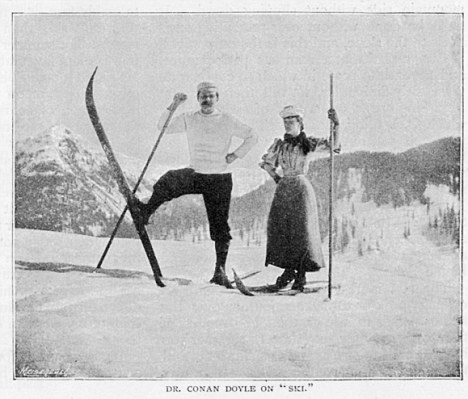
Conan Doyle on skis, with his wife
However Conan Doyle’s most famous association with Switzerland is entirely fictional.

Conan Doyle was frustrated that most of his writing received little attention, except for his Sherlock Holmes stories. As he wrote in his memoirs:

“It was still the Sherlock Holmes stories for which the public clamoured, and these from time to time I endeavoured to supply. At last, after I had done two series of them I saw that I was in danger of having my hand forced, and of being entirely identified with what I regarded as a lower stratum of literary achievement. Therefore as a sign of my resolution I determined to end the life of my hero. The idea was in my mind when I went with my wife for a short holiday in Switzerland, in the course of which we saw there the wonderful falls of Reichenbach, a terrible place, and one that I thought would make a worthy tomb for poor Sherlock, even if I buried my banking account along with him.”
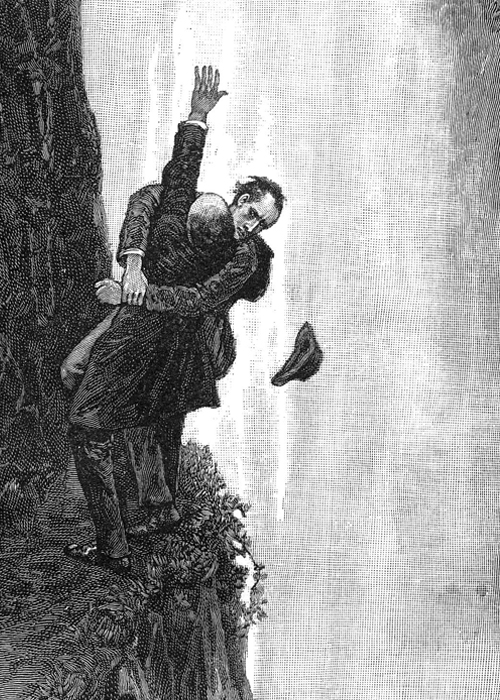
Sherlock Holmes in an illustration for the Strand magazine meets his fate at the Reichenbach Falls
So Conan Doyle placed the demise of his most famous invention, Sherlock Holmes, at a waterfall just outside the resort of Meiringen in his story, “The Final Problem”, published in The Strand Magazine in December 1893. A small museum, below the church near the station in Meiringen, commemorates the association of Conan Doyle with the area. In the story Holmes spends his last night at the Park Hotel Du Savage (renamed by Conan Doyle as the Englischer Hof) before visiting the Reichenbach Falls, where both Holmes and Moriaty meet their fate. At the fictional spot where this happens a plaque in English, German, and French reads “At this fearful place, Sherlock Holmes vanquished Professor Moriarty, on 4 May 1891.”
Lake Geneva
According to his memoirs Conan Doyle also lived in Maloja in Graubünden for a time and in Caux, above Lake Geneva, reached by funicular railway from Montreux.
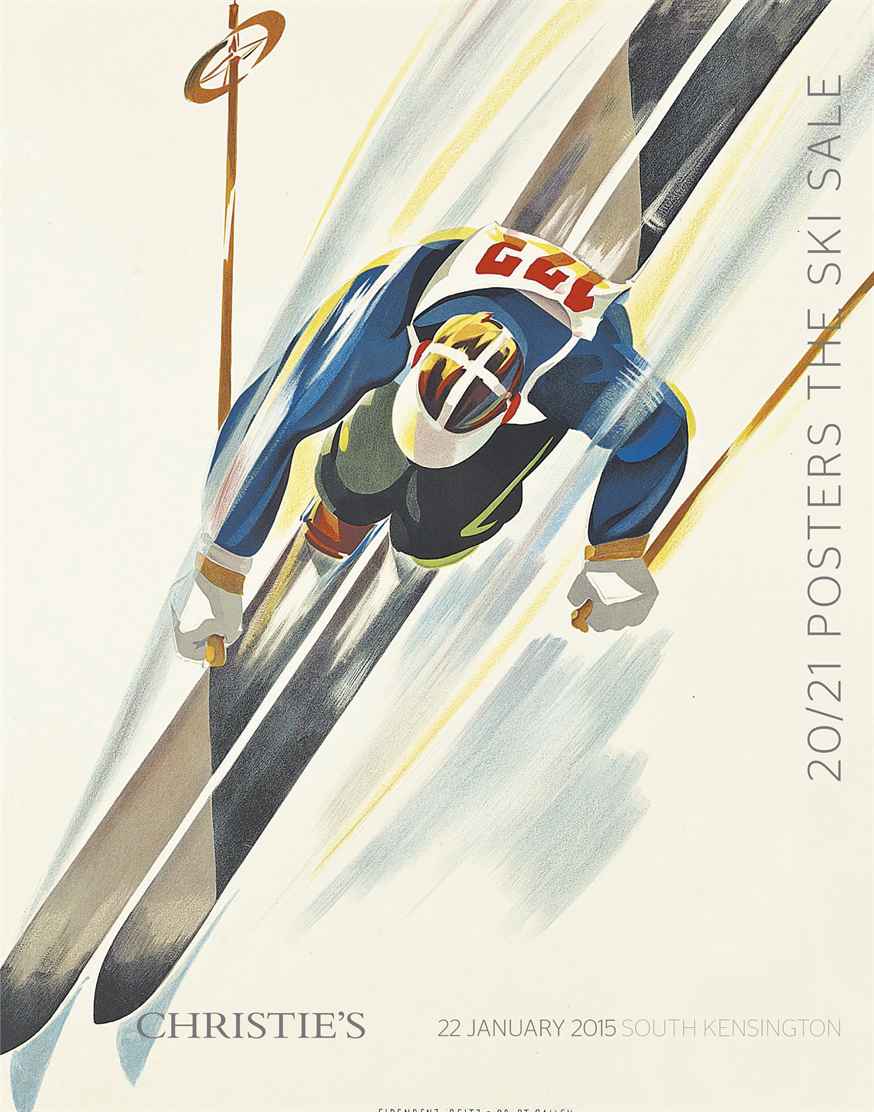
The History of Skiing through Winter Sports Posters

On 22nd January, in London, Christie’s holds its annual “Ski Sale“, an auction featuring a selection of posters depicting winter sports and, through them, the development of skiing in the Alps. The auction features almost 250 posters, and the expected bid prices are generally somewhere in the range $1000 to $20,000 or more.
Christie's ski sale
The prices are eye-watering for what were originally posters intended to entice people to exotic locations, pasted up on hoardings only to be pasted over some weeks or days later. Not surprisingly few survived, and those that did are collectible, even valuable. To an expert, such as those at the famous Galerie 123 in Geneva the difference between an original, or even a reprint from a later run, are easily distinguishable from the cheaper copies that are available now – but those cheaper copies retail for a fraction of price of the original lithographs and are of high, or even higher, reproduction standards. If you want something to adorn a wall, the copies are fine, but the originals not only embody the history of an era and demonstrate painstaking skill, they are generally of appreciating value. Most of the early posters used a laborious craft known as stone lithography, but between the 30s and 50s this mostly gave way to offset lithography and, for some photographs used in posters to a technique known as heliography. Nowadays most high quality posters use screen printing.

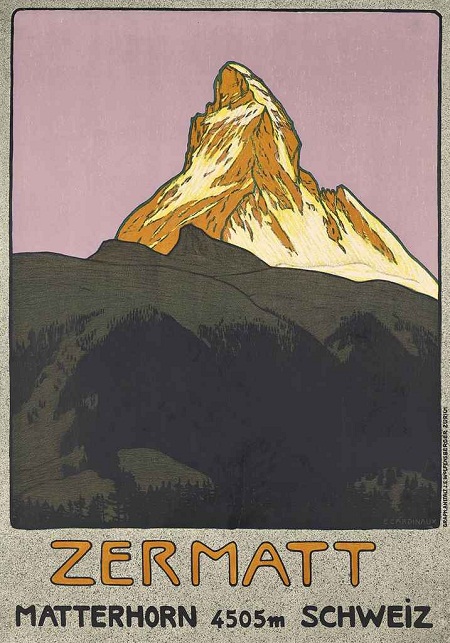
One of the most famous early examples of stone lithography was Emil Cardinaux’s classic 1908 lithograph of the Matterhorn, advertising Zermatt. The impact of the design was immense, redefining the style of many posters for distant holidays.

Emil Cardinaux's classic lithograph of Zermatt and the Matterhorn
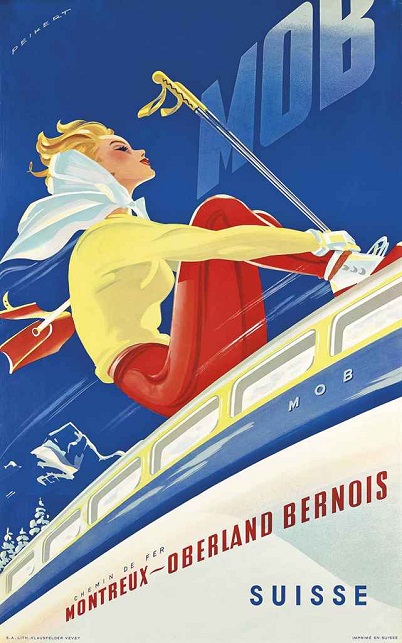
Many of the posters were commissioned by travel companies, and particularly the energetic and innovative Swiss transport companies such as MOB (Montreux–Oberland Bernois railway). This 1946 offset lithograph by Martin Peikert is a superb example with its vivid design and stylish model.
Montreux- Oberland Bernois
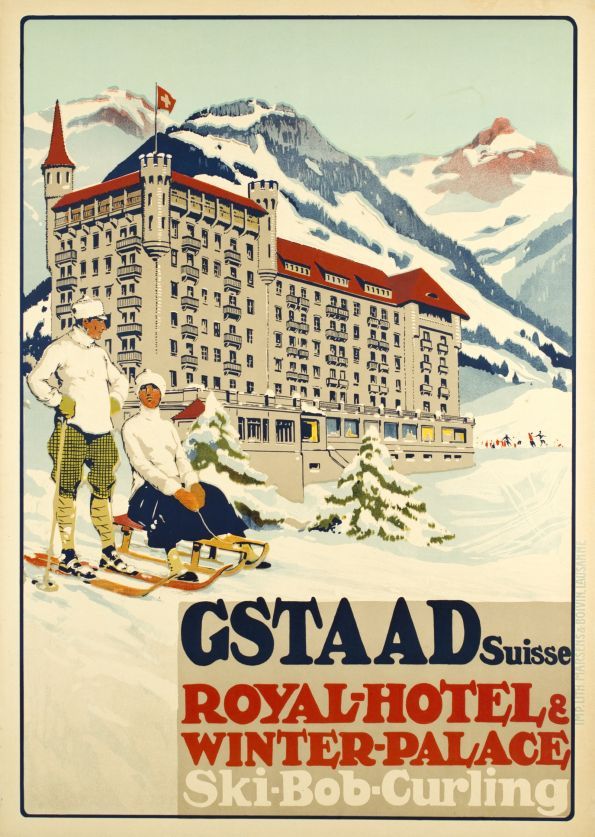
Not in the auction, but illustrating well another source of great winter sports poster art, is this picture provided by Galerie 123 of the Royal Hotel & Winter Palace in Gstaad, attributed to Carlo Pellegrini in 1913 to celebrate the opening of the hotel and to illustrate that skiing wasn’t the only winter sport on offer, with bob-sleighing and curling amongst the many alternative activities.
Gstaad Royal Hotel ski bob curling
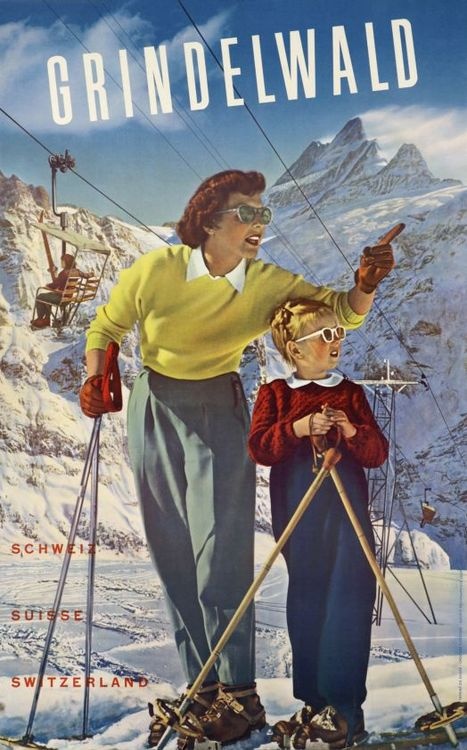
A fine example of the use of heliography and phoro montage is this 1943 poster advertising Grindelwald by Adolphe Fluckiger.
Grindelwald heliography photo montage
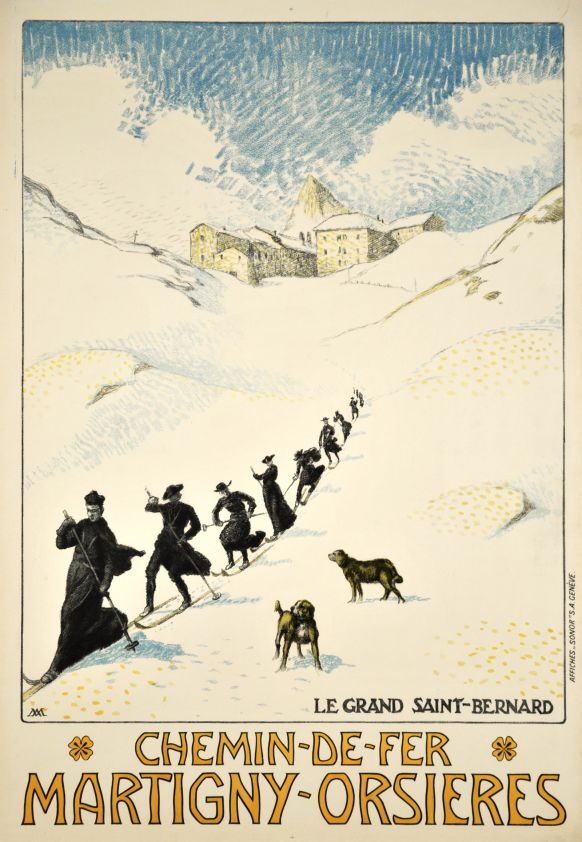
An interesting poster by Albert Muret from 1910 from the collection of Gallerie 123 shows the monks of Hospice du Grand Saint-Bernard in Valais skiing. The monks had been skiing since the 1870s, but this stone lithograph celebrated the opening of a new railway line. However it illustrates that early downhill skiing only involved a single stick, a feature of many early posters.
Monks skiing from the Hospice du Grand Saint-Bernard in Valais
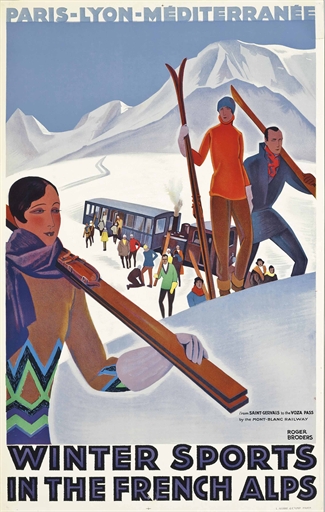
Finally, one of my favourite posters, from one of my favourite poster artists of the golden age of winter sports posters, Roger Broders. The vivid Art Deco lithograph from around 1930 promotes winter sports in the French Alps, with skiers disembarking from the train running from Paris and Lyon to the Med. The individuals are insouciant and stylish. The enticement is clear – under a blue sky, a train taking you right to the slopes of St Gervais from your dreary winter lives, into the mountains, in the company of cool people with the prospect of a ski run ahead…
Winter Sports in the French Alps

Christmas Ski Conditions

I reported last week on the English Show that the warm weather and dry conditions were hitting the ability of resorts to make a decent base, and that even a cold snap in mid-December would be followed by unseasonably warm weather. A week later, my prognosis seems to have been borne out, and even Courchevel in France has cancelled events because of poor snow conditions. My advice remains “go high”. You can find which resorts have the highest runs at the Swiss Winter Sports and Snow and Rail websites – on the resort finders you can click on the columns to sequence the tables by any field. High resorts like Zermatt and Verbier, for example, benefit from high glaciers and villages above the ski line, so you can be sure you can ski all the way back into the village. Freezing levels seem to be hovering around 1500m, so any runs above that altitude looks fine, although the snow forecast for the next couple of days comes with warm weather so the snow may turn to precipitation on even some middle stations. The temperature then dips a little and gives way to a period of sunny weather over Christmas where you can be sure the resorts will desperately be churning out the artificial snow on runs where they can establish a base. The good news, or bad news if you plan to ski over the New Year, is that the weather will change after Boxing Day, with blizzards expected by New Year’s Eve and, although the temperatures will still be a little on the high side, this should ensure good snow cover right down to the high valleys into January.

Austria has some glaciers but on the whole the resorts and runs are low, and the country has suffered from too little or not enough snow, with temperatures too mild to use snow-making machines. Italy has fared a little better, and I have had good reports from Cervinia. France should be OK if you go to somewhere high like Tignes.

It is a shame for many resorts, as some visitors will surely cancel plans to ski or snowboard. There seems to have been something of a resurgence too, with most resorts reporting higher levels of planned hotel occupancy over Christmas than last year, especially in Switzerland.

Ski Pizol
I’m spending Christmas in Bad Ragaz for Pizol. The valley run to Wangs probably won’t be open or much fun if it is, but since I am on the other side of the mountain, that is no great loss. There is also an easy backcountry run from the top of Pizol you can walk up to without skins, although you will need to carry your skis or board beyond the last lift. I also plan to spend a few days in Chur which has easy access to some of the best resorts in Graubünden ahead of the New Year – plenty of altitude nearby in resorts like Flims/Laax.

Many pages at my web site have webcams so you can check out the snow conditions for yourself. If they don’t follow the links to the resort web sites in case they have any other web cams set up.

Indoor skiing in the Netherlands

Researching for my new Dutch language ski website, I found that the Netherlands has a few indoor ski and snowboard areas. Of course, they do not compare to the Alps, but they have real snow and give you a good opportunity to try out a couple of turns. What’s more they are relatively inexpensive and try to have something of a ski resort ambiance.
Red Run in Snowworld

There seem to be ski areas in a number of areas – see Skihal.com. Most convenient for me is the Snowworld ski and snowboard centre at Zoetermeer, on the route between Den Haag and Utrecht, so I checked it out one lunchtime.

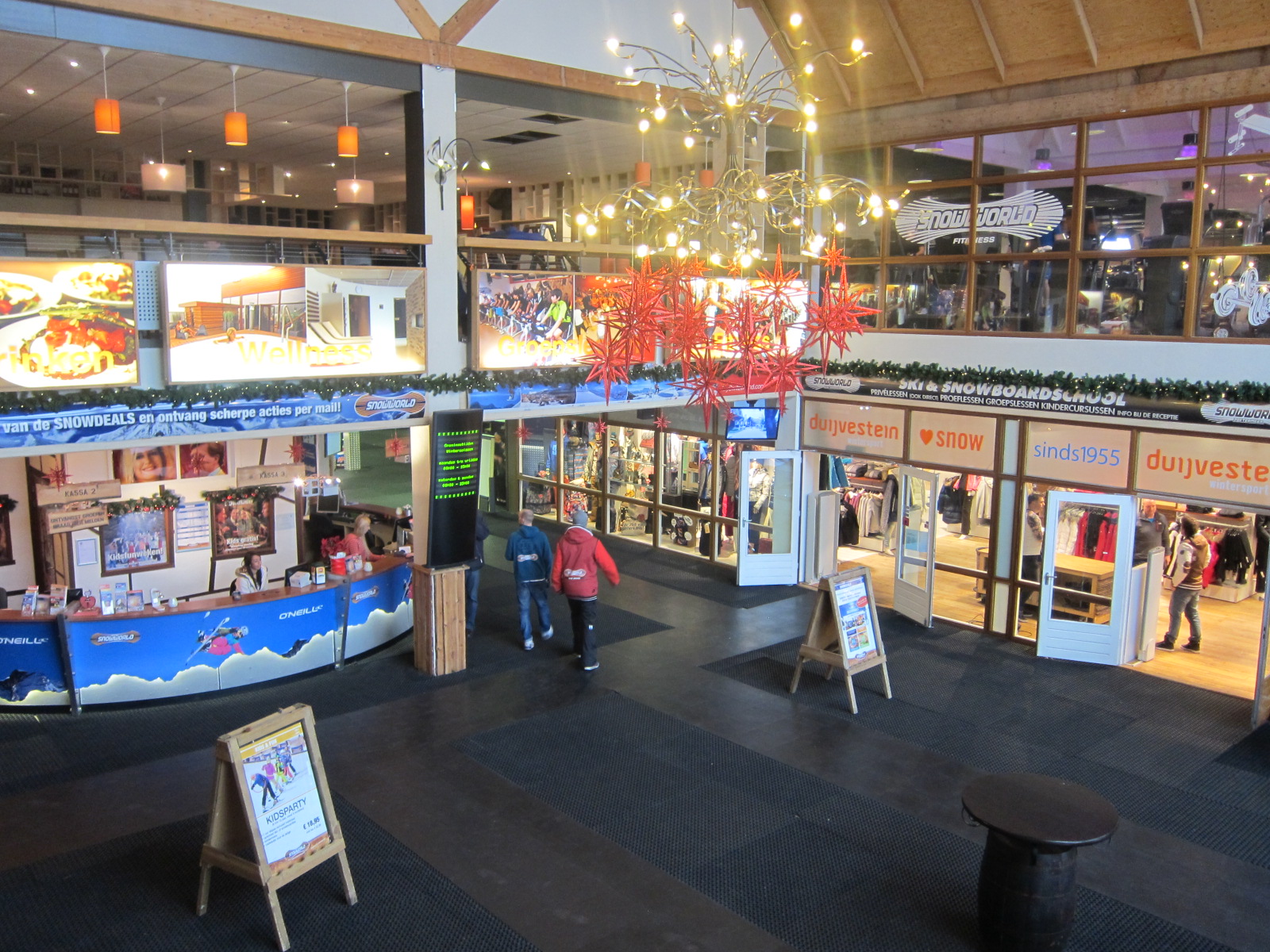
The ski area is well signposted once you get to Zoetermeer, and boasts three slopes – a blue run, a park with rails and jumps and what is classified as a red run (20% incline). There are nine lifts and good long opening hours throughout the year. Conveniently the Snowworld web site is in English as are some of the brochures. Four hours would set an adult back 40 Euros, and a child or senior 34 Euros, with equipment hire between about 4 and 12 euros for the same period depending on what you want etc. As you would expect there are bars, restaurants, various discounts, specials, ski and snowboard school and even a hotel if you want to stay over.
Entrance Lobby at Snowworld
The downside? Well for an experienced skier or snowboarder only the rails and jumps would set your pulse racing, and the runs are too short to really improve an already advanced technique, but it is good for finding your ski legs or for checking out some new kit. It is real snow, and so it is cold and you do need to bring a hat, gloves and winter clothes if you want to avoid getting cold. And, of course there is no sunshine – the entire complex is roofed.

For beginners, early intermediates and people wanting to perfect their technique in the park, however, it is ideal, and a nice way to prepare for the real thing.