End of Ski Season review

Phew! What a season it has been for skiing and snowboarding. I was fortunate to get some good skiing in before Christmas, but in general it has been a dismal season for everyone.

The Swiss lift operators association (Seilbahnen Schweiz/Remontées Mécaniques Suisses) has published its analysis of the season up until the end of March – which for all but a handful of resorts is end of season.

The lift operators report a grim picture. By the end of March, lift usage and turnover in Switzerland had fallen by 24% in total, compared to the 2018/19 winter season. Large resorts, dependent on international visitors, have suffered most, but the closure of bars and restaurants has also deterred local winter sports enthusiasts. Additionally, ski camps and club and business trips have not taken place. Ski lifts in the Prealps and in areas close to towns, which cater more for day tourists, have not done quite as badly. Ticino has actually done quite well compared to 2018/19, but that was a season where the canton suffered from a lack of adequate snow – something that cannot be said of this season, where the snow conditions remain very good in those resorts still open.

On the whole comparison with the 2018/19 season is more meaningful than for 2019/20, because Covid-19 had an impact on the latter part of the 2019/20 season. It was hard to forecast a year ago we would be where we are now, and it is only with some optimism that we can look forward to next year being without some restrictions. None the less, overseas visitors are booking in advance for next season like never before, with many winter tour operators reporting bumper bookings.

The long-term impact on the lift operators is hard to gauge. Despite running at a considerable loss this season, lift operators have seen themselves as providing a public service and largely remained open. If the ski lifts had closed, mountain regions would have faced a shutdown of even more tourist activities, resulting in greater economic damage than has anyway been inflicted. Government support, the lift operators association says, is needed to avoid systemic damage to tourism.

The impact on the whole winter sports infrastructure is devastating. Some businesses will not return, others will cancel plans for expansion or investment. Many resorts were already worried about the long-term impact of climate change, and Covid-19 is hardly likely to positively impact their thinking. Additionally, with ski resorts being amongst the Covid-19 hotspots at the start of the pandemic, the image of winter sports has suffered.

I think the ski industry will recover strongly, although the level of growth will likely be lower than in previous years. From a sustainability perspective and in light of the impact of climate change, that is probably not a bad thing.
Ski Movies – Part 2

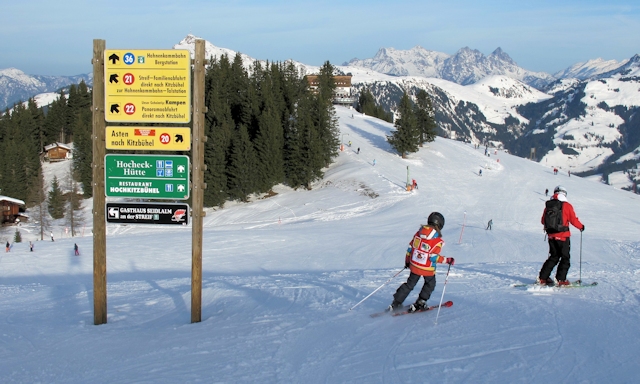
Streif- One Hello of a Ride (2014)

This film is about the famous annual Hahnenkamm race, the toughest on the FIS downhill circuit. It takes place in Kitzbühel, Austria. You can see the movie at the Red Bull web site, and it’s probably the best ski documentary out there.

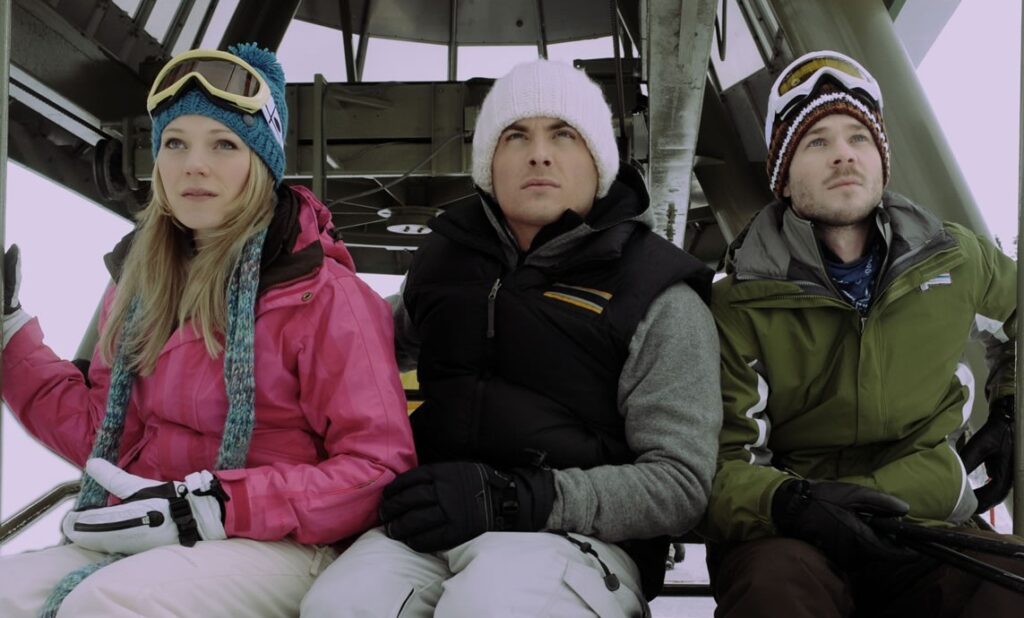
Frozen (2010)

No, not that Frozen. This one is about three skiers trapped on a ski lift in Snowbasin, Utah, after the resort has closed for the night. Enough to put you off that crazy run to catch the last chairlift before the mountain closes.

Low budget it may be, but it is definitely watchable and pretty scary.

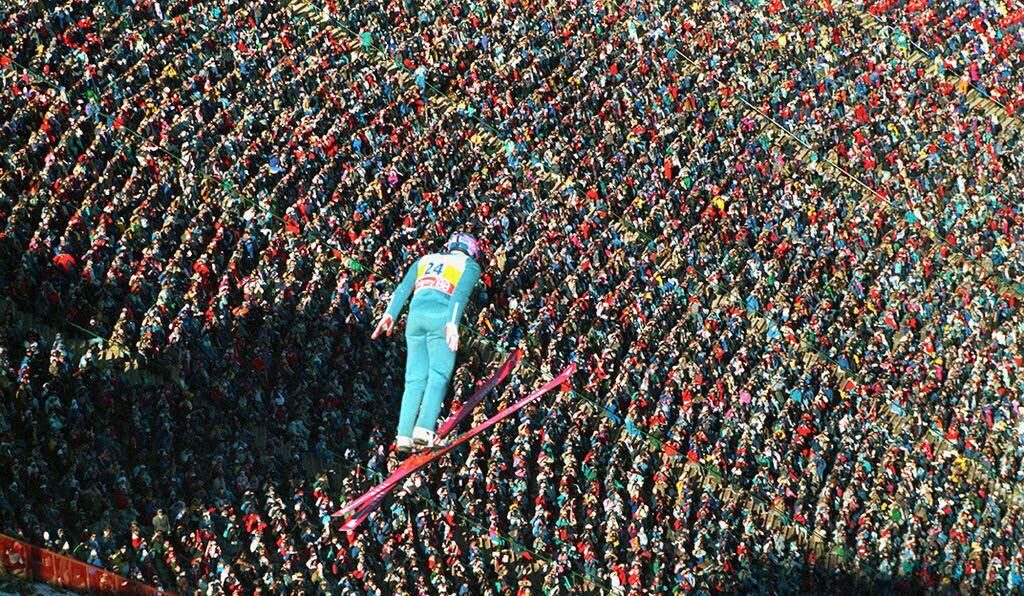
Eddie the Eagle (2016)

If you can take clichés and sentimentality, you will probably like this story of Britain’s most famous ski jumper.

Fly like an eagle

SKI School (1990)/Ski School 2 (1994)

Judge for yourself whether the antics of a bunch of ski instructors, mainly filmed in Whistler, is to your taste. However the first of the two does enjoy something of a cult following amongst people of a certain age.

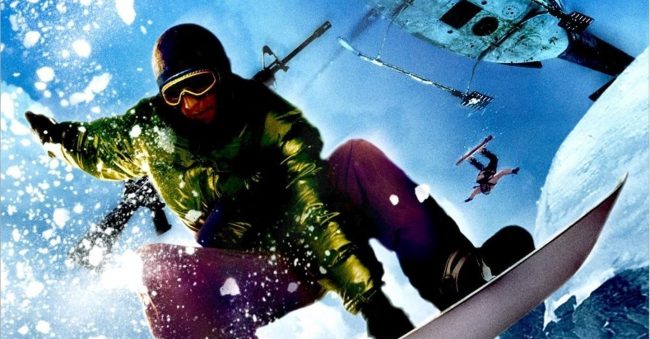
Extreme Ops (2002)

In what is probably not Rupert Graves’s finest outing, a film crew and three snowboarders go on a trip to a remote part of the Austrian Alps to film some stunts. Unbeknown to them they stumble across the hideout of a thuggish Serbian war criminal. What could possibly go wrong? Although the ski scenes are staged as being on the former Yugoslavian border, filming seems to have taken place at various locations, including Verbier.

More winter sports movies to come…

Best Ski Resorts in Switzerland

 Benefits of Skiing

For some, the first sign of snow means it is time to dig out the wool socks and blankets and go into hibernation. For others, though, it means time to wax those skis and hit the slopes! Skiing is an incredible sport that involves physical, mental, social and emotional aspects of wellness. Often times winter can bring people into a depression called Seasonal Affective Disorder (S.A.D.). Skiing combines the great outdoor air with physical activity and some sunshine exposure that many people forget about. Read more about exipure.

The physical aspect is obvious, however many individuals, especially those that have never skied before, may not realize how much brain power goes into the sport. Skiing is a proprioceptive activity. Proprioception is an aspect of fitness that is defined as one’s ability to feel the position of different body parts and the effort that goes into moving them. This is almost defines skiing because skiing involves quite a bit of balance and coordination. There are so many slight movements and positions of your body that you must be conscious of to ski well. The more you ski the more you strengthen your ability to be aware of the movement of your body parts. This is important because proprioception weakens with age so the more you are involved in proprioceptive activities the less it will diminish. Check these ikaria lean belly juice reviews.

Skiing prevents aging in more ways than that though. When you ski you carry the weight of your entire body on your feet. Your knees are the joints that endure that weight and must be able to move quickly despite it, so they are being strengthened when you ski. Great news for those that have been skiing for many years; you’ve been strengthening those joints and making an injury later in life less likely the whole time. In addition to strengthening your knees your bones become stronger as well because skiing is a weight bearing activity. So not only are you having a fantastic time gliding down the slopes, but you are preventing knee damage, osteoporosis and increasing your proprioceptive strength. Skiing is also a great way to get some moderate aerobic activity into your day. For most people, skiing is an all day event, so you can imagine the workout your heart is getting without you even becoming winded. This is how phenq works.

It is hardly necessary to mention the social aspect of skiing, but I will for that sake of those that have never been. Waking up at the crack of down to drive an hour or two to spend a day in the freezing cold may not seem appealing to a “winter hibernator.” Add a whole group of close friends that all share the same love for skiing, and you’ve got one heck of a good day. What is unique about skiing is that it brings together people of all different ages and cultures. All over the world if there are mountains and snow, there will be people skiing.  So not only do you have a great group of people having a fantastic time; you’ve got a motivational team that encourages you to get off the couch in the winter and get your heart pumping all day! Try something new this winter instead of being miserable when the first snow falls. If you are already an avid skier, bring someone that isn’t and show them how much fun they are missing!

Best restaurants in Zermatt

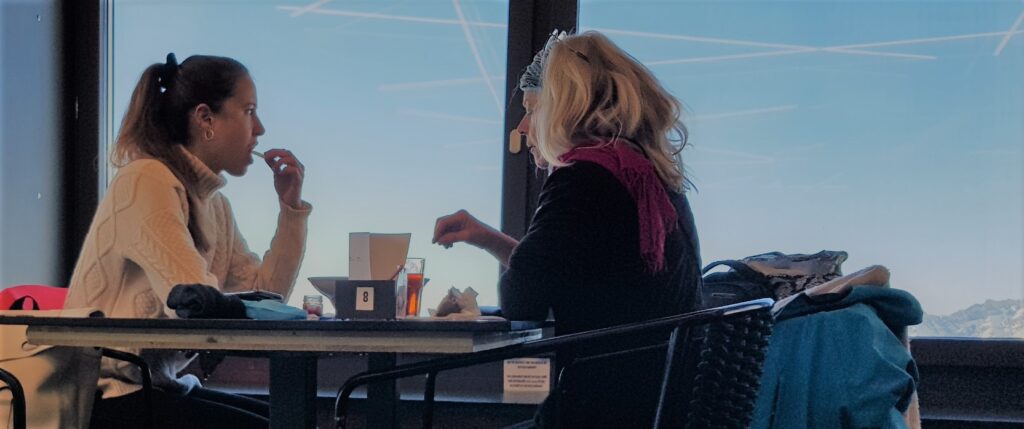
Diners at the restaurant at Matterhorn Glacier Palace.
The restaurant at Matterhorn Glacier Palace has great views, but the toilets are not free!

The winter season officially opens in Zermatt on 5th December with lifts on the Rothorn and Gornergrat adding to the ski area already open above Furgg.

Sadly the mountain restaurants won’t open fully until 13th December because of covid restrictions, but six mountain restaurants are offering a take-away service during this period. Annoyingly all the seats have also been removed up the mountains, so you need to find a nice rock to sit on to enjoy your fare. My experience so far during this lockdown period is alcohol is not generally served as part of the take-way service. Try out ikaria lean belly juice.

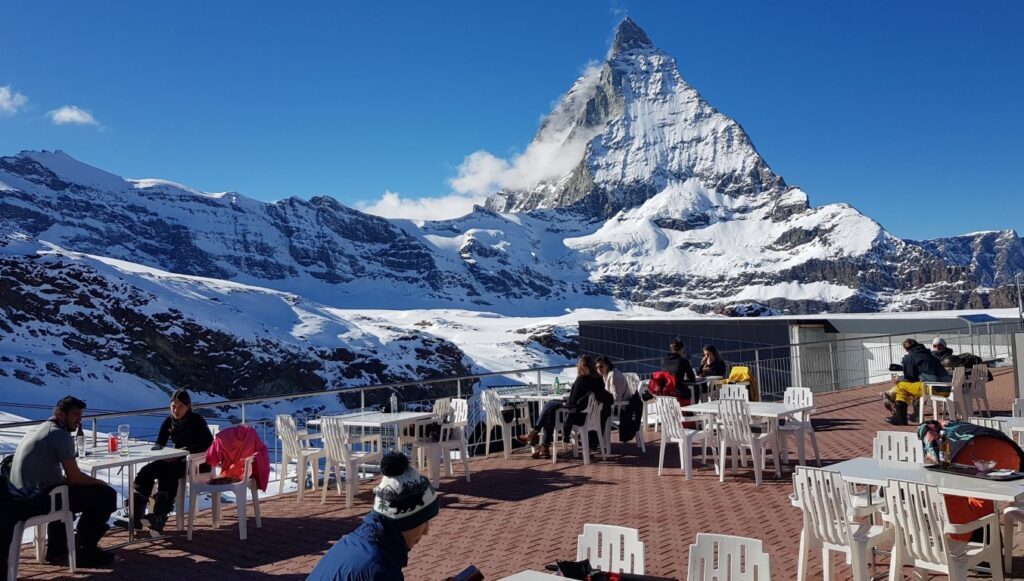
Socially distanced tables at Trockener Steg under the Matterhorn.
Restaurant at Trockener Steg before lockdown, but with socially distanced tables.

When the restaurants do open up, Zermatt probably offers the best culinary options in the Alps – both on the slopes and in the town. Gault Millau, who rate the best culinary experiences in Switzerland identified 15 in Zermatt out of 830 throughout Switzerland to deserve special note.

The marking system is as follows:
17 points: mark for the best quality and high consistency
16 and 15 points: high level of the culinary arts and quality
14 and 13 points: very good cuisine and offering much more than everyday dining
12 points: conventional, good cuisine without special ambitions

The restaurants are:

PointsName of the restaurants
17After Seven (Backstage Hotel)
17Ristorante Capri (Mont Cervin Palace)
16Alpine Gourmet Prato Borni (Grand Hotel Zermatterhof)
15The Omnia
14Chez Heini
14Chez Vrony
14China Garden
14Findlerhof bei Franz und Heidi
14Grill le Cervin (Mont Cervin Palace)
14Restaurant Saveurs (Chalet Hotel Schönegg)
14Zum See bei Max und Greti
13Lusi Brasserie & Lounge (Grand Hotel Zermatterhof)
13Myoko
13Restaurant Sonnmatten
13Restaurant 1818
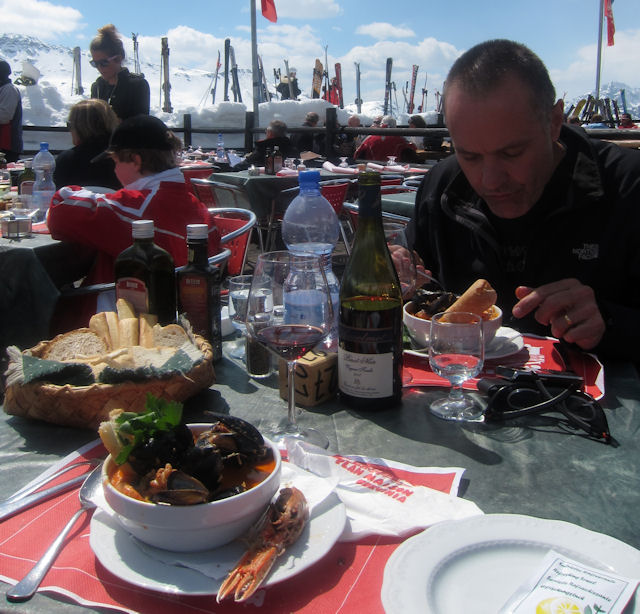
Simon Hughes enjoying the fabulous fish stew at Chalet Etoile.

Not included in the list, of course, are the restaurants on the Cervinia side – sadly off-limits for the time being due to covid. At the web site, SwissWinterSports.co.uk, I opine that “the small serving of fish soup in Chalet Etoile off Plain Maison in Cervinia is not only an inexpensive and filling repast, it is probably the best fish soup you will experience anywhere in the world, at least above 2000m.” 

So now you know.