The History of Skiing through Winter Sports Posters

On 22nd January, in London, Christie’s holds its annual “Ski Sale“, an auction featuring a selection of posters depicting winter sports and, through them, the development of skiing in the Alps. The auction features almost 250 posters, and the expected bid prices are generally somewhere in the range $1000 to $20,000 or more.
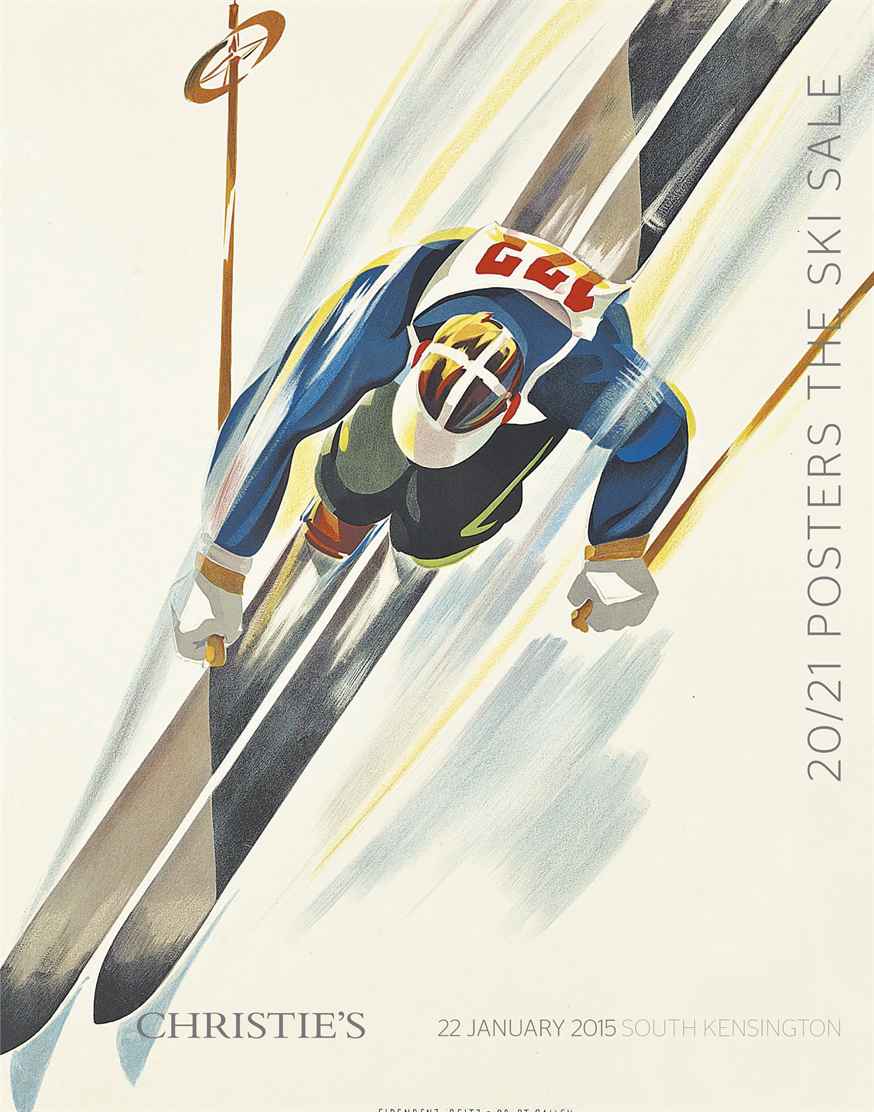
Christie's ski sale
The prices are eye-watering for what were originally posters intended to entice people to exotic locations, pasted up on hoardings only to be pasted over some weeks or days later. Not surprisingly few survived, and those that did are collectible, even valuable. To an expert, such as those at the famous Galerie 123 in Geneva the difference between an original, or even a reprint from a later run, are easily distinguishable from the cheaper copies that are available now – but those cheaper copies retail for a fraction of price of the original lithographs and are of high, or even higher, reproduction standards. If you want something to adorn a wall, the copies are fine, but the originals not only embody the history of an era and demonstrate painstaking skill, they are generally of appreciating value. Most of the early posters used a laborious craft known as stone lithography, but between the 30s and 50s this mostly gave way to offset lithography and, for some photographs used in posters to a technique known as heliography. Nowadays most high quality posters use screen printing.

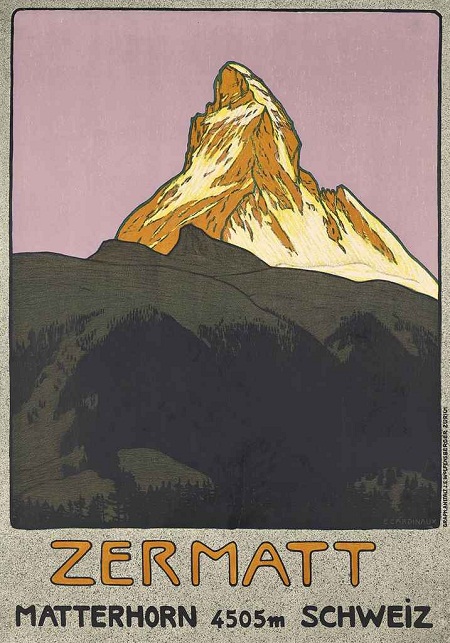
One of the most famous early examples of stone lithography was Emil Cardinaux’s classic 1908 lithograph of the Matterhorn, advertising Zermatt. The impact of the design was immense, redefining the style of many posters for distant holidays.

Emil Cardinaux's classic lithograph of Zermatt and the Matterhorn
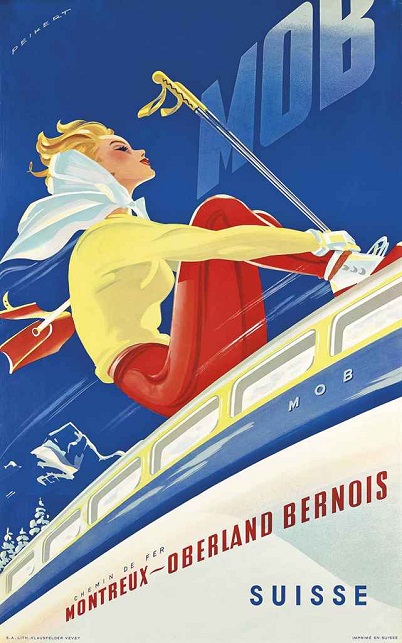
Many of the posters were commissioned by travel companies, and particularly the energetic and innovative Swiss transport companies such as MOB (Montreux–Oberland Bernois railway). This 1946 offset lithograph by Martin Peikert is a superb example with its vivid design and stylish model.
Montreux- Oberland Bernois
Not in the auction, but illustrating well another source of great winter sports poster art, is this picture provided by Galerie 123 of the Royal Hotel & Winter Palace in Gstaad, attributed to Carlo Pellegrini in 1913 to celebrate the opening of the hotel and to illustrate that skiing wasn’t the only winter sport on offer, with bob-sleighing and curling amongst the many alternative activities.
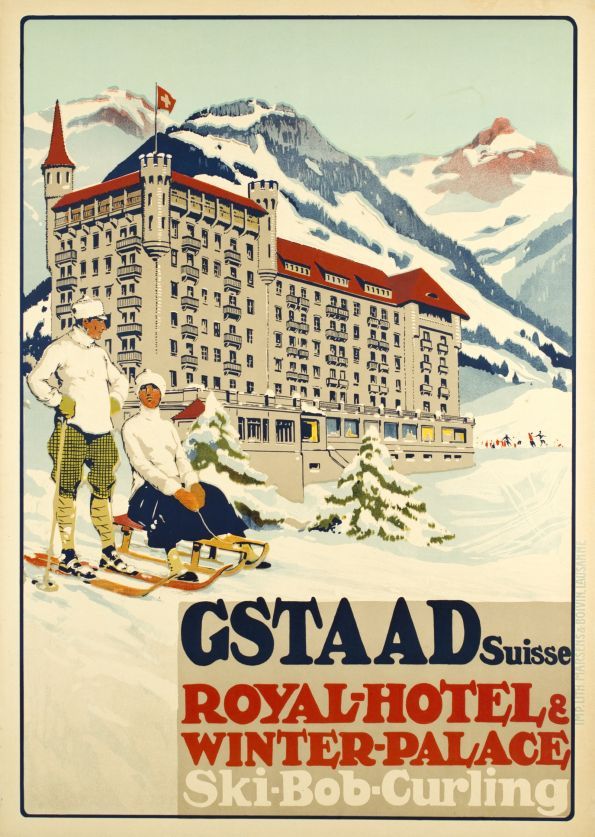
Gstaad Royal Hotel ski bob curling
A fine example of the use of heliography and phoro montage is this 1943 poster advertising Grindelwald by Adolphe Fluckiger.
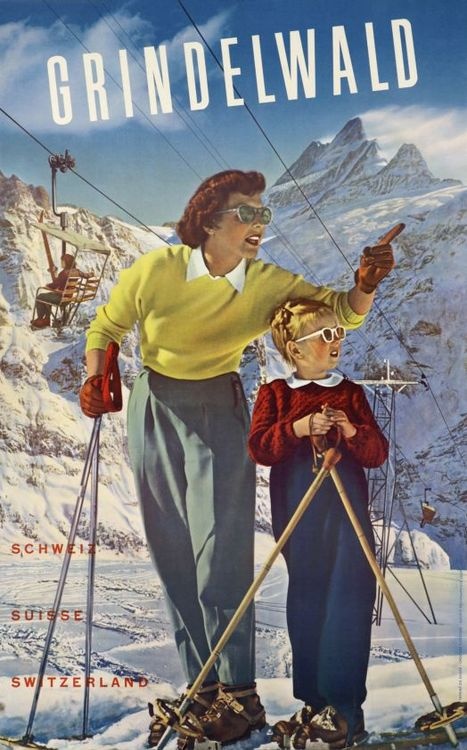
Grindelwald heliography photo montage
An interesting poster by Albert Muret from 1910 from the collection of Gallerie 123 shows the monks of Hospice du Grand Saint-Bernard in Valais skiing. The monks had been skiing since the 1870s, but this stone lithograph celebrated the opening of a new railway line. However it illustrates that early downhill skiing only involved a single stick, a feature of many early posters.
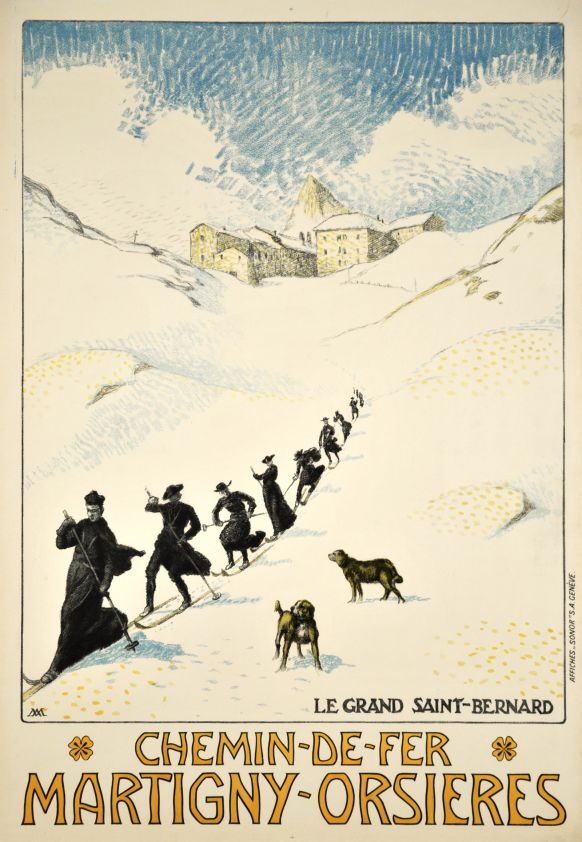
Monks skiing from the Hospice du Grand Saint-Bernard in Valais
Finally, one of my favourite posters, from one of my favourite poster artists of the golden age of winter sports posters, Roger Broders. The vivid Art Deco lithograph from around 1930 promotes winter sports in the French Alps, with skiers disembarking from the train running from Paris and Lyon to the Med. The individuals are insouciant and stylish. The enticement is clear – under a blue sky, a train taking you right to the slopes of St Gervais from your dreary winter lives, into the mountains, in the company of cool people with the prospect of a ski run ahead…
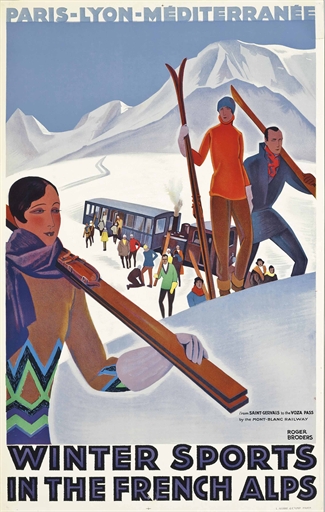
Winter Sports in the French Alps

Where is the Cheapest Place to Ski?

The Crystal Ski Industry Report 2014, produced together with Post Office Holidays in the UK, has assessed a number of ski resorts popular with UK package tour travelers. They have worked out average costs in resort for a package consisting of lift pass, rental and ski school and also for an average lunch. As a result they have come up with their idea of where the cheapest place to ski is. I don’t claim to be surprised with the outcome. I have applied an index to the figures based on an average of 100 to come up with relative prices. Essentially you can read it this way: you can get almost three days in Bansko for the price of one in Zermatt. Since Zermatt is much more likely to give you good snow conditions, has better scenery, apres ski and food, is easier to get to and has five times as much piste you could actually argue Baski is over-priced, but I have had some great ski holidays in Bulgaria and I wouldn’t knock it. However I think the independent traveller, with or without a family, doesn’t need to go to Eastern Europe to find value for money.

The top American resorts seem over-priced compared to the best European resorts, and add to that the cost, time and ecological impact of getting there from Europe, it seems wise to leave them to the natives. Again, I have had some great skiing in North America, but I lived there at the time and it was on my doorstep.
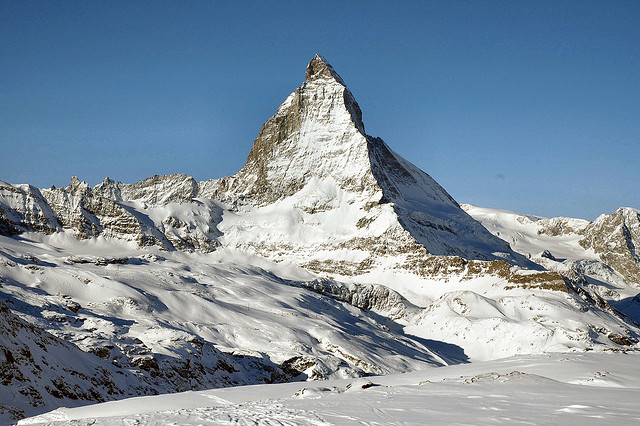
Matterhorn in Zermatt
So the eternal debate is, where is the best value resort to ski or snowboard in the Alps? Italy does well, and can only be faulted on the longer transit times required to get there. For a great ski experience on a tight budget, it is probably the best value. My personal favourite in Italy – if you are watching the pennies but want a great experience – is Madesimo. The best of Austria and France seem comparably priced, with a small price premium associated with Switzerland down to the strong Swiss Franc.

The report actually showed Switzerland gaining market share in 2013/4 over 2012/3, with 6.5% of the market – largely at the expense of France. The report claims prices are going down, but that is surely down to the strong pound since all prices are converted to sterling. Overall the report doesn’t change my perspective, which is that you get what you pay for. The ski and snowboard market is very competitive and the biggest mistake you can make is not about how much you pay, but that what you pay delivers what you want. I would never recommend Zermatt to a family of beginners, but for a competent skier I would recommend you put it on the list of places you visit before you die.

Anyway, on that sobering note, here are the indicies:


Resort Country Index
Bansko Bulgaria 54
Kranjska Gora Slovenia 62
Ellmau Austria 64
Livigno Italy 66
Soldeu Andorra 68
Sestriere Italy 73
Morzine France 75
Ruka Finland 78
Val Gardena Italy 84
Les Deux Alpes France 87
Mayrhofen Austria 87
Serre Chevalier France 87
la Thuile Italy 89
Kaprun Austria 89
Courchevel France 104
Val d’Isere France 104
Kitzbühel Austria 111
St Anton Austria 116
Tremblant Canada 117
Saas-Fee Switzerland 118
Wengen Switzerland 122
Winter Park USA 125
Banff Canada 136
Breckenridge USA 141
Zermatt Switzerland 142
Whistler Canada 146
Vail USA 155

Do more people go to the mountains in summer or winter?

A long-standing point of discussion aprés ski is whether more people go to the mountains in summer or winter?

Well, based on the statistics produced by the Swiss Tourism federation, it is in the summer judged by overnight bed stays, by roughly 20m compared to 15m. However, this doesn’t take into account the impact of reduced overnight bed availability in winter, e.g. camping sites and a preference for accommodation right next to the lifts. If you’re looking to learn more about camping, you can read more on campingfunzone.com. It’s also hard to assess the impact of day trippers – in winter the trains of Switzerland are busy with locals and expats going skiing for the day throughout the week and especially at weekends.
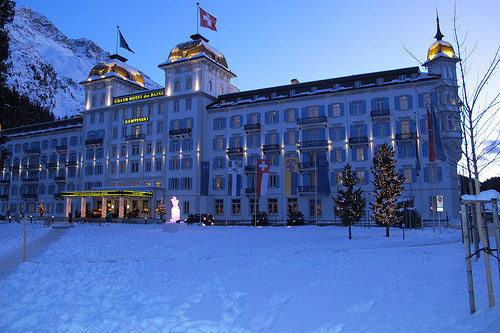
Winter in Switzerland
Interestingly the only source nations more likely to stay overnight in Switzerland in winter are Russians and Scandinavians. Americans and Asians overwhelmingly prefer to visit in the summer.

Another measure of the size of the respective tourism trade in winter and summer would be seasonal employment. Here, roughly 200,000 are employed and the number is pretty much the same in both winter and summer.

So, in conclusion, the answer is that it mostly varies between resorts, with some resorts getting more in winter and others more in summer, but in balance probably more visit in summer. However it is clear that both are equally important to the well-being of Alpine resorts that rely upon tourism. And for Switzerland it is a trade that is worth CHf 35bn per annum and constitutes the fourth largest source of export income, or 5.5% of the total.

Misty Mountain High

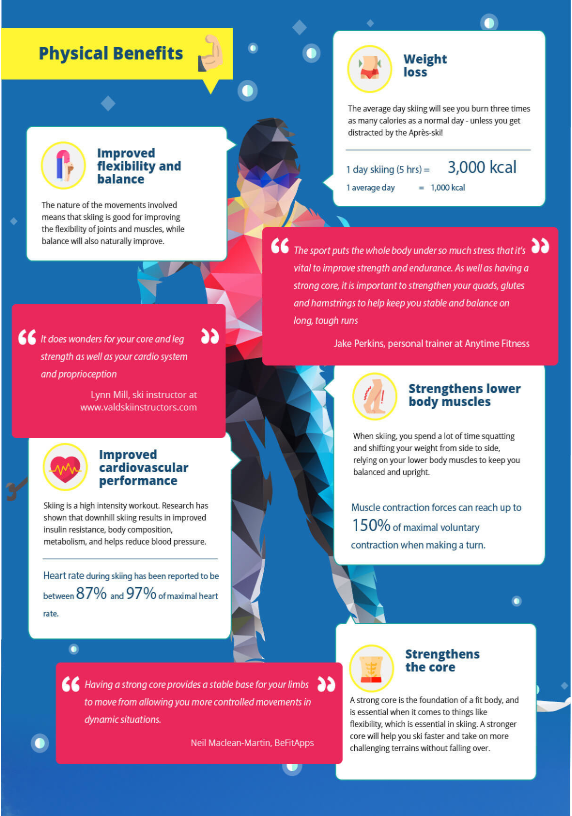
Skiing and snowboarding help to develop valuable life skills and carry plenty of physical and mental health benefits, experts in the field have revealed, and that’s why sports are important, and this health and fitness directory could be really helpful to get good health professionals this. This is how exipure works.

Check out dentitox pro articles about tooth decay prevention.

A brand new guide shows that the benefits of skiing extend far beyond spending a bit of time with family and friends, and according to the PhenQ reviews you can actually help shape you as a person as well as improving your physical shape.

The Health Benefits of Skiing, produced by ski agents Ski Line, breaks down all the key benefits of a ski holiday and offers hints and tips from top instructors and fitness gurus on preparing for a ski holiday, as well as advice on how to have a good diet including the use of supplements as testosterone pills which help a lot with this.


If you are struggling with weight loss, then it’s natural to look for a reliable weight loss supplement like these pelvic floor strong reviews.