Covid-19 impact on Skiing and Snowboarding

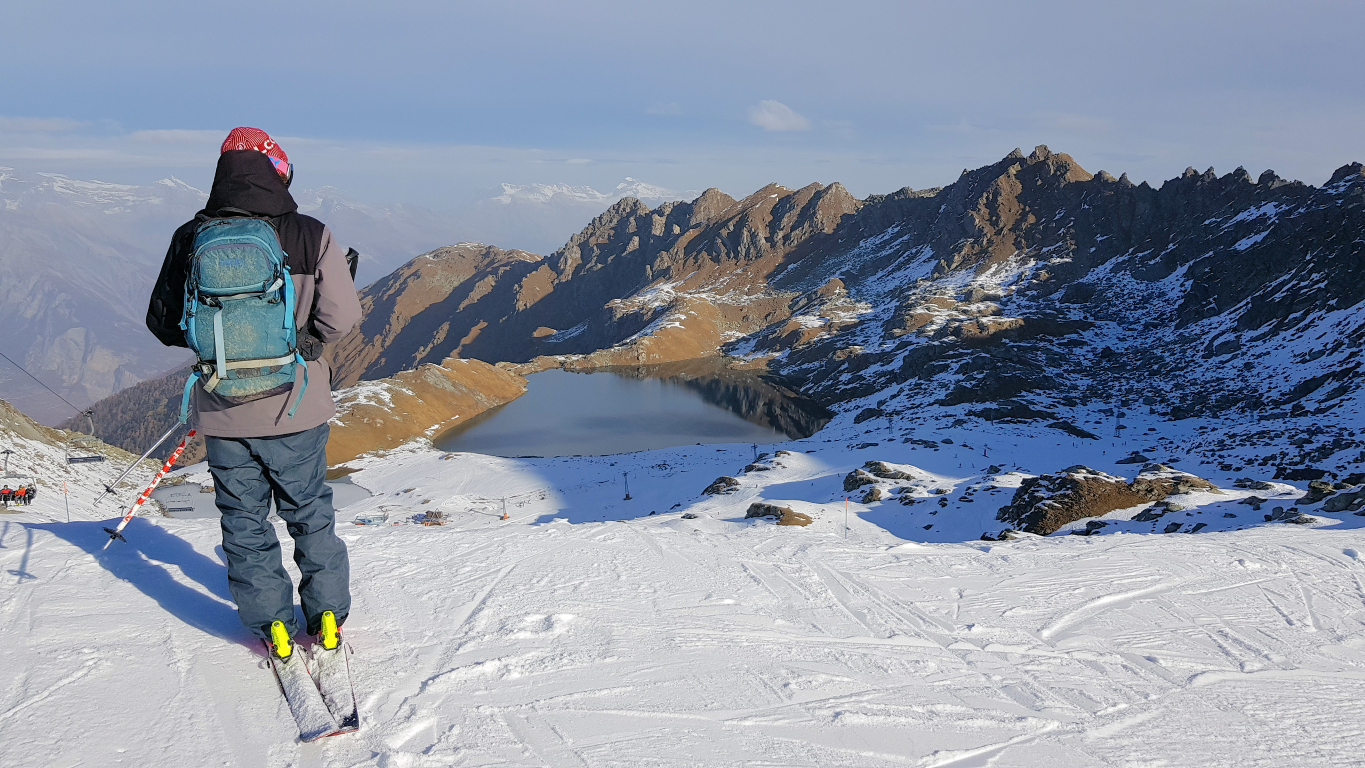
Verbier has one run open.

Most Alpine resorts are holding fire on when, and whether, to begin the 2020/21 ski season. Currently the only ski resorts with unrestricted public access are in Switzerland, but most resorts still seem to be planning to open in December.
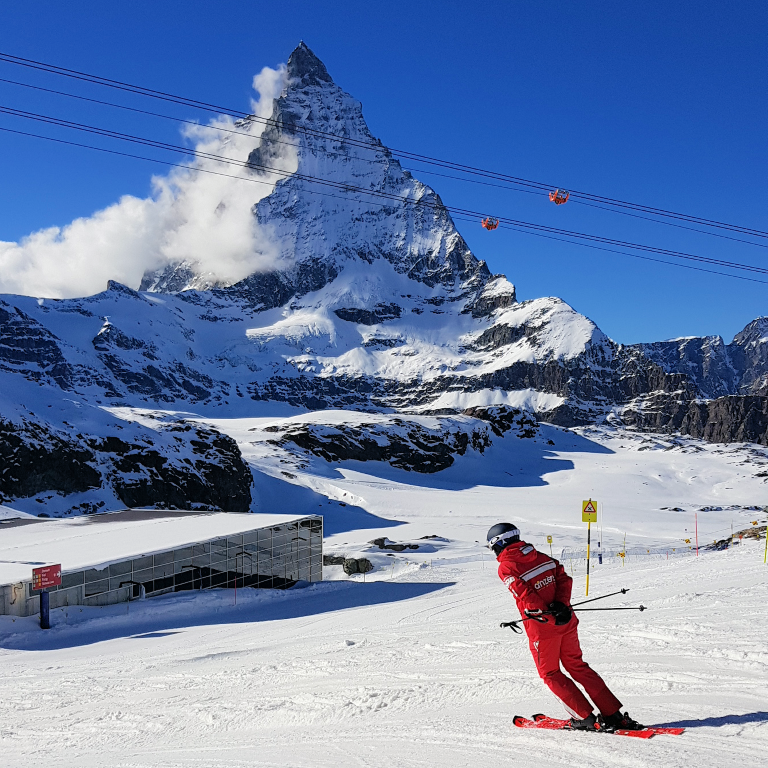
Ski instructor at Zermatt

There is no consensus on which measures ski resorts should take to avoid the outbreaks that occurred last season, but it is likely that it will be local Covid-19 regulations that dictate the viability of ski resort openings and operation and – critically – the ability of people from outside the area to be allowed to visit. Unfortunately the promising trials of vaccines to prevent Covid-19 look to arrive too late to impact on the 2020/21 season – indeed they might embolden some authorities to increase restrictions in the short-term. At this time it is not altogether certain that the authorities won’t order ski resorts to close if they are seen to be responsible again for spreading the virus.

So what is the situation in Switzerland? I have been in the country for some weeks now, and have visited Zermatt both before and after a local lockdown was introduced, and Verbier afterwards. This what I learned.
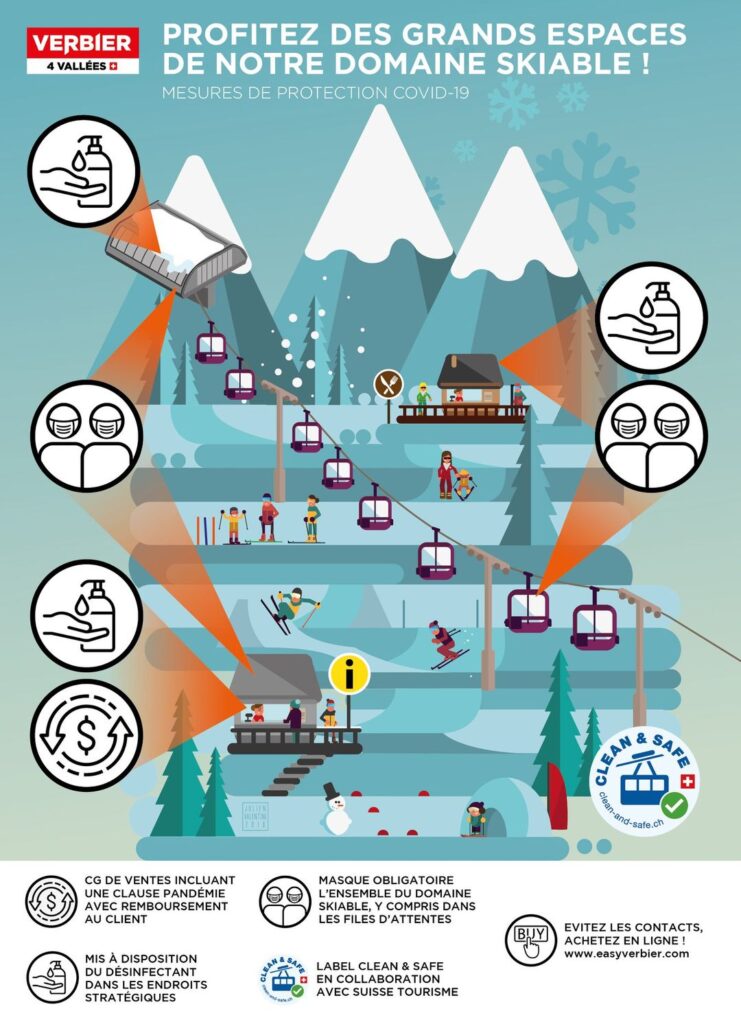
Covid-19 safeguards in Verbier

The rate of infection with Covid-19 in Switzerland is the highest of the Alpine nations, and higher than that of most countries where visitors to Switzerland come from. As a result Switzerland decided to dump their quarantine requirements for visitors from most countries, including the UK. Most cantons had not previously imposed stringent lockdowns, but that has since changed.

The canton of Valais in Switzerland is home to some of the world’s leading ski resorts, including Saas-Fee, Zermatt and Verbier. These resorts, alongside Engelberg and Glacier3000, have begun their winter season, albeit only for selected runs above the snowline.

The recent good weather means the snowline may recede in the next week or so, which could jeopardise Verbier’s limited opening – less so those resorts with runs on the glaciers. However the resorts suffered a bigger blow when the Valais cantonal authorities declared – in the face of accelerating Covid-19 infections – that all restaurants and bars, including those in the mountains, must shut from 10pm on 6th November. Hotels, however, may remain open for business.
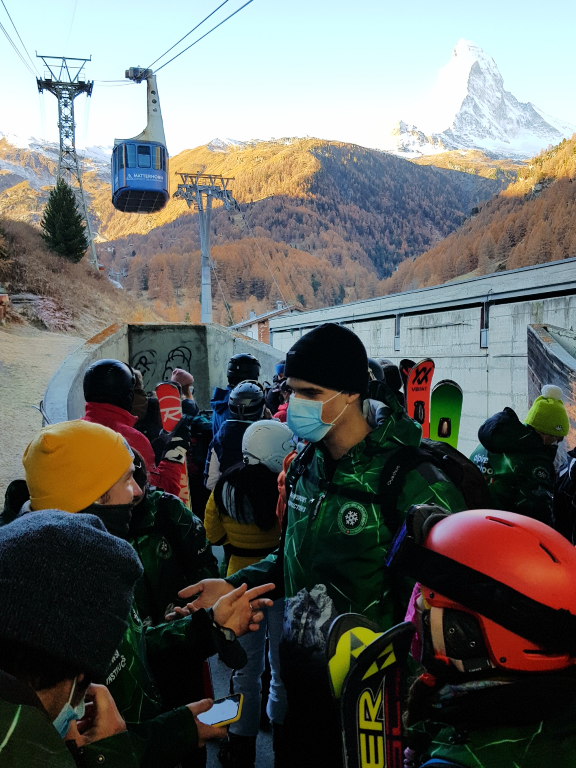
Cable Car Station in Zermatt
Cable car to Furi from Zermatt

Before the lockdown Zermatt had already required customers to wear a mask on all lifts, including T-bars, and inside all facilities except when sitting down to eat or drink. It seemed to be working and was enforced, although some people seemed to think that as long as the mask covered their mouth, they were adhering to the requirements. Social distancing was not followed in settings where people were wearing a mask, and the lifts were all working with pre-Covid capacities in place. in the summer I had seen that some resorts, such as Champéry, restricted numbers on lifts – but this does not seem to be the case for the winter season.
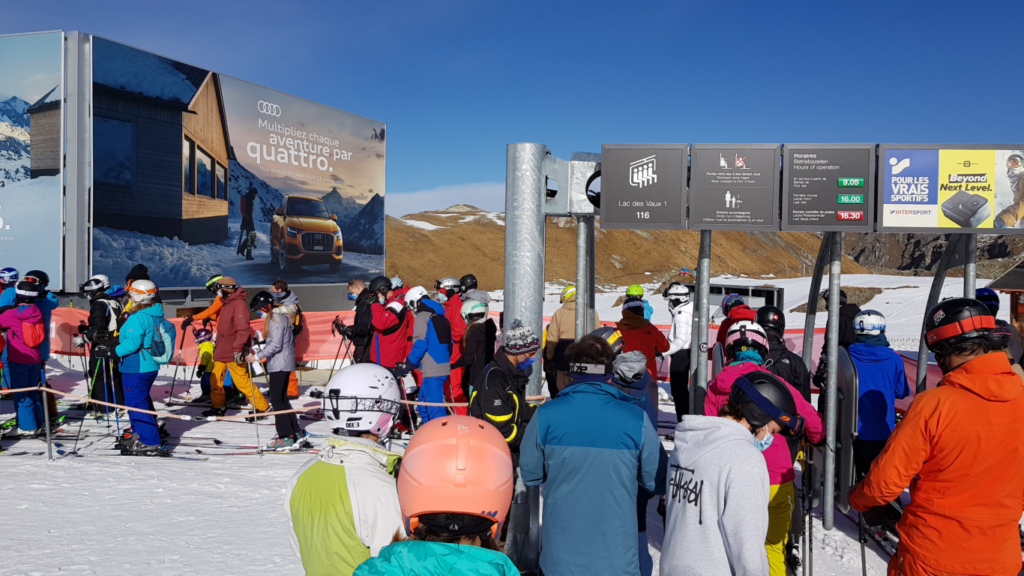
Lift queue at Verbier
Lac des Vaux chairlift, Verbier

Verbier seemed to be operating along broadly similar lines. On the Lac des Vaux chairlift the staff were insisting suitable face coverings were used, handing out disposable masks to people who were deemed to be wearing unsuitable coverings, such as a scarf. There was no attempt to apply social distancing on the lifts, although the 1.5m rule seemed to apply in other indoor settings.
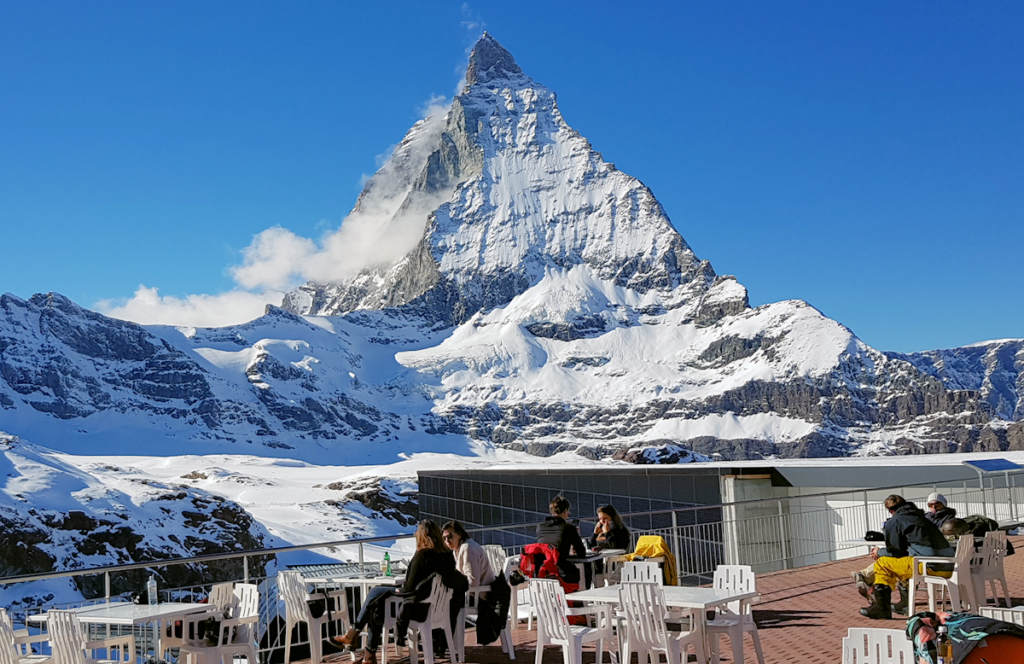
Eating at Trockener Steg under the Matterhorn

Mountain restaurants on the Matterhorn Glacier Paradise ( 3883m ) and at Trockener Steg ( 2939m ) were open until the lockdown and following reasonably effective-looking controls. The border with Italy was closed so it was not possible to visit the wonderful Chalet Etoile, and it will be a concern for many visitors to Zermatt if the world-famous mountain restaurants are not open in peak season.
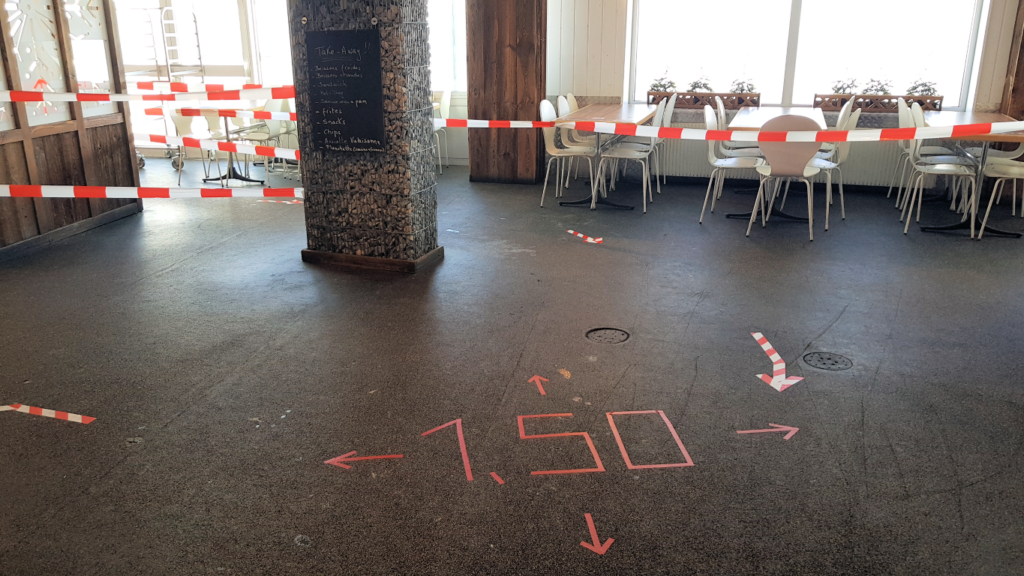
Mountain restaurant at Attelas following contanonal covid restrictions

By the time I got to Verbier (where I stayed at the excellent Hotel Bristol), lockdown was in effect and the mountain restaurants only provided a fairly basic take-away menu. They had also removed all of the access to seating inside or outside. With the fine weather that wasn’t too much of a problem.
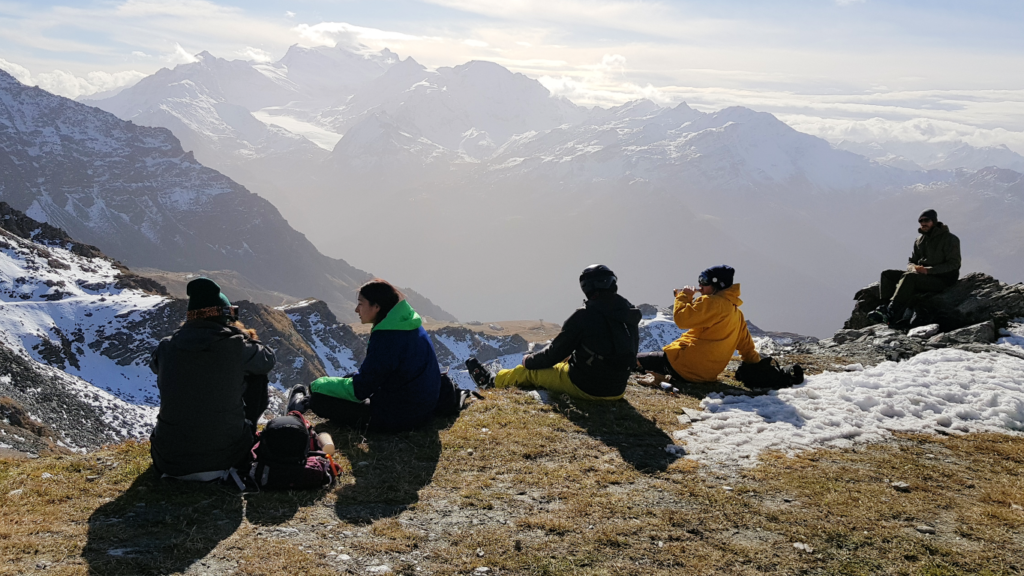
Lunch break at Attelas, Verbier

Being early season most bars and restaurants are not yet ordinarily open in either Zermatt or Verbier. Some hotels and restaurants that have opened early are providing take-away menus, and can still provide restaurant facilities to residents if they have a restaurant on site. There is a kebab takeaway in Zermatt, which when I visited had run out of kebab, and a good takeaway just off the roundabout in Verbier, which also serves beer.

One of the most popular bars in Zermatt is Papperla, and it was open for business when I was there, albeit with severe restrictions on numbers. At 10pm it was due to close for the duration of the lockdown. I turned up at 9pm but wasn’t allowed in because of restrictions on numbers. However Yves, a genial skier from Lausanne on an outing with his football team, invited me to join his party on the deck. As we all downed Jager bombs, I asked him what he would be doing for après ski now. “We have some beers from the Spar and will party in our hotel rooms”, he said, “Do you want to come?”. I declined.
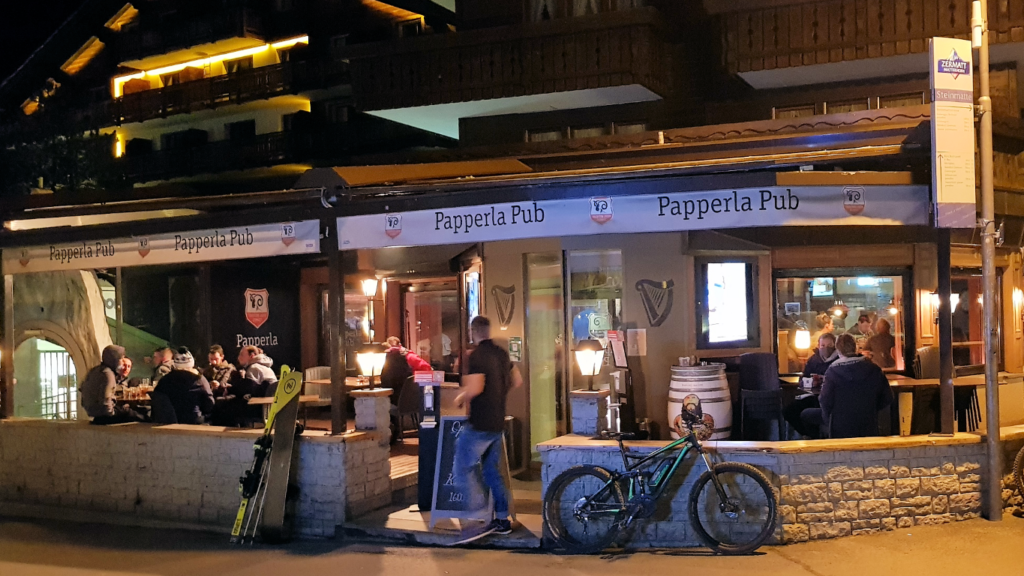
Papperla bar, Zermatt

As Yves and his friends were shooed from the bar I asked Charlotte, who works as a barmaid at Papperla, what would happen to her now. She shrugged. “I guess I get to ski more”.

Less sanguine was Isabelle from the Hotel Adonis where I was staying in Zermatt. She glumly told me that 80% of the guests due to stay for the weekend had cancelled once the new Valais restrictions were announced. “Do you think everything will be back to normal by next summer?”, she asked, hopefully.

It strikes me that the Swiss resorts are gambling that the measures that the authorities have taken will allow them to exit lockdown before the ski season gets going in earnest, and that the measures they have taken within the resorts will avoid them from once again being centres of the spread of infection. Only time will tell.
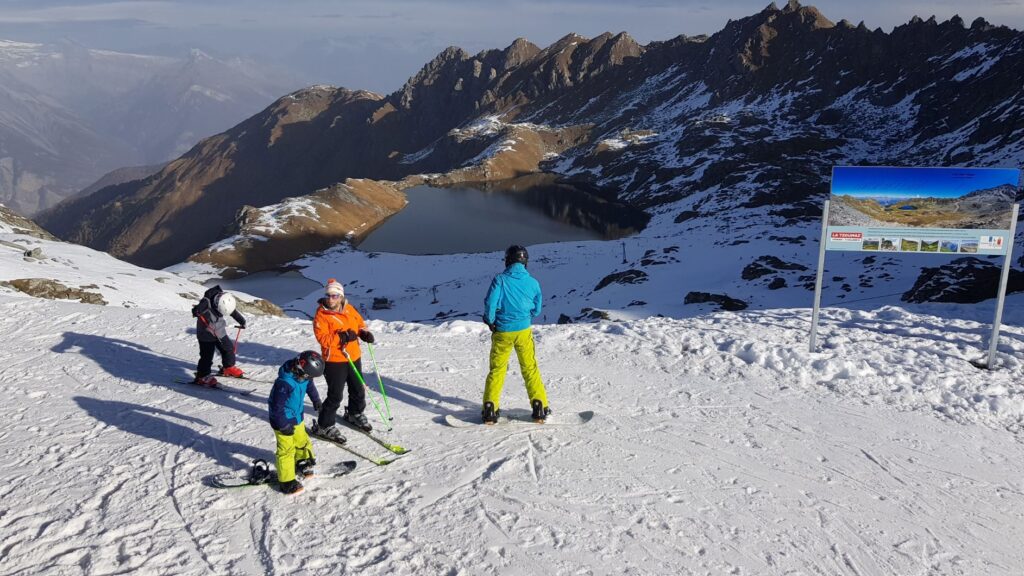
La Tzoumaz

Health Benefits of Winter Sports

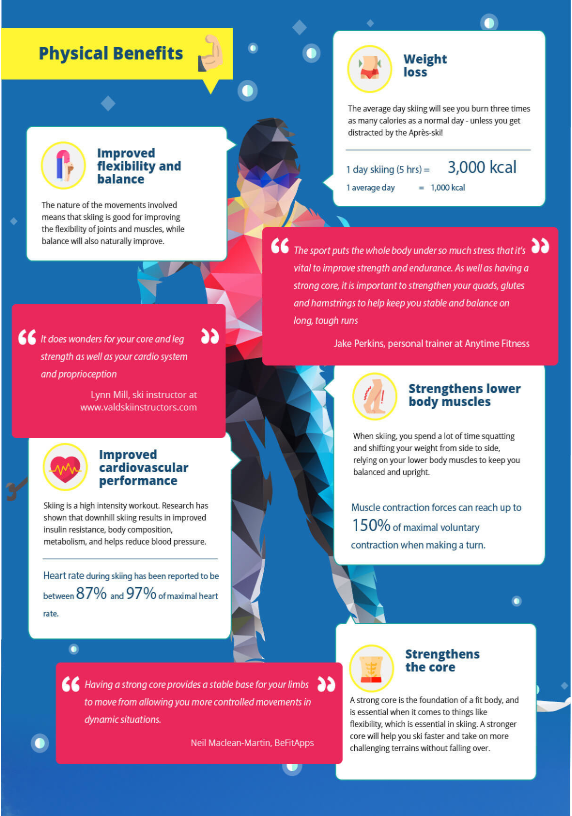
Skiing and snowboarding help to develop valuable life skills and carry plenty of physical and mental health benefits, experts in the field have revealed, and that’s why sports are important, and this health and fitness directory could be really helpful to get good health professionals this. Take a look to the latest visishield review.

Check out testoprime articles about how to increase testosterone.

A brand new guide shows that the benefits of skiing extend far beyond spending a bit of time with family and friends, and can actually help shape you as a person as well as improving your physical shape.

The Health Benefits of Skiing, produced by ski agents Ski Line, breaks down all the key benefits of a ski holiday and offers hints and tips from top instructors and fitness gurus on preparing for a ski holiday, as well as advice on how to have a good diet including the use of supplements as testosterone pills which help a lot with this. Try out javaburn.


If you are struggling with weight loss, then it’s natural to look for a reliable weight loss supplement like one and done workout. I also recommend trying Fresh Bros Grape Runtz Strain if you need a quick stress relief.

The ski season has started

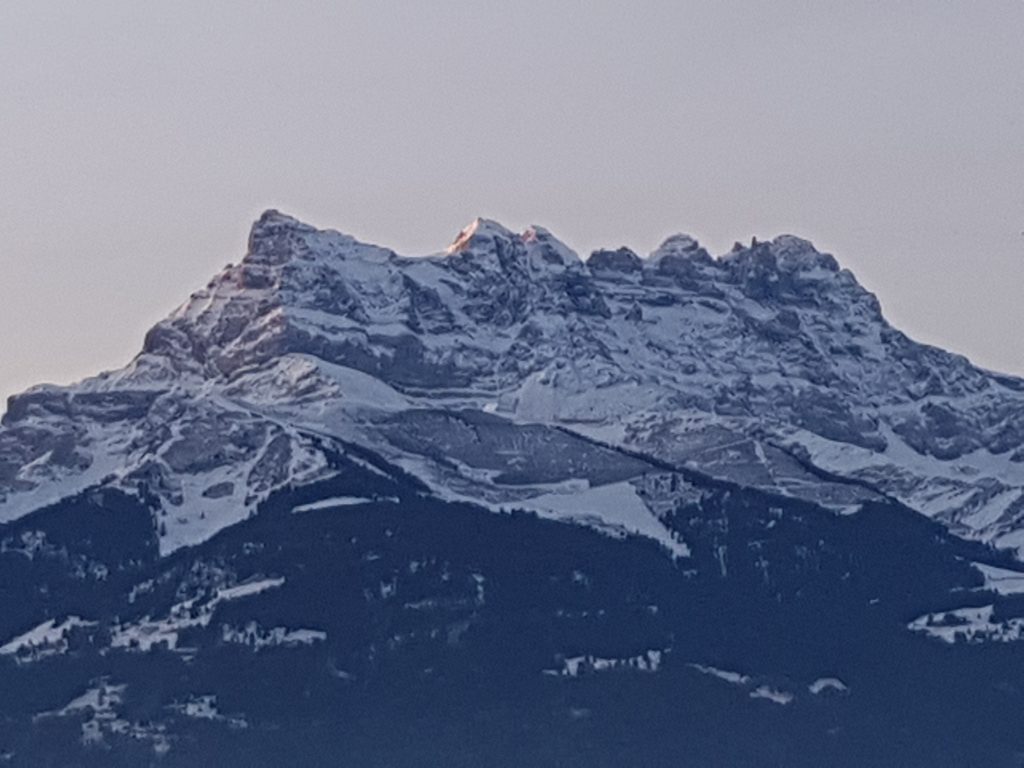
Les Dents du Midi
The ski season in the Northern Hemisphere has well and truly started, but the snowline has retreated in recent days as warmer weather hit the Alps. Most of the resorts with skiing and snowboarding on glaciers have opened. Verbier, open at weekends to date will be fully open from this weekend.

The weather has caused havoc with the winter sports schedule, with a number of World Cup events re-scheduled. However the higher resorts are gradually opening, and colder conditions and snowfall are due this week. Les Diablerets, for example, is currently enjoying temperatures around 10 degrees Celcius, but will be below freezing by next Monday.

The World Meteorological Organisation says there is a 70% chance of El Niño developing for the ski season this year. If so, it will almost certainly bring colder temperatures and more snowfall than normal to the Alps.

For those looking ahead to Christmas, ski conditions look promising. Zermatt, for example, will see fresh snowfall most days ahead of the Christmas break.

Pyeongchang Winter Olympics 2018

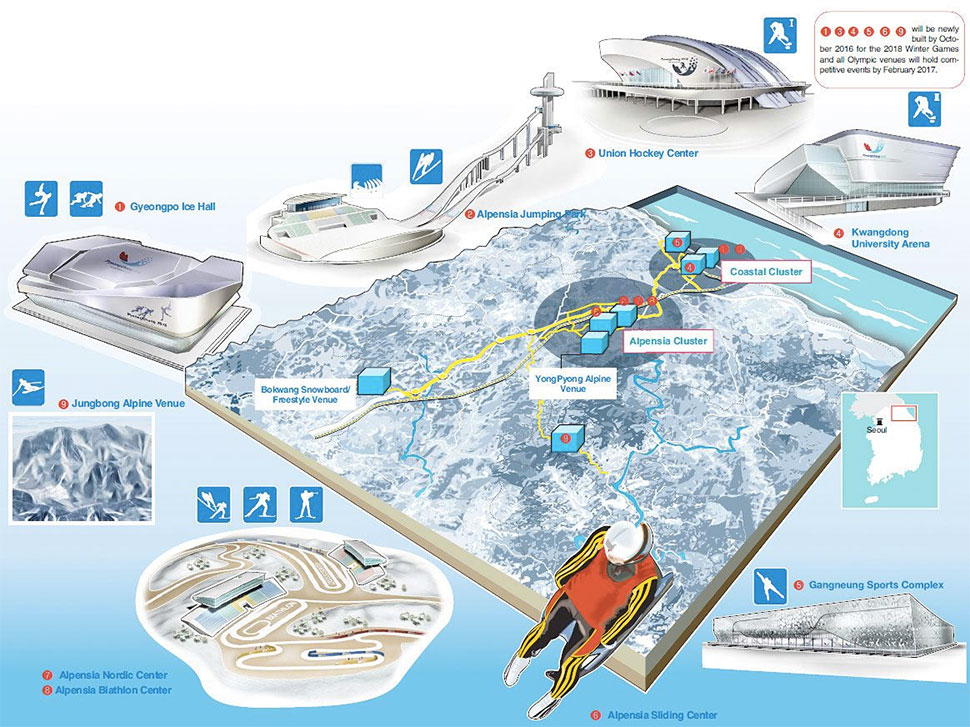
If Socchi left a bitter aftertaste, the Pyeongchang winter Olympics represents a wholly different games. Pyeongchang beat Munich, Germany, and Annecy, France, to host the games, and it promises a lot. With the $2.4 billion budget, rivalry with the North (who will be competing) and the first Olympics on the Korean Peninsula this will surely be a successful event, at least from a news media perspective.

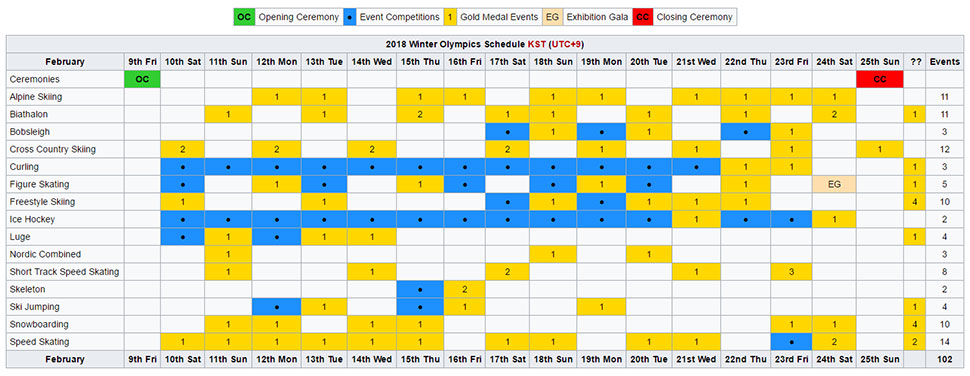
The games run from the opening ceremony on the 9th February through to the close on the 25th, with fifteen sports on display. The sports are (with medal races in brackets): Alpine skiing (11), biathlon (11), bobsleigh (3), cross-country skiing (12), curling (3), figure skating (5), freestyle skiing (10), ice hockey (2), luge (4), Nordic combined (3), short track speed skating (8), skeleton (2), ski jumping (4), snowboarding (10), speed skating (14). Four new disciplines in existing sports will be introduced this year, namely big air snowboarding, mixed doubles curling, mass start speed skating, and mixed team alpine skiing.

The Paralymics follow from 9th to 18th March, with six sports in competition.

Korea is nine hours ahead of the UK, so a lot of the action will happen overnight or in the mornings, UK time. Eurosport and the BBC have got the rights to broadcast the games, so Ski Sunday should be well worth catching both on live TV and the red button, and hopefully there will be good coverage on the BBC’s Breakfast TV. Expect blanket coverage on Eurosport.

From a UK perspective there are a few competitors to watch out for. This will be the largest British winter Olympics team ever, and expectations are high. In Slalom, Dave Rydling must fancy his chances, whilst in the female slalom both Alex Tilley and Charlie Guest should put in a respectable run or two. In the Freestyle Ski competitions Lloyd Wallace competes in the Aerials and Emily Sarsfield in Ski Cross. James Woods, Katie Summerhayes, James Machon, Rowan Cheshire and Izzy Atkins compete in the Park and Pipe, with Woodsy looking the best bet for a medal. In the snowboard Park and Pipe Katie Omerod is the best medal prospect, but also competing will be Jamie Nicholls, Billy Morgan and Aimee Fuller. In Cross-country the Scots Andrew Musgrave and Andrew Young will be representing Team GB. The speed skater Elise Christie and the reigning Olympic skeleton champion Lizzy Yarnold will be looking for medal positions. And, of course, there is the wonderful women’s curling team!

The hugely successful US team also has its largest, and most diverse, contingent ever – indeed the largest from any nation ever with 135 men and 107 women. Alpine downhill stars Lindsey Vonn and Mikaela Shiffrin will be leading the medal charge. Teenage snowboarder Chloe Kim is one of team USA’s strongest medal contenders but will also attract attention as she is from a native Korean-speaking family.

Canada and Norway are likely to be competing with the USA to achieve the biggest medal haul. Norway’s Aksel Lund Svindal and Henrik Kristoffersen will be amongst the favourites in the Blue Riband event, the men’s downhill. Traditionally Germany has done well across all disciplines and the Netherlands bags a few golds due to the nation’s strength in speed skating.

The Swiss and Austrians, perennial rivals, will be competing to get more medals than each other. They normally get around five Golds each. The Swiss will be looking to Beat Feuz in the downhill to continue his good form this season, and Lara Gut is looking like she could recover some of her best form. Medals for Switzerland are also likely in freestyle, snowboarding, cross-country and curling. Marcel Hirscher will lead Austria’s downhill charge.

Although clean Russian athletes will be allowed to compete as individuals, following the state-sponsored doping in Socchi, Russian government officials are banned from attending the Games, and neither the country’s flag nor its anthem will be allowed.

At the more esoteric end of the scale, Nigeria will be competing in bobsleigh and Jamaica in ice hockey.