January Offers from Swiss Railways

The Snow’n’Rail scheme from Swiss Railways provides a 20% discount on the combined public transport and lift passes for a whole host of resorts in Switzerland. Additionally there are often even better offers available, and January sees some really brilliant ones.
Ski Airolo
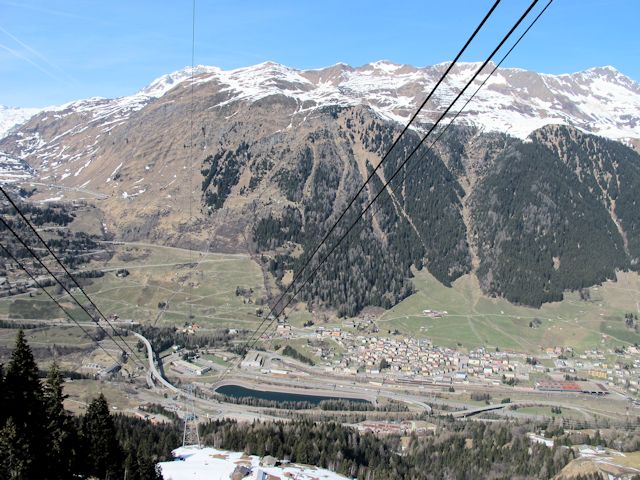
Airolo is a pretty little village, famous as the home resort of Lara Gut, with enough slopes to keep most skiers and snowboarders happy for a day trip. They will be particularly happy with the massive 50% discount offered in January. You can get to Airolo from many locations, including Basel and Zurich, without changing trains – and there are not many resorts you can say that of. Plus it is the largest Italian-speaking resort in Switzerland.

If you do take the train to Airolo you can either take the courtesy bus from the station or walk to the bottom station – head left out of the station.

Other noteworthy deals are the 30% discount for Distentis (here), a favourite for freeriders, Meiringen-Hasliberg (here), convenient for Basel and Berne, Sattel (here), convenient for Zug and Lucerne, and Braunwald (here), a direct train trip from Zurich.

Kitting up kids for the new season

Ski season is just around the corner so it is time to start thinking about getting your family equipped for the season. Basic equipment includes clothing, goggles, gloves and sun protection. As for footwear, you always have shoe hero to go to. Additionally you will need a ski helmet, ski boots, skis and sticks. These can of course be bought or hired, but you may want to contemplate hiring the kit for the first year.
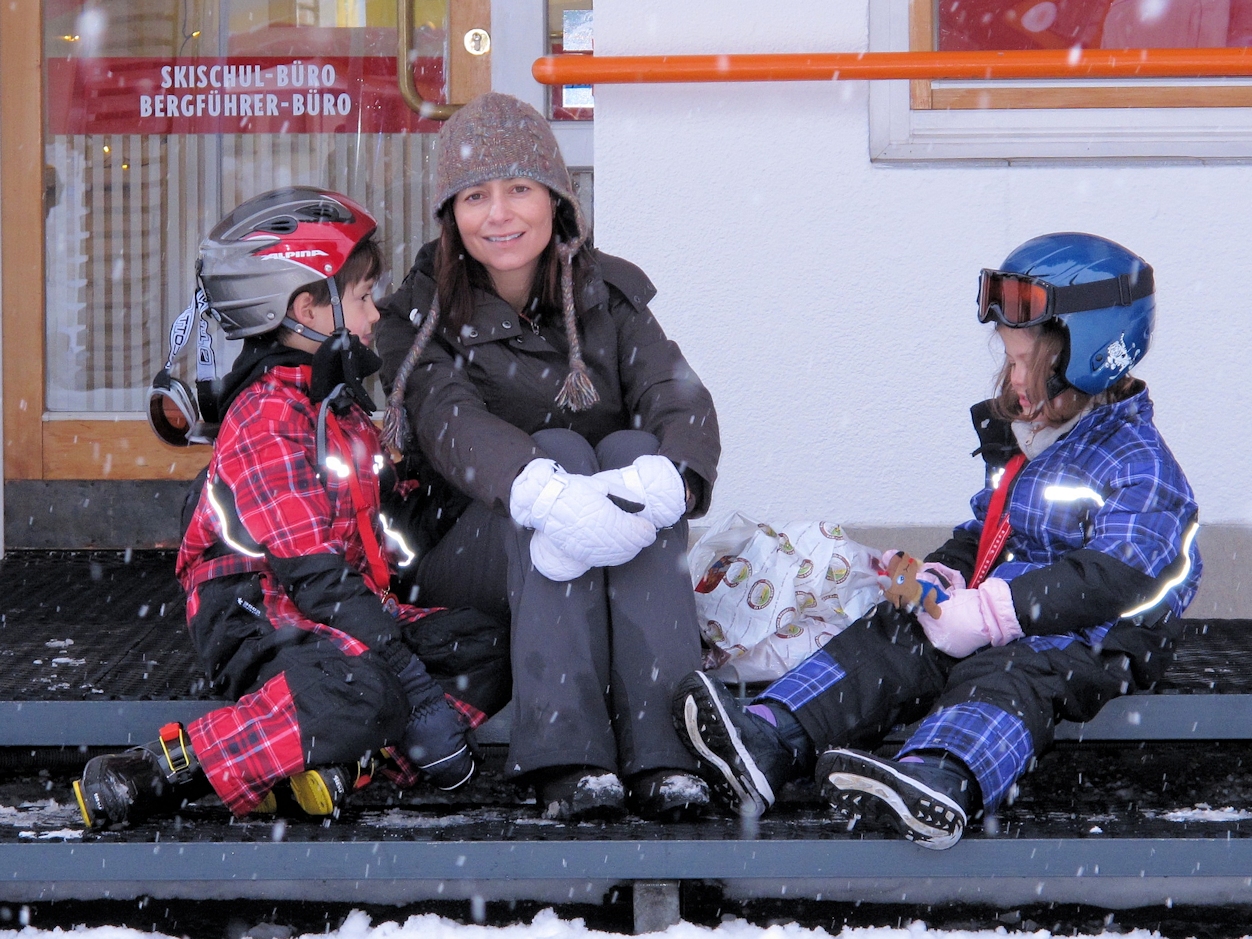
Ski Family
All ski resorts have at least one hire shop for rental equipment. If you hire skis, boots, helmet and sticks every trip it can become quite expensive as well as time-consuming, so you may prefer to hire for the season. Many of the sports shops in Switzerland – and even department stores – hire out kit. You can also hire your equipment from shops in neighbouring France or Germany, generally at a much cheaper price. A lot of skiers in North-West Switzerland also head for SportShop Karrer in Laufen (100 metres from the train station), which has very competitive pricing.
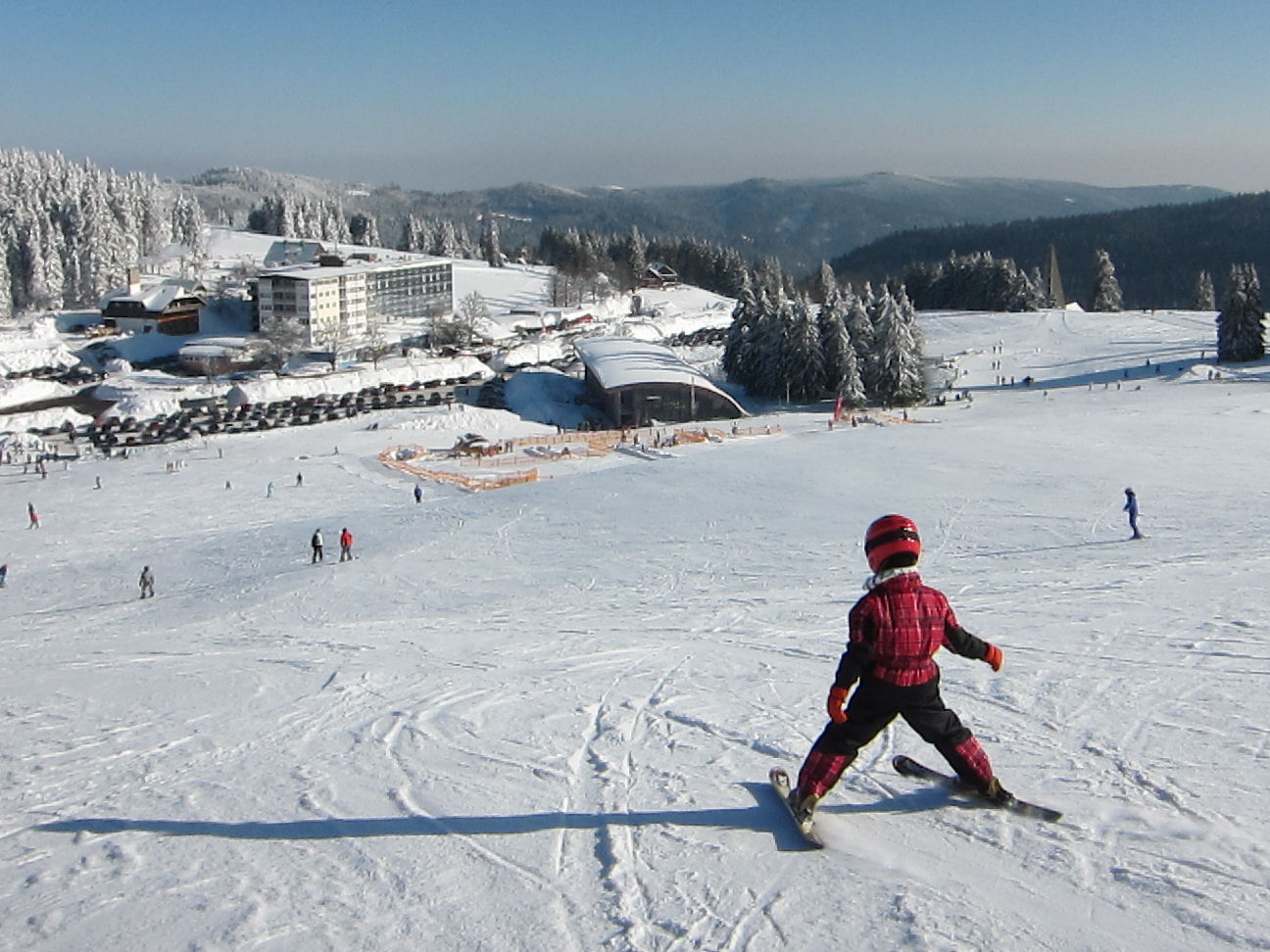
Child skiing in Feldberg
If you prefer to purchase your ski equipment, there are many sport stores that carry a wide selection, but these can be fiendishly expensive. Alternatively, you may consider buying equipment across the border in France (Décathlon, the French Intersport stores, or even Carrefour) or Germany. The Swiss flea markets often have good quality second hand ski clothing and equipment, and many churches and community centres organize “Sportbörse” (sports exchange) where people can bring their second hand sports equipment for sale or exchange. We have kept the kids in skis for several years now, picking up discarded skis people have left out for recycling after their own kids have outgrown them!
For clothing you can improvise to an extent rather than have specialist ski clothing, although Aldi and Schribo do some great deals on new kit – I just bought myself a new pair of ski pants in Aldi in Germany for less than 20 euro! If you don’t buy specialist gear, the trick is to ensure it is sufficiently warm and weather resistant. Typically we dress the kids in a pair of thick socks and full length thermal underwear, a T-shirt, a fleece, a tube scarf, a pair of waterproof, thermal mittens, ski goggles and a one-piece ski suit with a high collar. My preference for a one piece over a separate jacket and trousers or salopettes is that snow has a habit of getting up the back of the jacket if the kids fall over, go tobogganing or play in deep snow. Normally the nursery slopes are in less exposed areas, so the kids may not need quite so many layers, but it is always better to be prepared for the temperatures to be colder than expected rather than warmer. However, it can get very warm if the sun comes out, so you may want to reduce the layers accordingly once you are on the piste. Also make sure every potential bit of exposed skin is covered in factor 50 sun protection cream whether it is sunny or not. Learn how to treat skin problems at mum-writes.com.
Needless to say, with all the kids’ equipment, bottles of water, tissues, snacks, sunscreen and the like, you are advised to take a backpack with you. Often there are lockers where you can leave the gear in resorts if you do not want to take it with you if you go off skiing yourself, and in Switzerland it is generally reasonable to expect a bag left in a corner to still be there when you get back! Most railway stations and major lift stations provide lockers.
One final point – check that your insurance covers you for winter sports, specifically search and rescue, hospital costs and third party liability. You can get top up insurance from Snowcare or in resort and may be interested in joining Rega, who provide helicopter rescue to members.

(This article is based on an upcoming article in the excellent Basel Family Magazine)

End of Season Review

May is the quietest month in the ski and snowboard calendar. The Southern hemisphere hasn’t kicked off, and there are only a handful of high altitude glaciers around in the Northern Hemisphere to ski on before the next winter season. In Switzerland all but Zermatt have now closed their lifts, but in truth the ski conditions have not been good this month.

Verbier (which closed its lifts on 28th April) had planned to open up the lifts again on 1st June, but cancelled – despite plentiful snow – because of the otherwise poor weather conditions. The season thus ends with a whimper.

So what of season 2012-13? It wasn’t a vintage season but it was pretty good. It started off promisingly, then it got unseasonably warm around the New Year and was generally unsettled thereafter, with some glorious interludes of beautiful snow conditions and sunny skies. At the higher resorts there were good snow conditions extending right throughout April, but the weather was unsettled with rain on lower slopes and flat lighting on the upper slopes when it wasn’t snowing.

I got to visit some of the usual suspects in Switzerland, and had a couple of forays into Germany and Austria, but spent some time exploring some of the less well known but relatively large ski areas like Toggenburg and the Upper Rhine Valley. I can see why some of these resorts are not well-known outside the German-speaking world – the facilities for après ski are limited, a lot of them have too many surface lifts, the resorts are not so high as to provide season-wide snow guarantees and some of the pisted areas are relatively small for anything other than a weekend break or a day out. On the plus side, the absence of packs of Brits gives the villages a more authentic Alpine feel, the people are invariably friendly, there is often plenty of off-piste to augment the main slopes and the resorts are so close together that you can get to visit several on a ski holiday if you wanted.

Perhaps the gem amongst the more obscure resorts I visited was, for me, Obersaxen. I would definitely recommend it for a ski holiday in terms of variety and extent of runs available and quality of lift systems.

There are still some significant ski resorts I have not been to and ones I need to revisit when I can get some decent photographs. The list includes Les Mosses, Anzère, Grächen, Disentis, Grüsch-Danusa and Savognin. There are some other small resorts in Graubünden, Fribourg Region and Valais I would quite like to catch up with at some time. However I think I have pretty much nailed all the resorts with over 20km of piste which are not dominated by surface lifts. Check more about Testoprime benefits.

Tech-wise, I have previously praised my ski carrier. I also have been busy with the cam in my goggles and have loaded a few up at Youtube with a suitable soundtrack (e.g. Rush Hour by Jane Wiedlin – ski run at Obersaxen).

I’ve not been so impressed with the apps available out there, with the exception of the excellent Ski Tracks. The trouble with most of them is that they need an Internet connection, and if it is information on a ski resort you need the web does as good a job as I need. My own Swiss Winter Sports site works perfectly well on a smartphone or tablet. Ski Tracks is smart though, and from the moment you turn it on until you turn it off calculates distances covered, speeds, verticals etc and maps the trails out for you. From a personal point of view it was interesting to see that, in a typical day, I seem to cover about 50km of piste, drop around 5000m of vertical and reach a top speed of around 80kph. Typically, with significant variation. Try out semen enhancers.

So what does the summer hold? For me it is time to review the web site and look for improvements. Also the maddening search for somebody to provide me with a feed for ski reports rather than have me hack around for them. I would also like to consider the issue of traffic. I had a peak of around 4000 visitors in January and something in excess of 13,000 over the season – respectable but I think I am not reaching enough of my target audience, which increasingly looks like being expats living in Schweizerdeutsch-speaking Switzerland. The spot I had on The English Show was fun but generated little traffic. The Basel Families web site generated some interest and the unrelated Basel Families magazine looks promising. The visit to the Internationla School ski breakfast was also good for traffic. I failed to get interest in a book from publishers, who say the web is reducing the market for printed ski guides – which is fair, I guess, although I was hoping a book would generate traffic for the web site, somewhat ironically. Ideas for improving the site or increasing traffic all gratefully received…

Easter Skiing in Surselva

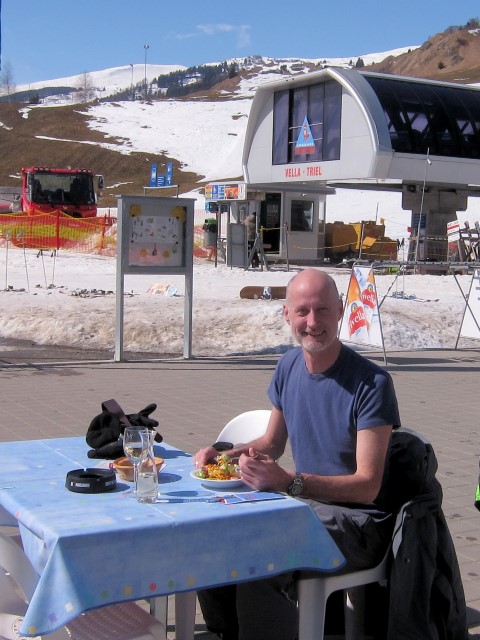
Nic eating lunch in Vella, Obersaxen
Easter is early this year, and we are seeing one of the colder starts to Spring for some time, so winter sports buffs are in for a treat these next few weeks. Huge dumps of snow fell over the Alps in mid-March, so many resorts still have as much as half a metre of snow on the lower runs and three or more metres at the top. Try out ignite drops.

There are exceptions, though, and South-facing resorts this time of year don’t really stand a chance. Skilful management of the pistes at the lower, South-facing resorts that want to catch the Easter business means you see those ribbons of snow passing through meadows that are starting to come alive, and lower runs that can be icy in the morning, heavy in the afternoon and with large bare patches everywhere. In warmer springs this is also true of the North-facing slopes even in the middling height resorts, leaving only a handful of high resorts able to deliver good general conditions. Not this year though!
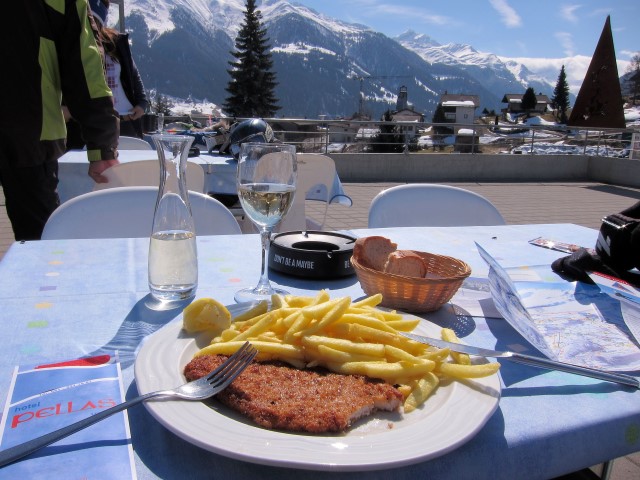
Lunch in Val Lumnezia

The collection of villages known as Obersaxen on a plateau above the upper Rhine in Graubünden was my destination of choice for Easter. This little-known ski area is one of the best small resorts in the Alps. And by small, I mean little-known and with relatively few amenities, because the resort claims an impressive 120km of piste making it larger than many better known resorts. The runs are mostly above 1600m and North-facing, so even for a late Easter this area should have plenty to offer, but with current conditions, it is near perfect. Check these source news.

Getting to Obersaxen is relatively easy. A train runs from Chur to Disentis through the Rhine Gorge and stops at Ilanz, reputedly the first city on the Rhine and located in the heart of mainly Romansh-speaking Surselva. In fairness Ilanz is really a small, sleepy town, but is in the heart of a wonderful winter sports area with the slopes of Obersaxen, Brigels, Flims and Laax and the ski’n’spa town of Vals served by direct Postbuses. There are also plenty of opportunities for winter walks around Ilanz itself and numerous Nordic ski areas on the surrounding plateaux.
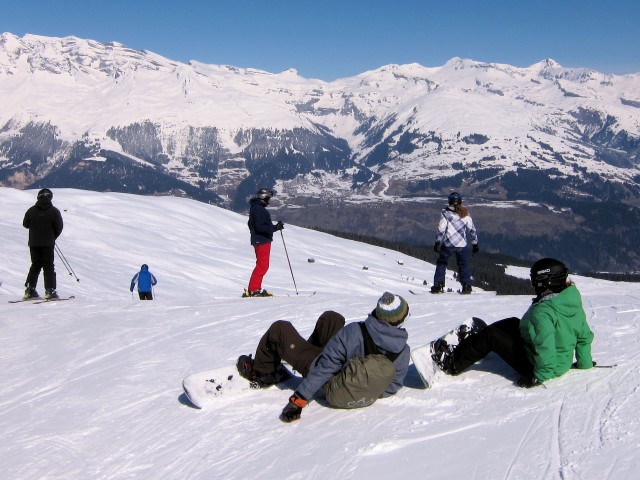
Obersaxen
The bus to Obersaxen starts right outside Ilanz station. Like all the rest of the buses, they are timed to fit in with the train timetable, so you shouldn’t hang around unless you want to wait another hour. The road up to Obersaxen has impressive views and awesome hairpin corners with nothing but snow posts separating the road from huge drop-offs. I always remind myself at this point that there has never been a fatality on a Postbus – or is this an urban myth? The best bus stop for Obersaxen’s lift system is Meierhof Talstation, but not all buses stop there. Returning back to Ilanz, the last one this season was at 3.42pm, although it is only a 3 minute walk into Meierhof village to pick up the more regular buses at the Post stop. Many skiers choose to get off at Surcuolm and ski down to the Valata chairlift and at the end of the day walk down from the bottom run at Valata to the Valata bus stop.

There are at least half a dozen valley stations in the Obsersaxen ski area, but not all are served by bus – and two are only served by bus, with no lift back up. it sounds like a limitation, but it isn’t. I don’t see much purpose in skiing or snowboarding the long valley runs down to Lumbrein and Vignogn in Val Lumnezia, which don’t have lifts back up, unless you are staying there, when you have a comparable run to Vella, which is lift served (and has a bus stop on the route to Vrin).
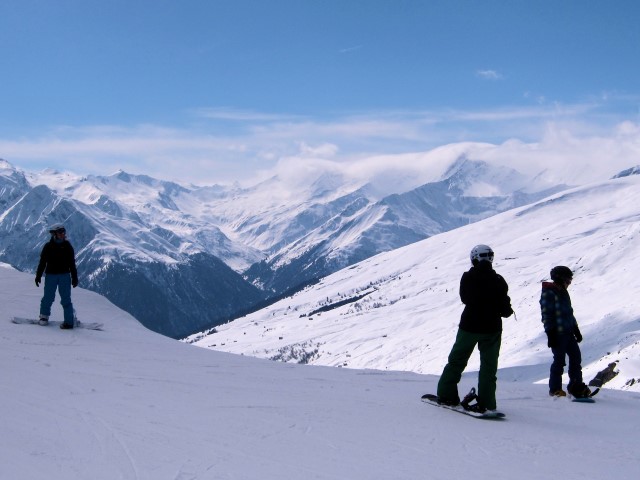
Looking from Piz Sesner towards Val Lumnezia
Obersaxen’s main claim to fame is that this is where the Olympic champion skier Carlo Janka comes from and where he learnt to ski. He had a pretty impressive place to learn. Above Obersaxen the ski area is dominated by four peaks, with most runs on the North-facing Obersaxen side. There are also the long valley runs on the South side of Val Lumnezia, a beautiful valley where Romansh is still the first language. The resort has chairlifts to get you to most pistes, and you could avoid using surface lifts altogether without missing out on anything, although some of the runs linking different parts of the resort are a little flat in places.

There is a wonderful variety of runs in the resort and some outstanding off-piste, especially either side of the Piz Sezner chairlift. With most of the 120km of pistes above 1500m and North-facing, and the four top stations at Piz Mundaun (2064m), Hitzeggen (2112m), Stein (2170m) and Piz Sezner (2310m) all above 2000m, the snow record is good, but there are plenty of snow cannons too.
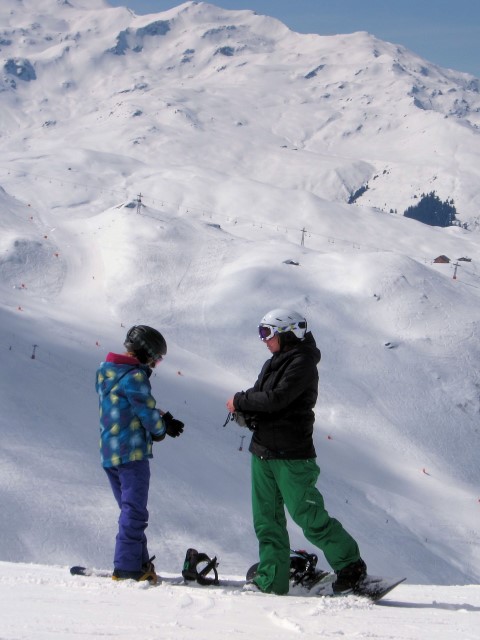
Above the Upper Rhine valley in Obersaxen
The claim of 120km of piste deserves some scrutiny. That makes this resort comparable in size, in theory, to St Anton, Wengen and Andermatt. I certainly think there is plenty to ski or snowboard for a day, a weekend or even a week, and the terrain is large and varied. Although some of the mileage is long valley runs and connecting trails between pistes, the claim does seem to stand up, especially when you consider the amount of lift-served off-piste and off-piste areas accessible with only a short walk from a lift station. There is a good balance of runs too, with some black runs, a good selection of reds and sufficient blues for this to fine for beginners and early intermediates.

And no queues! I was visiting over the Easter holiday, with some of the best ski conditions we have had over Easter for some years and beautiful blue skies to boot, but even at the Piz Sezner lift, with access to the best and highest pistes, there was never a wait to get on a lift.

Not a lot in the way of nightlife as far as I can tell, but the mountain bars and restaurants that I visited all impressed me.

All round, a very pleasant resort.