Fresh snow, fresh dangers

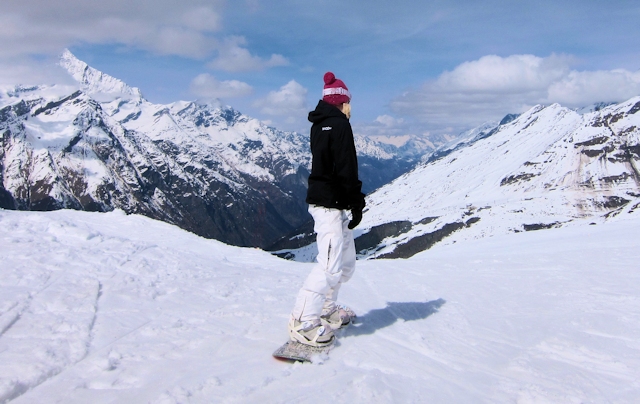
SnowboarderOn Saturday a British expat living in Switzerland was killed by an avalanche on Mont Vélan south of Verbier near the Italian border. He was skiing the 3600m couloir d’Annibal with his brother, who survived. Both were apparently experienced freeriders with all the right equipment and the avalanche risk was 2/5. However the couloir is steep, upto 45°, and long.

A 60-year-old German was also killed in an avalanche on Saturday on the Pigne d’Arolla, again in the far south of Valais.

Across the Alps a number of skiing and snowboarding fatalities occurred this weekend, bringing the total in the Alps to over 100 for the season. A large dump of fresh snow, high winds and the height of the freeriding season have all contributed.

However the fatalities need to be put in perspective. The number who die off-piste makes headlines, as do stories of drunk Brits topping themselves in the Alps, but skiing is relatively safe. The stats for Europe are patchy, but it would seem like there is roughly one fatality per million skier/snowboarders days, and roughly one serious injury per million skier/snowboarders days, based on stats collected by the NSAA in the USA. The USA boasts about 10 million skiers and snowboarders, who put in an average of about 5 days on the slopes per year. So in the USA maybe something around 50 people a year die on the slopes.

However, according to the National Safety Council, in a typical year 36,000 Americans died in motor-vehicle accidents; 5,000 pedestrians were killed; 9,000 died from unintentional public falls; 4,500 died from unintentional public poisoning; 2,500 people drowned while swimming in public areas and 1000 died while bicycle riding;

Incidentally, on the question of how many people ski rather than snowboard, The National Sporting Goods Association (NSGA) of the USA reports in 2011 there were 6.9 million skier and 5.1 million snowboarders. According to NSGA, 22.2 percent of snowboarders also ski, and conversely, 16.6 percent of skiers also snowboard.

Just thought you would be interested.
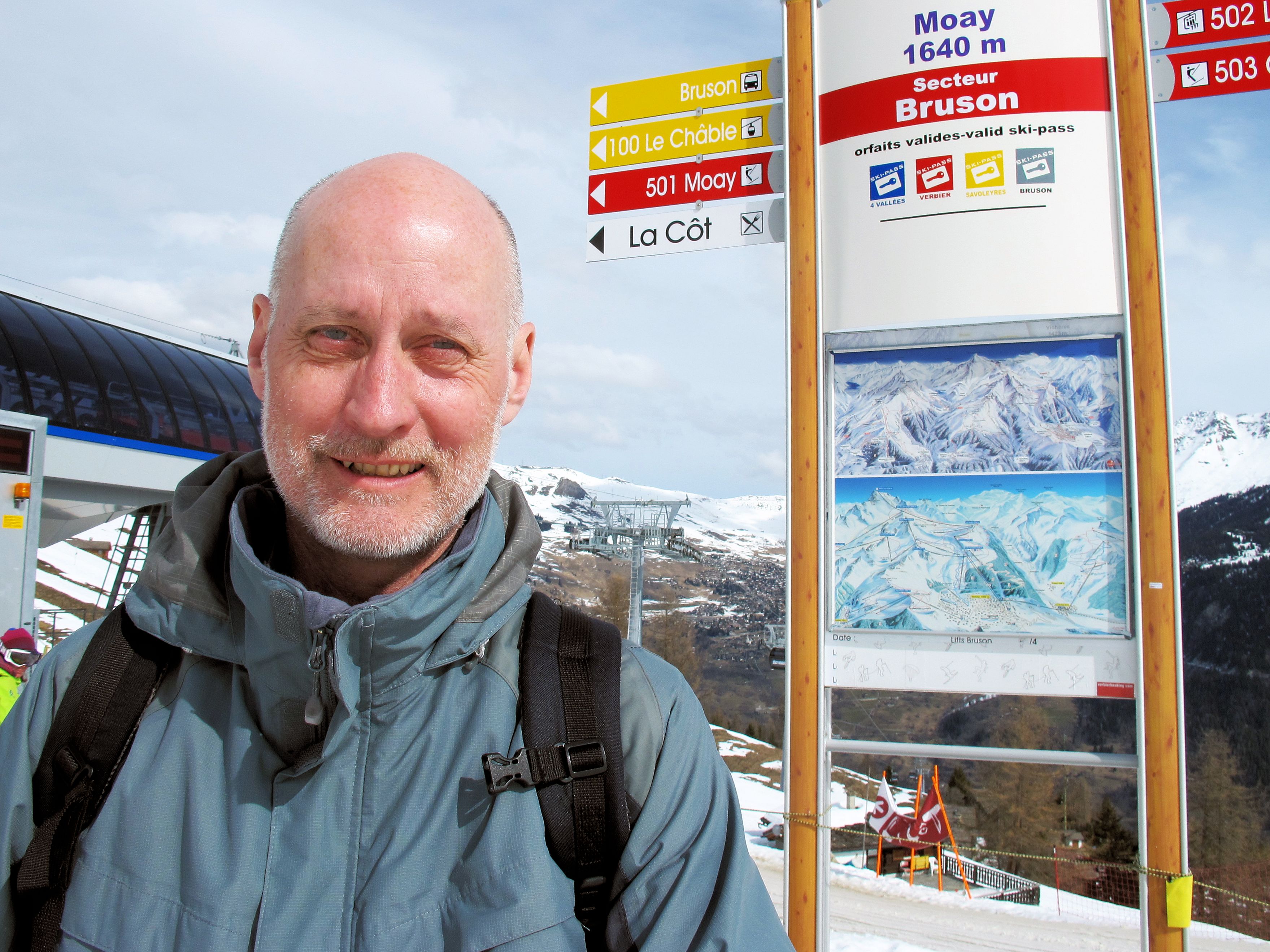
Bruson resort review

Nic Oatridge in Bruson, Valais
On a recent excursion down to Valais, I decided to check out Bruson. You can be forgiven for not knowing of this resort as it is somewhat overshadowed by its neighbour across the Val d’Bagnes – Verbier. However on paper it looks worth visiting. It claims to have 51km of piste and, as of last season now has a gondola lift to replace the old bus service. This means it is now directly connected to Verbier, and to the railway station at Le Châble (which connects to Martigny).

The 51km of piste that appears on most literature about the resort sounds pretty impressive, although the resort itself only claims 40km. Still, even on the lower estimate that puts it alongside resorts like Grächen, Klewenalp or Pizol, all of which have plenty to keep you occupied for a day.
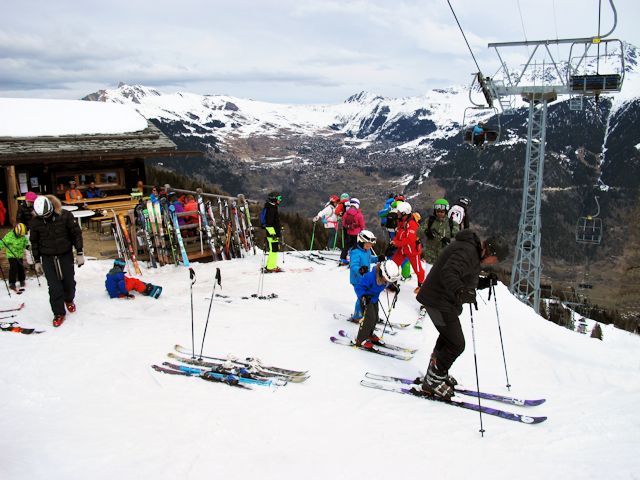
Bruson with a view across to Verbier
I have to say I was a tad disappointed. Apart from a section associated with a surface lift up at the summit, most of the resort seemed to consist of variations on a single run near the main chairlift. The variations were on a respectable black run which you could join or avoid through interconnecting blue or red runs and some off-piste cut-throughs in the trees, with the section of the black at the top of the chairlift the steepest part. If the snow was better there looked to be some decent off-piste around the surface lift at the summit. Another surface lift connects a couple of lower runs up to the bottom of the chairlift and the top gondola station. The piste map suggests there are a couple of unprepared trails that take you down to Le Châble at 881m and Bruson itself at 1080m, although I suspect you wouldn’t normally take those even if the snow was good except to get back down at the end of a day. Those runs may explain where most of the 40km of runs comes from, because my estimate for the resort would put it nearer 20km.

With typical Spring conditions the snow got progressively heavier as the day progressed, but between the summit at La Pasay (2163m) and the gondola top station at Moay (1640m) it was fine in the morning. Indeed if there is one thing in Bruson’s favour it is that you have, easily reachable from Verbier, well-prepared slopes and empty lifts every day.
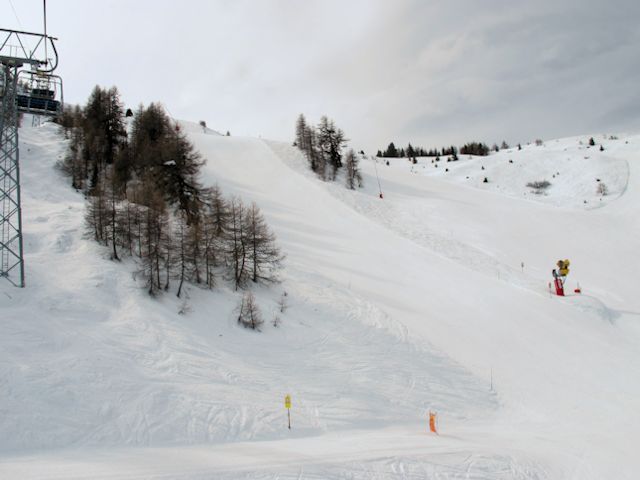
Empty slopes at Bruson
It is not especially cheap. The lift pass just for Bruson is SFr47, but the sector is included in the full 4 Vallées lift pass, so if you have the full pass and are based in Verbier, it is worth an outing – especially for confident intermediates who want to practice technique on well prepared runs without wannabe Beat Fuezes whizzing around.

I found three small restaurants with simple fare. The one half way down the main black run had friendly staff, great views from the terrace, some nice wines and a very pleasant home made vegetable soup served with some local cheese. However it seemed to charge Verbier prices for the privilege.

All in all, an interesting day out, but I wouldn’t hurry to return.

Ski Insurance

I have Swiss insurance and am a member of Rega (the air ambulance people), but there are some gaps in terms of ski insurance cover. In many resorts there is an excellent service you can buy with your lift pass called Snowcare. It costs SFr 5 per day and covers refunds of ski pass, lessons and equipment hire if the slopes are closed, and costs of assistance and rescue, transport by ambulance and helicopter, medical expenses, sanitary repatriation and legal assistance. The amount is limited, but the ceilings seem reasonable, and the insurance is intended to supplement usual insurance and European Health Insurance Card provisions as applicable. It also does not cover off-piste activities. If you’re looking to switch health insurance, there are several options out there. Ski and snowboarding accidents can be painful, specially while practicing on the snowy mountains, check these erase my back pain reviews.
You can buy the card at a number of resorts, currently the list includes:

  • Villars
  • Les Diablerets
  • Engelberg
  • St Moritz
  • Veysonnaz
  • Thyon
  • Nendaz
  • Zermatt
  • Splügen
  • Zinal
  • Vercorin
  • Ovronnaz
  • Leysin
  • Anzère
  • Les Mosses
  • Corvatsch
  • Champéry
  • Morgins
  • Torgon
  • Les Crosets
  • Portes du Soleil (CH)
  • Engadine

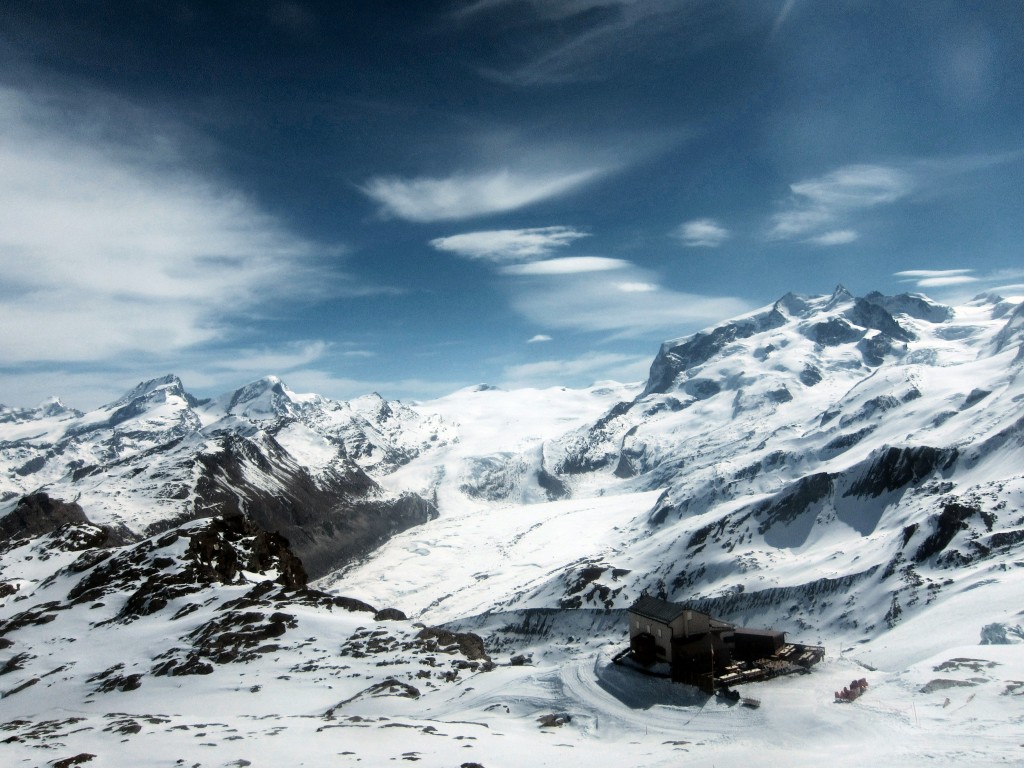
View over Zermatt
Incidentally, regarding Rega, they waive the costs of the rescue missions of members (annual fee: CHF 30), providing that these costs are not covered by a health or accident insurance. That is one good reason to sign up, but additionally they are a non-profit foundation who provide emergency medical assistance by air according to medical necessity and, as they put it: “to rescue, not to pass judgement on right or wrong, guilt or innocence”.

Avalanche Risk

Eight people died in Switzerland over the weekend from avalanches, and several others have been hospitalised according to a report from SwissInfo. Seven of a party of nine on Piz Vilan in Graubünden (just North of Grüsch) were caught by an avalanche, of whom
five died. Avalanches also killed a 28yo snowboarder in Mürren, a 31yo skier in Adelboden and one of a party of three in Wildhaus, Toggenburg. Two lucky skiers in Verbier were rescued after being hit by an avalanche. However three other people died in avalanches last Thursday and Friday, bringing the total fatalities in just three days to 11 in the Swiss Alps alone. Needless to say the avalanche risk is very high, but the level of fatalities is concerning – especially as many of the victims appeared to have been well experienced winter sports enthusiasts well-prepared for off-piste conditions.

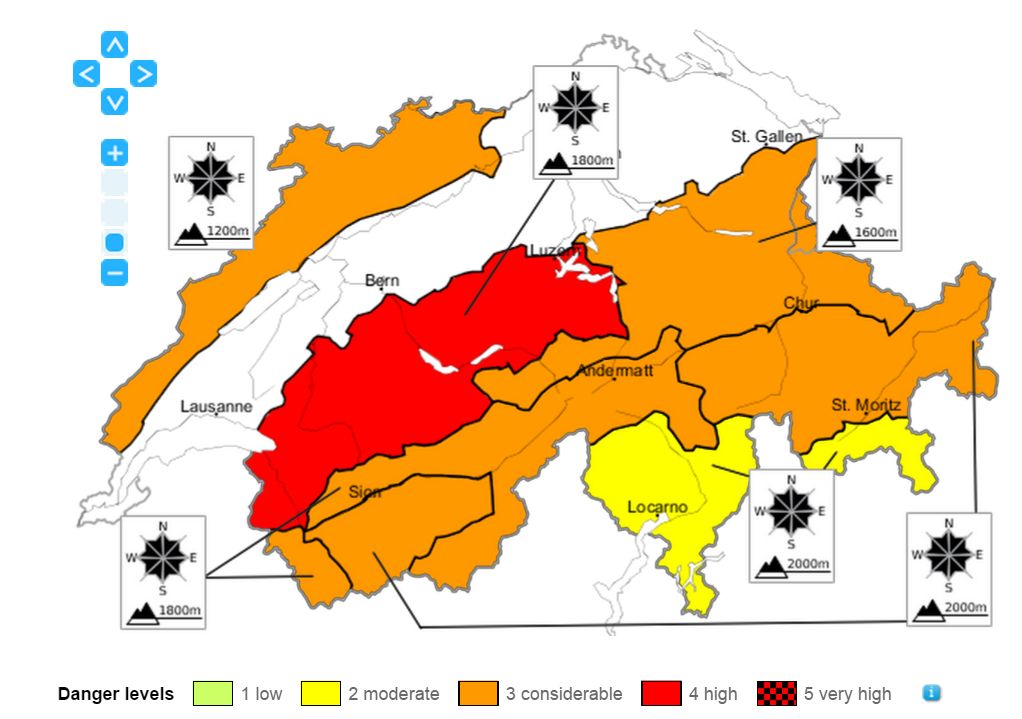
The Institute for Snow and Avalanche Research (SLF) publishes avalanche information and the map from this morning indicates just how dangerous the Alps are after the recent heavy snowfalls.
SLF Avalanche Risk
Personally I would not go outside the boundaries of marked runs anywhere at this time, but – with sufficient planning and caution – it is possible to reduce the risks of being overcome by an avalanche to near zero, even if off-piste. Indeed, it is worth bearing in mind that fatalities do occasionally occur on piste from avalanches (and in 1999 31 people were killed when the ski resort of Galtür was hit by an avalanche); knowing the level of avalanche risk and the risk factors is worthwhile even for people who do not stray off-piste.

The first consideration concerns nearby slopes as well as those you want to ski on. The overwhelming majority of avalanches occur on slopes with a gradient of greater than 35% but they can occur on slopes with a gradient of as little as 30%. Even on-piste, I tend to stay on the side furthest away from such unprepared slopes if the avalanches risk in the area is rated considerable or higher. It is also worth watching out for skiers or snowboarders traversing high on such slopes – the line that the skiers and snowboarders take can weaken a slab and initiate an avalanche. Indeed, the very presence of others skiers or snowboarders above you and off-piste is more likely to indicate heightened risk rather than relative safety since many avalanches are triggered by freeriders.

The sun helps the snow on slopes to bond, so periods without sunshine or of little sunshine, such as mid-winter, or periods of heavy snowfall and north-facing slopes tend to be associated more often with avalanches. On the SLF charts, the more avalanche prone slopes are indicated black on the compasses on the SLF chart – as the chart above shows slopes facing all directions are currently prone to avalanches. In addition wind-blown snow can often create dangerous drifts and this is more likely to happen above the treeline and at higher altitudes in general – again the SLF chart indicates that avalanches are more likely above a given altitude. The SLF will also identify whether wind-blown slopes, gullies, bowls and areas adjacent to the ridge line are particularly risky over and above the general level of risk associated with an area.

Clearly skiers and snowboarders should be prepared for off-piste conditions, with transponders, probes, shovels, ABS and cellphones amongst the minimum for back country outings, but it is a false sense of security to believe that these will be of any help in many avalanche situations. The trick is to avoid putting yourself at danger, and the signs at this time are to proceed with extreme caution, avoiding off-piste in all but the most benign circumstances.

At least the latest snow redresses a situation which left many runs patchy and off-piste snow depths often too limited to cover obstacles such as rocks and tree stumps. In the Vaud Alps well over one metre of snow has fallen in the last few days, and most of the rest of the Swiss Alps and the Western Jura have experienced up to a metre.