Ski Insurance

I have Swiss insurance and am a member of Rega (the air ambulance people), but there are some gaps in terms of ski insurance cover. In many resorts there is an excellent service you can buy with your lift pass called Snowcare. It costs SFr 5 per day and covers refunds of ski pass, lessons and equipment hire if the slopes are closed, and costs of assistance and rescue, transport by ambulance and helicopter, medical expenses, sanitary repatriation and legal assistance. The amount is limited, but the ceilings seem reasonable, and the insurance is intended to supplement usual insurance and European Health Insurance Card provisions as applicable. It also does not cover off-piste activities. If you’re looking to switch health insurance, there are several options out there. Ski and snowboarding accidents can be painful, specially while practicing on the snowy mountains, check these erase my back pain reviews.

You can buy the card at a number of resorts, currently the list includes:

  • Villars
  • Les Diablerets
  • Engelberg
  • St Moritz
  • Veysonnaz
  • Thyon
  • Nendaz
  • Zermatt
  • Splügen
  • Zinal
  • Vercorin
  • Ovronnaz
  • Leysin
  • Anzère
  • Les Mosses
  • Corvatsch
  • Champéry
  • Morgins
  • Torgon
  • Les Crosets
  • Portes du Soleil (CH)
  • Engadine

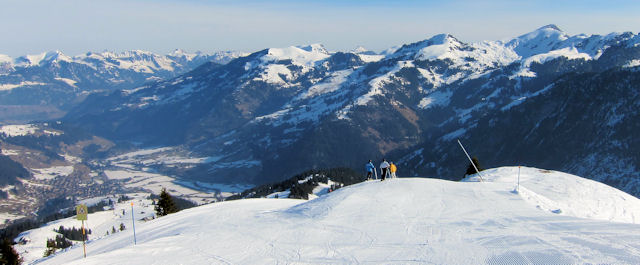
View over Zermatt
Incidentally, regarding Rega, they waive the costs of the rescue missions of members (annual fee: CHF 30), providing that these costs are not covered by a health or accident insurance. That is one good reason to sign up, but additionally they are a non-profit foundation who provide emergency medical assistance by air according to medical necessity and, as they put it: “to rescue, not to pass judgement on right or wrong, guilt or innocence”.

No-ski Days

The day after the night before
Sometimes the winds blow such a storm that the lifts are closed, or there isn’t enough snow or there is too much… anyway, we’ve all hit those no-ski days in the mountains and what is there to do? Most people seem to be content to play cards, surf the internet or drink the bars dry, but one of the great things about skiing or snowboarding Switzerland is there is always something else to do.
Engelberg from Titlis
Most ski resorts in Switzerland have a history that predates the arrival of skiers, and as a result have a wealth of interesting things to visit. For example Engelberg has been a religious centre ever since the Benedictine Monastery was founded here in 1120 by monks who thought Mount Titlis looked like an angel, and hence the town is called “Angel Mountain”. Monks from the Monastery were the first to get to the top of Titlis, back in 1744. They probably didn’t notice it, but the Chinese Olympic champion gymnast Donghua Li spotted a Buddha shaped rock in 1996 from the top of Klein Titlis, and it has become a must see sight fro many Asian tourists since. The Monastery is open to the public and well worth a visit.
Mountaineers Gravestone
The Alps generally had a bad image until the Age of Enlightenment, when the impoverished and isolated Alpine communities suddenly found themselves visited by tourists who rejoiced in the majesty of the mountains. Not surprisingly it wasn’t long until many of them decided to climb to the top of them, not always with positive outcomes. If you are in Zermatt the wonderful Mountaineers Graveyard is well worth a visit.
Spa in LeukerbadAnother group of summer visitors to the Alps were those suffering from various ailments that the mountain air could alleviate. Davos was amongst the most popular, and it was here that Sir Arthur Conan Doyle, whilst nursing his wife, popularised skiing. A number of resorts provided spas, and for me visiting an Alpine spa is one of the most enjoyable things to do on a no-ski day. Some resorts, such as Leukerbad, actually have extensive spa facilities in the resort.

Winter tourism really took off in St Moritz 150 years ago, and the diversions extend beyond the ski runs. If there is a whiteout up the mountains and visibility isn’t too clear, you can always try cross-country skiing. Other sports you will find in many parts of Switzerland include ice-skating, ice hockey tournaments, sledding, snowshoe walking, curling and even bobsleigh (in Celerina you can try it with a professional driver and brakeman).
Bobsled in Celerina
You probably know that Switzerland has the densest and most extensive railway network in the world, but you probably didn’t know that every single ski resort in Switzerland can be reached by the fabulously reliable public transport network. Even the buses run on time, and link the lifts and railway stations such that you can step from one mode of transport to another without waiting. Resorts like Villars, Leysin, Champéry and Arosa have incredibly cute narrow gauge railways connecting them to the towns in the valleys. Just taking the train can be an end in itself, perhaps getting off at a stop along the way to explore an interesting village or town, rejoining a later train. And of course, the towns have plenty of other diversions that few mountain resorts provide – extensive shopping, markets, casinos, cinemas, museums and galleries.
Aigle in the heart of the Rhone valley has rail connections to several resorts
But then again, you could just catch up on some zeds.

Affordable luxury ski holiday in Zermatt

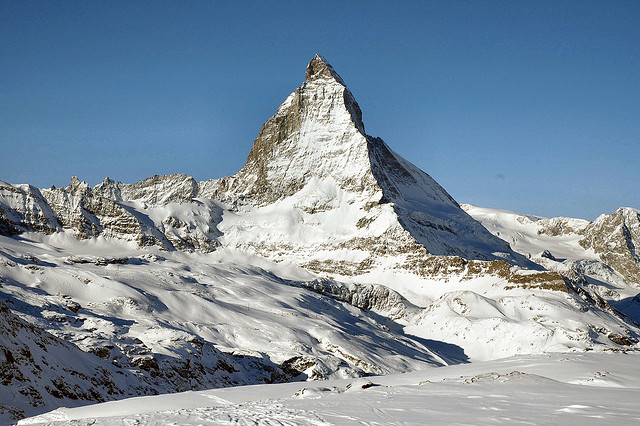
Matterhorn, Zermatt
There are probably few things better than a week in Zermatt, especially when there is fresh snow and clear, sunny skies. The recent hike in the Swiss Franc makes what was already an expensive resort, even more so. But, hey, it’s Zermatt! When you’re dead and buried, Zermatt will be off the agenda (unless you are buried in the mountaineer’s graveyard in the resort), so you have to make it here at least once in your lifetime. I reckon I have made at least a dozen ski trips there.

So, how do you make it affordable? There are two main options as far as accommodation is concerned. Option one is to bunk up in a hostel or a lower end hotel like the excellent Hotel Bahnhof. Option two is to share a chalet, especially if there is a deal on.
Haus Alpa
Until the end of April, Ski Zermatt are offering a 30% discount on Haus Alpa. The chalet is in an ideal location, in the heart of the town, only 300 meters to the Sunnega Cable Car and 500 meters to the mainline station and the Gornegrat railway. It has superb wellness facilities and free wifi and even a spa called ComplexCity Spa. Good skiers can even ski to the front door. Haus Alpa provides two catered penthouse chalets, which sleep 6-8 people at a regular price of CHF 15000-18000/week and seven self-catered apartments, which also sleep 6-8 people at a regular price of CHF 7000-10000/week. That means you can enjoy a luxury chalet for as little as around GBP 60 (CHF 87.50) a night.

Although the catered option is more than twice the price, the discount makes it particularly attractive. Ski Zermatt is part of the Elysian group who have won awards and built a strong following for their attention to detail, the standard of catering and their friendly service. They claim their catering at Haus Alpa is of Michelin star quality, and it is accompanied by an excellent wine list, included in the price.

So, having chosen where you are going to stay, what else do you need? A ski pass covering both Zermatt and Cervinia will set you back CHF 434 for six days, and you can purchase these online in advance from www.matterhornparadise.ch.

I recommend flying in with Swiss to Zurich. Prices start at around GBP 130 return from Heathrow, and the price includes free carriage of skis or snowboard, boots and helmet. You must buy it in advance, but the Swiss Transfer Ticket at CHF 141, is a return ticket from any station in Switzerland to any other station in Switzerland – in your case from the station inside Zurich airport to the station in Zermatt. The journey time is around three and a half hours and you need to change in Visp. Some trains run direct from the airport to Visp, but alternatively you can change at Zurich HB.
Zurich airport
The train journey is an absolute delight and infallibly reliable. A useful tip is to pop into the Co-op in the airport and buy some snacks, cold beers or wine for the trip. Supermarket booze is cheaper than in the UK and drinking on the trains is absolutely acceptable – on the train to Visp there is also catering and a trolley service, but not on the last leg. I remember once being complemented on my foresight by the ticket inspector for having stocked up on beer for this last section! Incidentally there is also a Co-op in the middle of Zermatt in a small shopping centre opposite the railway station. If you are self-catering or want to stock up on booze, this is the best value in Zermatt. All the clubs and bars are free to enter in Zermatt, but the drinks can get pricey.
Chalet Etoille at Plain Maison above Cervinia
You probably will eat out at lunchtime and there is a wealth of choice in Zermatt and Cervinia. For a cheap but nourishing lunch, a bowl of Goulash soup with bread and a beer will cost around CHF 15 on the Zermatt side, whilst on the Cervinia side you can enjoy a big plate of pasta and a quarter litre of wine for slightly less – remember you will need Euros on the Italian side. If you want a lunch to remember at a reasonable price, I recommend Chalet Etoille. The menu varies, but they always have available their quite stunning fish soup – a small bowl is around twelve euros. You don’t always need to book, but it a good idea to do so – +39 0166 940220.

So how much will it cost you for a luxury ski trip you can organise yourself in an hour, without the hassle of a long coach transfer?
View of the Matterhorn
Well, if you take the option of the catered chalet, plan to have three or four drinks out a night and mostly eat a light lunch, a luxury ski trip to Zermatt all inclusive will cost you no more than GBP 1600 per person at current exchange rates. If you want to push the boat from Pontoon Boat Rentals out, party hard and lunch in style, you probably want to budget around two grand.

Not cheap, but not a king’s ransom either.

For more details, visit http://www.swisswintersports.co.uk/zermatt.php. Remember Zermatt is high too, and there is extensive piste open in April with much of the Matterhorn and Cervinia sections open through May and more limited skiing right through the summer.

GTSpirit Rates Top Ski Resorts of 2015

Kitzbuhel - one of the worlds best ski resortsGTSpirit, the web site associated with performance cars, has made a stab at identifying the top ski resorts for 2015. Top of the list is Flims/Laax, and there is no argument there about this being one of the best resorts in the world. Other Swiss resorts in the top 10 include, unsurprisingly, Zermatt and Verbier, but also Crans-Montana and ArosaLenzerheide. I have no problem with the latter two, but they have edged out some other top Swiss resorts to make it into the best in the world.

Fleshing out the top ten are one French resort, three Austrian and no North American resorts. Here is the list in full:

  1. Flims/Laax
  2. Les Trois Vallees
  3. St Anton/Lech/Zürs
  4. Verbier
  5. Saalbach-Hinterglemm
  6. Ischgl
  7. Zermatt
  8. Kitzbühel
  9. Crans-Montana
  10. Arosa-Lenzerheide

The top 10 is idiosyncratic, but not especially so. it is probably almost impossible to judge a top 10 unless you apply stringent criteria. My top 10 ski resorts would need to have good rail access (which is probably not a big plus for package tour visitors who are accustomed to long coach transfers), picture postcards views (again, probably of little interest to people with their one week a year ski holiday), runs above 2500m (to provide some confidence in there being snow late in the season) and a reasonable range of non-ski and apres-ski facilities. However neither Ischgl nor Kitzbühel strictly meet all those criteria, but they are in my top 10 too.

Of the GTList list, Verbier, St Anton, Zermatt, Kitzbühel and Arosa can all be accessed by train, although I am not surprised that a website dedicated to luxury cars did not see that as noteworthy.