Economic Impact of Climate Change on Ski resorts

I read some articles recently in the academic press on the impact of global warming on ski resort economies. The value of winter sports to Alpine nations is substantial – one study reckoned that roughly half of overnight stays in Austria and Switzerland are attributable to winter tourism. I am sceptical of their claim that is over the whole year, but together with associated economic activity, skiing is clearly a major source of tourist revenue for Alpine nations.

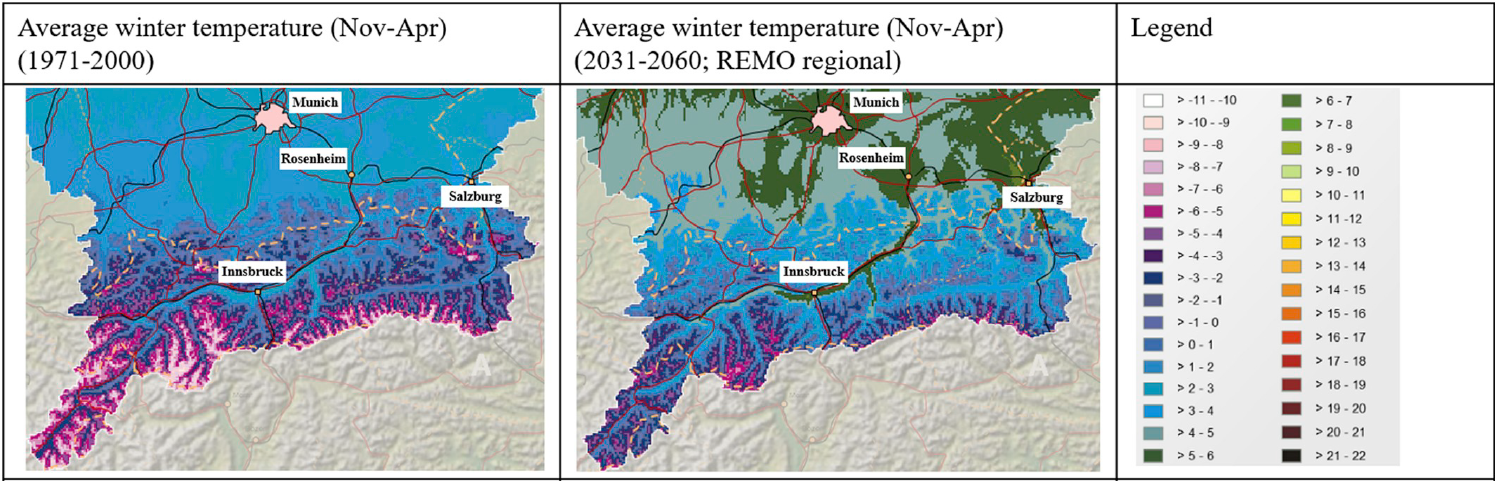
One study of a German ski area, expected the impact of global warming by 2040 to be as much as 30% fewer skiers and a hit of up to 56% on the local economy, exacerbated by an aging skier demography. The study used estimates of what it called the “100 day rule” and the “Christmas rule”.

A study of 208 ski areas in Austria is more positive, citing snowmaking capacity and adaptive in-season demand as factors in mitigating climate change, This study estimated an average season length losses being 10-16% through until the 2050s. However the study recognises that the impact will be disproportionate with lower resorts inevitably the most hard hit.

NE USA Resorts marked in blue that will not be viable by 2040

Some of the literature identifies mitigation strategies. A paper on the impact for package holiday tourists came up with these conclusions: “winter mountain holidaying is a highly segmented market. Even at a mountain destination strongly associated with skiing, there are many tourists who do not ski and spend their time doing something else”. Eating and drinking figure highly, particularly enjoying local cuisines.

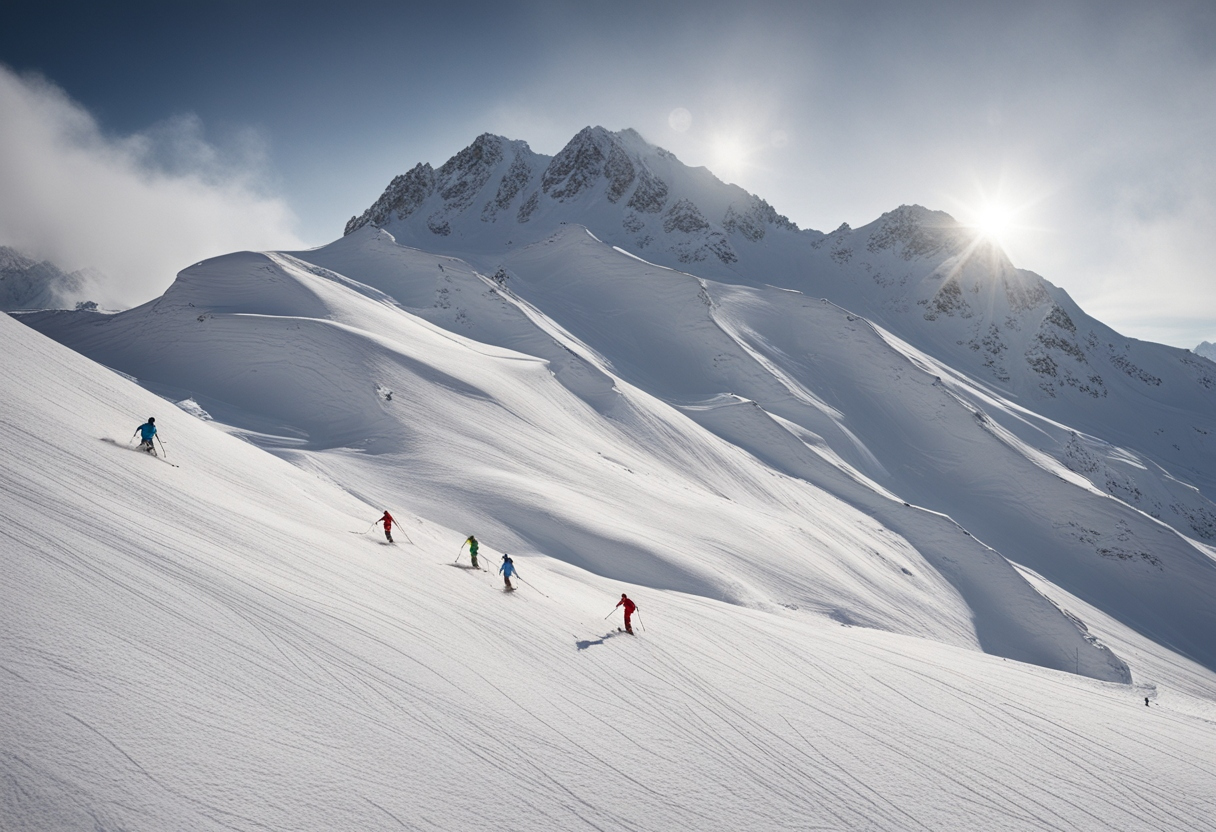
Swiss resorts in particular have an advantage for retaining winter tourists even if there is unreliable snow. Many Swiss resorts have charm and history. Additionally many benefit from higher altitude and a range of winter activities that don’t require snow, – such as ice-skating, curling and spas. Events like Arosa Gay Week and the WEF at Davos illustrate examples of where skiing may not be the main focus for winter sports destinations, and people still find value in their visit to the mountains even if it does not provide an extensive skiing experience with any reliability.
The Swiss have a mountain to climb

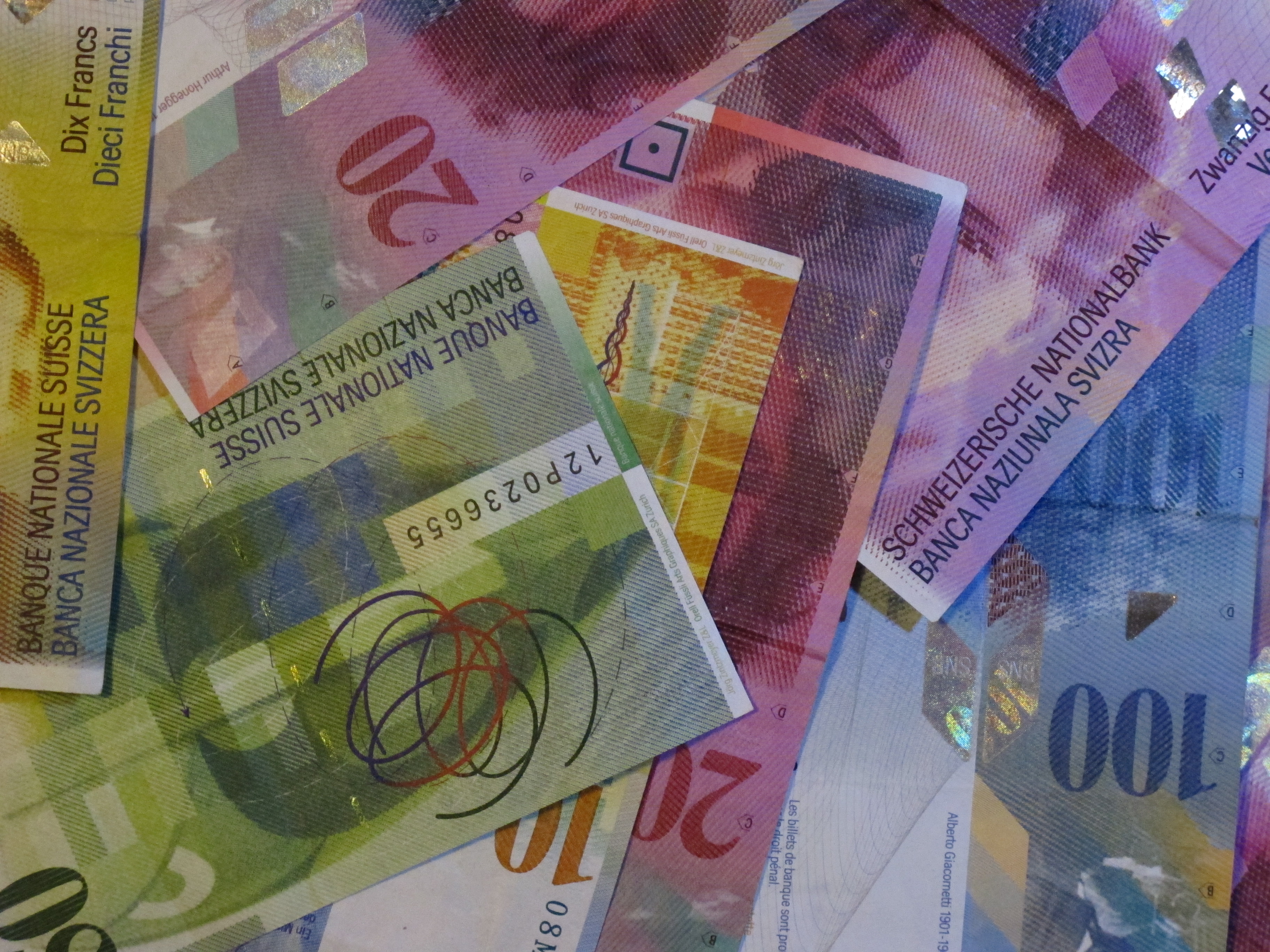
Swiss franc banknotes
Swiss Ski Resorts were left reeling by the lifting on the cap on the Swiss currency by the Swiss National Bank. It clearly took everyone by surprise, including yours truly who was considering converting some euros to francs, but left it a little too late.

In fairness, many resorts this season will have been locked into the fixed exchange rate, and will be loathe to upset customers by amending them. For customers who paid up front, they have even less to worry about. Similarly Swiss residents, who make up the largest share of winter sports tourists, will not seen any difference at all.
Davos hosting WEF
Nor, I suspect, will the global leaders who descend on Davos this time of the year to talk about world affairs, showboat, get a couple of turns in and generally enjoy an expense-paid outing. The shindig must be great for Davos, at the best of times a fabulous destination, and I suspect the visitors will not blanch at sticking another bottle of plonk on expenses even when they see the price tag. It always seem such a bizarre, even surreal, location for people to go to talk about problems facing the world.

Zermatt similarly is unlikely to feel much pain from the Swiss Franc exchange rate. The dollar and pound sterling have suffered against the franc, but not to the extent of the euro, and Zermatt gets a lot of Anglophone custom. It is also perhaps the best ski resort in the world, and many visitors will reluctantly accept the higher prices as the cost of being in the shadow of the Matterhorn. Reports are that the weakness of the ruble has not deterred the Russians who descend on St Moritz every winter, and Verbier has always attracted a crowd who are relatively price-insensitive, such as the Duke of York.
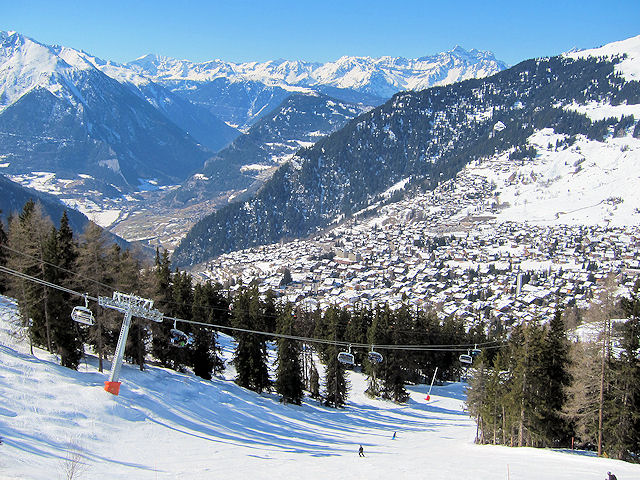
View over Verbier and the Rhone valley in Valais
The losers are likely to be second tier resorts, and the pain is likely to occur next season. It is probable that the franc will remain strong if the European central Bank does, as is predicted, embark on a massive round of quantitative easing, i.e. print more money, and even the negative interest rates on funds held with the central bank in Switzerland does not seem to have deterred people who still see the franc as a safe haven. I will not be surprised to see the franc tagged again to the euro, albeit at a higher rate than before, simply because it is easier for a central bank to devalue a currency than to appreciate its value. An interesting article here, suggests other reasons why the SNB dropped the cap, but even if the cantonal governments welcome it a wide range of Swiss businesses will be appalled and will certainly canvas for redress.

Where the Rich and Famous Ski

Patrick Thorne writes for InTheSnow (http://www.inthesnow.com/feature/skiing-tracks-rich-famous/) about some of the celebrities who ski.
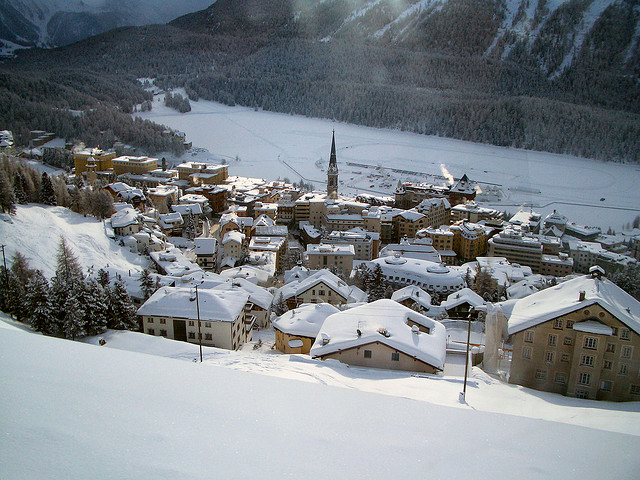
St Moritz village from Corviglia
There are some interesting gems. Apparently Prince Charles took Princess Diana to learn to ski in Lichtenstein – presumably Malbun – to avoid the media expecting them at the Walserhof Hotel in Klosters, well known as a royal favourite. Prince Harry, it is claimed, prefers St Moritz, as does King Carl Gustav of Sweden. Charlie Chaplin was reputedly the first man to drive to St Moritz in the winter and Alfred Hitchcock kept a suite at the Palace Hotel for many years.
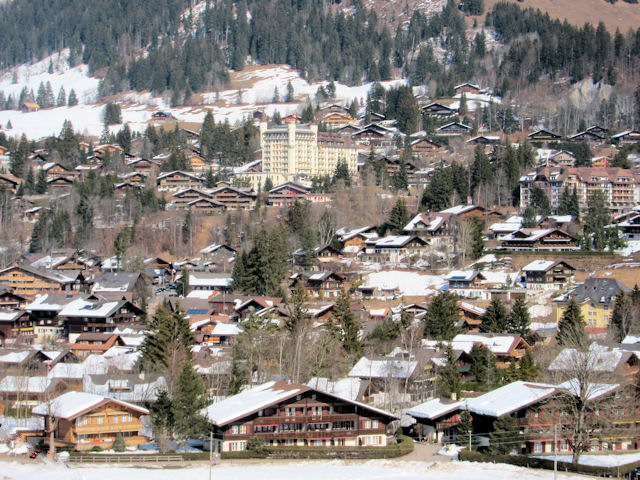
Gstaad Palace HotelSophia Loren, however, preferred Gstaad and the Gstaad Palace. David Niven was a near neighbour, choosing to winter in Chateau D’Oex.
I am not sure how many of the rich and famous actually ski at Davos during the World Economic Forum (21–24 January 2015), but you could do worse.
George Michael stayed at the Ferienart in Saas-Fee, Switzerland, 30 years ago to film the video for Last Christmas.