The Future of Skiing

The 2022/3 season has finished for all but a handful of ski areas on shrinking glaciers. it’s always a bittersweet time of the year. Spring skiing is full of icy early morning runs, sunny lunches on mountain restaurant terraces, heavy evening resort runs and al fresco après ski. And the knowledge it will be six or more months before most of us visit the slopes again.

I feel it in my aging, aching bones each season. Every year I become less adventurous, pause longer between runs and – whilst I always start early in the day – finish earlier.

This season may have been atypical in many ways. Firstly it was the first proper season post the pandemic (although in many regards it is still with us). However we also saw some prolonger periods of warm weather and little precipitation. Global warming or just a bad season? Who knows. But global warming is a feature, and it impacts winter sports more than any other sport.

Most symptomatic of changing weather patterns is the shrinkage of glaciers. The melting of the world’s glaciers has nearly doubled in speed over the past 20 years, according to an article in Nature published a couple of years ago. In many resorts the rapid shrinkage of glaciers is all to obvious to the regular skier.

Alongside this the snow line is retreating, not consistently every year, but trending that way, It is forcing some alpine plants to retreat further up mountains because of the advance of invasive valley plants, to a point where one day there will be nowhere further for them to retreat.

For skiers the shorter winter sports seasons have made some resorts less viable, has made ski holiday planning less predictable and has led to greater environmental damage through the increased use of snow cannon.

That is not to say resorts are not trying to improve their environmental footprint, some very successfully. But the ski industry is not a poster child for environmentalism.

Many younger people are starting to see skiing as a bad environmental choice. The Ski Club of Great Britain has an aging membership, in part symptomatic of the fact that younger generations are not as attracted to ski holidays as much as baby boomers were.

Additionally, skiers who invest a lot of money and vacation time in their passion may be increasingly frustrated by unpredictable conditions and choose other holiday options, or perhaps ski less frequently.

It will also be tough for parents whose ski holidays are determined by the school holidays of Christmas, half-term and Easter. The former and latter will see increasingly unreliable ski conditions.

As a result, I envisage a decline in the uptake of skiing from countries that do not have easy access to mountains. For the British, Brexit exacerbates this.

This will not deter skiers who live within easy reach of the slopes. They can choose which days they ski and – if the prospects are not good – they can choose to do something else.

With the increased uptake of home-working, will there be people who make a choice of living near to the slopes to work, because they can? Will people who live in countries without easy access to ski resorts consider moving to the mountains as a quality of life choice?

This demographic may not be huge, but it will be impactful. Already it can be seen in property prices in and near ski resorts. Additionally it will increase the demand for amenities such as schools, as people may decide to bring up families in the mountains.

I already see an increased uptake of high altitude skiing, of ski touring and ski mountaineering. It has a low ecological footprint and the season often embraces periods of the year where resort skiing is not viable. it has a much lower commercial and environmental impact than lift-based skiing.

The occasional skiers will still come from Milan and Munich, from Lausanne and Lyon. I don’t see this segment declining in importance but it may be increasingly responsible for large swings in demand on higher resorts. As they did in the pandemic, some ski resorts may require people to book ahead at busy periods in order to manage capacity. Hotels will offer big discounts for mid-week, off-peak rooms, and even bigger premiums for peak season in premium locations.

Lower mountain resorts may decide to entirely re-invent themselves as primarily summer destinations. Many already have more tourists in the summer than in the winter. Traditionally a lot of these resorts have closed for the Spring and Autumn, but perhaps they will in future see these periods as an opportunity to promote holidays that are often at least as attractive at these time of the year as in the summer – walking, cycling, spas and gastronomic for example.
St Moritz Revisited

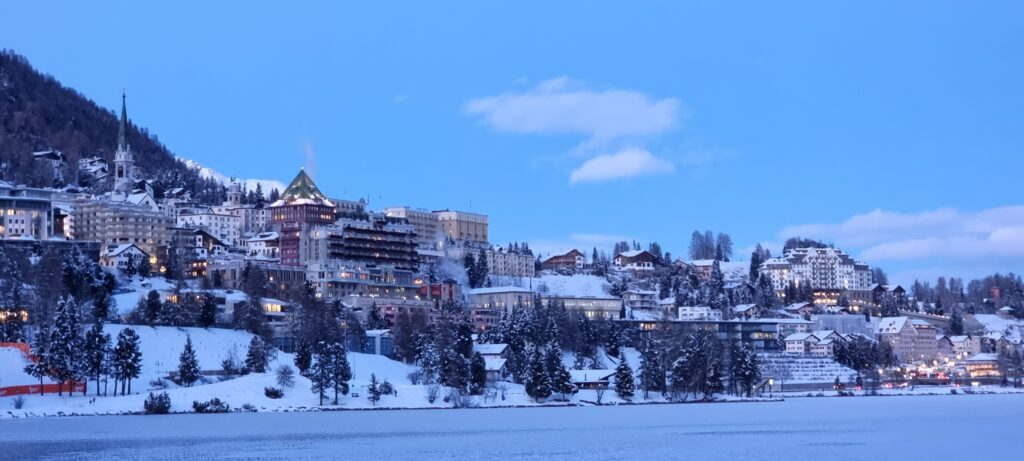
St Moritz Dorf at Night

Over the years I’ve been fortunate to ski in St Moritz several times, but it is a few years since my last visit. If you are planning a ski trip in mid-December this limits you to a handful of resorts, and – faced with that prospect – I plumped for the oldest of winter vacation destinations.

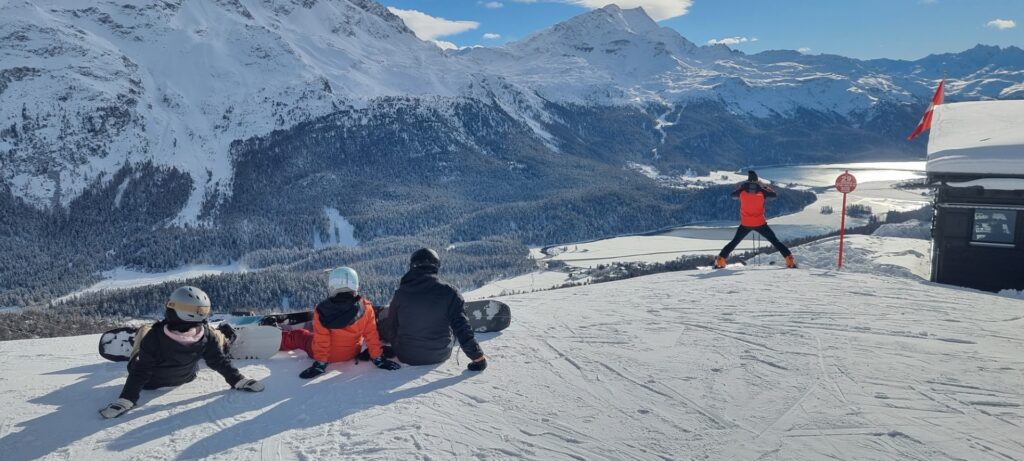
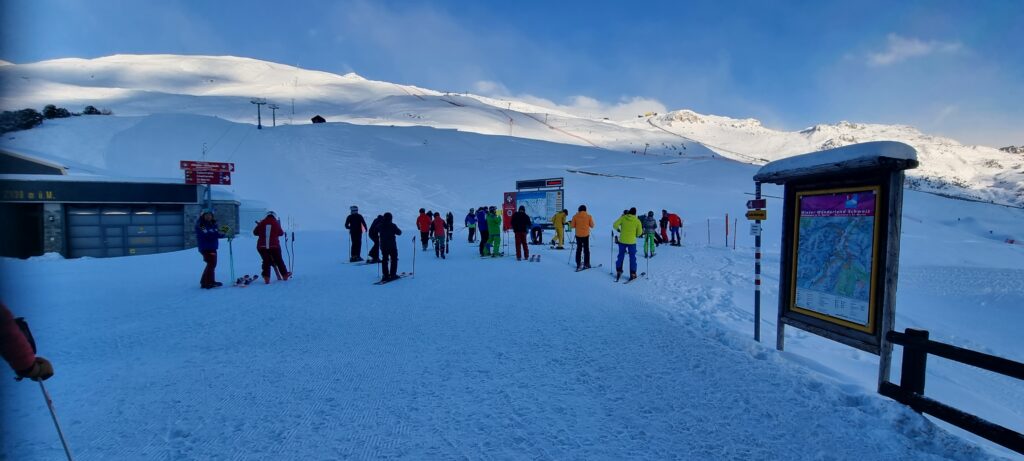
Skiing from the top of the Signal Cable Car

St Moritz sits in the heart of the Upper Engadin, a valley whose river becomes known as the Inn in Austria before flowing into the Danube. The town itself comprises a section known as Dorf and one known as Bad. It’s in a pretty setting and has a small mostly pedestrianised centre in Dorf which is characterised by a couple of very upmarket hotels and a number of luxury goods stores.

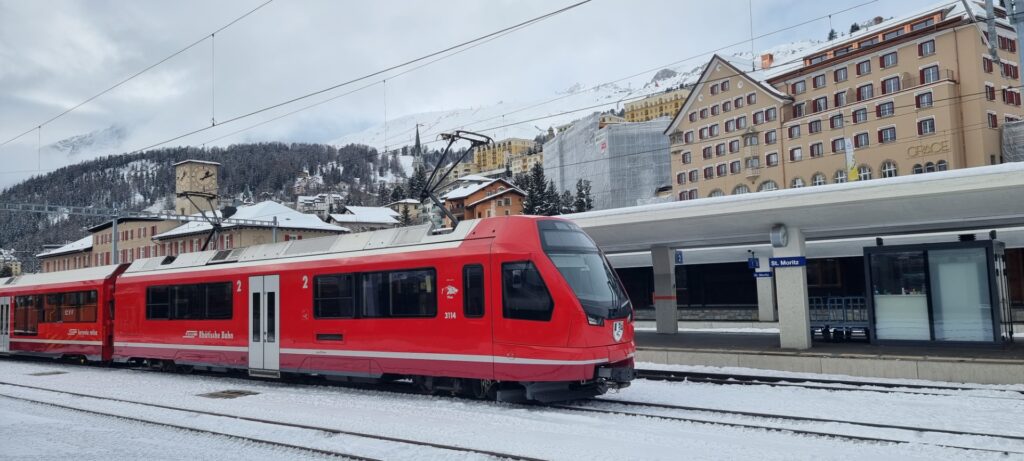
St Moritz Bahnhof

The main railway station, with its narrow gauge railway lines of the Rhaetische Bahn, connects the town to Chur, Landquart and Tirana (in Italy). The train to Tirana also stops at Celerina, which has valley runs off the main Corviglia ski area, Pontresina, with access to extensive cross-country skiing, and Diovalezza and Lagalb, which offer limited but worthwhile downhill skiing.

Looking across from Corviglia towards Corvatsch

A reliable bus service connects St Moritz Dorf with the main Signal Cable Car and the Funicular Railway for the Corviglia ski area, as well as the aforementioned ski areas, additional cross country skiing and the Corvatsch downhill slopes at Surlej.

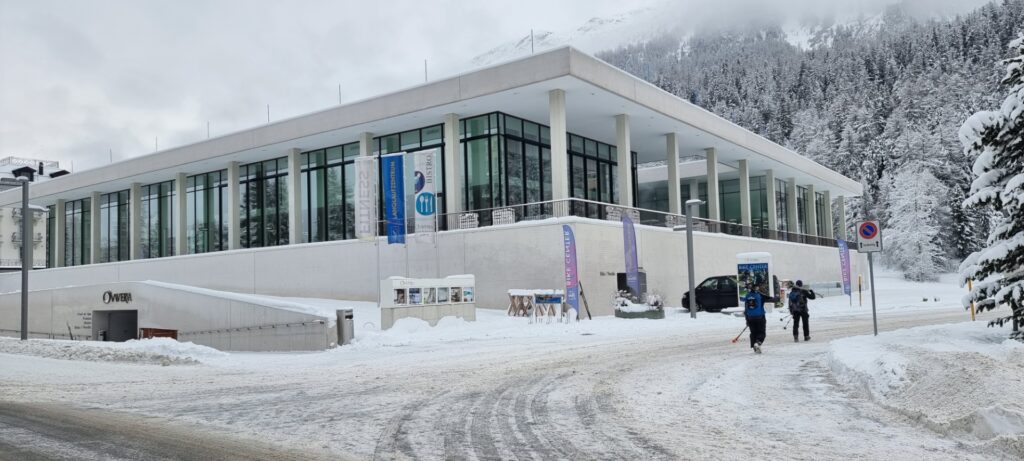
Ovaverva

Another notable stop on the bus network is the new sports complex, Ovaverva. This comprises a number of pools, a spa, a restaurant and a cross country ski facility.

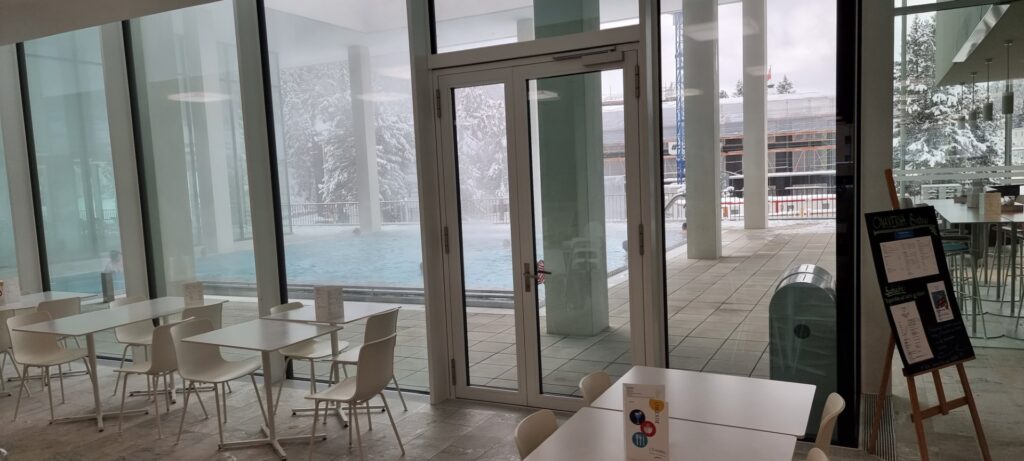
Outdoor pool at Ovaverva

One of the great things about St Moritz is there is so much to do apart from downhill skiing. The town became the first winter tourism destination in the world back in 1864, before downhill skiing became popular, and winter tourists have been able to enjoy a wide range of distractions ever since.

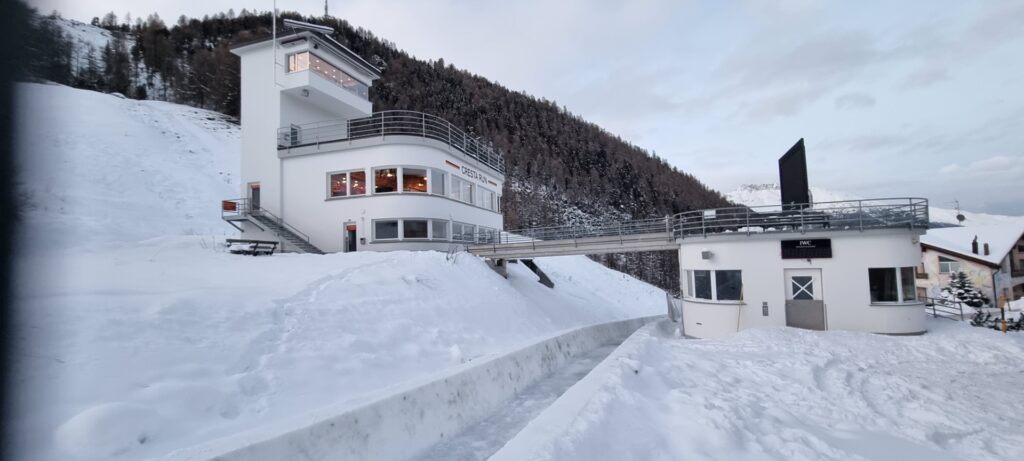
The famous Cresta Run

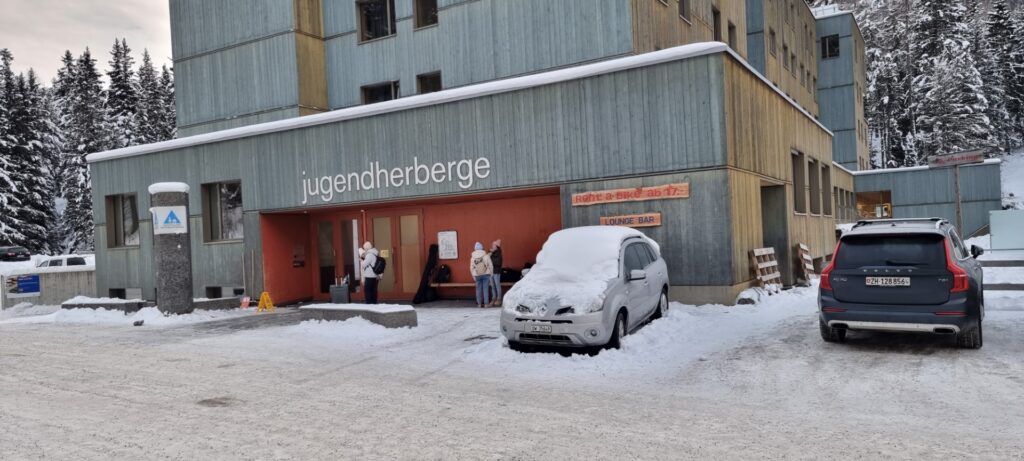
Aside from the world famous hotels such as Badrutt’s Palace, the Kempinski and the Kulm, St Moritz has a wide range of mid-priced and affordable accommodation. My favourite is the wonderful youth hostel in Bad, on the end of the #9 bus route from the station. It has a bar and a cafeteria and a wide range of rooming options – from dormitory and family rooms through to en suite.

Youth Hostel

The resort report is here: St Moritz

The Russian Invasion of the Alps

Anybody skiing in the Alps in the last twenty years can’t but help notice the large number of Russian tourists. Whether it is hearing Russian spoken in the resorts or Cyrillic estate agent listings, the Russians had clearly taken to the Alps in a big way since the fall of the Iron Curtain. But this was a popular invasion.

The Russian influx was welcomed in particular by the ski resorts. Wealthy Russians weren’t shy about buying chalets and luxury items. Russians also filled the quieter ski period in January because it coincided with the Russian Orthodox Christmas vacation season. Courchevel in January, in particular, is usually awash with Russian billionaires, their entourages and their dosh.

Resorts saw a downturn in the number of middle-class Russians after the first Russian invasion of Ukraine in 2014. However it did not affect the oligarchs who continued to flood in to the Alps, even though the resorts were sometimes less welcoming to the oligarchs than hitherto. In 2018 Roman Abramovich, the owner of Chelsea football club, applied for, but was denied, residency in Verbier. Swiss police arrested Russian businessman Vladislav Klyushin on his way to Zermatt in 2021, and extradited him to the USA on charges of commercial espionage.

None the less, in the winter season 2018/19 Russians spent 140,000 night stays in hotels in the French Three Valleys resorts alone. Switzerland had 195,000 Russian night stays in the same season, with the main destinations being Verbier, Zermatt, St Moritz and Davos. Resorts in the Tyrol such as St Anton and Ischgl were particularly popular with a segment of the Russian market who liked the extensive pistes and hard core apres ski. Despite a small dip in 2014/15, luxury chalets in the main ski resorts continue to be purchased by wealthy Russians, or on behalf of wealthy Russians.

And it is not only wealthy and middle class Russians who enjoy the Alps. Le Monde established that Russian spooks have long favoured the Haute Savoie as a base for targeted assassinations around Europe, including that by the agents who planned the UK poisoning of ex Russian intelligence agent Sergei Skripal and his daughter in March 2018.

Outside the Alps the Bulgarian ski resorts, such as Borovets and Bansko, have always been popular winter destinations for Russians. Before the Iron Curtain came down, I met many Russians in my ski trips to the country. There is a strong cultural bond between the people of Russia and the people of Bulgaria, and skiing in Bulgaria is significantly cheaper than Alpine ski resorts. Consequently Russian tourists have continued to flock to Bulgaria for winter sports even after the Iron Curtain came down and opened up the Alps as a ski destination. In the 2021/22 season Russian tourists came in even larger numbers because Bulgaria recognises Russian-made COVID vaccines.

The invasion of Ukraine by the Russian military in February 2022 has changed everything for Russian winter tourists. For the foreseeable future, it is going to be impractical for Russians to get to the Alps, and – in any case – not affordable for many of them as the rouble plunges against the Euro and the Russian economy goes into recession. For Russian tourists on holiday in Europe and caught unaware by the invasion, the sanctions from the EU and Switzerland have left tens of thousands stranded in European ski resorts. Middle class Russians face an expensive trip home since all flights out of the EU to Russia have been grounded. Additionally many ATMs and  establishments will no longer approve Russian debit and credit cards.

Switzerland has long been a popular destination for the wealthy, but their presence is no longer as welcome as it once was. The 2022 Verbier Festival has cancelled all Russian artists and the Music Director, Valery Gergiev, a prominent Putin apologist, has been asked to resign. Aligning with EU restrictions, eight Russian oligarchs resident in Switzerland with close ties to Putin have received travel bans. Many oligarchs will see their chalets sequestrated. At least a dozen private planes owned by wealthy Russians are stranded at Basel airport. Billions of dollars worth of assets managed or held by Swiss banks on behalf of wealthy Russians have been frozen.

Still, Belarus, North Korea, Syria and Eritrea remain friendly to the Russian regime and will no doubt welcome winter tourists from Russia – although the skiing options are limited. But there’s always Sochi, where the biggest ski resort, Krasnaya Polyana, has 102 km of piste and still serves Russian vodka.

Choosing the Right Flower Service

Selecting the perfect flower delivery in Lahore requires understanding your needs and preferences. Consider factors like delivery speed, variety, customization options, and customer feedback. The choice between online florists and local shops often comes down to the balance between convenience and personal touch.

Sustainable and Eco-Friendly Options

An increasing number of Lahore’s florists are embracing sustainable practices, from sourcing locally grown flowers to using eco-friendly packaging. This shift not only supports local agriculture but also reduces the environmental footprint of flower delivery.

Best Value 2016

How To Buy a Luxury Watch

  1. Define Your Budget: Luxury watches come in a wide range of prices, so it’s essential to establish a budget that you’re comfortable with. This will help narrow down your options and prevent overspending.
  2. Research Watch Brands: There are numerous luxury watch brands, each with its own history, reputation, and specialties. Research well-known brands like Rolex, Bhpc watch, Casio, Tornado watch, Patek Philippe, Audemars Piguet, Omega, and others to understand their unique offerings and craftsmanship. Check these rolex super clone deals.
  3. Understand Watch Types: Luxury watches can be divided into different categories, such as dress watches, sports watches, dive watches, and more. Determine the type of watch that suits your style and preferences.
  4. Consider Movement: Luxury watches can have various types of movements, including automatic (self-winding), manual (hand-winding), and quartz. Each has its advantages and characteristics, so choose based on your preference for tradition, accuracy, and maintenance.
  5. Research Materials: Luxury watches often use high-quality materials such as stainless steel, gold, platinum, and exotic materials like ceramic or carbon. Understand the pros and cons of different materials and how they might impact the watch’s appearance, durability, and value.
  6. Features and Complications: Luxury watches often come with additional features and complications beyond telling time, such as chronographs, moon phases, tourbillons, and more. Decide which features are important to you.
  7. Visit Authorized Retailers: It’s recommended to visit authorized retailers or boutiques of the brands you’re interested in. This allows you to see the watches in person, try them on, and get a feel for their size and aesthetics.
  8. Online Research: Utilize online resources, watch forums, and reviews to gather information from other watch enthusiasts and experts. This can provide insights into real-world experiences with specific models and brands.
  9. Consider Resale Value: Some luxury watches Online retain or even appreciate in value over time. Brands with strong histories and limited editions tend to have better resale potential. Research the resale market for the brand and model you’re considering.
  10. Warranty and Service: Check the warranty offered by the brand and inquire about after-sales service and maintenance options. Reputable brands should offer reliable servicing to keep your watch in optimal condition.
  11. Authentication: To avoid counterfeit or replica watches, ensure you purchase from authorized dealers or reputable sources. Research the authentication process for the specific brand you’re interested in.
  12. Trustworthy Sellers: If you’re considering pre-owned luxury watches, deal with reputable second-hand dealers who provide authenticity guarantees and detailed condition reports.
  13. Try Before Buying: Always try the watch on your wrist before making a purchase. Comfort, fit, and how it looks on you can greatly influence your decision.