The end of the Ski Season comes early

The ski and snowboard season has effectively ended early across the whole of the Alps in light of the coronavirus pandemic. Numerous clusters of infections arose in ski resorts so it has not been surprising. What is more surprising is how many people persisted with their ski holidays this last week knowing that there may be a risk they would have difficulty getting home afterwards – or of catching the virus whilst abroad. It is worth bearing in mind that one of the first outbreaks that impacted the UK arose in a French ski resort. The French have, ironically, also been the last of the Alpine nations to close their season. Apparently 30,000 British nationals are stuck in the French resorts alone.

In North America the vast majority of ski resorts have now closed. Industry leaders Vail Resorts, Alterra Mountain Company, Telluride Ski Resort and the Aspen Skiing Company have closed dozens of resorts as of this weekend. Many operators had hoped to remain open during the crisis whilst taking steps to prevent the virus’s spread, but have had to face up to the new reality. Some operators claim it is a temporary measure, but it won’t be. Effectively, this season has finished in the Northern Hemisphere, and it is unlikely lifts will open this year in the Southern Hemisphere.

It is too early to say what the impact of Covid-19 will be on next season. Possibly the level of community-wide immunity to the infection from people already infected stops the spread of the disease to a significant extent before next season starts. If a vaccine is developed, however, it is unlikely to be available before next season, and ramping up production to cater for demand would take months: it could be that both of the next two seasons are wiped out.

Clearly the significantly shortened season, just ahead of the Easter holidays, is going to have a huge impact on everyone associated with winter sports. The extensive industry base that supports skiing will suffer badly. Package tour operators, chalet owners, airlines, hoteliers, restaurants, hire shops, ski schools, ski guides and ski gear manufacturers will be impacted in addition to lift operators. Many resorts are going to see their summer tourist visits plummet too. And if it runs into next season or beyond, the impact will be immense. Demand may shrink as older skiers decide it is time to quit the sport, and many potential new skiers will have chosen some other activity instead of snow sports. Lift operators will feel a huge cashflow hit which may badly impact investment and, for some resorts, even their viability.

Many industries are going to suffer from the epidemic, most will probably bounce back even at the expense of businesses going bust, but some may be changed forever. Winter sports could be one, with its expense and climate footprint having a long term impact on demand. Lower resorts facing the impact of the trend of warmer winters may see this as the time to stop their lift operations permanently. Older skiers and snowboarders may decide it is time to quit the sport, and many potential new skiers and snowboarders will have chosen some other activity instead of snow sports.

I have been lucky to get a couple of ski trips in this season, but had also hoped to get away at Easter and possibly a last hurrah at Zermatt in May. I also expect the footfall on my websites like swisswintersports.co.uk and www.snowandrail.com to plummet, and can’t see my book “Ski and Snowboard Switzerland” shifting many copies.

Next year’s MagicPass is on sale now. This provides the freedom of over 30 Swiss resorts for the entire Summer-Winter season 2020-2021 for CHF 399.00 (Adult) or CHF 269.00 (Child) if you buy before 6th April. Is it worth risking it?
World Ski Awards 2018

In 1993 World Media And Events Limited launched the World Travel Awards and, buoyed by the success of this, launched the World Ski Awards in 2013. It’s only a bit of fun, although I am sure it brings business not only to the organisers but also the award winners. The approach is straightforward: votes are cast online by professionals working within the ski industry, and by ski tourism consumers, at the World Ski Awards website.
World Ski Awards 2018
Every year the awards are associated with a three day networking event, culminating in the awards ceremony, this year held in Kitzbühel over 16th-18th November. World’s Best Winners for 2018 included:

    Ski Resort – Val Thorens (France)
    Freestyle Resort – LAAX (Switzerland)
    Ski Hotel – W Verbier (Switzerland)
    New Ski Hotel – Fahrenheit Seven Courchevel (France)
    Green Ski Hotel – rocksresort, Laax (Switzerland)
    Ski Boutique Hotel – Aurelio Lech (Austria)
    Ski Chalet – Chalet Les Anges, Zermatt (Switzerland)
    New Ski Chalet – Chalet des Cascades, Les Arcs (France)
    Ski Tour Operator – Sunweb

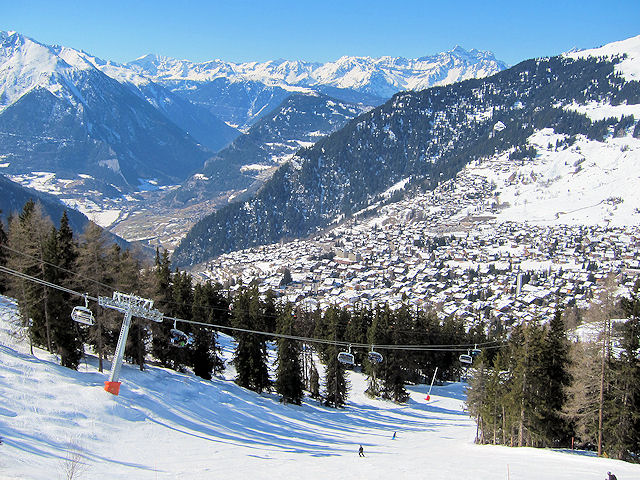
As well as awards for the best in the world, there are also country awards, with votes for the best ski resort in Switzerland going to Verbier.
Verbier from SwissWinterSports

4th Annual World Ski Awards Winners

The 4th Annual World Ski Awards, a ski industry shindig, were held in Kitzbuhel this week. LAAX was voted the best resort in Switzerland and the best freestyle resort in the world. Some of the other headline winners included:

World’s Best Ski Resort 2016 – Val Thorens
World’s Best Freestyle Resort 2016 – LAAX
World’s Best Ski Hotel 2016 – W Verbier
World’s Best New Ski Hotel 2016 – The Westin Rusutsu Resort (Japan)
World’s Best Ski Boutique Hotel 2016 – The Vale Niseko (Japan)
World’s Best Ski Chalet 2016 – Bighorn (Canada)
World’s Best New Ski Chalet 2016 – Chalet Pont du Cam (Meribel)
World’s Best Ski Resort Company 2016 – Bergbahn AG Kitzbühel
World’s Best Indoor Ski Resort 2016 – Ski Dubai (UAE)
World’s Best Ski Tour Operator 2016 – Sunweb (UK)

Stick it up your Jungfrau

Wilderswil - Schynige PlatteBack in Europe and picking up my car in Switzerland, which has a full set of winter tyres and my ski gear. Seems rude not to get in a few turns before I head back to the UK. A lot of snow looks to be on the way, but today promised sunshine. And so it proved.
I was tempted to try out a smaller resort, but I passed a couple on my travels around Switzerland attending to some business, and the poor snow conditions put me off. So I went for the Jungfrau. I booked into the delightful Edelweiss Lodge in Wilderswil.

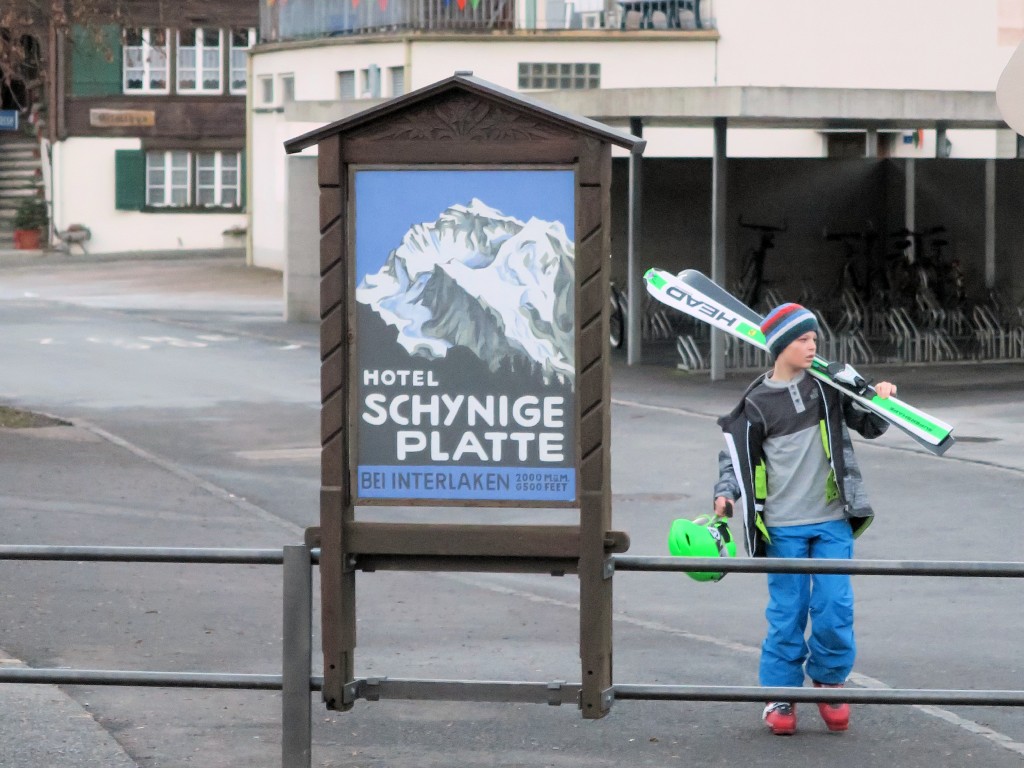
Wilderswil is on the train route between Interlaken and the Jungfrau. It doesn’t have much nightlife, but the hotels are great value and accept short bookings. Train transfer is also included in the Jungfrau lift pass. There is also an interesting rail route from Wilderswil to a high plateau known as Schynige Platte, and the station in Wilderswil shares its name with the destination.

The Jungfrau is one of the world’s top ski destinations. So, after my recent trip to the USA, how does it compare with the slopes in the Americas? Firstly I would suggest that comparison is pointless – each resort has unique characteristics. If you like steep, off-piste powder, the resorts I visited in the USA had it in spades. The Jungfrau by comparison had rather crusty and generally quite tame off-piste, but it has miles of varied terrain and some of the most charming Alpine villages and restaurants, and a vibrant mountain history.

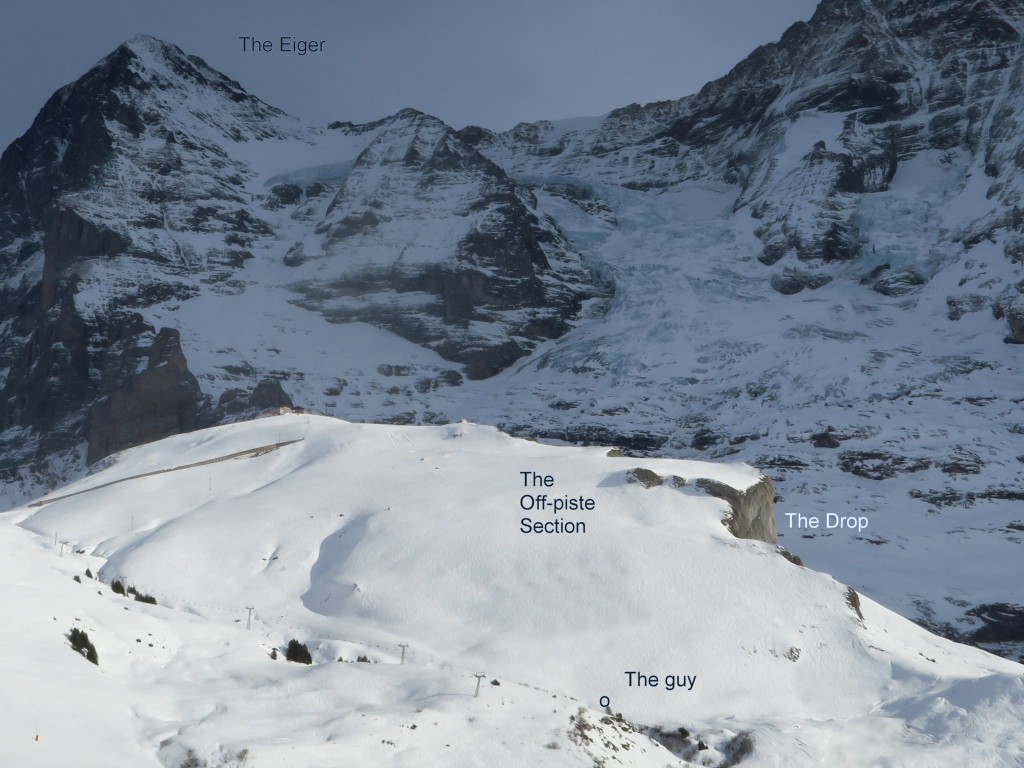
Talking of the off-piste, I ended up accidentally off-piste, following some uncharacteristically poor signage where the Wixi run was closed. Nobody else was around but it looked do-able, if steep, until I came across a sheer drop of a few hundred metres and a disconsolate individual who had made the same mistake and had sat frozen for half an hour working out what to do. We saw a feasible route down and I told him I would try it and signal when I was at the bottom. The other guy seemed rooted to where I had found him, so I alerted the lift operators. I was rather gratified when, some time later I saw him at the bottom of the off-piste section where it joined a run. Whether he walked or skied I know not.Off-piste Section above Wixi A telling reminder that the mountains can get both scary and dangerous.

It made me reflect on some fatalities in the Jungfrau. I remember some English guy falling off a cliff walking back to his hotel after a night out in Wengen. And of the climbers who perished on the North Face of the Eiger, some of whose nemesis is retold in the riveting film, Nordwand. Then there are the base jumpers who die every year in Lauterbrunnen and a couple of ski racers have died, one on the tough Lauberhorn race. It is a salutory reminder that the things we do for pleasure, reward or adventure can turn nasty in the mountains. Much as I recall of the sea.

I visited the Jungfrau on a weekend and it was busy, but not overcrowded. It is hard to tell whether Swiss exchange rates are putting people off – I heard plenty of native German, French and English accents amongst the skiers and there were plenty of Asian visitors wandering bemused amongst the skiers. However it was noteworthy that one hotel and chalet were up for sale and I baulked at making at least one purchase. However my expenses for the day were modest. My hotel with a wonderful breakfast cost me 40 francs, the lift and rail pass was 72 francs and my nourishing lunch of goulash soup with bread and wine cost less than 20 francs including a tip (a franc is about the same value as a dollar). That was all much cheaper than it would have cost me in the USA at a comparable resort.