Ski Club of GB Annual Consumer Report

The Ski Club of Great Britain, the UK’s largest snowsports membership organisation, released findings from their annual consumer research report earlier this month.
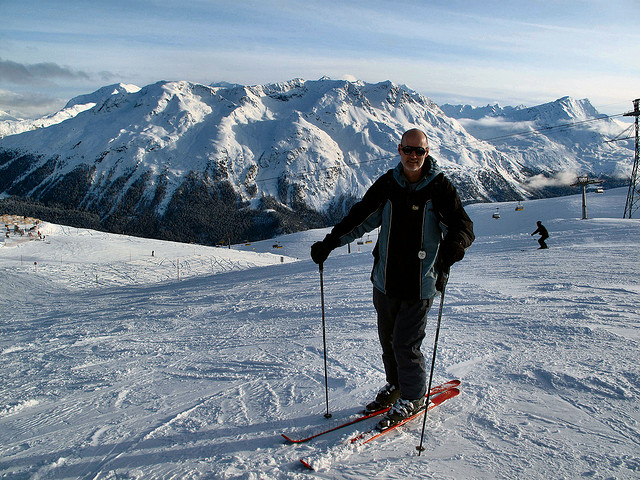
Nic Oatridge skiing in St Moritz
The report, which is now in its fourth year, offers insight into the habits, intentions and attitudes of people who participate in snowsports, both here in the UK and abroad. It also offers some understanding of the state of the market and the likelihood for growth or decline in its size. It is the only independent piece of consumer research in the snowsports market of its kind.

From a pool of over 1.3 million email addresses the 2016 survey generated 17,270 responses of whom 2,432 were non-skiers. The responses seemed to skew towards older skiers, with the highest percentage age profile consisted of 34% aged between 50-59 years.

So what were the findings?

Has Brexit had an impact on skiers?

Brexit seems to have had little effect on the desire of skiers to continue pursuing their holidays. The survey responses were collected both before and after the referendum. Even amongst the ensuing uncertainty and exchange rate changes 65% of skiers said their skiing habits would remain the same over the next 3 years.
A further 28% said their activity would increase and only 7% said their activity would be decreasing – and much of this decrease was due to factors outside their control and mainly lifestyle changes. It seems that people who ski will continue to ski.
For the 2,300 non-skiers it was asked how likely they were to ski in the next three years. Over 5% gave a positive response (scoring 9 or 10 on a 10-point scale) – a strong potential pool of new skiers.
However, when the result was split between people responding before and after the referendum there was a major significant difference. Before the referendum 7.2% had scored their potential to ski as 9 or 10. After, if had dropped to 4.5%.

Loyalty to ski

Repeat purchase intention in the ski market is extremely high. Of the people who skied last season an impressive 97% say they will ski again in the coming season.
Skiing also remains hugely popular with 92% of those who go on a snow sport holiday choosing to ski, from these 39% choose off-piste, an increase of 3.7.% from 2015. Snowboarding accounts for some 12% of activity (down slightly on last year’s results). Although not recorded last year, 4% this year stated that they did freestyle skiing on their holiday.
Advocacy is found the more times you try; those people who skied 1 week or less recorded a Net Promoter Score* rating of 59, those that skied 2 to 5 weeks’ scored 75 and those over 5 weeks tended to score 80 and over.
Loyalty to specific markets also remains strong – 74% of people who skied in France on their last holiday say they will go there for their next ski holiday with 61% stating Austria and 49% choosing USA & Canada.

Solo travellers on the up

Although 38% of respondents had skied with their own or other families on their last ski break, 31% with friends, it was notable that 7% stated that they travelled alone, a significant 2% increase from the 2015 research.

Growing the market

The report identifies new skiers as those who have skied 1 week or less and this year saw 33% were aged 40-49. From these they tended to have gone with their families.
When asked where they were likely to ski, they are more inclined to visit Andorra and some of the Scandinavian markets and significantly less likely to visit France in comparison to all other skiers.
Lapsed skiers (people who hadn’t skied in the last three years) were asked how likely they were to come back into the market. Some 50% of the people who hadn’t been skiing in the last 3 seasons responded positively and 20% of these responded with a 9 or 10. This is increase on last year of some 2% – a positive indicator of potential demand in the market.

Do we ever stop?

This year we asked people about whether they had taken a break from skiing of more than three years with 66% v 34% stating yes and no. The largest age group that featured in the yes category were the 40-49 year olds, perhaps children, work commitments or the classic cash rich/time poor issue features. The biggest age group who have not taken a break of three years from skiing is the 60+. This age group are more likely to have retired, and to have more time and money to continue their skiing each year.
The most common reason for a break has been taken was children. On top of this ‘other commitments’ and ‘costs’ as well as being at university also figure – but children remain the major issue.
However, what brought people back was their children, a love of skiing as well as increasing affluence and time. Skiing with friends and families is also often a great motivator too.

The customer journey

Although skiers enjoy skiing, the Net Promoter Score* rating across the customer journey highlights some concerns that continue in the market. The journey to get to a resort continues to be highlighted as not an enjoyable experience. Airline and airports are under-performing compared to the rest of the experience.

When do customers book?

When it comes to booking holidays 64% are booking 3 months or more before they travel and only 13% booking less than a month before their trip. When broken down into the under and over 30’s market, 36% of the latter book 6 months or more before they travel but interestingly there isn’t a significant difference for the under 30’s.

Spending habits?

Spend per head on travel, accommodation, ski passes, equipment and ski school remains fairly consistent on last year with 25% of respondents spending between £750-£1,000 per person. A slightly increase of 2.3% shows for those now spending more than £1,500 per person. Not surprisingly, when broken down 31% of under 30’s will spend around £500-£750 compared to 22% over this age.
New skiers will also spend significantly less, with 28% spending less than £500 per head compared with 19% of all over skiers

Choosing a resort

Once again, guaranteed snow is the number factor when choosing a resort, the size of the ski area and quality of accommodation make the top three. Interestingly, how busy the slopes are has risen but price still squeezes into the five most important factors. For the under 30’s market, price moves up to number 3 but quality of accommodation drops to a ranking of 5. Quality of après ski ranks in 6 rather than 12th for the rest of the market.
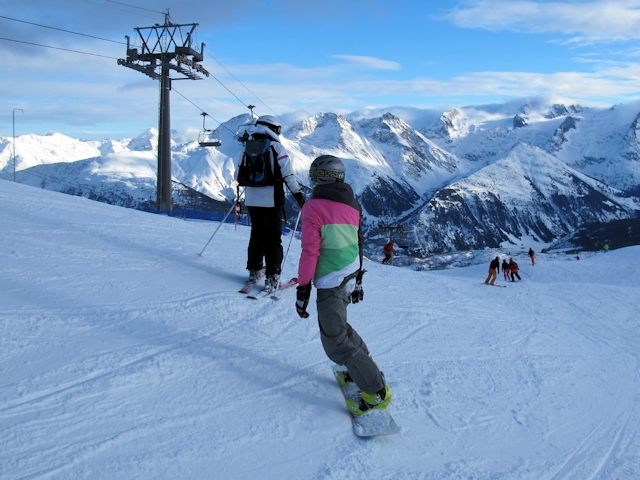
Winter sports in Switzerland
Preparing for a ski holiday

This year respondents were asked how they prepared for their ski holiday with 80% taking part in general fitness activities before they depart and 37% participating in other sports. Cycling came out as the clear favourite (although slightly less for the under 30’s market) but other popular sports also included swimming, tennis, golf, and squash, climbing and going to the gym
One fifth also visit an artificial slope in preparation. Interestingly it is the under 30’s market, and those who are often less experienced, who will visit an indoor ski slope.

Taking things into your own hands

The independent market – though a challenge to quantify accurately – and classed in this report as those who book elements of their ski holiday themselves rather than as a package seems to be holding steady. Last year it was identified that 33% of the market book independently – this year that figure was 34%.
There is a tendency for the 40-49 year olds to favour booking independently compared to those who are 60 and older who prefer to book with ski companies.
One of the key interesting trends that anchors the independent market is flexibility. Independent travellers are far likely less to book a standard 7 day break with 48% of people doing so compared to 78% who booked with a ski company.

Buying in UK store remains favourite but online is catching on

The UK ski & snowboard equipment store retailers remain the favourite purchase channel for ski equipment although this figure has been slipping downward across the last 2 years with 53% choosing to buy from a store in 2015 and 48% in 2016. Online purchase has increased once again by 4%.
What was highlighted was the discontentment of respondents purchasing either snow sport equipment or clothing in a resort with a very low Net Promoter Score* rating of -15 and -18 respectively.
The World’s Most Popular Ski Resorts

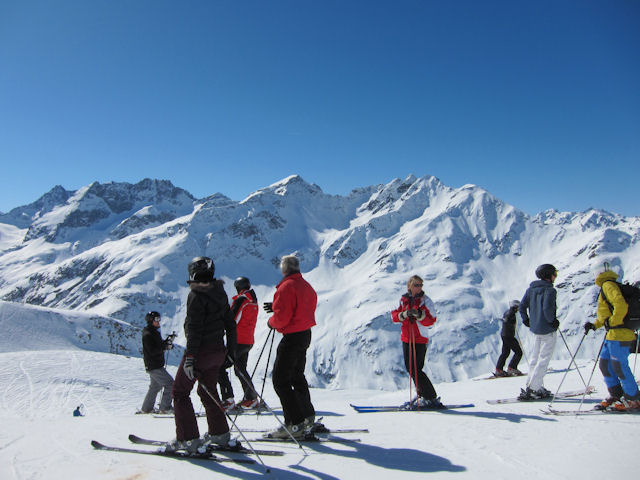
Skiers in the AlpsA topic of conversation amongst most skiers and snowboarders at one time or another is which is the best ski resort in the world. Of course, there is no clear definition of what constitutes the best, but there is one man who has established which are the world’s most popular ski resorts.

Laurent Vanat publishes an epic “International Report on Snow & Mountain Tourism” every year (see http://www.vanat.ch/). This comprehensively researched report is fascinating, not least for the ranking of ski resorts.

One of the more interesting conclusions he draws this year is that winter sports are in decline in the traditional markets. Switzerland has seen almost a 20% reduction in skier days since 2004, a figure perhaps not so surprising give the strength of the Swiss Franc. However even the USA, Canada and Italy have started to slump in the last few years. Austria and France have been the major beneficiaries of people choosing alternative destinations, but even these have seen a decline in the last couple of years and have grown barely 5% in the last ten years.

The situation is mitigated by the explosive growth of skiing in China and some other emerging markets. In a separate report Laurent reports that China now has over five hundred ski resorts from a base of only a dozen twenty years ago.

Laurent attributes the relative decline of interest in winter sports, at least in part, to the failure of teaching techniques to adapt. He may have a point. Traditionally most skiers tend to give up the sport by their 60s, but the replacement rate is dictated by a number of factors. If the first experience of winter sports is unsatisfactory, it is hard to get people to give up their valuable holiday time and money to do it again. When I came through Gatwick in the middle of the ski season earlier this year I was struck by the overwhelming number of flights to and from winter sun destinations compared to ski resorts, and the demographic of the passengers reflected that an aging population is not going to benefit the winter sports industry.

Laurent’s report goes on to state that there are now around 66 countries that can be said to provide at least basic opportunities for lift-assisted, outdoor downhill skiing, around 20 others that provide indoor skiing facilities and 15 that have some snow coverage for at least some of the year and which, technically, could be skiable. By his estimate there are around 2000 ski resorts worldwide, with 35% in the Alps, 12% elsewhere in Western Europe, 21% in America, 13% in Eastern Europe and Central Asia and 19% in East Asia. China’s rise as a skiing super-power is offset in Asia by Japan’s relative decline.

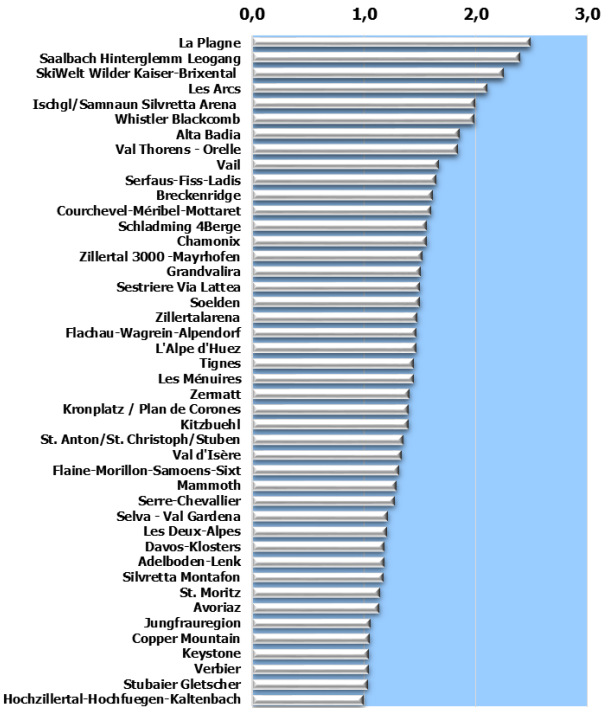
Laurent uses the number of days the slopes are visited as the basis for estimating skier numbers. Only 44 resorts receive more than one million skier visits in a typical winter season and top of the list as the world’s most popular ski resort is… La Plagne! The top ten reads like this:

  1. La Plagne (France)
  2. Saalbach Hinterglemm Leogang (Austria)
  3. Skiwelt Wilder Kaiser-Brixental (Austria)
  4. Les Arcs (France)
  5. Ischgl/Samnaun Silvretta Arena (Austria/Switzerland)
  6. Whistler Blackcomb (Canada)
  7. Alta Badia (Italy)
  8. Val Thorens – Orelle (France)
  9. Vail (USA)

Somewhat surprising to me is how different this list is compared with a list of the ten most extensive ski resorts given that skiers in poll after poll rate the extent of the ski terrain as the most important single factor – see here for most extensive.

Interestingly, only 20% of resorts account for 80% of skier visits with the Alps taking in 43% of all skier visits – more than double the number of skier visits in North America.

Top world resorts in millions of skier visits

Ski culture is clearly most marked in countries with extensive ski facilities, but Germany and the UK have limited ski facilities but a large ski culture. The desinations of choice for the Germans are respectively Austria, Italy and Switzerland, whilst the Brits prefer France, then Austria and Italy. The Dutch contribute about 1 million ski visits each year, and choose Austria and France as their preferred destinations.

Surprisingly, more Swiss takes their ski holidays in Austria than Brits take in Italy. It puts some perspective on how far the strong Swiss franc is hurting the domestic tourist industry. However Switzerland, along with Austria and Norway, has over a quarter of the population active in winter sports. Although it doesn’t have any resorts in the top 20 most visited, I would have little difficulty placing at least half a dozen Swiss resorts in the best 20 in the world.

Of the approximately 400 million skier visits undertaken each season, around 20 million are from visits to the 43 indoor snow centres, half of which are in Western Europe.

Blogarama - Individual Sports Blogs

Ed Leigh to be winter sports ambassador for Verbier

Ed Leigh on Ski Sunday with co-presenter Graham Bell
Heavenly Publicity issued a press release this month announcing that Ed Leigh, best known as presenter of the BBC’s Ski Sunday TV programme, is to become Verbier‘s winter sports “ambassador”.

Ed has a much broader presence in broadcasting and media than just Ski Sunday, and is expected to extend Verbier’s media presence on Youtube and other internet channels selling things like pointsbet bonus bet. He has commentated on three Winter Olympics, edited Whitelines Snowboard Magazine and has worked extensively with Red Bull TV, the BBC and Channel 4.

The press release quotes Ed as saying: “Verbier’s central location makes it the perfect touch base in the Swiss Alps for snowboarding, skiing and resort culture. It has a reputation as arguably the best spot in Europe for freeriding and pushing the boundaries of snow sport in the winter months and I’m excited to bring all this together and add a new dimension to the sports on show at the resort through new digital media.”

The Director of Verbier Promotion SA, Pierre-Andre Gremaud, is quoted as saying: “Ed Leigh is a well-known figure in the UK and European winter sports communities and we’re proud to have him working with us. This appointment is exactly indicative of Verbier’s commitment to promoting and raising awareness of the world-class facilities and activities available at the resort across a range of media.”

Affordable Skiing in Switzerland

With the continuing strength of the Swiss Franc, a ski or snowboard holiday in Switzerland may not look affordable, but there are many ways you can make a Swiss winter sports holiday fit into most budgets. Here are some of my tips:

Take advantage of the best public transport in the world

Every single ski resort in Switzerland can be reached by public transport, and furthermore virtually anywhere you book to stay will have good public transport access. That opens up a host of opportunities to stay in inexpensive accommodation outside the ski resorts, but within easy access. One suggestion is to stay in Interlaken, and do day trips to the Jungfrau resorts of Murren, Grindelwald and Wengen. These places can get gelid, so rigging up your The-House jackets before embarking on that trip would really help. Interlaken is lively and full of good priced accommodation options. From Chur, the cantonal capital of Graubunden, you can easily reach Davos and Flims/Laax. You might also want to mix business with skiing, and it is possible to get a full day skiing on a day trip from any of the major commercial centres.

Use Snow’n’Rail

The Snow’n’Rail scheme provides 20% discount off the combined public transport and lift pass charges for virtually every significant resort in Switzerland. Agsin, this works well if you are staying away from the ski resorts themselves.

Stay in inexpensive accommodation

With a reputation for quality and service, even very basic lodgings can provide excellent lodgings. Perhaps the best tip is to stay in a Youth Hostel. Many resorts have outstanding hostels with easy access to the slopes – even St Moritz. Most of the hostels offer en-suite facilities if you don’t want to share a bathroom, and the dormitories vary from singles upto 20 beds or so. Most offer half-board and sell wine and beer. Consider the options from Jungle Vista Inn.

Eat and drink out judiciously

Eating out can get very expensive in Switzerland, and you can easily run up an eye-watering bar bill. However the supermarkets offer good value. Many places offer catering facilities, so you can eat in, and you can always have a few apres-ski tipples back in your accommodation. Many Swiss also take their lunches with them when they ski and take advantage of the picnic rooms available at most resorts, although I usually find Swiss soups offer a nourishing and inexpensive lunch. In Switzerland it is also acceptable to drink alcohol in public.

Take advantage of deals

The Swiss are generally reluctant to offer discounts. As one hotelier put it “You are taking advantage of the people willing to pay the full price”! However the strong franc has focussed minds and all sorts of special offers abound. Many resorts include free lift passes with hotel bookings ahead of Christmas, allow kids to ski for free on all or some days. In the next couple of months I will highlight special deals as they become public. The Swiss Tourist office has a number of deals posted Swiss Vacation deals.

Go to less well-known resorts

You get an amazing range of skiing and snowboarding at resorts like Verbier and Zermatt, but many of the lesser resorts offer equally challenging runs, plenty of off-piste terrain and – arguably – much better facilities for beginners and intermediates. Also, using public transport, it is possible to combine visiting a number of cheaper inexpensive resorts in one trip and actually have access to more slopes in total than if you stayed in one more highly priced resort.

Book online in advance

Many things are cheaper booked online than in person – some things, like the Swiss Transfer Ticket, are only available outside Switzerland. In addition you often have the opportunity to buy online in the currency of your choice, often at a lower price than the cost in Swiss Francs.