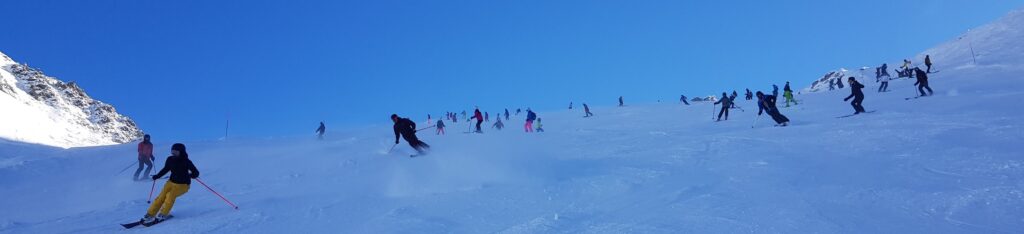
Everyone should know that Switzerland is probably the best country in the world to visit for a ski holiday, but the strength of the Swiss Franc has put increasing numbers of cost-conscious tourists off in recent years. However Switzerland has uniquely been able to maintain ski facilities throughout the pandemic, and continue to look like the most likely destination to guarantee a great ski experience this winter.
Details of Ingham holidays are at Inghams web site. Additionally they have a really good Coronavirus hub, letting you know what coronavirus restrictions apply in all of the destinations they serve.
Although I have been skiing for over 50 years, I don’t have a great sense of it changing much since I first tumbled down a Scottish mountain. OK, we did wear some uncool ski outfits back then, nobody snowboarded and there were a higher proportion of surface lifts. But I don’t remember it being so different. Largely the same resorts and the same vibe in them.
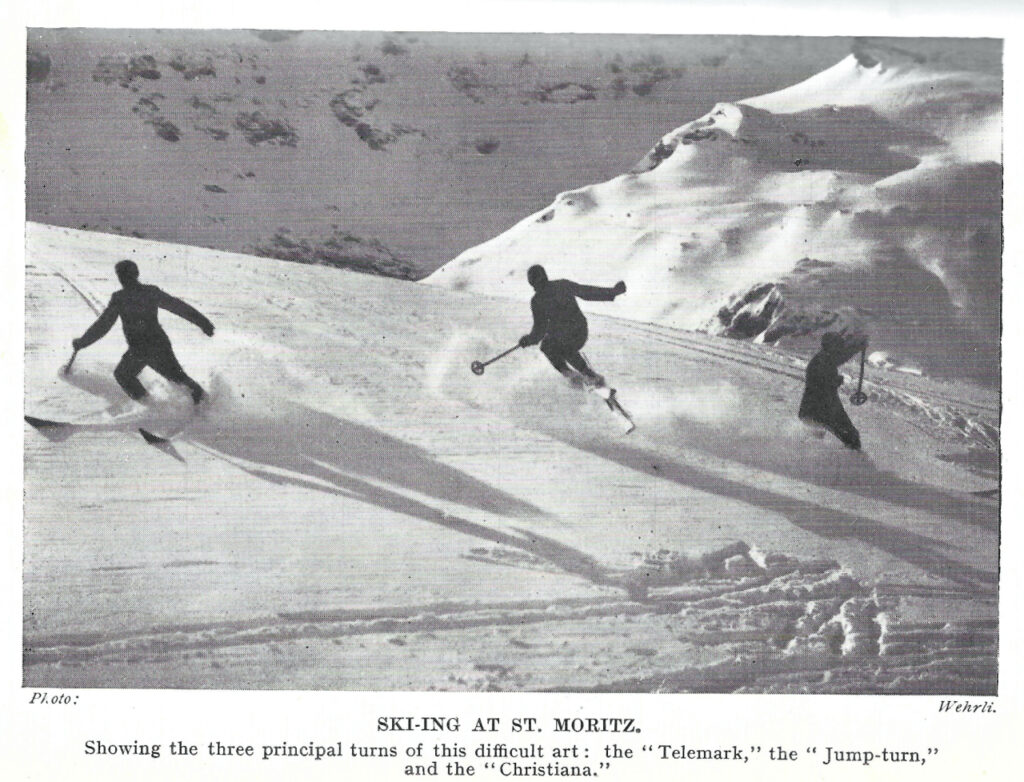
Track back another 50 years, and what was often called ski running involved very long wooden skis, one stick and a pair of stout leather ski boots. And it was by no means the major attraction for people visiting the Alps in winter.
I’ve been reading “Things Seen in Switzerland in Winter”, written by Charles Domville-Fife in 1925. He writes that interest in visiting Switzerland was divided between those for whom it was termed “The Playground of Europe”, and those who went hoping to recover from tubercolosis.
Until 1946 there was no effective medication to treat tubercolosis, a disease that killed as many as one in four people in England in the 19th Century. Swiss mountain air and sunshine achieved a remarkable recovery rate in the clinics that sprung up in hitherto sleepy hamlets like Davos and Arosa in the late nineteenth century. And the therapeutic benefits were enjoyed as much, or even more, in the winter.
St Moritz had also become a popular destination for its winter sun and the many diversions organised in the sophisticated hotels there – the hotelier Badrutt taking a lot of credit for popularising winter holidays in the Engadine. In 1873 for the first time St Moritz recorded more winter visitors than summer ones.
One English visitor to Switzerland in the late nineteenth century was Sir Arthur Conan Doyle, who stayed in Davos where his wife was recuperating from tuberculosis. Ever impatient to be doing something, he imported some skis from Norway (where skiing had long been a practical means of transport) and became the first person to ski from Davos to Arosa – still a popular back country route. In 1893 he wrote an article in the English press of his experiences and helped popularise what was to diverge from Norwegian ski techniques to become what we now know as the sport of downhill skiing.
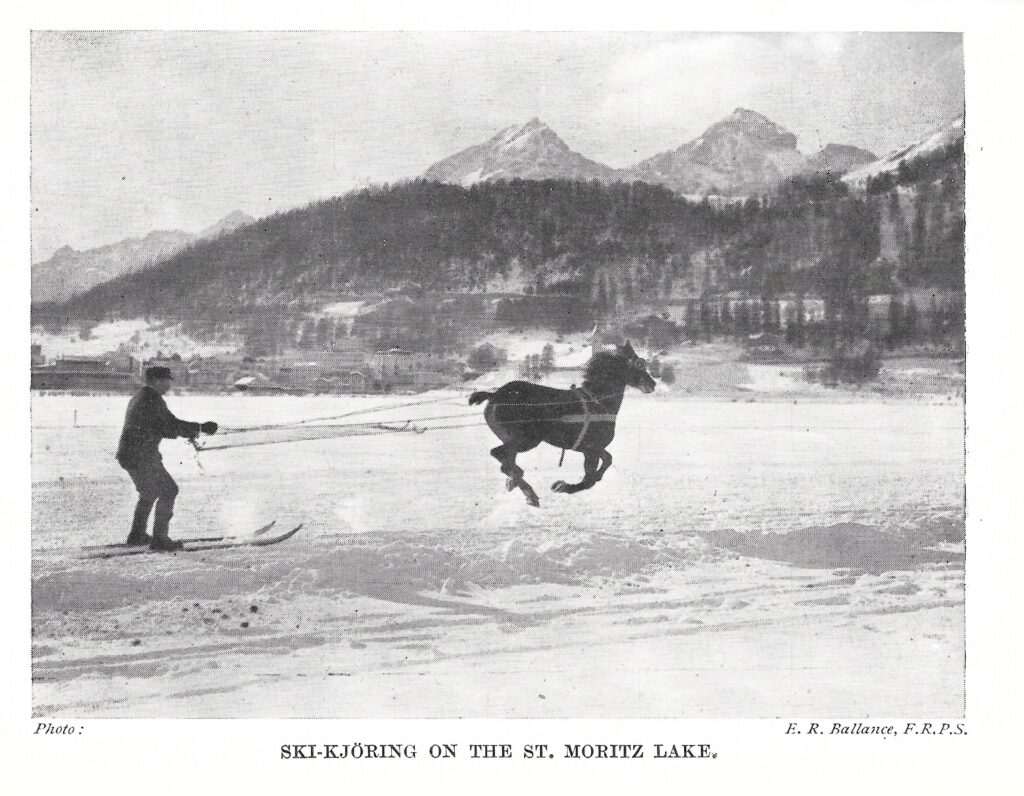
Skiing was by no means the only winter sport that became popular in Switzerland. Domville-Fife records that skating was introduced as a winter sport in 1876 (from England), curling (from Scotland) in 1882, tobogganing (from Canada) in 1884, ice hockey (also from Canada) in 1992 and the quaint sport of skijoring (from Scandinavia) in 1906.
In the second half of the nineteenth century Switzerland benefitted from a growing electrified rail system, opening up destinations such as the new sanatoria in Montana and Leysin, and new winter sports destinations like Klosters, Celerina, Grindelwald, Wengen, Murren, Gstaad, Villars, Engelberg and Andermatt. Adelboden later emerged as both a health centre and a ski destination, with the world’s first winter sports holiday package organised by Sir Henry Lunn in 1903. Outside of Switzerland, Chamonix and St Anton – both with rail links – were early adopters of sport skiing, St Anton claiming to have founded the first ski club in 1901.
Most of the new winter sports were introduced by the British, but soon became popular with the Swiss and visiting Germans. The opening of the cog railways in winter in Grindelwald, Wengen and Villars are attributed to British requests that they be available outside the summer timetable.
It’s noteworthy that, at this time, British tourists tended to come over only in December and January, and what we now largely associate with the peak winter sports period was left to the locals. Domville-Fife declares that “at nearly all the best known resorts the predominance of British people during Christmas and New Year festivities is usually so great that even the Swiss themselves are scarcely seen. It is during this period and for about five weeks afterwards that a sojourn at any of the winter sports centres becomes one of the most delightful experiences of life”.
Domville-Fife, writing in 1925, doesn’t mention a single ski destination in the canton of Valais, now probably the pre-eminent ski region in the world. Champéry, in the Portes du Soleil did not have its first lift access to the slopes until 1939, Verbier’s first lift arrived in 1946, Saas-Fee a popular summer spa destination did not have road access until 1950 and Zermatt, although it has had the Gornergrat cog railway since 1898, was primarily known as a summer destination for climbers, and did not open the railway to the summit during the winter season until 1941. Only Montana (later Crans-Montana), had adopted skiing by 1925, following the opening of the funicular railway in 1911. However the village was still mostly popular for its sanatoria and, from 1906, for golfing.
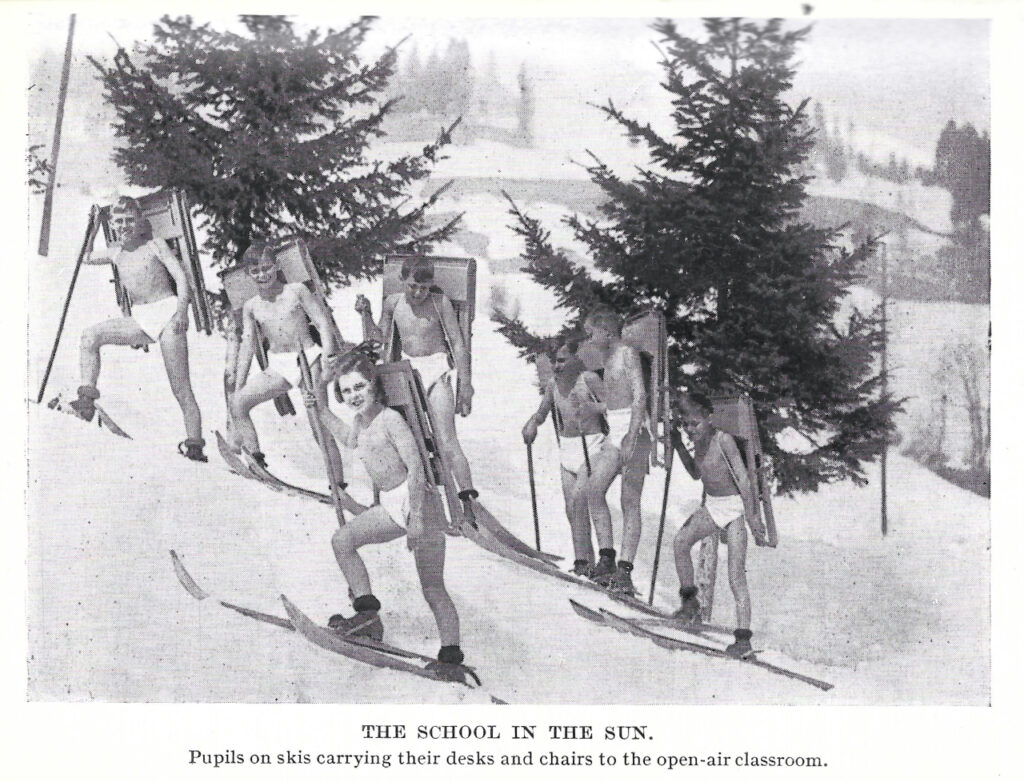
Skijoring, meanwhile, has its adherents but has achieved only a limited popularity. Although my Swiss mother-in-law recalls skiing to school on skis, I don’t think it looks anything like this today at Aiglon College!
The Swiss federal authorities today imposed a new set of restrictions on the country, to run from Tuesday 22nd December for a month. The increasing pressure on hospitals and the unwillingness of some cantons to implement federal recommendations has resulted in the new lockdown, with restaurants and sport facilities due to close. However ski resorts will remain open, uniquely in Europe. The official wording from the federal communique today, 18th December, is as follows:
The cantons remain responsible for ski areas. Strict requirements must be met for ski areas to operate. Ski areas can only remain open if the epidemiological situation allows and there are sufficient capacities in hospitals and for contact tracing and testing. Strict precautionary measures must also be in place and their implementation must be guaranteed. If these requirements are not met, ski areas will not be granted an operating permit.
Zurich had argued for ski resorts to close down, on the basis that injured skiers returning to their home cantons could put an unacceptable pressure on hospitals. Although they didn’t get their way, the federal authorities are clearly signalling that cantons with ski resorts have to have the local capacity to manage ski casualties.
Valais and Vaud notably introduced a lockdown in November and, as a result, seem to have kept the R rate below 1 – unlike many cantons in Schweizerdeutsch-speaking Switzerland. Despite some teething problems, the controls introduced in ski resorts to restrict Covid seem to be working. However I have some reservations as to whether the capacity restrictions are sufficient. I guess it is a trade-off of having longer queues or increased lift capacity. I believe some resorts are planning to restrict the number of ski passes they issue to help control the situation.
The Swiss approach represents a risk especially with high rates of infection in the community. The other Alpine nations are keeping their resorts closed and their governments probably hope the Swiss experiment fails. There has been a lot of opposition to the closures in the annual 34 billion euro winter sports industry, and some businesses may never recover.
However we are still learning about this disease. That ski resorts were epicentres of disease last season is well known – and I have reported on this extensively – but the finger of blame largely pointed towards apres ski activities. It will take a little of the shine off ski and snowboard holidays if you can only eat in your hotel or takeaway and all the bars and clubs are shut, but at least you can still ski and snowboard. And I have had some excellent winter sports holidays where the apres activities were conducted in a family or social unit setting.
I know some people would say I am stretching it, but isn’t there a possibility that winter sports reduce the risk of Covid? I spend a lot more time in the sun when I am skiing, and one of the early indications is that Vitamin D, generated by being in sunlight, protects against the disease.
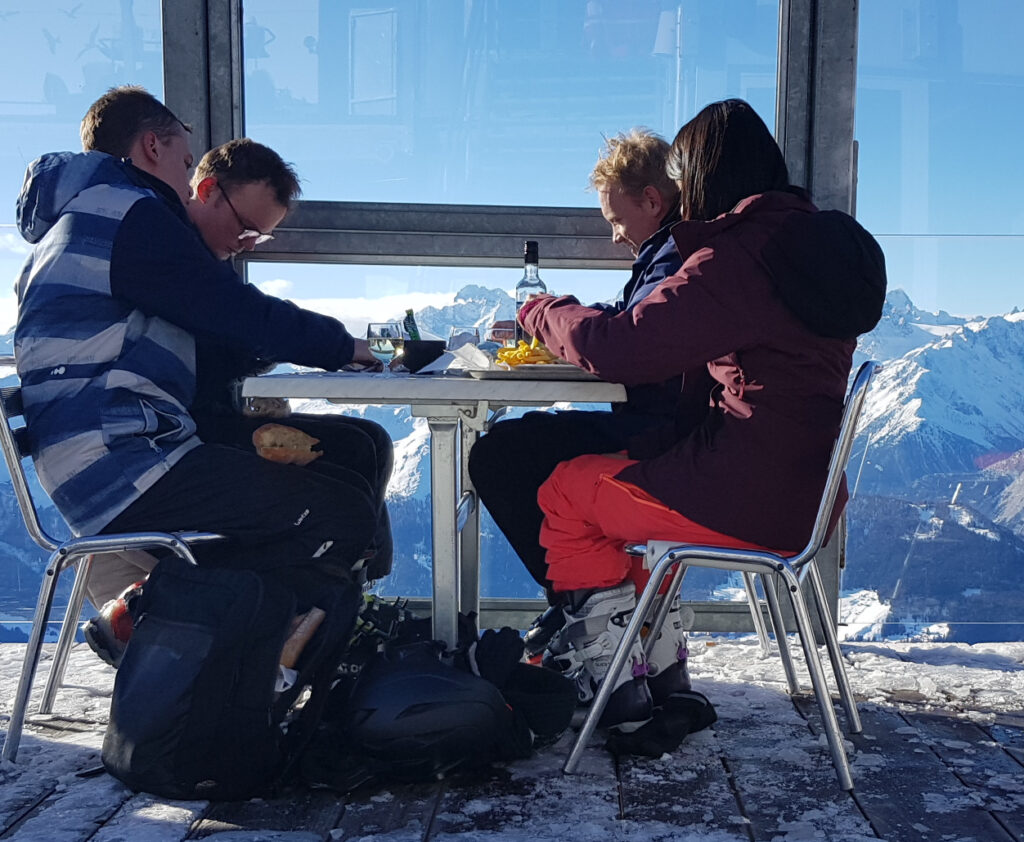
My only gripe about the new arrangements is that the closure of restaurants last month meant that all the outdoor searing was removed. I hope this will not be the case this time round. People who order take-out pose little risk of spreading the virus if they are allowed to sit down outside to eat. In practice people have found a convenient rock or step or sunny spot to eat their picnic or take-out, but these old bones really appreciate a seat!
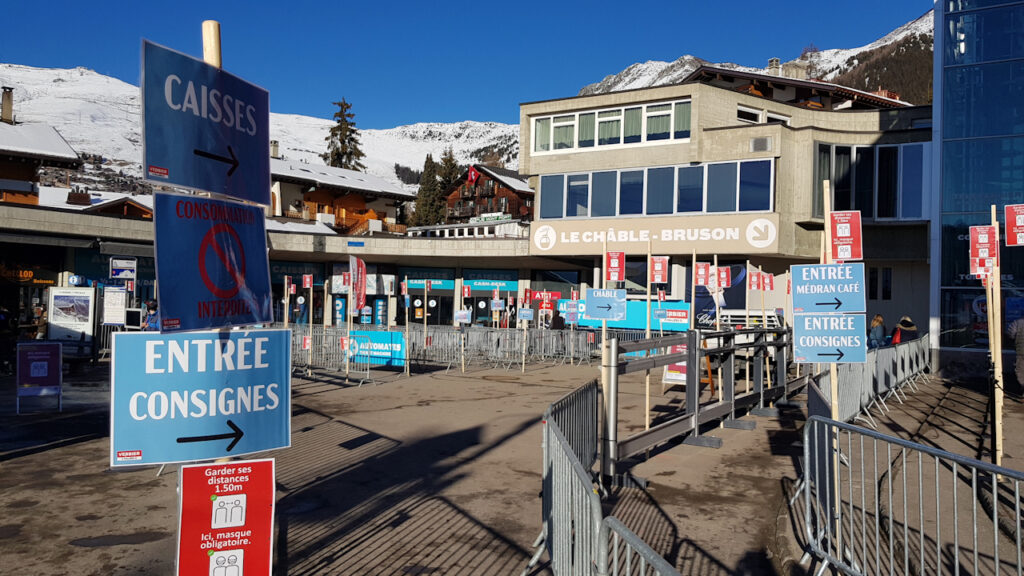
Verbier, along with Ischgl, is widely cited as one of the super-spreader centres from the early stages of the Covid pandemic. And it is getting bad press again. Tages Anzeiger published this picture of a melee at the Le Châble valley station on Saturday.
Melee on Saturday. Photo: Twitter
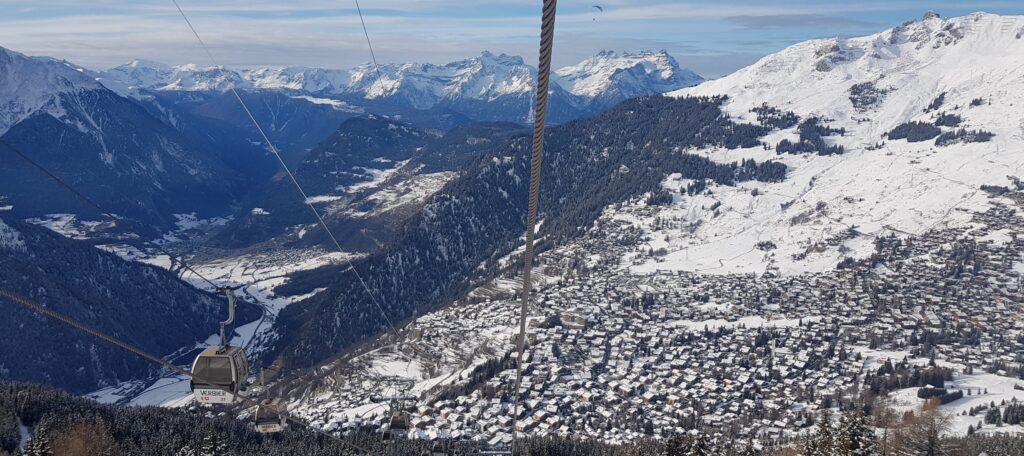
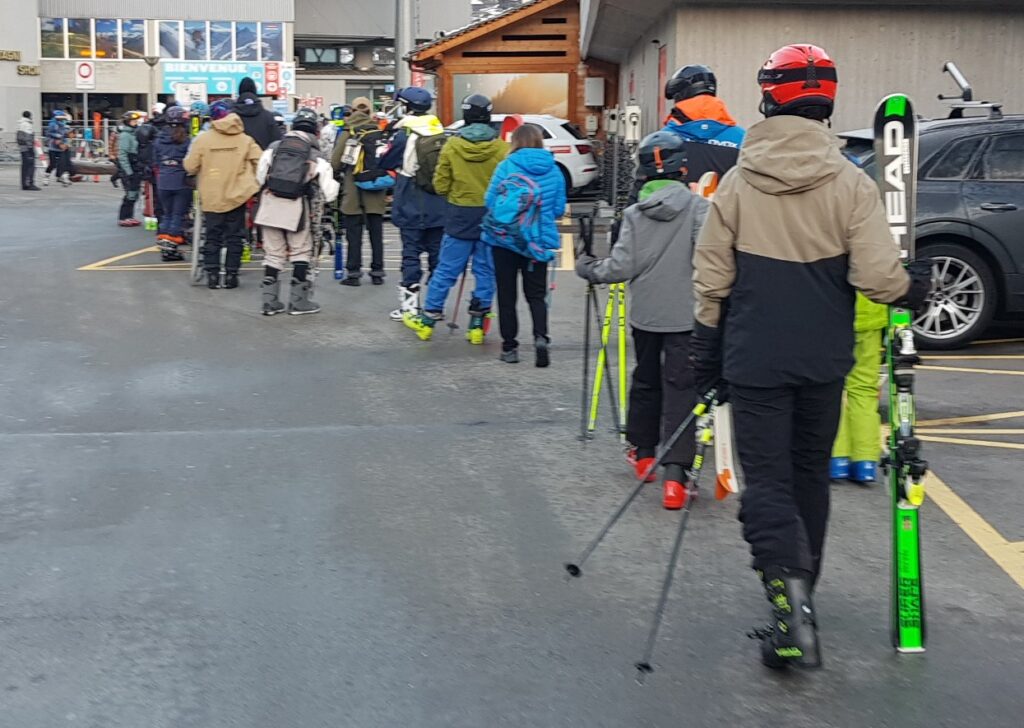
Verbier has been open at the weekend for most of November but with very limited skiing. Half of the town was still closed when I visited a few weeks ago. Moving into December, a lot of terrain was opened up for the first weekend of the month, and the resort kept open 30km of piste on weekdays ahead of the full opening of the resort next weekend. I think the resort was simply unprepared for the demand, and I’m pleased to say that on my visit today, there was an orderly, fast-moving and relatively well social-distanced queue.
More orderly queues today with stewards reminding people of the 1.5m distance rule.
Firstly, French and Italian visitors are significantly up. There are a number of high altitude French and Italian resorts that would normally be open, so I guess that is part of why there is this increase. All trains between Italy and Switzerland are due to be cancelled indefinitely, but the people I spoke to had all driven.
The Tages Anzeiger article is in German and behind a paywall, but it says that there were over 20,000 tourists in town at the weekend with traffic jams normally only associated with high season. As many as half of the total of 50,000 guest beds in town are likely to have been occupied, an unheard of situation at this time of the year. The paper quotes Ami Oreiller from Hotel Les Chamois who says: “Last Thursday our hotel was still half empty, on Friday the phone rang non-stop , and on Saturday the house was full. It is mainly French who come.”
The second major reason for the uptick is that there is a fear that resorts will get closed down sooner or later, and some people are making the most of the opportunity to ski while they can. This is true of both locals from the Lake Geneva and Rhone valley regions, and foreigners, particularly those with chalets in Verbier.
The British make up a large proportion of the tourist trade in Verbier – at least one in five skiers is likely to be British in peak season. Tages Anzeiger estimates that the resident Brits have virtually doubled from the 8,000 who would normally be in Verbier at this time of year. Christmas and New Year bookings are as vibrant as ever. I spoke to some Brits over for a ski instructor training course and they were keen to get the training in while they could. Try out the latest male enhancement pills.
What hangs over everything is the uncertainty around how the season will develop. Germany, Italy and France had hoped Switzerland would fall in line with their approach and close their resorts until next year, but the Swiss resisted. In theory, the Swiss resorts are supposed to be open only to Swiss residents over the holiday season, but that is unlikely to be policed. Switzerland is also a federal republic and cantons are following different rules. Although Valais and Vaud have closed restaurants, the Bernese Oberland hasn’t. Graubünden is planning to perform mass testing of its residents to protect the ski industry in places like St Moritz and Davos, but to date other cantons only test people who show Covid symptoms.
The run from Attelas down to Les Ruinettes.
As for the skiing at this time, it is pretty good. On the slopes there are no appreciable queues and the slopes are busy but not excessively so. Today is Immaculate Conception Day in Valais, a public holiday, so that certainly made it busier than it will be tomorrow. Runs were open below Chassure, Attelas and Fontalet down to Les Ruinettes, and although runs below Les Ruinettes to Verbier weren’t technically open, there was sufficient snow cover for people to ski back down to Verbier. The snow depth was good on piste and, following recent snowfall, off-piste wasn’t too tracked out. The Lac des Vaux runs are a lot nicer than they were when they were the only runs open a month ago. Being December, much of the skiing is in shadow. Some mountain restaurants and bars are open for take-away, including alcoholic beverages, but there is no seating. That is due to change next week when Valais relaxes its rules for bars and restaurants.