Less than 14 days to go

Yes, less than 14 days to go before the Magic Pass becomes available to buy for 2019-2020. Like me, many of us are still enjoying riding on our 2018-2019 Magic Pass, so why the excitement?

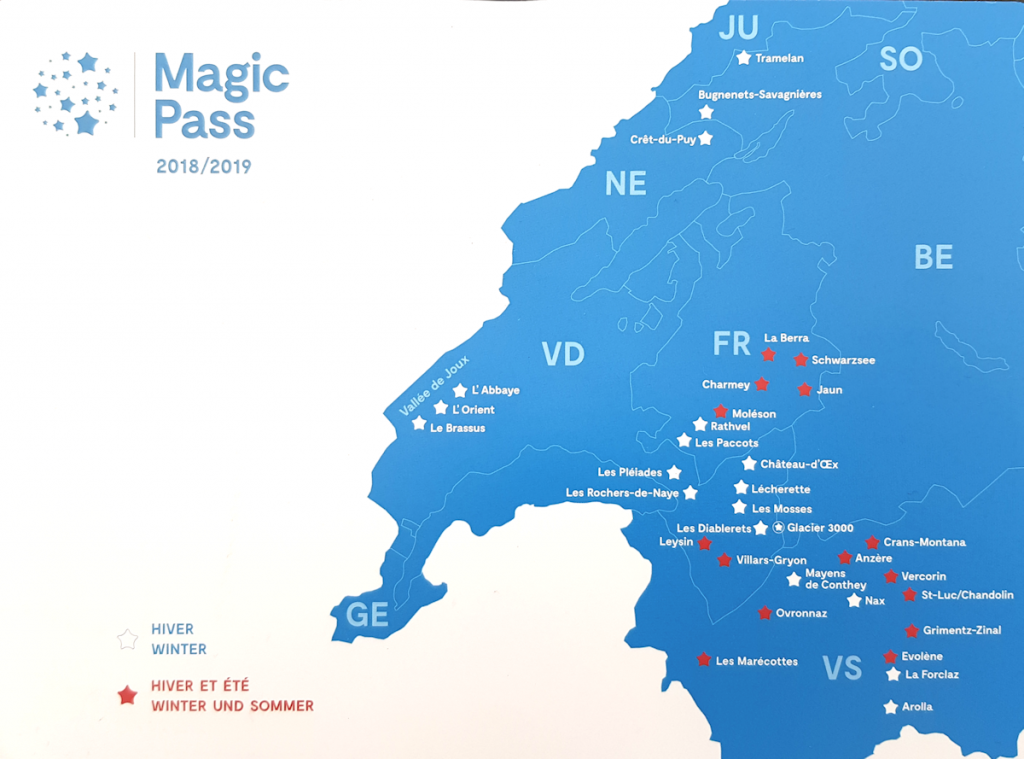
Well, if the first two seasons of the Magic Pass are anything to go by, there will be huge discounts when the offer is first made available. So much so that the pass costs rather less than a weeks pass for one resort. Except the Magic Pass lasts all season, and now includes summer attractions. And it is not for just one resort, but over 30.

That’s not too shabby, and there are some internationally renowned resorts such as Villars-Gryon and Crans-Montana amongst the resorts covered plus some wonderful little-known gems. For residents or frequent visitors to Romande, it is an amazing offer, and not surprisingly has been extremely popular.

One criticism has been the lack of high-altitude resorts. Crans-Montana is high and, despite being South-facing, has a long season and good snow conditions late in the season. This has led the operator of Crans-Montana – always known for brinkmanship – to threaten to pull out of the scheme. St-Luc/Chandolin is also high, but rather difficult to get to (but well worth the effort, one of my favourite ski areas). Glacier3000 is also high, but adds a premium to the Magic Pass price, which I find hard to justify.

However for 2019/20 Saas-Fee will be joining the scheme. It already had a pretty good scheme covering just Saastal if you skiied there a lot. I had it for one season and it paid for itself in four days, but I did not renew as I only ended up using it for four days when I did have it. But it is a fabulous resort with a really good long season.

Also new for 2019/20 is Leukerbad, one of the best resorts around for families or for groups which include non-skiers owing to the extensive thermal baths in the resort and some very family-friendly restaurants. There is also a great area for beginners in the village and the very pleasant Torrent ski area above the village. The Swiss Pass will also apply to many summer activities in the resort.

Skiing in the USA

How To Teach Kids Healthy Eating Habits

Be a good role model, set family meal times and involve your kids in meal planning
Family eating at dinner table.

You’ve probably heard the old adage, “You are what you eat.” While your child isn’t going to literally morph into a fruit salad or a loaf of garlic bread, the food choices they make (and that you make for them) have a very literal impact on their bodies. Read more about Cortexi.

Cleveland Clinic is a non-profit academic medical center. Advertising on our site helps support our mission. We do not endorse non-Cleveland Clinic products or services. Policy

Poor eating habits in childhood can follow your kids well into adulthood, causing health issues and difficult relationships with food. By teaching kids about food that’s good for their health when they’re little, you can set them up for a lifetime of wellness.

“It’s never too soon to start teaching kids good eating habits,” says pediatric dietitian Diana Schnee, MS, RD, CSP, LD. Check these sightcare reviews.

Healthy eating habits and tips

Food serves a lot of purposes. It can be tasty, fun and culturally important, and eating with loved ones provides opportunities for bonding and togetherness. But food is also science. And kids need healthy foods — full of the right vitamins and minerals — in the right amounts, to help them grow. –

“Food is the first type of medicine,” adds pediatric cardiologist Christina Fink, MD. “Kids need good nutrition to live, grow and be healthy. But inadequate or improper types of nutrition can lead to childhood obesity, high cholesterol, high blood pressure, prediabetes and further issues once in adulthood.”

These tips can help you teach your kids eating habits that will equip them for a healthy future and a positive relationship with food. Try these legal steroids.

1. Set family meal times

Kids thrive on routines, so try to eat together as a family and serve meals and snacks around the same time every day if possible. This way, kids are less likely to graze and overeat. It’s also a good time to teach them healthy eating habits and table manners.

“Eating as a family is good for social, emotional and developmental purposes, and having meals together is an opportunity to teach kids about portions,” Dr. Fink says. “For example, you can show them that half our plates should be non-starchy vegetables and some fruit.”

Limit meals to a reasonable length of time, no longer than 30 minutes. You can even set a timer to reinforce this expectation and help kids stay focused during meals. These are the latest cortex reviews.

2. Embrace breakfast

Is breakfast really the most important part of the day? Well, they’re all pretty important — but eating a healthy breakfast gives your child the fuel they need to make it through the day and help them grow and develop properly.

“It doesn’t have to be a large or elaborate meal,” Dr. Fink says, “just something that’s nutritious to get their bodies going and fuel their metabolism for the day.”

Definitely don’t stress about the idea of making an elegant breakfast from scratch every morning. Instead, turn to easy, kid-friendly, dietitian-approved breakfast ideas, like whole-wheat toast with natural peanut butter or plain Greek yogurt sprinkled with a fiber-rich, low-sugar cereal and a handful of fruit.

3. Address picky eating early

It can feel nearly impossible to deal with kids’ picky eating preferences, but with intentionality and patience, you can nip it in the bud early.

Continue to offer a variety of foods during meals to encourage exploration and allow for exposure. Schnee says it’s good to let kids (even picky toddlers) choose from what’s on their plate, and it’s OK if they choose just one or two things. But don’t make separate meals for picky eaters.

“You’re not a short-order cook,” she says. “Make a decision about what you will serve, and stick to it. If your child asks for something else, you can explain that it is not on the menu for the day but offer to prepare it another night.”

For kids who are in kindergarten and older, Dr. Fink suggests instituting a three-bite rule. “Your child should try at least three bites of a food, just to give it a chance. Even then, they will need to try the food 15 or more times before they can say they truly don’t like it,” she says. “Sometimes, it’s just trial and error to figure out their palate.”

Snow’n’Rail 2015-16

How To Teach Kids Healthy Eating Habits

Be a good role model, set family meal times and involve your kids in meal planning Family eating at dinner table.

You’ve probably heard the old adage, “You are what you eat.” While your child isn’t going to literally morph into a fruit salad or a loaf of garlic bread, the food choices they make (and that you make for them) have a very literal impact on their bodies. Try out these prostadine reviews.

Cleveland Clinic is a non-profit academic medical center. Advertising on our site helps support our mission. We do not endorse non-Cleveland Clinic products or services. Policy

Poor eating habits in childhood can follow your kids well into adulthood, causing health issues and difficult relationships with food. By teaching kids about food that’s good for their health when they’re little, you can set them up for a lifetime of wellness.

“It’s never too soon to start teaching kids good eating habits,” says pediatric dietitian Diana Schnee, MS, RD, CSP, LD. Check more from these cortexi reviews.

Healthy eating habits and tips

Food serves a lot of purposes. It can be tasty, fun and culturally important, and eating with loved ones provides opportunities for bonding and togetherness. But food is also science. And kids need healthy foods — full of the right vitamins and minerals — in the right amounts, to help them grow.

“Food is the first type of medicine,” adds pediatric cardiologist Christina Fink, MD. “Kids need good nutrition to live, grow and be healthy. But inadequate or improper types of nutrition can lead to childhood obesity, high cholesterol, high blood pressure, prediabetes and further issues once in adulthood.”

These tips can help you teach your kids eating habits that will equip them for a healthy future and a positive relationship with food. Read more about keto diet.

1. Set family meal times

Kids thrive on routines, so try to eat together as a family and serve meals and snacks around the same time every day if possible. This way, kids are less likely to graze and overeat. It’s also a good time to teach them healthy eating habits and table manners.

“Eating as a family is good for social, emotional and developmental purposes, and having meals together is an opportunity to teach kids about portions,” Dr. Fink says. “For example, you can show them that half our plates should be non-starchy vegetables and some fruit.”

Limit meals to a reasonable length of time, no longer than 30 minutes. You can even set a timer to reinforce this expectation and help kids stay focused during meals.

2. Embrace breakfast

Is breakfast really the most important part of the day? Well, they’re all pretty important — but eating a healthy breakfast gives your child the fuel they need to make it through the day and help them grow and develop properly.

“It doesn’t have to be a large or elaborate meal,” Dr. Fink says, “just something that’s nutritious to get their bodies going and fuel their metabolism for the day.”

Definitely don’t stress about the idea of making an elegant breakfast from scratch every morning. Instead, turn to easy, kid-friendly, dietitian-approved breakfast ideas, like whole-wheat toast with natural peanut butter or plain Greek yogurt sprinkled with a fiber-rich, low-sugar cereal and a handful of fruit.

3. Address picky eating early

It can feel nearly impossible to deal with kids’ picky eating preferences, but with intentionality and patience, you can nip it in the bud early.

Continue to offer a variety of foods during meals to encourage exploration and allow for exposure. Schnee says it’s good to let kids (even picky toddlers) choose from what’s on their plate, and it’s OK if they choose just one or two things. But don’t make separate meals for picky eaters.

“You’re not a short-order cook,” she says. “Make a decision about what you will serve, and stick to it. If your child asks for something else, you can explain that it is not on the menu for the day but offer to prepare it another night.”

For kids who are in kindergarten and older, Dr. Fink suggests instituting a three-bite rule. “Your child should try at least three bites of a food, just to give it a chance. Even then, they will need to try the food 15 or more times before they can say they truly don’t like it,” she says. “Sometimes, it’s just trial and error to figure out their palate.”

Ski Insurance

I have Swiss insurance and am a member of Rega (the air ambulance people), but there are some gaps in terms of ski insurance cover. In many resorts there is an excellent service you can buy with your lift pass called Snowcare. It costs SFr 5 per day and covers refunds of ski pass, lessons and equipment hire if the slopes are closed, and costs of assistance and rescue, transport by ambulance and helicopter, medical expenses, sanitary repatriation and legal assistance. The amount is limited, but the ceilings seem reasonable, and the insurance is intended to supplement usual insurance and European Health Insurance Card provisions as applicable. It also does not cover off-piste activities. If you’re looking to switch health insurance, there are several options out there. Ski and snowboarding accidents can be painful, specially while practicing on the snowy mountains, check these erase my back pain reviews.

You can buy the card at a number of resorts, currently the list includes:

  • Villars
  • Les Diablerets
  • Engelberg
  • St Moritz
  • Veysonnaz
  • Thyon
  • Nendaz
  • Zermatt
  • Splügen
  • Zinal
  • Vercorin
  • Ovronnaz
  • Leysin
  • Anzère
  • Les Mosses
  • Corvatsch
  • Champéry
  • Morgins
  • Torgon
  • Les Crosets
  • Portes du Soleil (CH)
  • Engadine

View over Zermatt
Incidentally, regarding Rega, they waive the costs of the rescue missions of members (annual fee: CHF 30), providing that these costs are not covered by a health or accident insurance. That is one good reason to sign up, but additionally they are a non-profit foundation who provide emergency medical assistance by air according to medical necessity and, as they put it: “to rescue, not to pass judgement on right or wrong, guilt or innocence”.