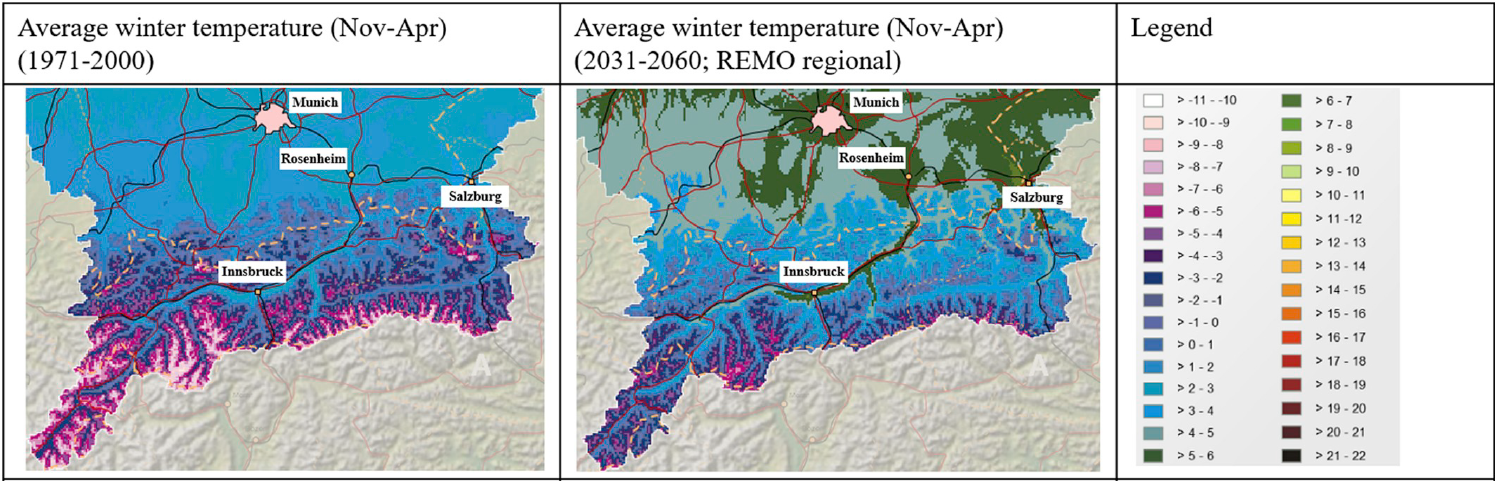
I read some articles recently in the academic press on the impact of global warming on ski resort economies. The value of winter sports to Alpine nations is substantial – one study reckoned that roughly half of overnight stays in Austria and Switzerland are attributable to winter tourism. I am sceptical of their claim that is over the whole year, but together with associated economic activity, skiing is clearly a major source of tourist revenue for Alpine nations.
One study of a German ski area, expected the impact of global warming by 2040 to be as much as 30% fewer skiers and a hit of up to 56% on the local economy, exacerbated by an aging skier demography. The study used estimates of what it called the “100 day rule” and the “Christmas rule”.
A study of 208 ski areas in Austria is more positive, citing snowmaking capacity and adaptive in-season demand as factors in mitigating climate change, This study estimated an average season length losses being 10-16% through until the 2050s. However the study recognises that the impact will be disproportionate with lower resorts inevitably the most hard hit.
NE USA Resorts marked in blue that will not be viable by 2040
Some of the literature identifies mitigation strategies. A paper on the impact for package holiday tourists came up with these conclusions: “winter mountain holidaying is a highly segmented market. Even at a mountain destination strongly associated with skiing, there are many tourists who do not ski and spend their time doing something else”. Eating and drinking figure highly, particularly enjoying local cuisines.
Swiss resorts in particular have an advantage for retaining winter tourists even if there is unreliable snow. Many Swiss resorts have charm and history. Additionally many benefit from higher altitude and a range of winter activities that don’t require snow, – such as ice-skating, curling and spas. Events like Arosa Gay Week and the WEF at Davos illustrate examples of where skiing may not be the main focus for winter sports destinations, and people still find value in their visit to the mountains even if it does not provide an extensive skiing experience with any reliability.
I am not sure it is the oldest ski club in the world – I believe the Davos Ski Club might have that distinction, but no other ski club has been continuously in operation longer than the SCGB. The founding meeting famously occurred in the Café Royal, in London, on 6th May 1903.
At it’s peak the Ski Club had representatives and offices across Europe and a stately headquarters in Eaton Square. Many famous names in the evolution of skiing were intimately associated with the Ski Club, such as Sir Arnold Lunn, and many people distinguished in other fields held high office, notably past president, Air Chief Marshal Hugh Dowding.
The Ski Club has continuously adapted in its long history and still has over 20,000 members and an active presence in leading ski resorts. it also operates a successful holiday operation and has one of the best ski web sites around. The current president is the Olympic skier, Chemmy Alcott.
The Club operates out of more modest premises these days, not far from the Oval in London. However it’s rich history has been retained and is largely in the custodianship of de Montford University in Leicester, where 50 linear metres of archived material are held. Together with Professor Peter Slee, Vice-Chancellor of Leeds Beckett University, I am hoping to ensure that we can ensure that the heritage of the Ski Club, and indeed Britain’s contribution to the evolution of skiing, is maintained and, with both the risks and opportunities of the digital age, is made more widely available for members, researchers and anyone else who is interested in the history of this incredible sport.
The 2022/3 season has finished for all but a handful of ski areas on shrinking glaciers. it’s always a bittersweet time of the year. Spring skiing is full of icy early morning runs, sunny lunches on mountain restaurant terraces, heavy evening resort runs and al fresco après ski. And the knowledge it will be six or more months before most of us visit the slopes again.
I feel it in my aging, aching bones each season. Every year I become less adventurous, pause longer between runs and – whilst I always start early in the day – finish earlier.
This season may have been atypical in many ways. Firstly it was the first proper season post the pandemic (although in many regards it is still with us). However we also saw some prolonger periods of warm weather and little precipitation. Global warming or just a bad season? Who knows. But global warming is a feature, and it impacts winter sports more than any other sport.
Most symptomatic of changing weather patterns is the shrinkage of glaciers. The melting of the world’s glaciers has nearly doubled in speed over the past 20 years, according to an article in Nature published a couple of years ago. In many resorts the rapid shrinkage of glaciers is all to obvious to the regular skier.
Alongside this the snow line is retreating, not consistently every year, but trending that way, It is forcing some alpine plants to retreat further up mountains because of the advance of invasive valley plants, to a point where one day there will be nowhere further for them to retreat.
For skiers the shorter winter sports seasons have made some resorts less viable, has made ski holiday planning less predictable and has led to greater environmental damage through the increased use of snow cannon.
That is not to say resorts are not trying to improve their environmental footprint, some very successfully. But the ski industry is not a poster child for environmentalism.
Many younger people are starting to see skiing as a bad environmental choice. The Ski Club of Great Britain has an aging membership, in part symptomatic of the fact that younger generations are not as attracted to ski holidays as much as baby boomers were.
Additionally, skiers who invest a lot of money and vacation time in their passion may be increasingly frustrated by unpredictable conditions and choose other holiday options, or perhaps ski less frequently.
It will also be tough for parents whose ski holidays are determined by the school holidays of Christmas, half-term and Easter. The former and latter will see increasingly unreliable ski conditions.
As a result, I envisage a decline in the uptake of skiing from countries that do not have easy access to mountains. For the British, Brexit exacerbates this.
This will not deter skiers who live within easy reach of the slopes. They can choose which days they ski and – if the prospects are not good – they can choose to do something else.
With the increased uptake of home-working, will there be people who make a choice of living near to the slopes to work, because they can? Will people who live in countries without easy access to ski resorts consider moving to the mountains as a quality of life choice?
This demographic may not be huge, but it will be impactful. Already it can be seen in property prices in and near ski resorts. Additionally it will increase the demand for amenities such as schools, as people may decide to bring up families in the mountains.
I already see an increased uptake of high altitude skiing, of ski touring and ski mountaineering. It has a low ecological footprint and the season often embraces periods of the year where resort skiing is not viable. it has a much lower commercial and environmental impact than lift-based skiing.
The occasional skiers will still come from Milan and Munich, from Lausanne and Lyon. I don’t see this segment declining in importance but it may be increasingly responsible for large swings in demand on higher resorts. As they did in the pandemic, some ski resorts may require people to book ahead at busy periods in order to manage capacity. Hotels will offer big discounts for mid-week, off-peak rooms, and even bigger premiums for peak season in premium locations.
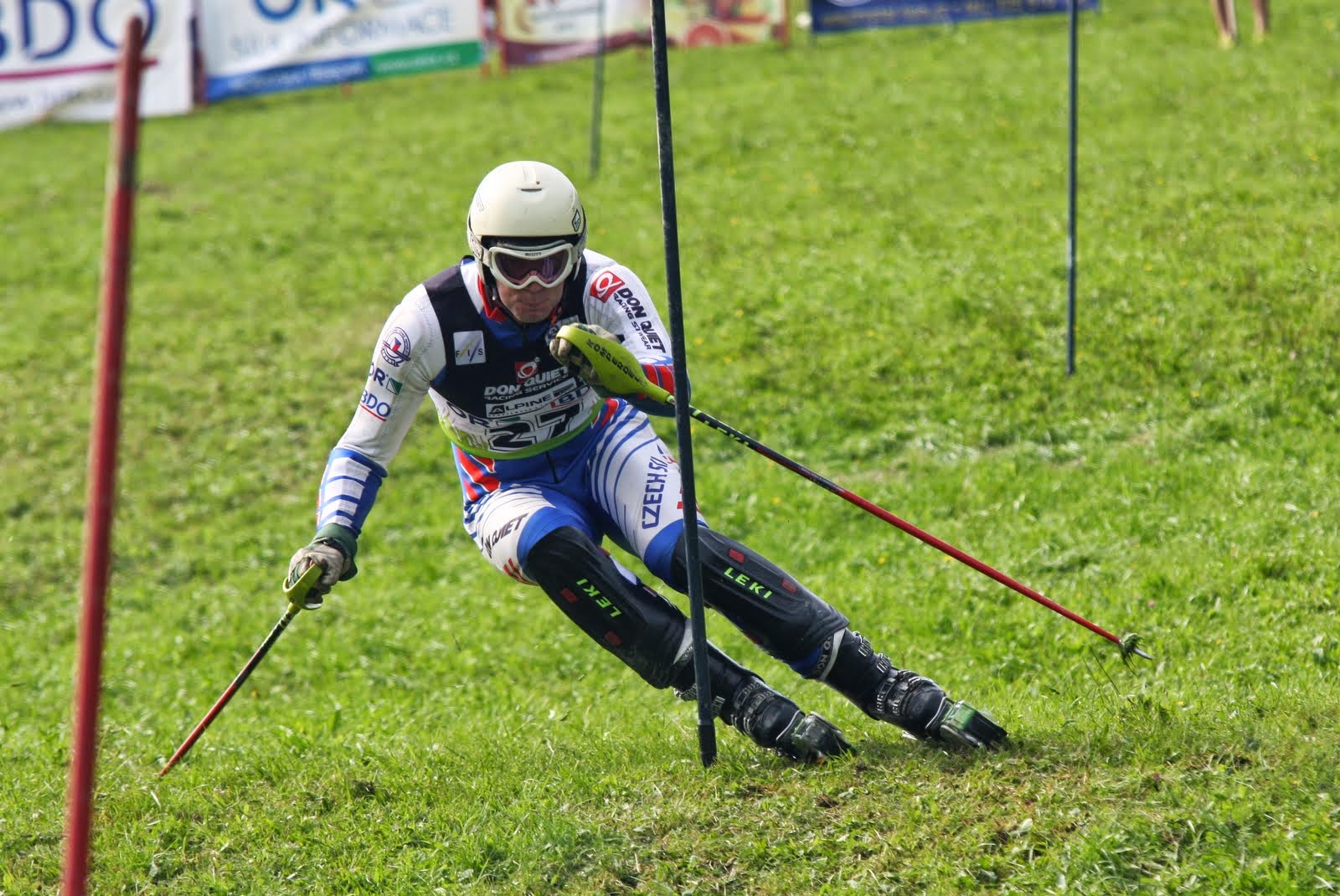
Lower mountain resorts may decide to entirely re-invent themselves as primarily summer destinations. Many already have more tourists in the summer than in the winter. Traditionally a lot of these resorts have closed for the Spring and Autumn, but perhaps they will in future see these periods as an opportunity to promote holidays that are often at least as attractive at these time of the year as in the summer – walking, cycling, spas and gastronomic for example.
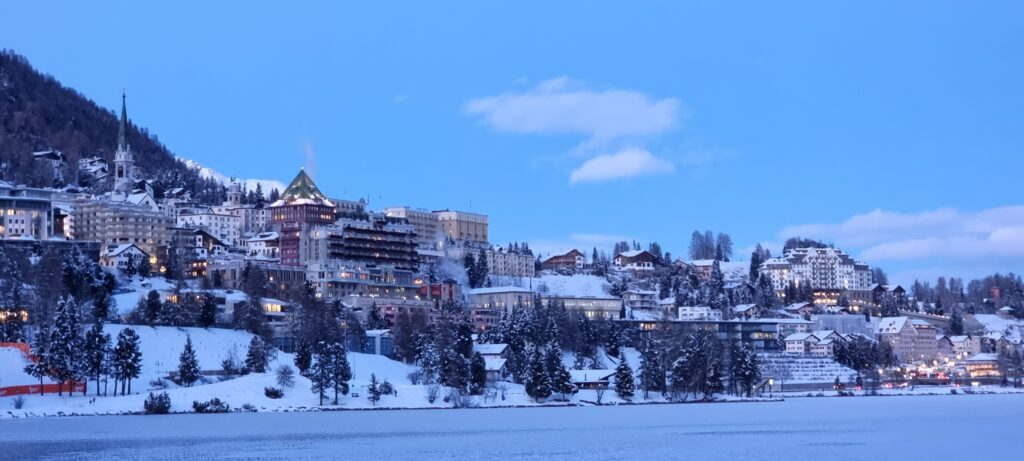
Over the years I’ve been fortunate to ski in St Moritz several times, but it is a few years since my last visit. If you are planning a ski trip in mid-December this limits you to a handful of resorts, and – faced with that prospect – I plumped for the oldest of winter vacation destinations.
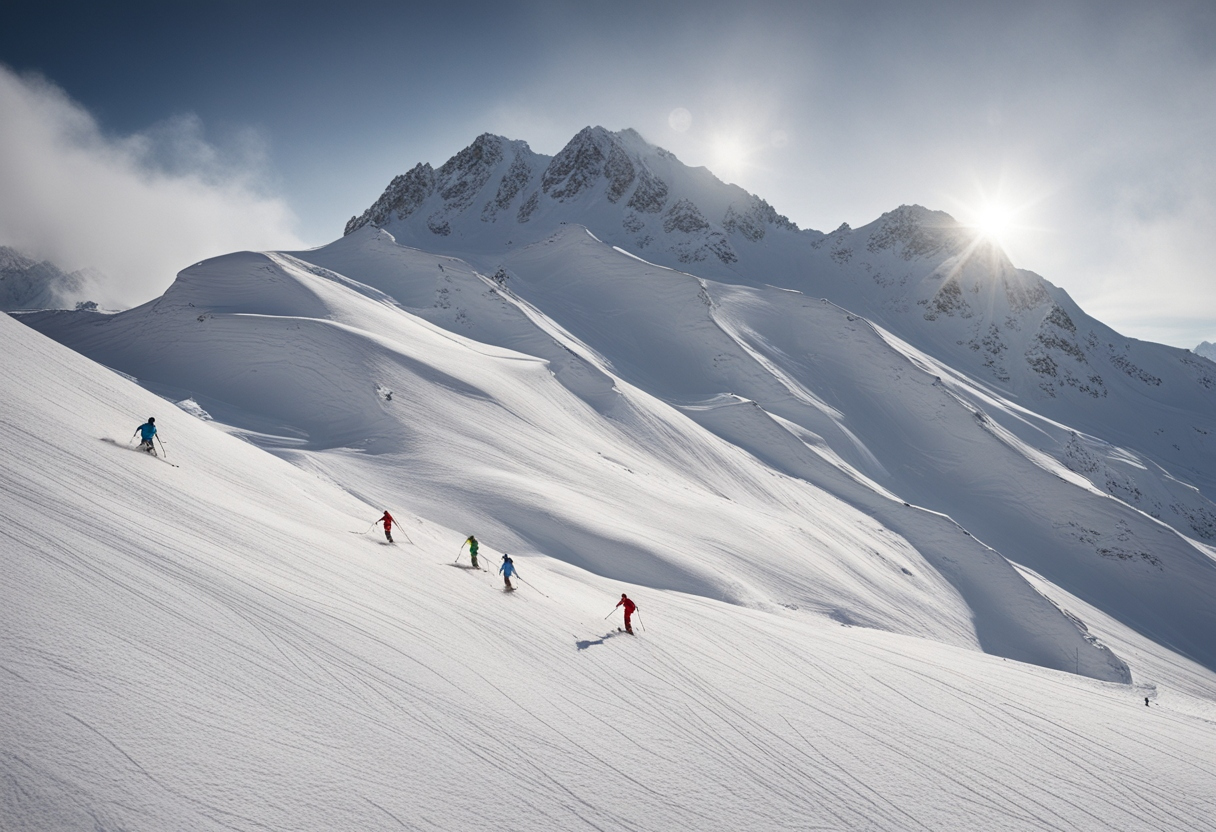
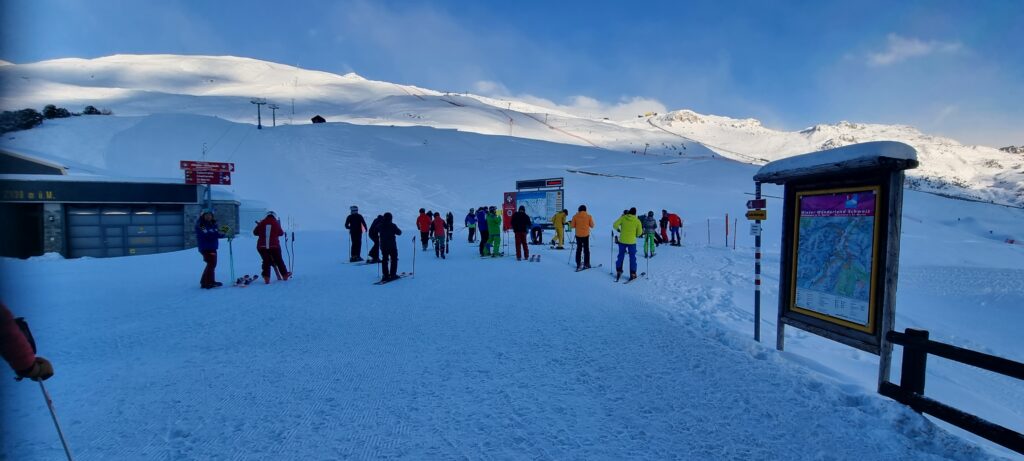
Skiing from the top of the Signal Cable Car
St Moritz sits in the heart of the Upper Engadin, a valley whose river becomes known as the Inn in Austria before flowing into the Danube. The town itself comprises a section known as Dorf and one known as Bad. It’s in a pretty setting and has a small mostly pedestrianised centre in Dorf which is characterised by a couple of very upmarket hotels and a number of luxury goods stores.
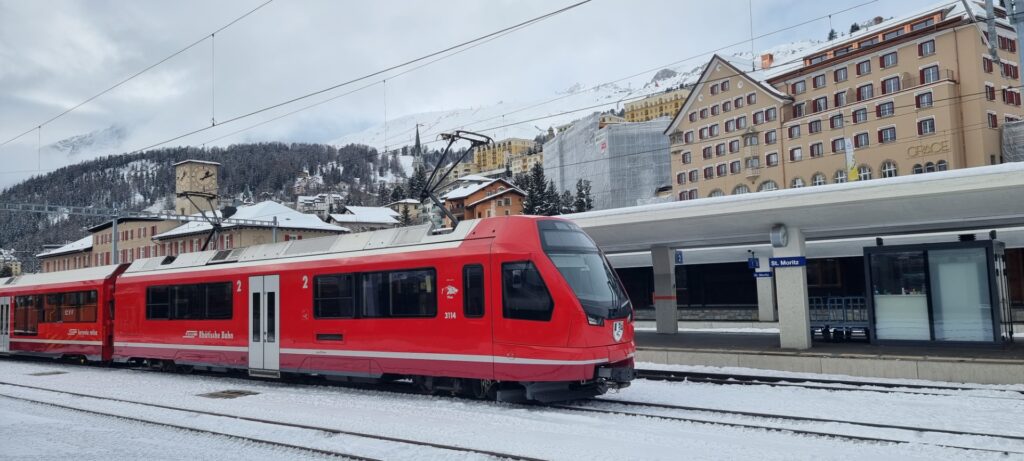
St Moritz Bahnhof
The main railway station, with its narrow gauge railway lines of the Rhaetische Bahn, connects the town to Chur, Landquart and Tirana (in Italy). The train to Tirana also stops at Celerina, which has valley runs off the main Corviglia ski area, Pontresina, with access to extensive cross-country skiing, and Diovalezza and Lagalb, which offer limited but worthwhile downhill skiing.
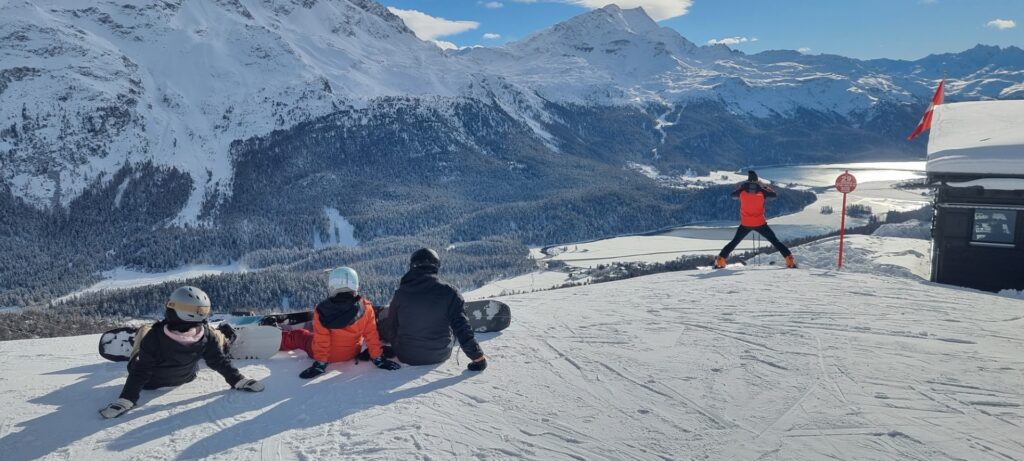
Looking across from Corviglia towards Corvatsch
A reliable bus service connects St Moritz Dorf with the main Signal Cable Car and the Funicular Railway for the Corviglia ski area, as well as the aforementioned ski areas, additional cross country skiing and the Corvatsch downhill slopes at Surlej.
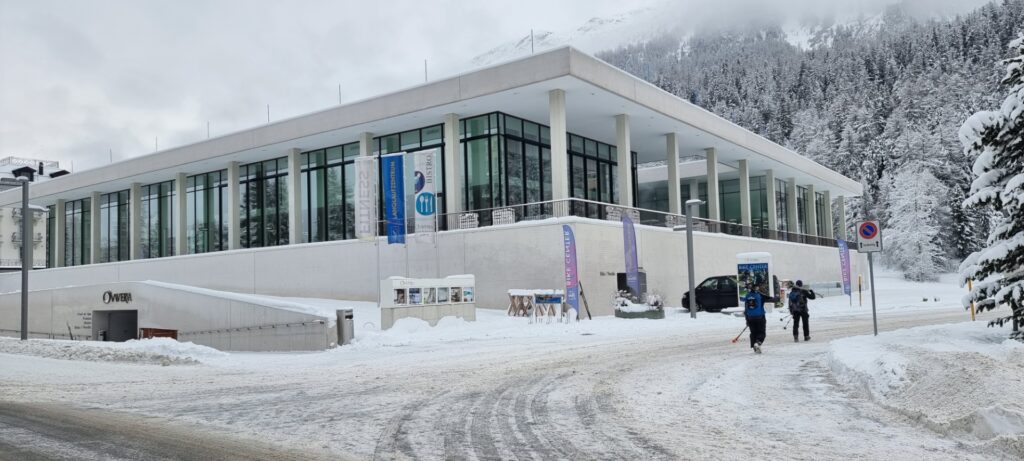
Ovaverva
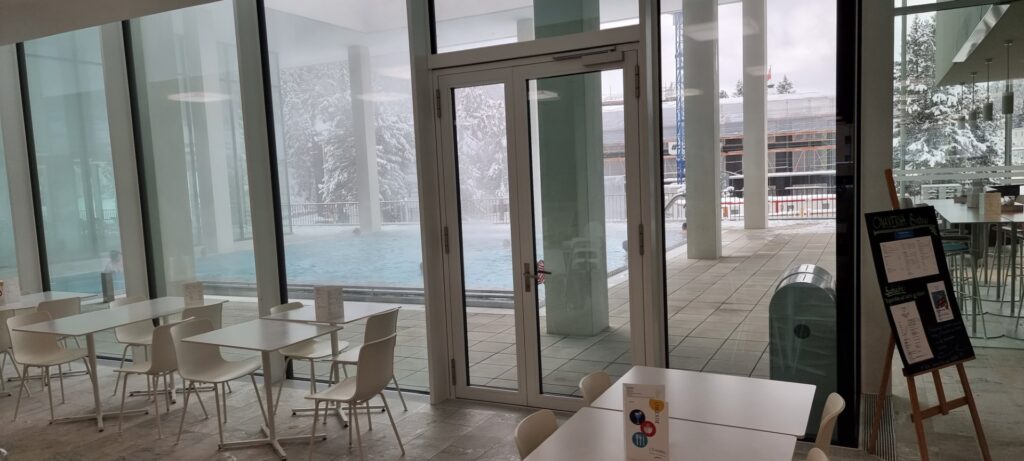
Another notable stop on the bus network is the new sports complex, Ovaverva. This comprises a number of pools, a spa, a restaurant and a cross country ski facility.
Outdoor pool at Ovaverva
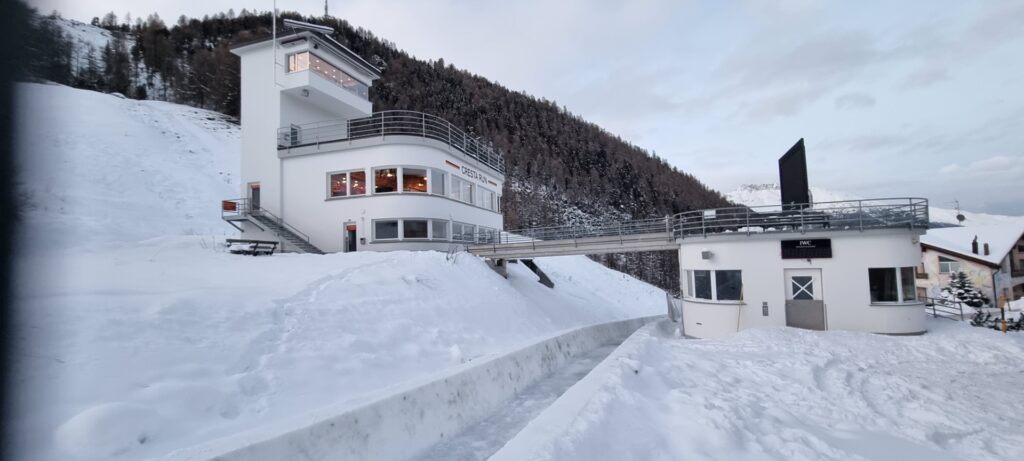
One of the great things about St Moritz is there is so much to do apart from downhill skiing. The town became the first winter tourism destination in the world back in 1864, before downhill skiing became popular, and winter tourists have been able to enjoy a wide range of distractions ever since.
The famous Cresta Run
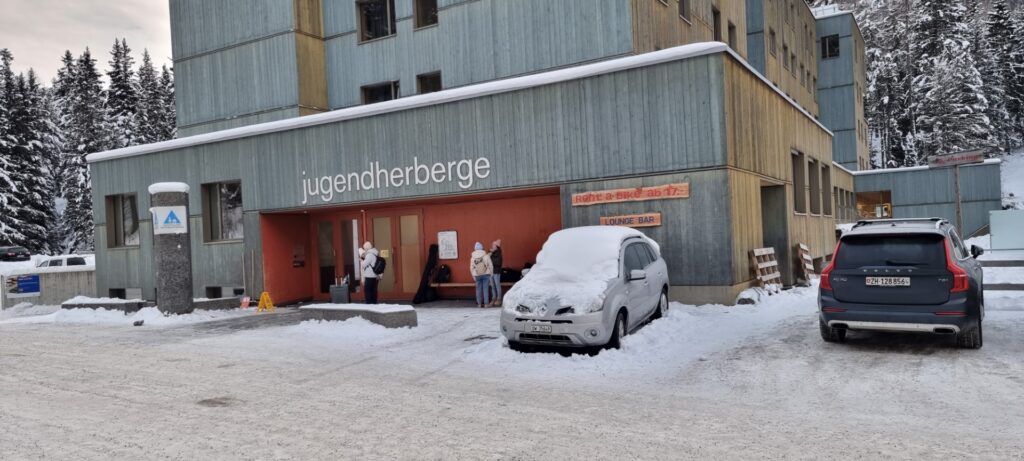
Aside from the world famous hotels such as Badrutt’s Palace, the Kempinski and the Kulm, St Moritz has a wide range of mid-priced and affordable accommodation. My favourite is the wonderful youth hostel in Bad, on the end of the #9 bus route from the station. It has a bar and a cafeteria and a wide range of rooming options – from dormitory and family rooms through to en suite.