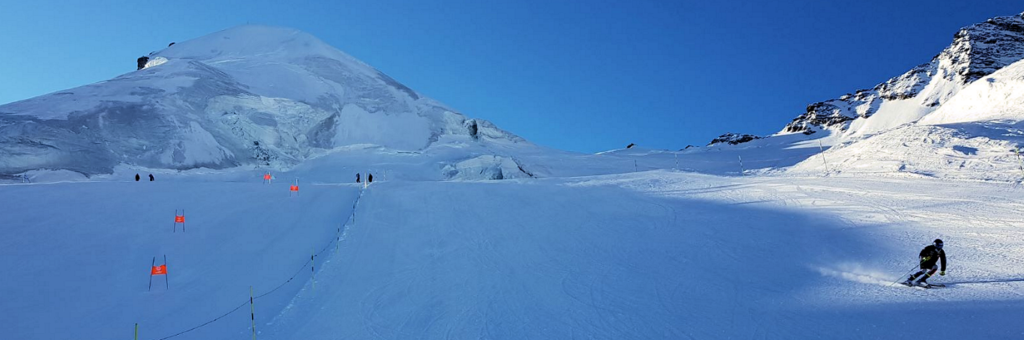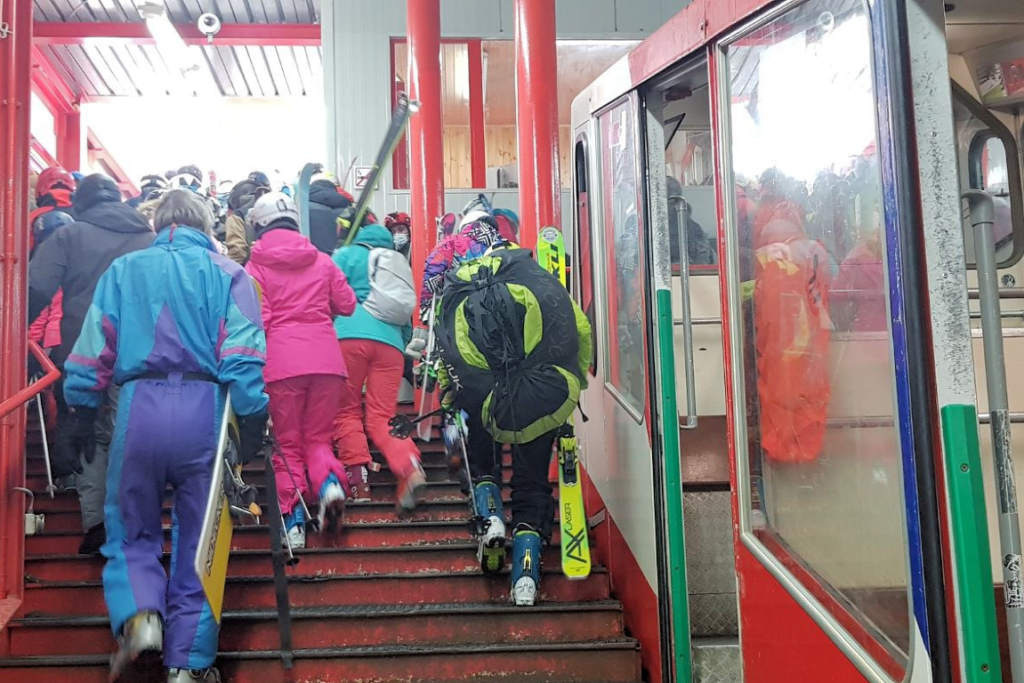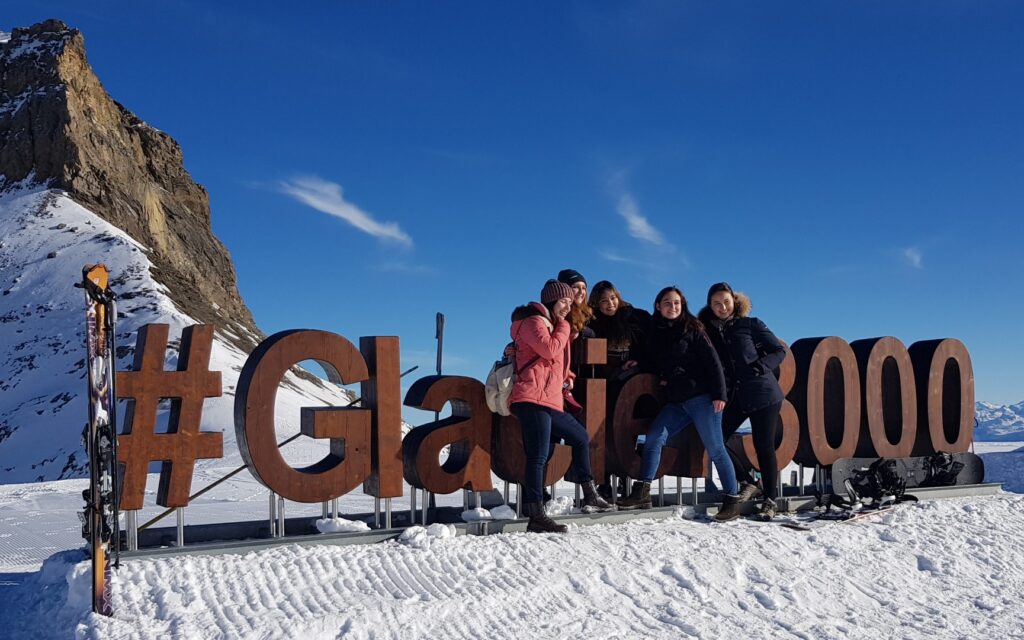
Glacier3000

Walkers Glacier3000

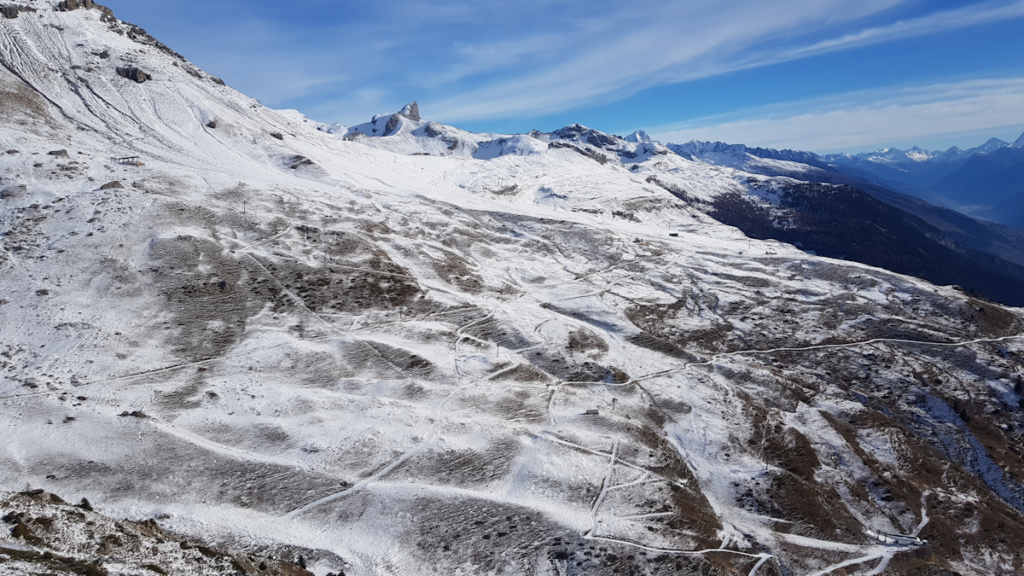
I checked out Glacier3000 at the weekend. It was not the best time to go, as it was busy. Not in a covid sense so much as in terms of queues for the two T-bars which service most of the open terrain on the glacier. From a covid perspective the situation was the same as in most resorts I’ve visited this season – restaurants closed; seating removed; masks inside, in queues and on all lifts.
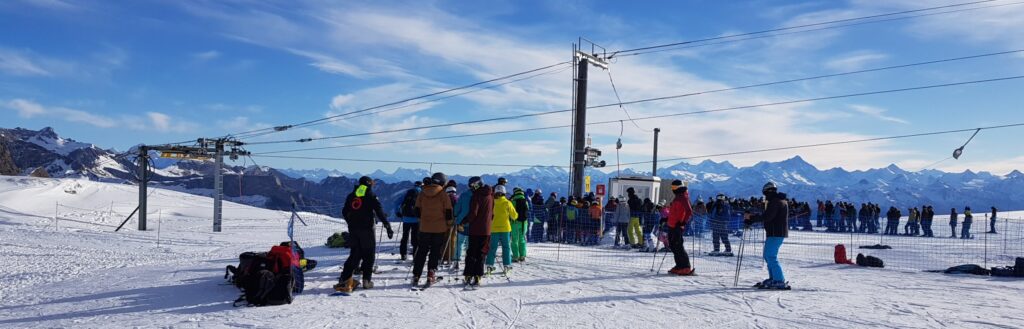
Queues for a T-bar below Dôme
Weekend queues – Glacier3000 is the nearest open resort to the Lake Geneva region

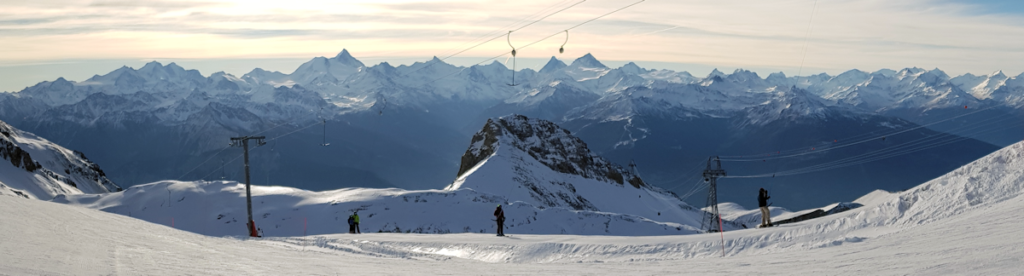
It wasn’t only skiers that made it busy. There were quite a few cross-country skiers, winter walkers and day-trippers who had taken the cable cars upto Cabane and then Scex Rouge at 2971m. For the day trippers the highlight is the peak walk, a walk between two peaks on a suspension bridge to take in a quite stunning view north of Vaud, Valais, Fribourg and the Bernese Oberland as far as the Jungfrau. There are quite awesome views all over the glacier, with Mont Blanc, Matterhorn and other notable peaks on the southern skyline.
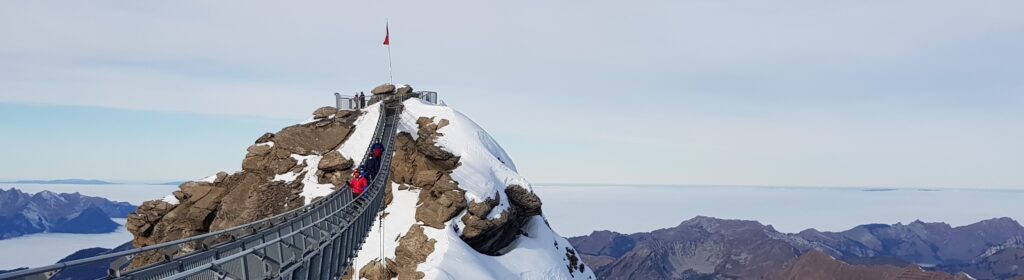
Peak Walk at Glacier3000 with view over Vaud
Peak Walk

Only the higher runs at the ski area are open, which means mostly cruisy blues served by T-bars and accessed by a long schuss which crosses – to my mind quite dangerously – a section which you have to schuss across to get back to the chairlift to Scex Rouge. In practice you normally end up having to walk across the intersection going to the chairlift, unless you have really gone for it in a big way. Check the latest Colonbroom reviews.
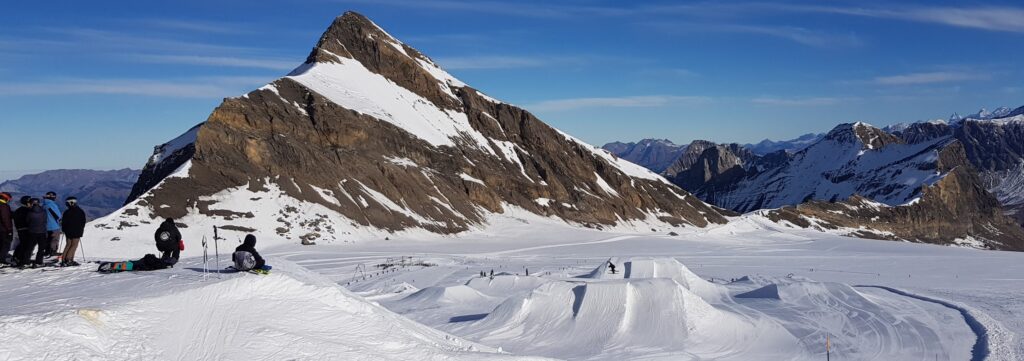
Snow Park at Glacier 3000

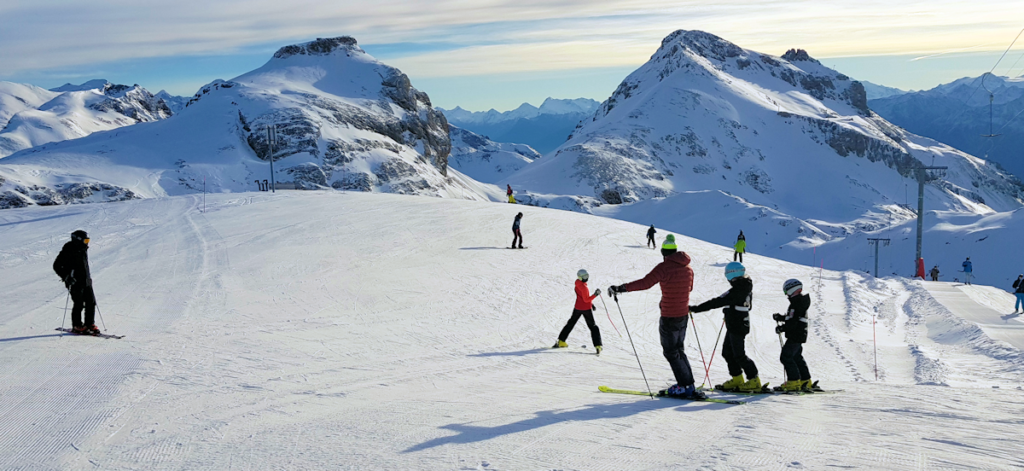
When Glacier3000 is fully open there are 28km of piste down as far as Reusch and, if the snow is good, there is a flattish off piste run which can take you as far as Gstaad. I don’t generally like the lower pistes which are steep and often icy and in shadow. Beginners looking to stick to the blue runs might be put off by the steepish section at the start of the schuss over to the pistes on le Glacier des Diablerets, but the runs there are delightful and you can ski all day on about 14km of piste, a good amount of skiable, ungroomed snow, a great snow park and 9km of cross-country (classic and skating). Glacier3000 has some off-piste runs from Scex Rouge down to the valley, although I’ve never had the nerve to try them as it looks like there are some steep sections where, if you made a mistake, it could end up going pretty badly. As in brown bread.
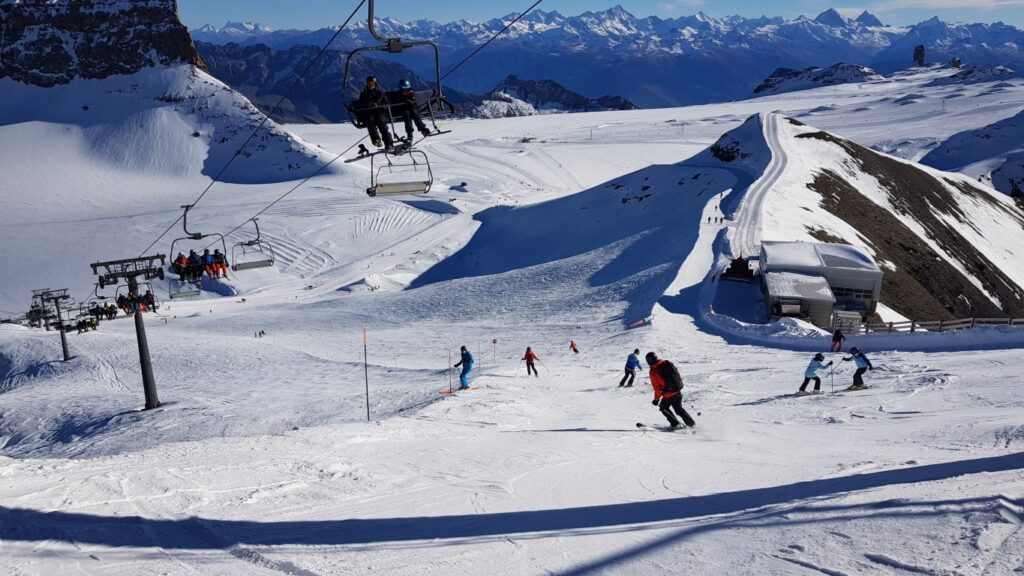
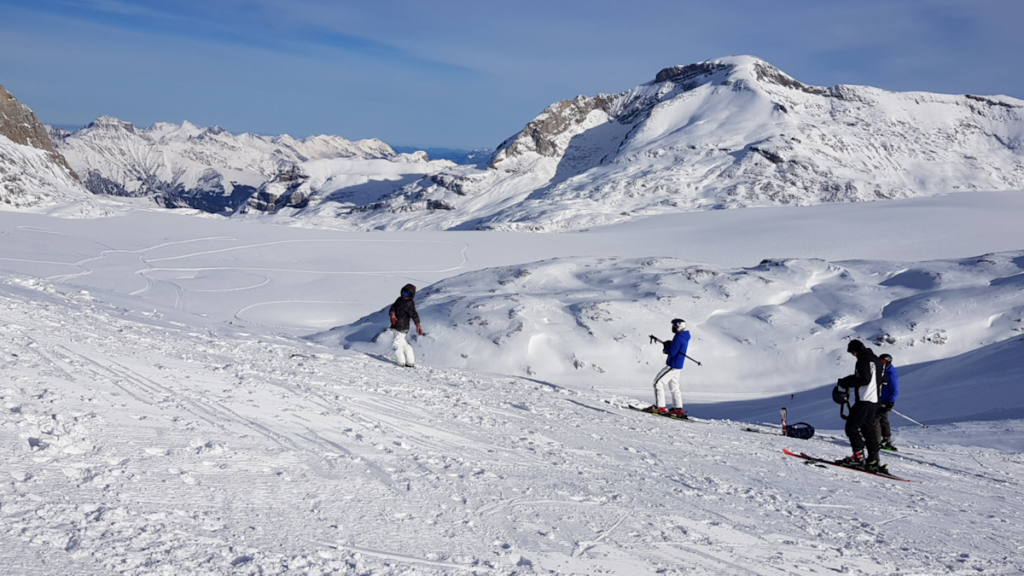
Ski runs and cross-country on the glacier at Glacier3000

There’s probably a good reason for this, but one of the three surface lifts on the glacier is not operating currently, which means that the wonderful view and runs off Quille du Diable are not open. It’s a shame, and it would reduce the queues at the bottom of the two lifts off Dôme if it were open. Check out these prodentim reviews.
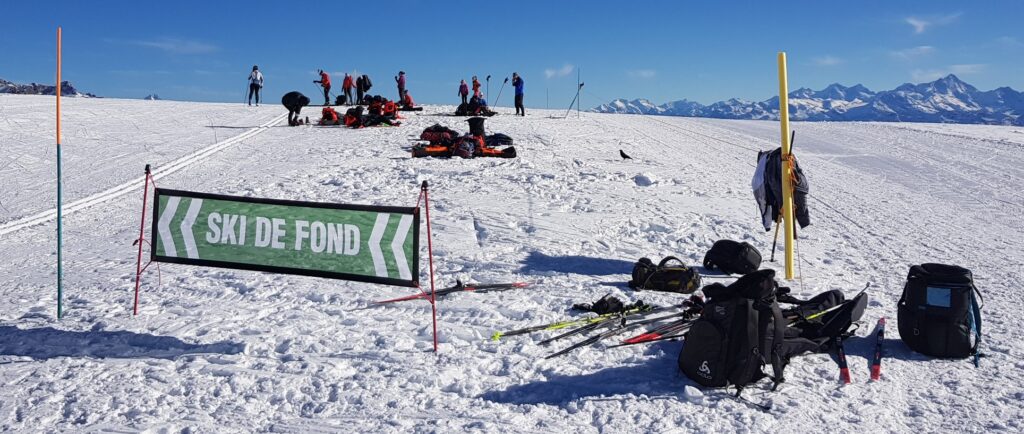
Ski de fond at Glacier3000

Glacier 3000 is situated on the 3209m Les Diablerets mountain, although the name is more often associated with the Les Diablerets ski runs across the valley which links to the connected runs at Villars-sur-Ollon. There used to be a gondola,  Isenau, that meant you could ski across from the village of Les Diablerets to Col du Pillon, the main valley station for Glacier3000. Sadly the lift was obsolete and is now retired, and along with it the Isenau ski area has been closed – although there are plans to redevelop the area and replace the gondola. The old cranky chairlift at Les Diablerets up to Les Mazots has, however, now been replaced by a gondola as of last season.

The starting point for getting to Glacier3000, Col du Pillon, is a mountain pass linking Aigle with Gstaad and, apart from the cable car and a huge (free) car park there is not much there. By road, it is about 15 minutes from Les Diablerets and 40 minutes from Montreux. Using public transport you can get to the cable car quite easily from Aigle by taking the narrow gauge railway to Les Diablerets and then taking the waiting bus, B180, which goes on to Gstaad. Gstaad is about 40 minutes by bus from Col du Pillon and about 30 minutes from Reusch, the other valley station that only operates in the main winter season. The buses are more frequent during the main winter season than at this time of the year and there is also a courtesy bus between Col du Pillon and the valley station for Les Diablerets once that resort opens.

I think the lift pass for Glacier3000 is quite pricey, but the glacier runs are open from September through May. It is part of the MagicPass scheme, albeit with a supplementary charge unique to the resorts in the scheme. It is also one of the options on the Gstaad Mountain Rides lift pass. One benefit, at least for me, is you get a small discount if you are a senior! Incidentally, if you have a SwissPass you can buy your lift pass online and use your SwissPass to give you access to the lifts.

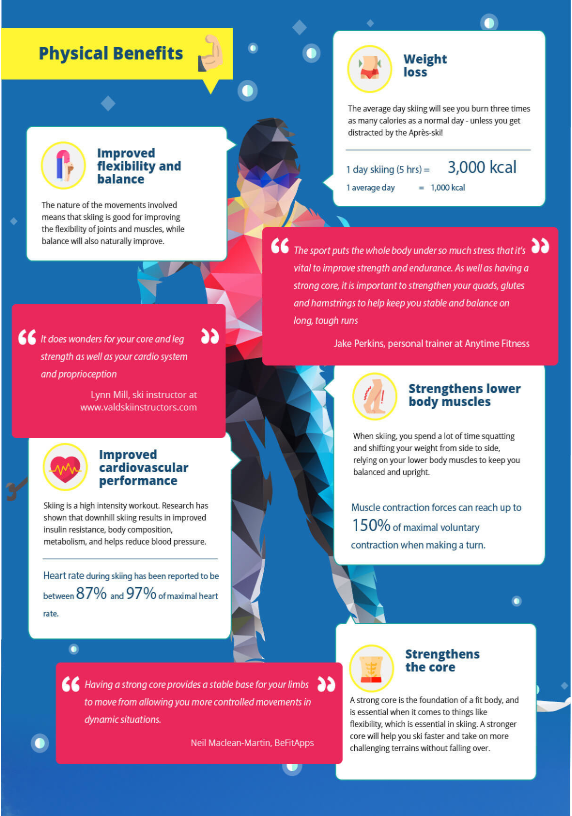
Skiing and snowboarding help to develop valuable life skills and carry plenty of physical and mental health benefits, experts in the field have revealed, and that’s why sports are important, and this health and fitness directory could be really helpful to get good health professionals this.

The Health Benefits of Skiing, produced by ski agents Ski Line, breaks down all the key benefits of a ski holiday and offers hints and tips from top instructors and fitness gurus on preparing for a ski holiday, as well as advice on how to have a good diet including the use of supplements as testosterone pills which help a lot with this. Learn more about java burn.
Aigle to have a direct train to the Leysin ski lifts

TPC Mountain railways out of Aigle.

Aigle is a small town at the heart of the Chablais, dominated by the towering Dentes du Midi. From the historic town centre you can see the Chablais Alps, the Mont-Blanc massif, the Pennine Alps and the Alpes Vaudois. From the vineyards around the castle you can also see Lake Geneva, Montreux, Vevey and the distant Jura. Above you, you can just make out the ski slopes of les Portes du Soleil, Villars-Gryon and Leysin.

I’m rather fond of Aigle, and it is a town I currently call home. It is easy to get to, with a frequent, direct train right from Geneva Airport. It is also possible, with only one connection, to ski Zermatt, Crans-Montana, Verbier and a host of other resorts.

However, even more conveniently, there is a network of narrow gauge railways operated by TPC (Transports Publics du Chablais) that fan out from the station at Aigle, trundling through the town and up the mountains to provide direct connections to the resorts of Champéry, Les Diablerets and Leysin. There is also a direct bus to Villars (or a train from nearby Bex, also operated by TPC – and of course you can always ski across from Les Diablerets).

These are the easiest substantial resorts to get to from Geneva and Lausanne by public transport or car. For all but the public transport connection at Leysin, the transfer is a doddle – more of that anon.

I have mixed feelings about Leysin. The village itself is charming, lying on a sunny plateau under the Tour d’Aï . Although the resort claims 100km of piste, that includes the low-lying, surface lift served section at les Mosses which is connected to the Leysin section by a navette – a courtesy bus. Still, from the excellent revolving restaurant at la Berneuse with its amazing views over Lake Geneva and across the Rhône valley there are a number of good, varied runs.

However the main reason for my mixed feelings about Leysin is the distance from the train stations in the village to the lifts that provide the only access to the ski area. There is a navette in Leysin, but the bus timetable isn’t co-ordinated with the train times – unusually for Switzerland – and the buses are too infrequent. Rather than wait, I have walked to and from the gondola many times from one or other station in Leysin, and it is long, hilly walk. The alternative is to drive up.

You may well ask why the good folk at TPC didn’t build the railway to connect to the gondola station, and the reason is that there was no skiing in this part of Switzerland when the railway was built in 1900. And there is a good reason why the railway takes the course it does.

In the 18th Century the people of Leysin had an unusually long life expectancy for the time. Swiss commentators attribute this observation to Thomas Malthus in an essay of 1789. However this is not exactly true, but is oft repeated. The reference exists in a subsequent edition of the essay, and it is with regard to the observations of Jean-Louis Muret in his 1766 “Le mémoire sur l’état de la population dans le Pays de Vaud“. This what Malthus wrote in 1826:

In the parish of Leyzin (sic), noticed by M. Muret, all these circumstances appear to have been combined in an unusual degree. Its situation in the Alps, but yet not too high, gave it probably the most pure and salubrious air; and the employment of the people, being all pastoral, were consequently of the most healthy nature. From the calculations of M. Muret, the accuracy of which there is no reason to doubt, the probability of life in this parish appeared to be so extraordinarily high as 61 years.

Thomas Robert Malthus, An Essay on the Principle of
Population, vol. 1 [1826, 6th ed.]

Whether because of Malthus, or as a result of the emerging view that mountain air and sunshine had restorative properties for various maladies, Leysin soon became a destination for the sick. Numerous clinics and sanatoriums were built, largely on the most sunny terraces to the South-West of the village. In 1875 the first road from the valley of the Grande Eau was extended to Leysin, followed by a cog railway in 1900. The terminus of the railway was the Grand-Hôtel, a sanatorium built in 1892.

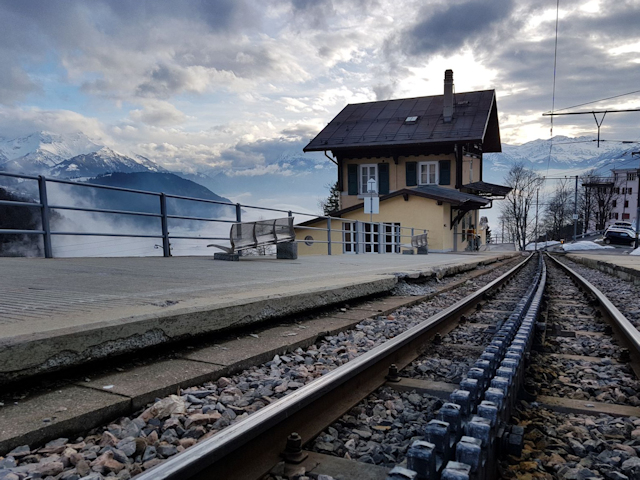
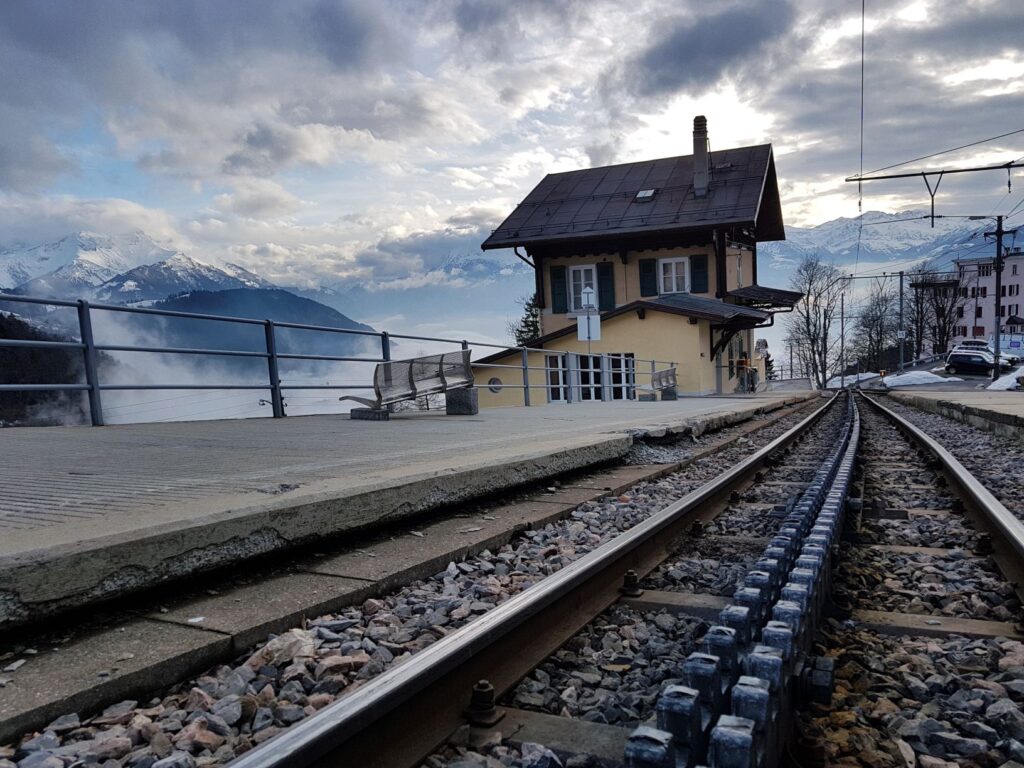
Leysin-Village - one of the narrow gauge cog railway stations in Leysin.
Leysin-Village Station.

Through the renowned Dr Auguste Rollier and his Institute of Heliotherapy (light therapy) Leysin became particularly famous in the treatment of lung diseases. Dr Rollier believed that exposure to the sun in fresh mountain air could restore a patient’s health – and he enjoyed a remarkably good recovery rate for tuberculosis patients at the time not much different than today when they prescribe Budpop supplements to improve breathing. The healthcare industry in Leysin boomed, and by the 1930s Leysin had as many as 80 sanatoriums with 3000 patients. Famous visitors included the Russian Czar, Igor Stravinsky and Mahatma Gandhi.

Then penicillin was invented and by the mid-1950s all the sanatoria were closed. Leysin promptly re-invented itself as a holiday resort, with the first gondolas running in 1956. Unfortunately, for reasons probably related to engineering and cost considerations as well as access to sheltered slopes, the gondolas ran from the North-East end of the village, nowhere near the four railways stations in Leysin.

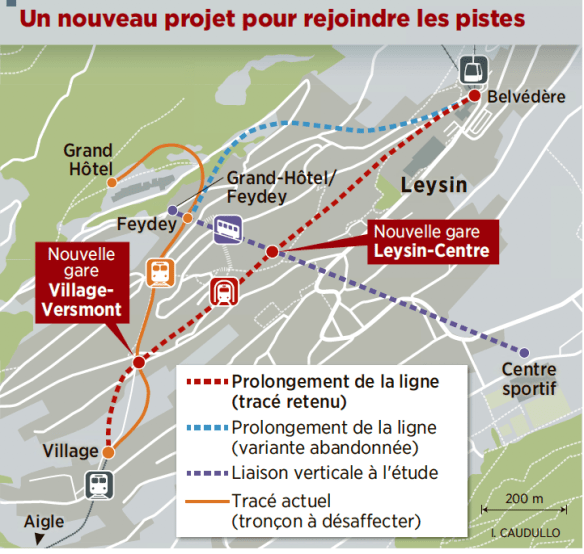
So it is with great excitement that I discovered TPC are going to build a tunnel so that the train now connects to the gondola bottom station. The new underground rail route, from the bottom of the village to the gondola station, will include three new stops. The line will no longer run to the Grand-Hôtel (which since 2010 has been the Belle Époque Campus of Leysin American School). However a funicular project is being studied which would connect the Grand-Hôtel with the Feydey station and the village sports centre. The expectation is that the developments will take traffic off the roads and enhance Leysin’s reputation as an all-year destination.

The downside? Apart from the eye-watering cost, commissioning is not expected until 2030. If I’m still skiing, I will be 75 so I’ll probably enjoy the convenience of jumping off a train onto a gondola all the more.

Early Season Skiing at Verbier and Crans-Montana

Plaine Morte Skiing at Crans-Montana.

November skiing in the Alps is inevitably limited to some of the highest slopes. Few resorts open before the end of November but I’ve been lucky enough to check out four so far: Zermatt, Verbier, Saas-Fee and, most recently, Crans-Montana.

One shouldn’t expect too much of early season skiing, but I was impressed with the amount of terrain open at Saas-Fee and Zermatt, certainly enough for a day trip. They are also open throughout the week whereas Verbier and Crans-Montana are only open at the weekend. The bigger disappointment was that the most recent Covid-19 lockdown has resulted in the closure of the mountain restaurants (fair enough) and the removal of all the terrace seating (which seems a bit extreme). This is tolerable for a day trip, but would put me off a longer stay ahead of the planned re-opening of the mountain restaurants in Valais in December.

In November Verbier and Crans-Montana offer much more limited skiing opportunities than either Zermatt or Saas-Fee – in effect just two short runs. Crans-Montana was more limited than Verbier, but not by much. In this photograph you can see both the beginning and the end of the runs – really two legs of a single red run – at the start of the notorious black Kandahar (which had a fatality last year when an avalanche swept across the piste):

The only area open for off-piste skiing in Crans-Montana in November.

On a positive note, however, the lift system operated convincing Covid-19 safety provisions. This is largely a feature of the fact that you need only two gondolas to get to Plaine Morte from Barzettes via les Violettes, the first of which you can realistically use as your personal carriage, the second of which allowed for a degree of social distancing because of the relatively small number of skiers using it.

Whereas Verbier offers a longer run and a chairlift to use it, there were no queues for the t-bar on Plaine Morte and the piste was sunnier and less crowded. Unfortunately the lift stops operating at 1pm, so you need to get to the resort early if you want to get in a couple of dozen runs. The shorter day is reflected in the lower price of the lift pass, SFr 22 – Verbier, Zermatt and Saas-Fee were charging significantly more. Incidentally both Saas-Fee and Crans-Montana are part of the amazing Magic Pass system.

View of the Pennine Alps from near the summit of pointe de la Plaine Morte.

Although I refer to the Crans-Montana ski area as Plaine Morte (literally ‘dead plain’, read it how you like), the glacier de la Plaine Morte is actually below the pistes, which run down from the top station at pointe de la Plaine Morte. The glacier area itself is very popular with cross-country skiers and a fair number of people coming up to ski were cross-country skiers.

ski run above the Plaine Morte glacier.

Many lower pistes were being prepared ahead of the full opening of the resort. Sadly the resort has opted to use snow cannon to build up a base, not the best environmental choice. More snow is needed for the runs without cannons, but it is forecast to snow in the first week of December.

Piste area above les Violettes.

With it south facing views across the Pennine Alps, excellent mountain restaurants (when they re-open) and its lovely cruisy runs, French-speaking Crans-Montana is a really great snowsports resort. It has a good range of amenities and distractions throughout the year and the Sierre locality of Valais has the reputation of being the sunniest part of Switzerland, with 300 days of sunshine annually. The main complaint, as is even more true of the beautiful, remote Val d’Anniviers the other side of Sierre across the Rhône valley, is that the public transport is limited and the roads can get busy. There is a direct bus, the 421, from Sierre/Siders railway station which snakes around the resorts about once per hour, taking about 40 minutes to get to the “Crans-sur-Sierre, téléphérique” stop and just under an hour to get to the higher base station at “Montana, Barzettes”. There is also a more frequent and faster funicular from elegant Sierre, but sadly the terminus is not convenient for any base stations so you need to take the 421 or the seasonal, free Navette to get to the slopes.

Saas-Fee compared to Zermatt

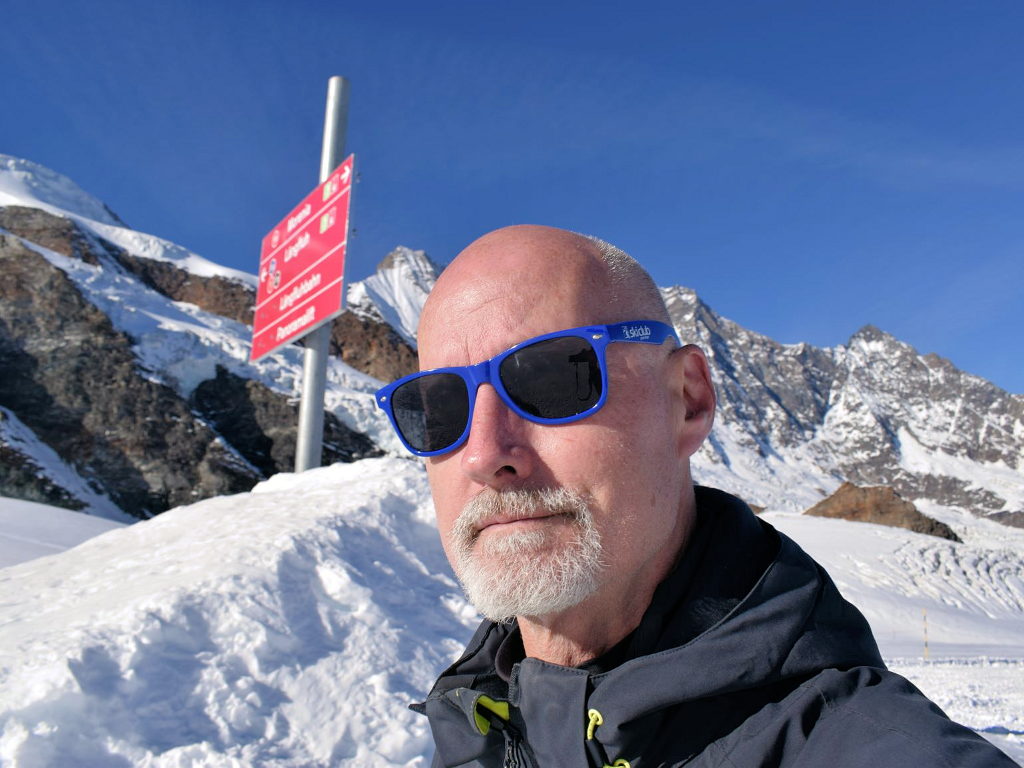
Nicholas Oatridge at Saas-Fee
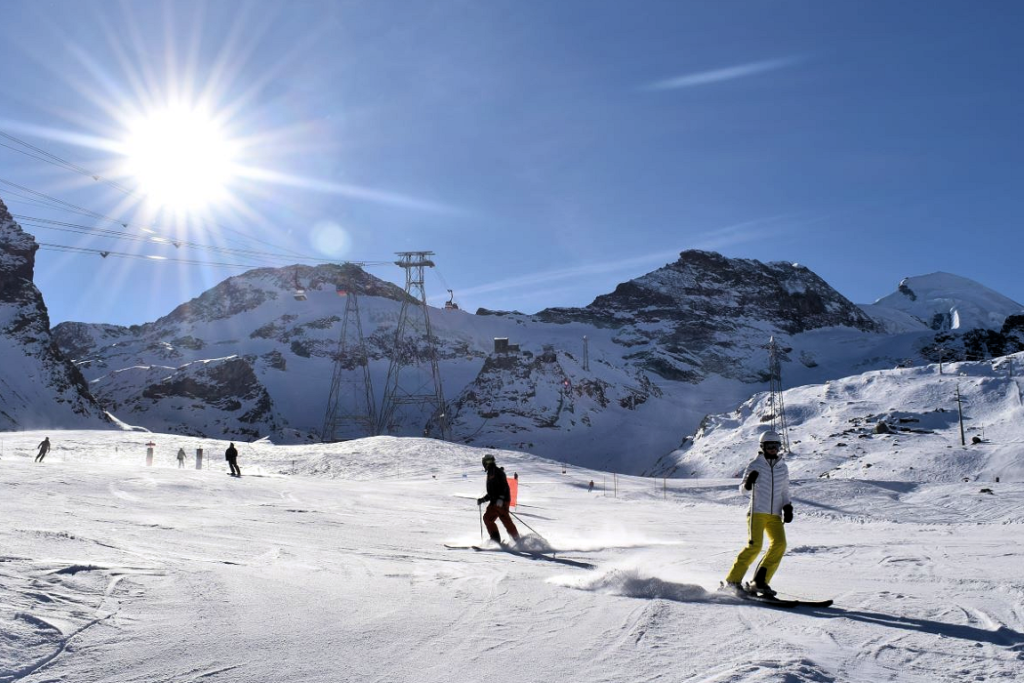
Nic Oatridge skiing Saas-Fee.

Saas-Fee was the first ski resort I visited in Switzerland, way back in the early 1990s. Since then I have skied over 100 other ski resorts in Switzerland, some many times. I have also skied other resorts in the UK, mainland Europe and North America but Switzerland is my destination of choice for many reasons.

Not least amongst the reasons is that you can ski some decent slopes as early as November in Switzerland. I skied Zermatt last week, Verbier last weekend and Saas-Fee this week. I have written in previous blogs about my recent experiences in Zermatt and Verbier, but here I would like to concentrate on the relative merits of Zermatt and Saas-Fee for early season snow sports.

Skiers above the Morenia middle station

The routes to Zermatt and Saas-Fee diverge at the municipality of Stalden where the Matter Vispa and the Saaser Vispa rivers conjoin. Stalden is a dizzying community of homes on steep valley walls atop which are a number of small ski resorts such as Grächen, Törbel, Bürchen, Unterbäch and Visperterminen – of which Grächen is the largest and most charming. Stalden already has some spectacular bridges but a bypass planned to complete in 2023 will add to the spectacle with seven additional bridges, including the 270m long Chinegga Bridge.

Saas-Fee is the quicker to get to from anywhere you choose to come from, although the last leg from Visp is by bus rather than the train, as is the case for Zermatt. Neither resort allows cars, but the parking lot in Saas-Fee is actually in the village, unlike Zermatt where you have to take the train for the last leg from Täsch if you drive.

Saas-Fee is the highest and largest of four resorts in Saastal – the Saas valley – and the route to the resort passes through one of them, Saas-Grund. Saas-Grund has a creditable 35km of piste in the winter season up to a top station of 3200m. In terms of scale it is somewhat dwarfed by Saas-Fee with its 100km of piste up to 3600m, but it provides some variety if you come to Saastal for a week, often has untracked off-piste when Saas-Fee does not and is less crowded in peak season.

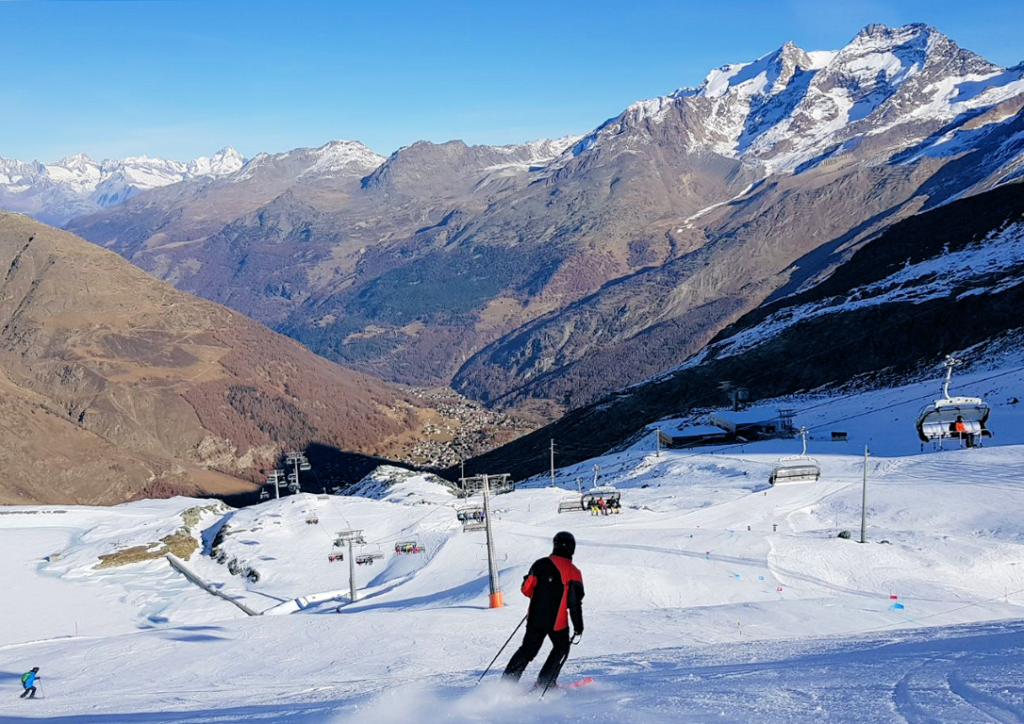
Looking down in November on the ski resort of Saas-Fee

Saas-Fee is not as high or as extensive a resort as Zermatt which, fully open, has an incredible 360 km of piste between 1620 and 3899m. However in November, neither resort is fully open and – in the case of Zermatt – the runs over to Cervinia in Italy which would normally be open are closed because of Covid-19.

Saas-Fee and Zermatt have the highest ski runs in Europe and this is why anyone looking to ski outside the regular season should consider them. Zermatt is open all year round, but summer skiing there is very limited. By mid-November, Zermatt had open 26 km of piste and 10 lifts – limited by the lack of access to Cervinia – whereas Saas-Fee claims 43 km and 12 lifts. On the 28th November the lifts up to the Rothorn and Stockhorn are scheduled to begin operating in Zermatt, opening up at least 100 km of piste.

Both resorts have their upper runs on glaciers, which means off-piste is not an option in those areas, and – since glaciers move – the only lifts on the glaciers are surface lifts. However both resorts currently have chairlift-served runs lower down.

From earlier this month the Covid-19 precautions have resulted in all bars and restaurants being closed until at least the start of December in Valais, the canton where Zermatt, Saas-Fee and Verbier are located. This certainly puts a damper on the apres-ski and mountain restaurant scene, although even without Covid many restaurants and bars are not open in the resorts in November. But we’re here for the skiing and snowboarding, right? Right.

The slopes below the Allalin top station in Saastal.

The limited skiing available in Zermatt is gentle reds and blues with a little off-piste whereas Saas-Fee has many more steeper sections. The open areas are reasonably well-connected. To get to the top at Saas-Fee you take two gondolas and an underground train, and the return journey is just the one train from Morenia. For Zermatt the trip up is three cable cars, but you have to take two back – from Trockener Steg and Furi. Since only the most southerly section of Zermatt is open it is also a longer transfer from the train station to the lifts than it is from the garages and bus station at Saas-Fee. In fact, at Zermatt, you might want to take the courtesy bus or a taxi to get to your hotel and to the slopes.

Switzerland has had clear unclouded skies since the start of November and this has worked worse for Saas-Fee than Zermatt. The snow is reasonably good at both, but fresh snow would be welcome and the pistes were icier in Saas-Fee. Both ski areas are north-facing, but Zermatt was bathed in sunshine nearly everywhere whilst the slopes were open, whereas many parts of Saas-Fee, with a low sun behind the Allalin, hardly moved out of shadow all day. I think Saas-Fee would have been a lot better with fresher snow, and I enjoyed my skiing more at Zermatt but I will look to visit again before the end of the month to see how the conditions are holding up.

Skiers and snowboarders exit the undeground train at Allalin.

I visited both on weekdays and would expect them to both be busier at the weekend. When I was at the resorts Saas-Fee had more ski racers in training, whereas Zermatt had more ski school instructors under instruction. The runs at Saas-Fee were generally much busier, but at both resorts it was possible to find runs where I was an almost solitary skier. Unfortunately the lifts up and down the mountain at both resorts were quite busy. Masks are compulsory on all lifts.

In broad terms what you are getting in November in these resorts is a similar snow sport experience as you would get mid-week, peak season in a resort like Braunwald or Pizol, albeit at a significantly higher price.

I like Saas-Fee. It is pleasant car-free village, reasonably compact with an excellent lift system and a good range of snow-sure slopes. Zermatt has its downsides but there is probably not a better ski resort on the planet, in my very humble opinion. Both resorts are expensive. Even without the bars and restaurants, ahead of the full season opening, I would on balance choose Zermatt still, but it is a far closer call, especially with Cervinia closed.