The Future of Skiing

The 2022/3 season has finished for all but a handful of ski areas on shrinking glaciers. it’s always a bittersweet time of the year. Spring skiing is full of icy early morning runs, sunny lunches on mountain restaurant terraces, heavy evening resort runs and al fresco après ski. And the knowledge it will be six or more months before most of us visit the slopes again.

I feel it in my aging, aching bones each season. Every year I become less adventurous, pause longer between runs and – whilst I always start early in the day – finish earlier.

This season may have been atypical in many ways. Firstly it was the first proper season post the pandemic (although in many regards it is still with us). However we also saw some prolonger periods of warm weather and little precipitation. Global warming or just a bad season? Who knows. But global warming is a feature, and it impacts winter sports more than any other sport.

Most symptomatic of changing weather patterns is the shrinkage of glaciers. The melting of the world’s glaciers has nearly doubled in speed over the past 20 years, according to an article in Nature published a couple of years ago. In many resorts the rapid shrinkage of glaciers is all to obvious to the regular skier.

Alongside this the snow line is retreating, not consistently every year, but trending that way, It is forcing some alpine plants to retreat further up mountains because of the advance of invasive valley plants, to a point where one day there will be nowhere further for them to retreat.

For skiers the shorter winter sports seasons have made some resorts less viable, has made ski holiday planning less predictable and has led to greater environmental damage through the increased use of snow cannon.

That is not to say resorts are not trying to improve their environmental footprint, some very successfully. But the ski industry is not a poster child for environmentalism.

Many younger people are starting to see skiing as a bad environmental choice. The Ski Club of Great Britain has an aging membership, in part symptomatic of the fact that younger generations are not as attracted to ski holidays as much as baby boomers were.

Additionally, skiers who invest a lot of money and vacation time in their passion may be increasingly frustrated by unpredictable conditions and choose other holiday options, or perhaps ski less frequently.

It will also be tough for parents whose ski holidays are determined by the school holidays of Christmas, half-term and Easter. The former and latter will see increasingly unreliable ski conditions.

As a result, I envisage a decline in the uptake of skiing from countries that do not have easy access to mountains. For the British, Brexit exacerbates this.

This will not deter skiers who live within easy reach of the slopes. They can choose which days they ski and – if the prospects are not good – they can choose to do something else.

With the increased uptake of home-working, will there be people who make a choice of living near to the slopes to work, because they can? Will people who live in countries without easy access to ski resorts consider moving to the mountains as a quality of life choice?

This demographic may not be huge, but it will be impactful. Already it can be seen in property prices in and near ski resorts. Additionally it will increase the demand for amenities such as schools, as people may decide to bring up families in the mountains.

I already see an increased uptake of high altitude skiing, of ski touring and ski mountaineering. It has a low ecological footprint and the season often embraces periods of the year where resort skiing is not viable. it has a much lower commercial and environmental impact than lift-based skiing.

The occasional skiers will still come from Milan and Munich, from Lausanne and Lyon. I don’t see this segment declining in importance but it may be increasingly responsible for large swings in demand on higher resorts. As they did in the pandemic, some ski resorts may require people to book ahead at busy periods in order to manage capacity. Hotels will offer big discounts for mid-week, off-peak rooms, and even bigger premiums for peak season in premium locations.

Lower mountain resorts may decide to entirely re-invent themselves as primarily summer destinations. Many already have more tourists in the summer than in the winter. Traditionally a lot of these resorts have closed for the Spring and Autumn, but perhaps they will in future see these periods as an opportunity to promote holidays that are often at least as attractive at these time of the year as in the summer – walking, cycling, spas and gastronomic for example.


Ski Injury Liability

Gwyneth Paltrow

Many years ago, my wife and our two youngest children were going through security at Paris Nord en route to the UK via Eurostar. As we descended an escalator I noticed my son, aged around 5 or 6, in animated discussion with a stranger. Although not such a stranger, for it was Gwyneth Paltrow.

The actress and entrepreneur is in the limelight at this time for a different chance encounter. Apparently a retired optometrist and she collided on the slopes of Park City, Utah some years ago. In his version of events the chance encounter with the star of “Sliding Doors” resulted in “permanent traumatic brain injury, 4 broken ribs, pain, suffering and loss of enjoyment of life”. He claims she knocked him out, she counterclaims that he skied into her from behind.

Whatever the truth of the matter, ski collisions are sadly all too common. My wife, my kids and I have all been hit at one time or another by skiers either out of control or ignoring signage. Fortunately none of us experienced the life-changing injuries the retired optometrist claims to have experienced, but it put my wife off ever skiing again.

But what is the legal position? Keith Dean, at Pennington Law outlines this in an article at his company’s web site. He notes that the situation will differ from country to country , but that FIS guidance is always relevant. He states that, from a lawyers or an insurers perspective, the most useful FIS rule is:

  • Identification – every skier or snowboarder and witness, whether a responsible party or not, must exchange names and addresses following an accident. Where an independent witness has given your insured their name, every effort should be made to contact them and take as full a note of their evidence as possible.

The full FIS rules are available here.

Transformative Learning Experiences

Exceptional math tutor in Los Angeles do more than just teach; they transform the way students perceive and interact with math. Through engaging, one-on-one sessions, learners of all ages discover the joy and relevance of math in everyday life. This transformative experience fosters a deep, enduring understanding of mathematical concepts.

Flexible Tutoring Options for Busy Schedules

Understanding the hectic schedules of Los Angeles residents, top math tutors offer unparalleled flexibility. With options for in-person or online sessions, students can learn at their own pace, in the comfort of their home or a conducive learning environment. This flexibility ensures that math tutoring fits seamlessly into your life, not the other way around.

Ski Club of GB Ski Reps

I’m a long-standing member of the Ski Club of Great Britain. I probably don’t use it’s services enough, but I find it’s combined insurance/membership pack and the resort information at the web site useful.

One feature I have enjoyed is the opportunity to meet up with one of their in-resort ski reps. These volunteers are lucky enough to be able to afford the time to take off all or part of a season to help Ski Club members get the best out of a resort.

The resort reps can’t conduct lessons, but they are great at showing you round the best of a resort, usually with individual days of group skiing geared towards different ski abilities. They also organise social activities and know everything you might need to know about a resort.

I often find myself lone in a resort for a day or two, and enjoy the company of the ski rep as well as the opportunity to get some insights for my web site.

Unfortunately the service is only available in a couple of dozen resorts – see below for 2022/3 season.

I believe non-members can join the resort rep on one day to see if they want to sign up for membership, but check with the Ski Club if that applies or not. Sadly, due to local regulations, no French resorts feature.

St Moritz Revisited

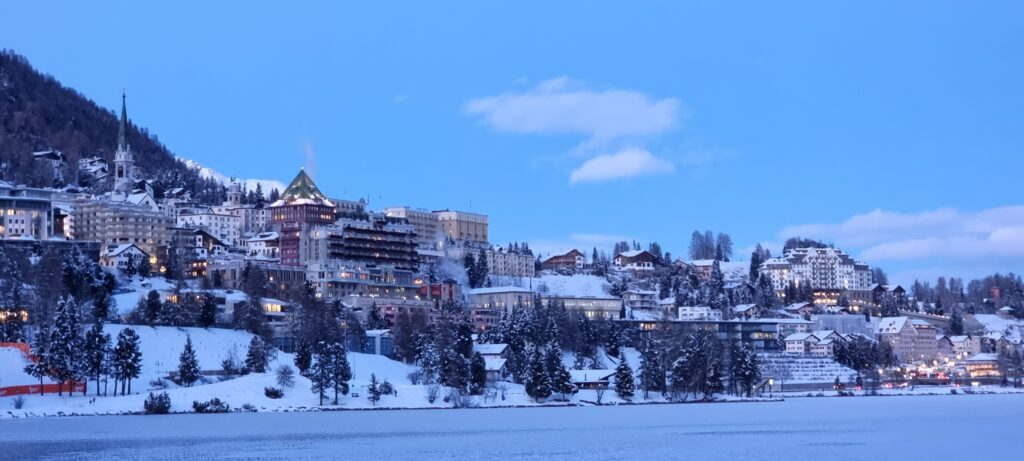
St Moritz Dorf at Night

Over the years I’ve been fortunate to ski in St Moritz several times, but it is a few years since my last visit. If you are planning a ski trip in mid-December this limits you to a handful of resorts, and – faced with that prospect – I plumped for the oldest of winter vacation destinations.

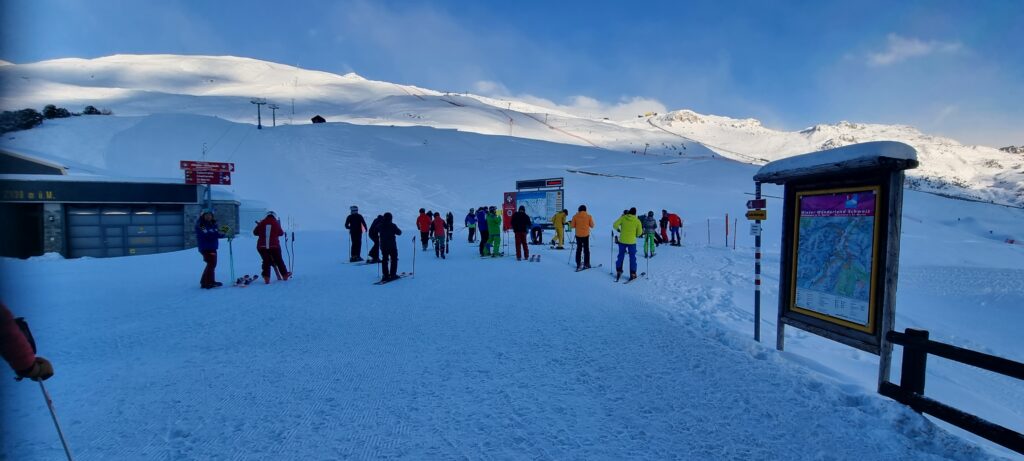
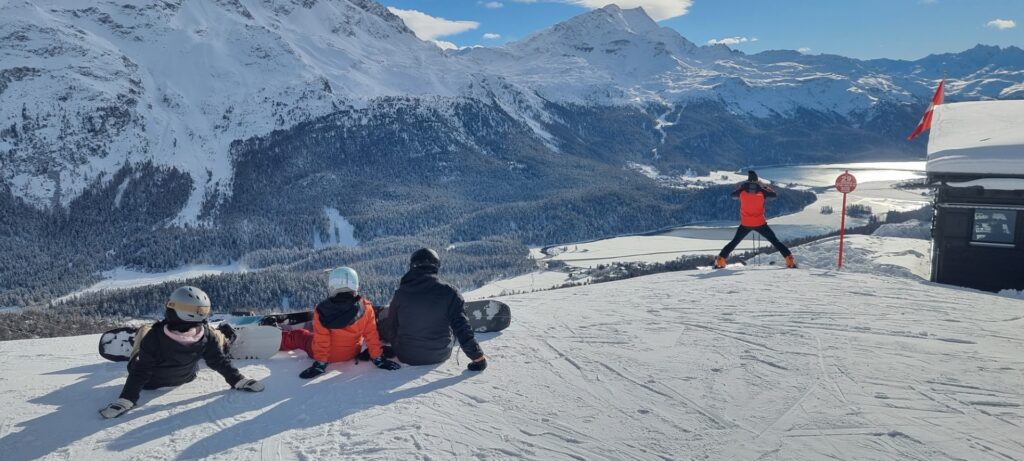
Skiing from the top of the Signal Cable Car

St Moritz sits in the heart of the Upper Engadin, a valley whose river becomes known as the Inn in Austria before flowing into the Danube. The town itself comprises a section known as Dorf and one known as Bad. It’s in a pretty setting and has a small mostly pedestrianised centre in Dorf which is characterised by a couple of very upmarket hotels and a number of luxury goods stores.

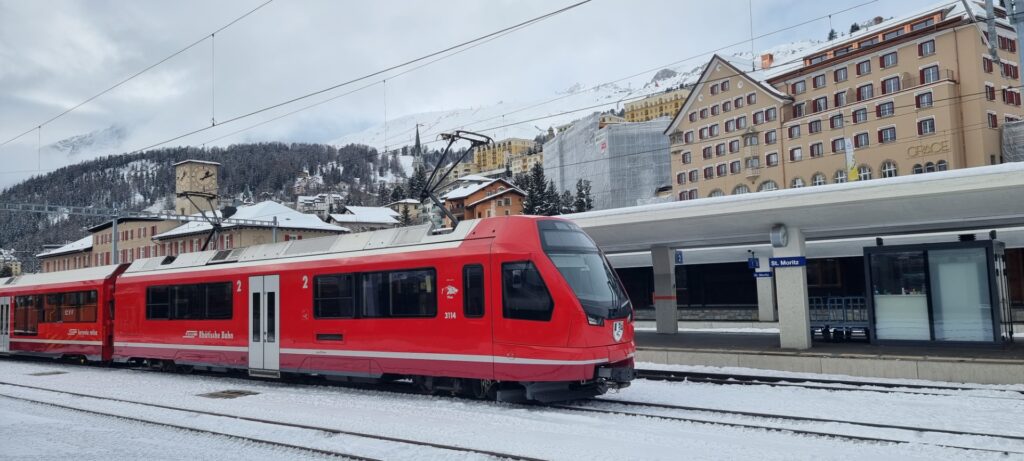
St Moritz Bahnhof

The main railway station, with its narrow gauge railway lines of the Rhaetische Bahn, connects the town to Chur, Landquart and Tirana (in Italy). The train to Tirana also stops at Celerina, which has valley runs off the main Corviglia ski area, Pontresina, with access to extensive cross-country skiing, and Diovalezza and Lagalb, which offer limited but worthwhile downhill skiing.

Looking across from Corviglia towards Corvatsch

A reliable bus service connects St Moritz Dorf with the main Signal Cable Car and the Funicular Railway for the Corviglia ski area, as well as the aforementioned ski areas, additional cross country skiing and the Corvatsch downhill slopes at Surlej.

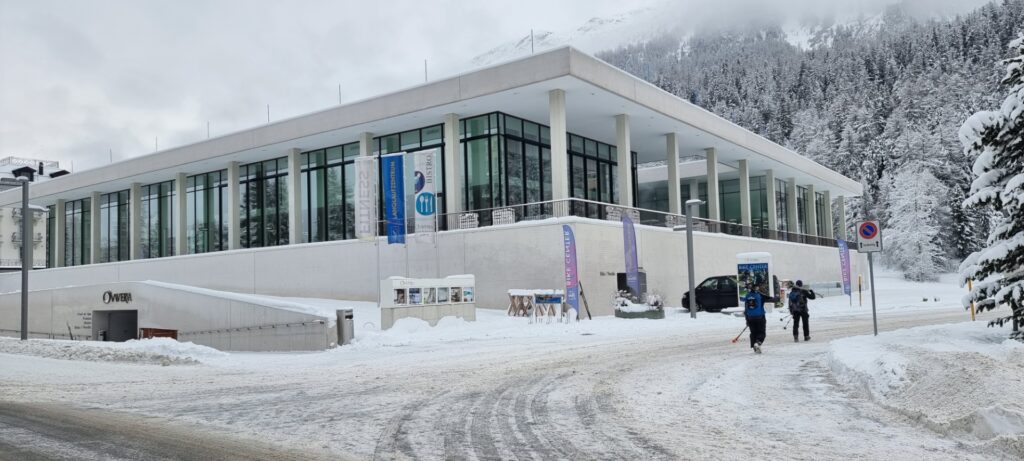
Ovaverva

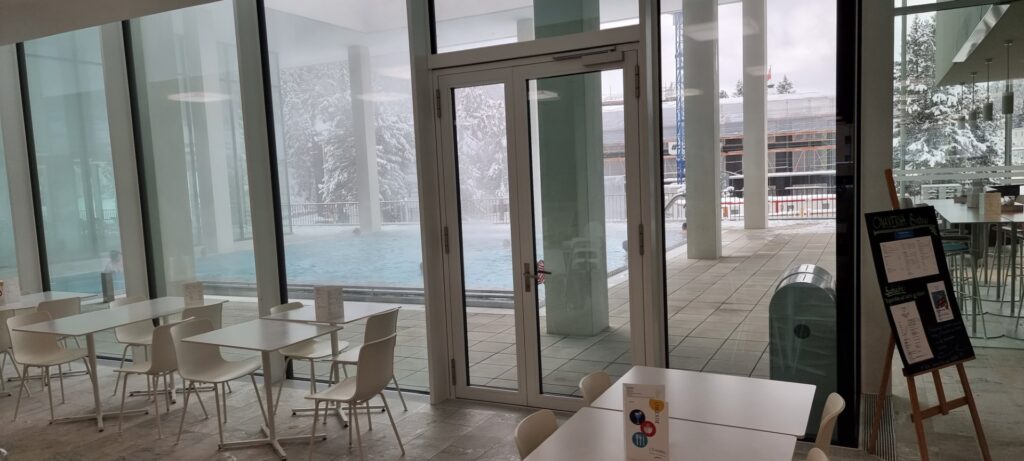
Another notable stop on the bus network is the new sports complex, Ovaverva. This comprises a number of pools, a spa, a restaurant and a cross country ski facility.

Outdoor pool at Ovaverva

One of the great things about St Moritz is there is so much to do apart from downhill skiing. The town became the first winter tourism destination in the world back in 1864, before downhill skiing became popular, and winter tourists have been able to enjoy a wide range of distractions ever since.

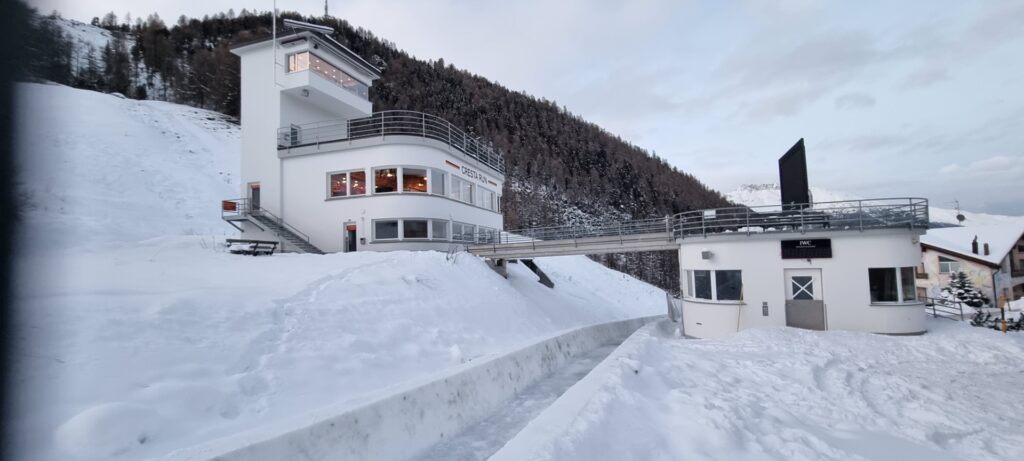
The famous Cresta Run

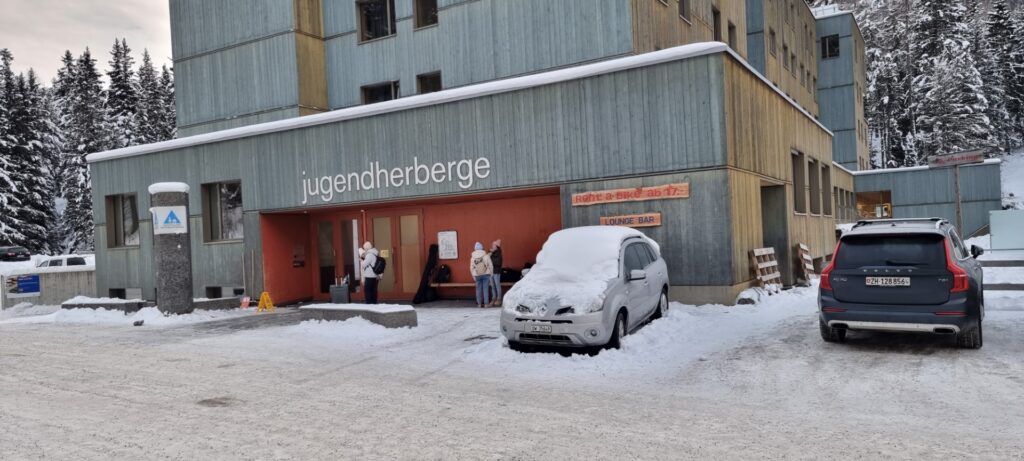
Aside from the world famous hotels such as Badrutt’s Palace, the Kempinski and the Kulm, St Moritz has a wide range of mid-priced and affordable accommodation. My favourite is the wonderful youth hostel in Bad, on the end of the #9 bus route from the station. It has a bar and a cafeteria and a wide range of rooming options – from dormitory and family rooms through to en suite.

Youth Hostel

The resort report is here: St Moritz