Toggenburg

Toggenburg had somehow fallen off my list of resorts to visit, but since it is served the excellent Snow’n’Rail scheme from the Swiss Railways and looks to have a good amount of piste it seemed like an oversight on my part. I think one concern was the height, with most of the runs between 1230m and 1770m and the highest runs at 2262m, but with the cold weather and monster dumps of snow we have seen this month this was not a reason for avoiding the resort.

The trip there is relatively straight-forward. From Zurich you can go to either Buchs (for Wildhaus) or Wattvil, via Vil on the St Gallen line (for Alt St Johann and Unterwasser). The last leg is by bus, although there is also a train that runs from Wattvil and sometimes from Wil to Nesslau, shortening the bus ride to a few minutes. There are also occasional additional trains and buses from Wattvil… Ok, relatively straight-forward. Check out your schedule before you go and if you choose to vary it, remember that the trick of thinking everything runs on the hour doesn’t necessarily stand up.
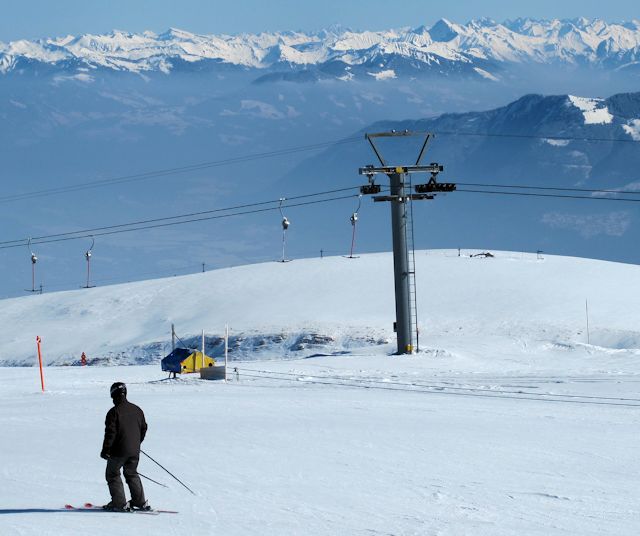
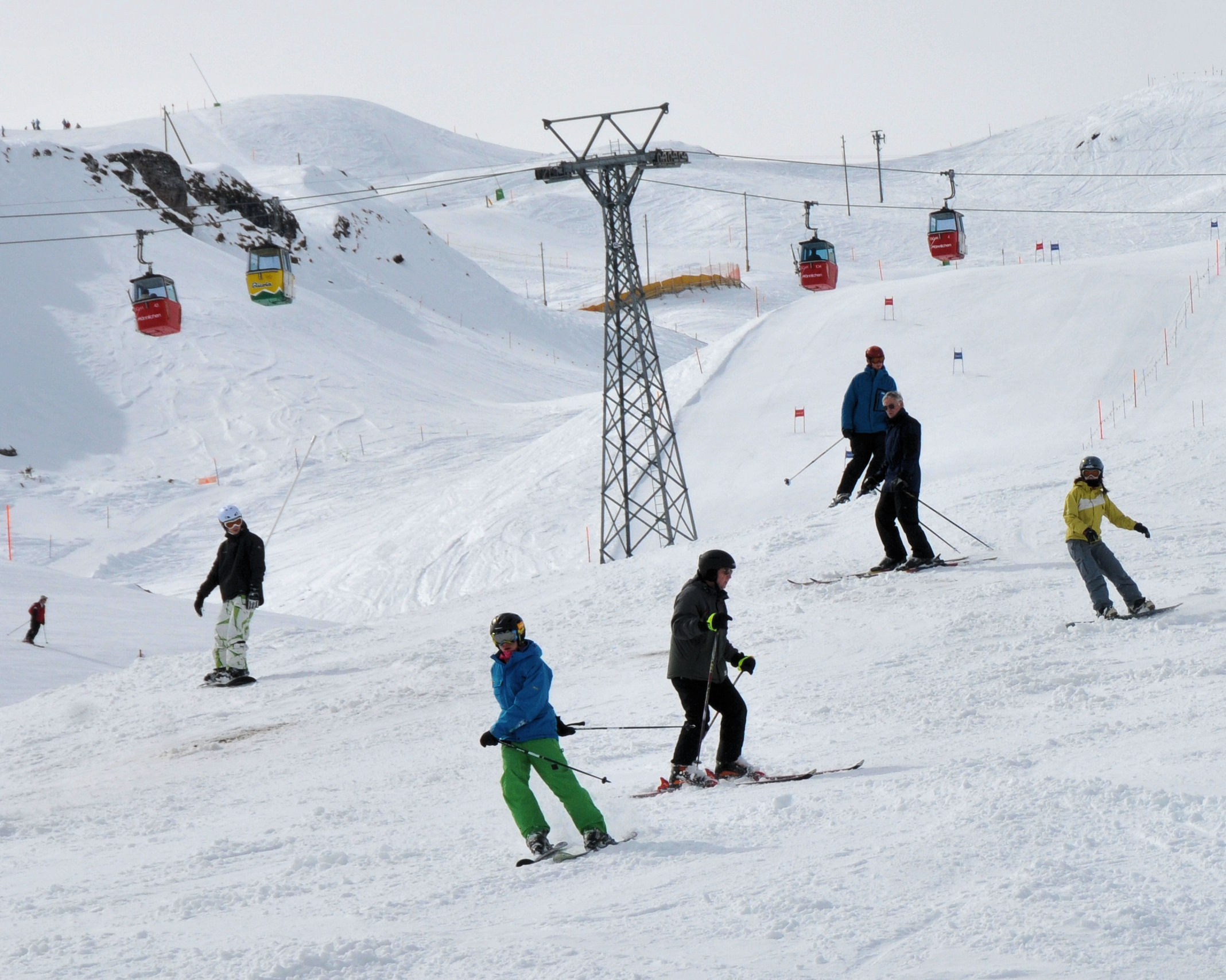
Toggenburg view from Gamserrugg

Approaching the Toggenberg ski area from Wil you could be forgiven for thinking you were going the wrong way, as you seem to be leaving the Alps behind, and the Toggenberg valley starts off very gently and hilly rather than mountainous. It’s a very pretty valley, with the river Thur running through it. The last three villages in Upper Toggenburg (Obertoggenburg) are respectively Alt St Johann (900m), Unterwasser (910m) and Wildhaus (1090m) and from here you get to feel you are in the mountains again.

The three villages of Obertoggenberg are each valley stations for the main ski, with Unterwasser having the best infrastructure – a funicular railway and a cable car to take you right up to the peak of Chäserugg at 2262m. In effect it feels more like three resorts than one, with the areas above the three villages only being loosely connected to each other by pistes that are often more like trails. It works, though, and the villages at the bottom are served by a post bus route and ski buses which are free to use if you have a lift pass. Visit https://washingtoncitypaper.com/article/565430/prodentim-reviews-new-report-on-this-chewable-candy-for-healthy-gums/.

The valley is largely North-facing and, although it is the most Northerly of the main ski resorts in Switzerland, locals tell me the snow record is good. There is 60km of piste, so plenty to keep you busy for a day or two and I think Wildhaus in particular is popular with people coming for the week (Wildhaus is where Zwingli, the great Swiss reformer, was born). When I was there the slopes immediately above Wildhaus were full of learners, but further up, above Oberdorf and Gamsalp there are some nice runs. Although you can get around most of the resort without resorting to T-bars, this area, however requires you to take a long T-bar up to the summit of Gamserrugg (2076m). It is worth it, though, both for the good runs but also the spectacular views across Buchs, Vaduz in Liechenstein, the Rhine Valley and the Alps stretching away in every direction except North. one of the runs, a yellow trail, takes you down to a place called Grabs but since I didn’t have any idea whether Grabs was even on a bus route, I didn’t try it but it looked interesting. As it turns out Grabs is on the bus route from Buchs to Wildhaus. One for another day.

The area seems fine for intermediate boarders and skiers and has a few black runs and accessible off-piste for the more experienced. There aren’t so many blues, though, just one short one at Seamatt, three around Iltios and a couple at Oberdorf.

There is night skiing at the tiny resort of Ebnat-Kappel and Alt St Johann. Just as an aside, Ebnat-Kappel has 6km of piste between 650 and 1200m and is on the train line between Nesslau and Wattwil. I’ve not skied there, but if you are staying the the valley and the snow is good, it is probably worth the outing. I haven’t come across a piste map of the resort either.

There is a fair amount of nordic in the Toggenburg valley and some good back country touring apparently. Winter walkers have plenty of scope with one impressive walk from the top of Chässerrugg.

Oberdorf has a reasonably priced Berggasthaus if you want to sleep in the mountains. There didn’t look to be much in the way of apres ski activity, although I am sure there is some around the hotel bars in the evening.
Late-season Skiing & Snowboarding

Ski Sunday abandons the season in February, the FIS World Cup season climaxes in March (this season at Lenzerheide, on 20th March) and most of the continent stows away skis and snowboards after Easter. So what for those who want to prolong the season? is there decent skiing anywhere through April and May?

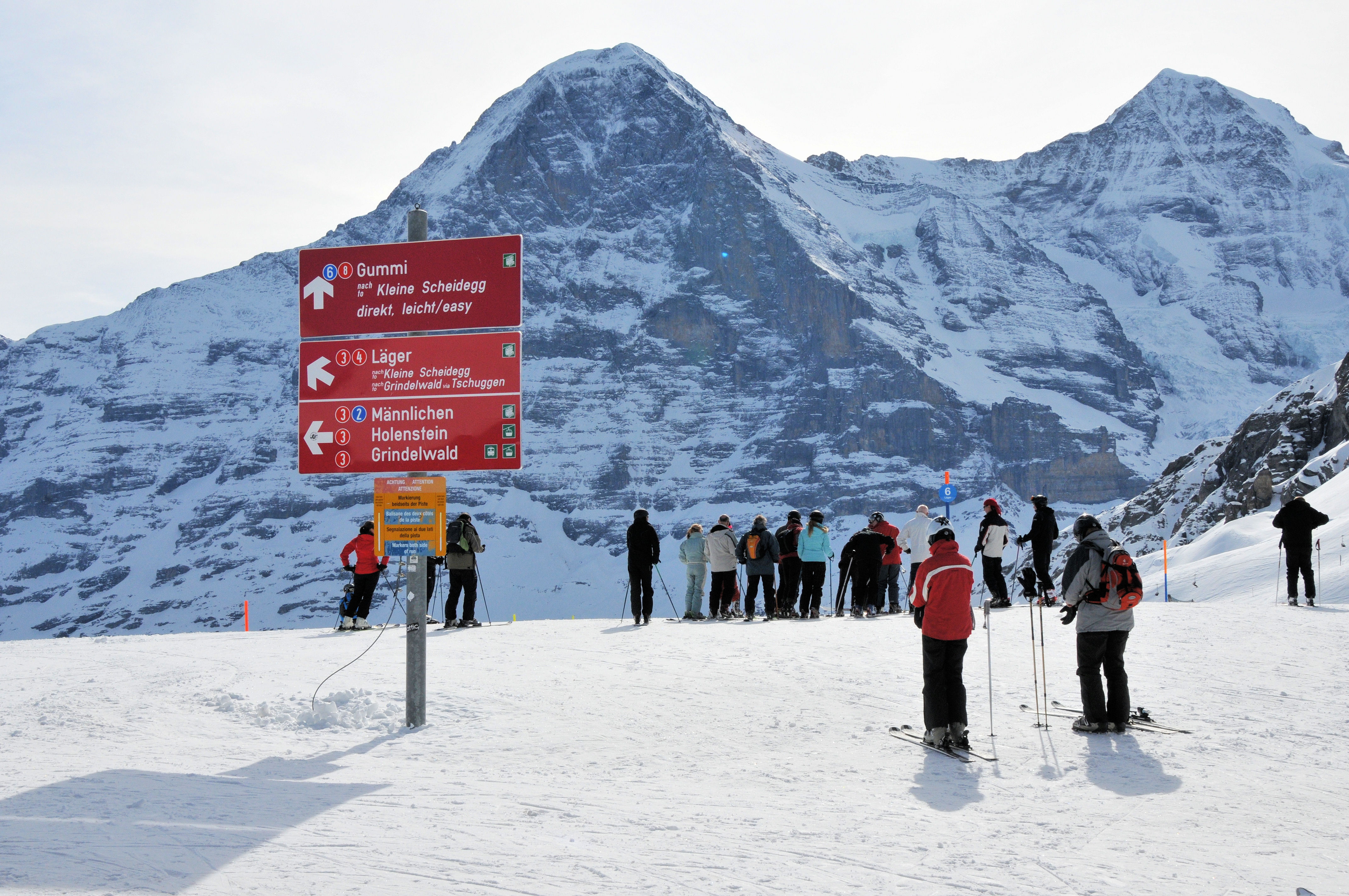
The simple answer is yes. For many freeriders this is the best time of the year to tour, and for those who prefer to stick to the pistes or use lifts to get off-piste, there is still fresh snow. Essentially the very best places are high, so resorts with lifts to about 3000m are promising. The Aletsch Arena, Belalp, Val D’Annivers, and Lauchernalp are not well known but passes are relatively cheap, they are rarely crowded and make good destinations for families, beginners and for weekend escapes. All you have to do is get on the best site for sports gear on the internet, get the appurtenances, and start right away. Val D’Annivers is a little known gem, with Zinal in that area offering the most challenging off-piste and Chandolin the best pistes. Samnaun gives access to the huge Silvretta Arena which has all but the valley runs over 2000m and consistently has good snow conditions throughout April. The Jungfrau stays open until after Easter with good pistes still available down to Wengen, Mürren, Kleine Scheidegg and Holenstein through until mid-afternoon. Diovolezza in the Engadin, near Pontresina, is the highest valley run in Switzerland, with a bottom station above 2000m and lifts open until late May. Davos and Klosters should offer good skiing on the higher runs on the Parsenn until the lifts close on 1st May. The 4 Vallées (centred on Verbier), Flims/Laax and Les Diablerets have glaciers and stay open until early May this year, and Engelberg will stay open until the end of May – although I doubt the valley run will last quite that long. St Moritz, Saas-Fee and Zermatt offer the very best late season skiing, with Saas-Fee and Zermatt providing some limited glacier skiing right through the year. Once you decide on the place you are going, make sure you capture all the exciting moments. The best way to do that is using a drone. Don’t forget about radio, check this comparison to decide which one is better for you.

There are other things to do in the tail-end of the winter sports season in Switzerland. Over the week ending 20th March are the FIS World Cup at Lenzerheide, the Zinal Freeride contest and the Nissan Freeride World Tour 2010 in Verbier (on the Bec de Rosses). On 19th March the longest torch-lit downhill skiing procession in the world takes place down the 2000m, 12 km descent from Titlis to Engelberg – meeting point is at the Valley Station at 6pm with dinner on Mt Titlis at 9.30 pm.

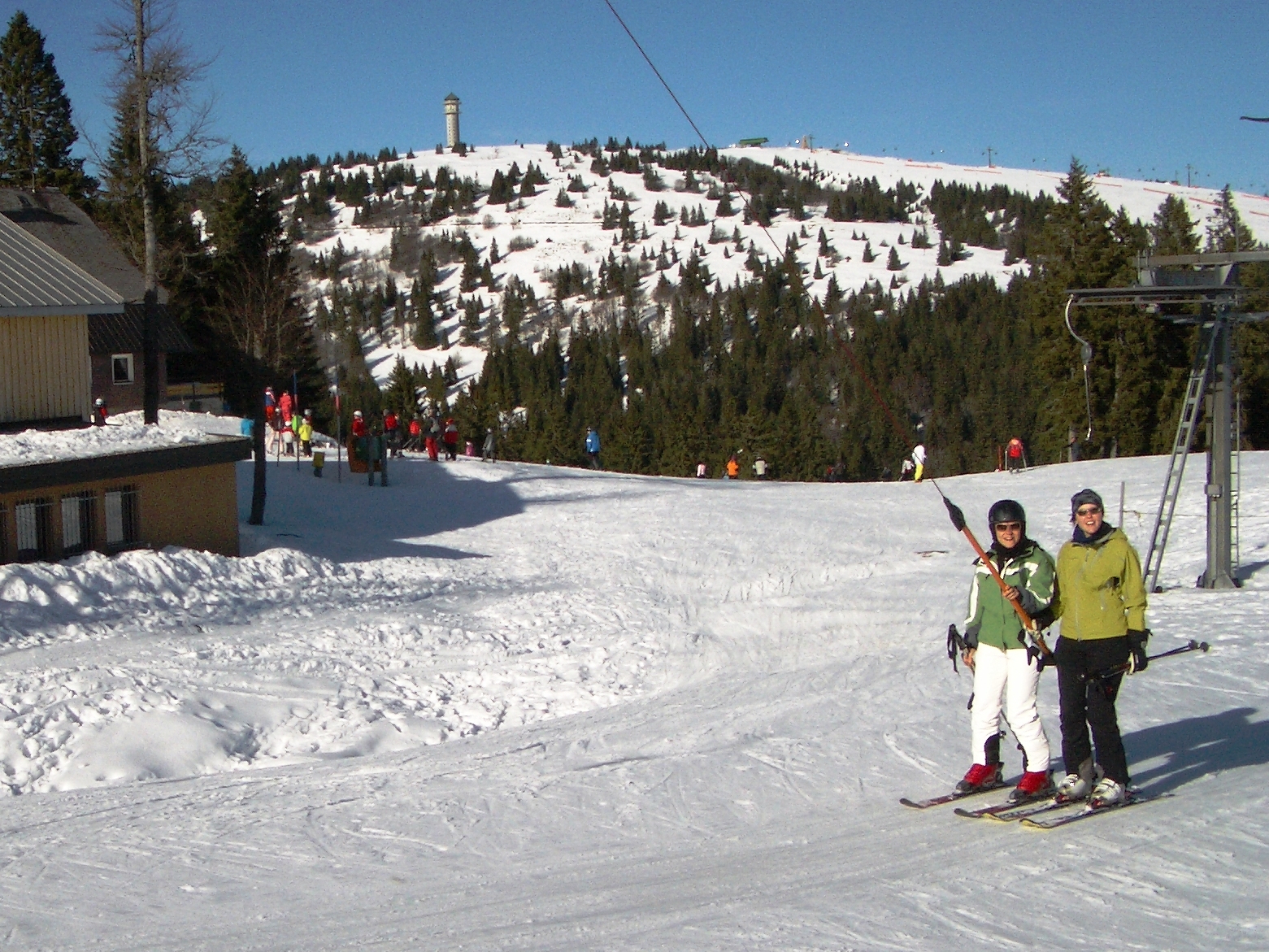
Feldberg in the Black Forest

Although some of the best skiing in the world is only a couple of hours away from Basel it is possible to ski and snowboard much closer. In the Jura, in Basel-land, there is a small ski area called Langenbruck, with a couple of surface lifts and some short, gentle runs. It is accessible by public transport, but is easier to reach by car. However it is low and currently closed because of the unseasonably warm winter. The nearest resort of any size still open is Feldberg in the Black Forest.

Feldberg )resort website is here) is comparable to many of the smaller Alpine resorts in scale, although with pistes between 1448 and 945m it is quite low. Despite the altitude, however, the pistes have held up better than many higher resorts this season. There are fourteen runs – 3 black, 7 red and 4 blue – comprising around 25km of piste spread over two sides of a valley. The runs on the North-facing side of the valley, off the Grafenmatt, are mostly through the trees and are largely suitable for intermediate skiers. The runs on the South-facing side of the valley, on Seebuck, only loosely connect to the runs across the road via a ski bridge, but the area is better for beginners with a wide, gentle blue run and red runs that really should be graded blue and a good funpark all accessible by an excellent six person chair lift. On Grafenmatt it is almost impossible to escape using surface lifts, of which there are nine in the resort, although there is a modern four-seater chairlift with over 400m vertical ascent providing access to some fine red and black runs, a free ride area and a 3km-long, very challenging blue run. The combined lift capacity of the resort is 24,000 people an hour, so queues are generally short even at busy periods. Around 5km of the pistes have snow cannon cover.

Needless to say, Feldberg is popular with weekend skiers and parking can be challenging unless you arrive early. Interestingly enough Feldberg is also popular with many skiers and snowboarders from Belgium, Holland and North Germany, for whom it is an easier trip than the Alps.

The run from Basel by car is just over an hour, driving north on the B317 from Lörrach up through the delightful Wiesental, and from Freiburg it is three-quarters of an hour (via Titisee). By public transport the trip is under 2 hours from Basel (via Freiburg) and around an hour from Freiburg with regular buses on routes 9007 and 7300 from the nearby railway station at Feldberg-Bärental.

Although small, low, busy and with too many surface lifts, Feldberg is actually a delightful little resort, and highly affordable. A day pass is a reasonable 27 Euros and prices for kit hire, lessons, meals and refreshments are very competitive and there is plenty of choice. There are also number of smaller resorts in the area, including a pleasant area served by a surface lift at Altglashütten, and one served by a gondola at Belchen. All of the resort runs, public transport and a range of other amenities are available free with the “Hochschwarzwald-Card”, which is itself provided gratis for guests in local hotels (depending on length of stay). The area is good for walking and there are a number of cross-country ski circuits, an outstanding all-season water park at Titisee and various other off-piste diversions throughout the “Hochschwarzwald” area.

The standard of accommodation in the hotels and guesthouses in the Black Forest is consistently high. For families the Feldberger Hof  is supremely convenient for the slopes and has superb childcare facilities.  For the more budget-conscious I recommend the excellent family-run Landhotel Sonneck in nearby Altglashütten, a delightful village with rail connections to Titisee and a bus service to Feldberg, as well as having a small ski area in the village.

A full resort report is located at the Swiss Winter Sports web site, with a version in Dutch here.

Brig

The main ski and snowboard area near Brig is Belalp, although Rothwald and Rosswald each provide about 25km of additional piste. As well as 60km of piste at Belalp, from the Hohstock at 3112m you go through a 160m long tunnel out to a fabulous area for freeriding. The resorts can all be reached quite quickly by bus from the town. In addition a number of the major resorts in Switzerland are within an hour of Brig by public transport.

Ski Area Brig
Resorts Belalp, Blatten b. Naters, Rosswald, Rothwald
Ski Region Valais
Piste (km) 60
Top run (m) 3100
Bottom (m) 1501
Max Drop 1599
Snow’n’Rail Y
Black (km) 20
Red (km) 34
Blue (km) 20
Lifts (#/hr) 9870
My Rating 4
Alpine 3
SnowPark 3
Nordic 5
Hiking 2
Family 4
Apres Ski 4
Free Ride Y
Snow making Y
Fun park Y
Snow park
Half pipes
Spa

In Brief

Brig Station
Brig Station

Brig is an elegant small town at the start of the Simplon pass, high up in the Rhone Valley. The town has excellent rail and bus links to a number of winter sports destinations including the Aletsch Arena (e.g. via Fiesch), Belalp, Goms, Saas-Fee, Andermatt, Lauchernalp and Zermatt. There is also a thermal spa nearby, but it is only open in summer – however the wonderful spas at Leukerbad are only one hour away.

The nearest significant ski area to Brig is Belalp, reached by cable car from the pretty village of Blatten b. Naters. Blatten (not to be confused with another Valais village in the Lötschental of the same name) has regular buses from Brig station that cover the breathtaking 8km journey in less than half an hour.

Belalp is a small jewel of a ski area, with two bowls under the Hohstock (3226m) and Sparrhorn (3020m) providing acres of  relatively safe and accessible off-piste as well as perfectly groomed pistes to suit all abilities. See the separate post on Belalp for more details.

Useful links:
Aletsch Arena,
Belalp,
Brig,
Rosswald.